
Columns
No General Gowon! Two million children needn’t die to keep Nigeria one!


By Sunny Igboanugo
Would you do the same thing today as you did then? This was a question I put to the late Ikemba Nnewi, Emeka Odumegwu Ojukwu in one of the several meetings I had with him while he was alive. Of course it was all about his Biafra Story. He turned to me with his trademark bulging eyes almost boring holes in my forehead. Then, chuckling, as usual, he retorted: How do you expect me, at 70 to do the same thing the same way I did it in my 30s.


I didn’t press further. That was enough. There was no need to. The response was indicative of his acknowledgement that some of the decisions and actions he took, prior, during and even after, as the leader of the Biafran effort turned out to be mistakes, some out of youthful exuberance and he wouldn’t travel the same route in his later years, given the wisdom and benefit of age. Ojukwu died on November 26, 2011 at 78, many years after that interview.
The same question was posed to Yakubu Gowon, Ojukwu’s opposite number, who prosecuted the same war on behalf of Nigeria, during an engagement with Daily Trust, as one of the events to mark the 90th birthday anniversary of the General, who today, is the longest-serving military leader – 1966-1975 – nine years.
In the interview I read at the weekend, he was asked if he would have acted differently given another opportunity. His answer was emphatic. No! It was then followed with a long narrative of how he needed to do anything and everything to keep Nigeria together and to prevent it from disintegrating. He embellished it by going into a chest-beating mode about how he achieved the Biafran defeat without outside help.
Hear him: “I don’t think I would have done anything differently. Every effort was made to make sure that the situation did not degenerate into a breakaway. I had a duty to make sure that the breakup of the country did not happen. We had to fight for two and a half years and made sure that there was no interference from outside.
“There was no question of allowing any nation or power to get involved in our crisis. If you remember, in the Congo you had United Nations forces made up of Nigerian troops and others from other parts of Africa to deal with the problem. At least we were able to deal with that problem and make sure we were able to live again as a people. So, I couldn’t have done it differently.”
Now, this is where I have a problem with the General. His penchant for sticking to the same narrative for more than 60 years since that awful event, is what rankles. I never heard Gowon, either before or in the recent, admit for once that there was any mistake on his part in the series of events before, during and even after the war.
It is not only regrettable, it is tragic! What the former Head of State, said invariably, is that he would still have killed over three million Igbo, two million of them, women and children, as some estimates would have it, just to keep Nigeria together and there was no other way he could have gone about it and achieved the same purpose.
Now, you would have thought age was playing a fast one on him and either he did not grasp the question put to him quite clearly or he lacked the articulacy to string together a credible, believable and more judicious answer. But that is hardly the case. This is the same string of logic he has maintained all through in his account of the war – a narrative that flows principally from the propaganda components of the Nigerian war managers.
It means, were the war fought over again, and were he to preside, he would’ve still sanction the soldiers who wantonly shot at the able-bodied youths that congregated at the Ogbogologo Square in Asaba to welcome them with drumming and dancing, killing an estimated 2,000 of them in one fell-swoop – the notorious Asaba massacre.
He’s saying that he would still be silent while Russian and Egyptian pilots, who conducted those deadly flights dropped their lethal contents in market places, hospitals and other sacred places, which left decapitated human parts scattered in different directions apart from burying many more in deep holes made by the impacts of the blitzkriegs.
Even with the benefit of hindsight and the present picture of Nigeria, Gowon, at 90, and 60 years after the war is still maintaining that he would still ignore those pictures of thousands of children with chicken legs, distended stomachs, glazy eyes buried in shrunken socket, mounted on heavy, hairless heads. How else does anyone describe tragedy?
Even in his own narrative about the war, Gowon still found an uncanny way of pushing the blame outside his domain, despite being the Head of State during the outbreak of hostilities that eventually led to it. Hearing him talk about how the South East decided to secede from Nigeria, as the sole culprit, you’d think that Ndigbo, who occupied the area just woke up one day and decided to break out from Nigeria to form Biafra.
Not in the Daily Trust encounter, nor anywhere else where he gave his account, had anyone heard Gowon mention the hundreds of Ndigbo, slaughtered in different places in the north – the pregnant women, whose bowels were torn open with daggers and their unborn babies pulled out, the headless bodies that were littered everywhere in all the cities and town, the young Igbo ladies that were corralled into leprosy colonies and forced to mate with the inmates and the other atrocities that formed the story of the pogrom of that era that happened under his nose without raising a finger.
Those headless bodies and others in various stages of decapitation which arrived in train coaches in Enugu and other tales of mindless atrocities committed against Ndigbo and the need to give the survivors a safe haven, were the reasons Ojukwu gave as immediate cause of the demand for Biafra and therefore the war. Any critical mind would have expected Gowon to speak to this, either to debunk it or give his own argument as to why it was not enough to demand for self-governance.
But mum has always been the word. As he has always been wont, all you hear is the repetitive, one-sided, puerile, spurious and mostly obtuse monologue of keeping Nigeria together, as he maintained in the latest outing, where he told his host: “I have always said that if there’s no secession, there wouldn’t be a break out and there wouldn’t be a question of civil war because it got to the stage that the situation was getting pretty clear that a part of the country, the South-east wanted to secede. My duty and profession at that time demanded to make sure that we kept the country together. And that was how it happened.”
I never even knew him to be a narcissist or possessing any element of that trait in his blood. Indeed, I had always taken the General as the humblest Nigerian leader ever. That was until I heard his gloating in that interview. He even accepted himself being likened to Abraham Lincoln. Of course he should be cut his slacks. Lincoln won a civil war in America while he won the Nigerian edition. So, he’s right.
But then what? Okay, he succeeded in “keeping Nigeria together.” How is the face of that Nigeria today? Is he happy with the optics as well as the sights and sounds? That same America of Lincoln has progressively integrated all segments and component parts of the society and progressively worked at it that all the veneer of discrimination has almost been eliminated to create equality of all citizens.
Today, the picture of a black man is hanging somewhere in the Oval Office of the White House in Washington as a product of the war against slavery Lincoln fought. But what do you have here? At the same time the highest Igbo man in power in Nigeria today is the misery Deputy Speaker of the House of Representatives. Yet, not a whimper from the General.
Intriguingly, the snake, which bit Ndigbo so many years ago, seems to have found its way into the General’s backyard. Like the South East, the North Central part of Nigeria, has remained a theatre of wanton human carnage for many years now. Gowon’s kins have been served the same fate, if not worse, of which made Ojukwu pick up arms and say ENOUGH!
Yes! Probably not by jets dropping bombs or fighters firing at fleeing children, but the results are as devastating. I wonder why the General kept silent on that in last weekend’s encounter, just as he has done over the years. Probably the Daily Trust host didn’t ask. It would have been great to know if his idea of one Nigeria included his own kits now scattered in IDP camps all over Nigeria.
Once in Enugu, I interviewed a President of the Rosicrucian Order (AMORC), some decades back. I listened to him connect the Asaba massacre – the bodies of those young men torn apart by bullets, which became eyesore evidence of the darkness of some human hearts – with the bullet-riddled body of an ex-Nigerian leader fingered as the purveyor of that calamity after his assailants waylaid him during a coup.
He had used that connection to adumbrate his teaching about the efficacy of the Law of Karma and how every man must be served with the same plate he did others. I don’t know how this applies to Gowon. But I’m sure that as he clinks glasses in celebration last weekend, a part of his inner voice might be tugging at his heart to remind him of his brothers languishing in those IDP camps, after being chased from their ancestral homes by some brutal invaders.
From what I hear, those now living like refugees, the likes that were replete in Biafra are the lucky ones. Others who were not lucky, faced the worst kind of deaths possible, delivered to them by the same people on whose behest their fathers and brothers visited Igboland with the worst kind of mindless bestiality.
As he sips his wine and digs into that rich plater, the picture of Sunday Igboho at No 10 Donning Street, submitting a letter in demand for the Yoruba Nation, is currently on display everywhere in the media. So are the pictures of the devastation by Boko Haram and other terrorist group who have carved a fiefdom in the North East as well as their brothers doing no less in the North West.
What this suggests is that Ojukwu’s idea of Confederation, which was at the core of the Aburi Accord, and the immediate trigger of the war, might not be a bad idea after all. The idea, which principally was an advocacy for a loose centre for Nigeria, might have allowed for those who see western education as a sin to conduct their own affairs devoid of that external pollution. It would have saved the lives of thousands of Nigerians that have lost their lives in military formations, churches, mosques and plazas.
Gowon swears that he suddenly took ill on return from Aburi, hence could not announce the content of the Aburi Accord. Other accounts think he lied. But whether he lied or not, the fact remains that Ojukwu made the announcement and all he asked was clear. It was not strange either. Rather, it was for Nigeria to be modelled after Great Britain, made up of Scotland, Ireland, Wales and England.
As he buries his teeth into that chicken breast, the General must be reminded that the echoes of anguish reverberating from communities in Benue, Jos, Taraba, Kaduna, Katsina and Zamfara are as loud as those in Igboland and that the people of Ibarapa in Oyo State and Owo in Ondo, are still reeling from their own share of pains from the cold hand of gunmen. Those pains might not be there had the Ojukwu variant of the Aburi document been allowed to work.
Even more, the clime called Nigeria today, could have presented the African version of Singapore, South Korea, Taiwan and Dubai by the competition that could have endured. It would mean sustaining the spirit of what was already on ground in the different regions before the war, had the Confederation idea been allowed to fester. Granted, military rule truncated that idea through the unitary system that it came with, but Confederation would have restored the country back to the status quo ante.
Now, I might not like the idea of mockery and taunting from the traducers of the General who are claiming that God allowed him to live this long to punish him with memories of his people suffering the same fate as the Igbo people he supervised their near annihilation. That would be dancing on the graves and memories of those victims. I’d rather go with the positive side that as the Chief Actor in that horrible theatre of tragedy, Gowon is being offered the opportunity of righting the wrongs of the past.
I think at 90 he must have borne the burden from the images of those children that starved to death long enough and must now offload it by offering the needed apology. I think 60 years is long enough to tell the whole truth as he knows them. That might serve as the adequate penance and restitution he needs to meet God by the time he finally boards the flight that is already taxiing at the tarmac.
Otherwise, to continue to maintain the not-guilty narrative is akin to claiming sainthood. I think his sticking to this unconvincing narrative is to please man. What’s the benefit of looking good to man and displeasing God? If at 90, he is still claiming to have got things right at 32 even with the present picture of the country starring him in the face and saying the direct opposite, it means an uncanny attemp to compete with God for infallibility. That in itself is a great sin and no sinner can see God. Not one with the burden of those two million children of Biafra.
My name is Sunny Igboanugo and I’m The Tiny Voice!









Columns
The Three-Month Sprint (1): Philosophical Architecture of an Intellectual Trilogy of State Decay
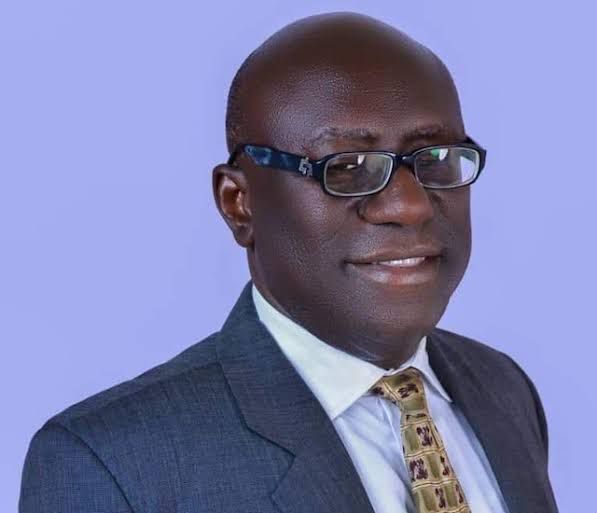
Last week on The Sunday Stew, we unveiled the Decoupling Sovereignty Index (DSI), a quantitative metric I developed as an extension of the Trinity of State Decay. It is meant to be a mathematical instrument for measuring the degree of separation between a state’s juridical sovereignty and its lived reality. I had planned to follow up today with the first instalment of a three-part series on the methodology and indicators of the DSI.
Then, from the middle of last week, there was a development that sent me into a sustained period of reflection.
On Wednesday, Zenodo — the open-access repository developed by CERN, the European Organisation for Nuclear Research, and the European Commission — published my 16,315-word theoretical treatise, ‘The Trinity of State Decay (Part 1): Sovereign Decoupling and Rival Sovereignty — A Theoretical Statement.’ On Thursday, Harvard Dataverse, owned and operated by Harvard University, published the same work. On Friday morning, an email arrived from the Social Science Open Access Repository (SSOAR), operated by GESIS — the Leibniz Institute for the Social Sciences in Germany — confirming that they too had accepted, published, and archived the paper.

Late Prof. Edward Said
I sat with that for a while. It is exactly three months since The Sunday Stew made its debut. In those three short months, we have produced an original analytical framework (The Insecurity Triad), a comprehensive theoretical formulation (the Trinity of State Decay), and a quantitative index (DSI). Within the same period, the framework entered global scholarly circulation, and now the theoretical paper has been published by three of the world’s most respected scholarly repositories within seventy-two hours of each other. I found myself thinking about the symmetry of it: three months. A trilogy of original contributions. A triple publication in a single week.
Numbers sometimes carry meaning far beyond arithmetic. This one felt like it was trying to tell me something.
I. The Seed Planted in a Library
When The Sunday Stew was conceived, I did not set out to become a framework architect, a theorist, or an index creator. But looking back, I think the seed was planted much earlier — by accident, in the history section of the University of Calabar library.
I was preparing a term paper on Nigerian history. Our lecturer was the late Dr. Erim O. Erim — a man you had to do your absolute best to satisfy. I was moving along the shelves when I stopped. What arrested me was a name on a spine: Sigmund Freud. His biography. I could not understand what such a book was doing in the history section. I took it anyway, borrowed it, and in one week read it cover to cover.
Of everything I read about Freud’s life, one idea lodged itself in my subconscious and has never left: Freud’s concept of immortality. He defined it simply but profoundly: immortality is being known by many anonymous people. Not a mystical phenomenon, but a psychological and systemic one. It is the act of leaving behind an intellectual footprint so distinct that your ideas are absorbed by millions of people who may never meet you, but who must use your language to understand their own reality.
Freud did not merely write a theory. He changed the global vocabulary. Because of Freud, anonymous people who have never read a page of psychoanalysis use the words ego, subconscious, projection, and defence mechanism every single day. They are operating within his architecture without ever knowing it. That, he argued, was immortality.
I was a young man in a university library who had come looking for Nigerian history and stumbled into a philosophy of intellectual legacy. I did not know, at the time, that I had been given a compass.

•Late Antonio Gramsci
II. The Book C.Don Handed Me
Several years later, when I lived in Lagos, I had someone who was (and still is) a friend, a big brother, and a mentor. The home of C.Don Adinuba — then at Ilupeju — was like my second home. I could walk in at any time. C.Don was the perfect host, and his wife a hostess of uncommon warmth. There was never a dull moment in that house. He knew I loved books, and he is himself one of the most intellectually deep people I have ever encountered.
On one of those days, he pulled a book from his shelf, handed it to me, and said: “Go and read this.” I looked at it. The author was unfamiliar. I asked: “Who is Edward Said?” He replied: “Just go and read the book.”
Representations of the Intellectual — which grew out of Said’s 1993 Reith Lectures for the BBC — turned out to be, apart from the Bible, one of the most impactful books I have ever read. In its pages I first encountered Antonio Gramsci, whose Prison Notebooks has made an enduring impression on my intellectual formation and theoretical development. Said’s argument — that the intellectual’s vocation is to speak truth to power, to represent the unrepresented, and to refuse the comfort of specialisation in favour of the discomfort of genuine engagement — became a way of understanding what journalism, practised seriously, is actually for.
And from Antonio Gramsci, particularly his broad conception of the intellectual, I came to understand that intellectuals are not confined to universities, research institutes, or academic titles. Gramsci argued that intellectual activity exists wherever people help shape ideas, interpret reality, organise knowledge, and influence how society understands itself. Through that lens, I realised that journalism is not merely a profession of reporting events; it is an inherently intellectual vocation.
As a journalist, I do more than gather facts and relay information. I help frame public conversations, interrogate power, highlight social challenges, preserve collective memory, and contribute to the global marketplace of ideas. This understanding deepened my sense of responsibility to society. It reinforced the belief that journalism carries a duty not only to inform but also to enlighten, challenge assumptions, encourage critical thinking, and provide citizens with the knowledge necessary to make informed decisions.
Gramsci’s perspective helped me see that the journalist occupies a vital bridge in the relationship between structured knowledge and public life. The responsibility is therefore not simply to report what happens, but to pursue truth rigorously, interpret developments thoughtfully, and contribute constructively to the intellectual and moral development of society. In that sense, journalism became for me not just a career, but a pure form of public intellectual engagement.
These two books — one stumbled upon by accident, one pressed into my hands by C.Don — formed the philosophical foundation on which everything that follows in this column rests. I did not know that at the time. I know it now.

Late Sigmund Freud
III. The Question That Started Everything
When The Sunday Stew made its debut on March 8th, I initially envisioned a column anchored broadly on faith, character, and the structural forces that shape society, with a focus on Nigeria and Africa in a global context. But the second edition on March 15 inspired our current trajectory. Entitled ‘A Country Without Earthquakes — Yet Shaken by Itself’, it explored the tragic reality of Nigeria manufacturing catastrophic man-made disasters while other nations contend merely with natural ones. The insights that came from writing that piece—drawing heavily from an expansive interview a former colleague and I conducted with the late Professor Jubril Aminu in 2012—inspired the rigorous analytical direction this column ultimately took, beginning with the development of The Insecurity Triad.
At the outset, I only set out to understand why Nigeria keeps bleeding. I wanted to discover why the same communities bury the same dead in the same circumstances decade after decade, while the state issues the same predictable condemnations, commissions the same redundant reports, and recommends the same superficial reforms that are never implemented. I set out, in other words, to do journalism.
What I did not anticipate was that the honest, uncompromising pursuit of that question would eventually produce what the academy calls a macro-theoretical framework—and that this framework would, in time, find its home at Harvard and other top-tier scientific repositories.
The Trinity of State Decay did not arrive fully formed. It emerged from a profound frustration—the frustration of a scholar-journalist who has spent years watching analytical frameworks imported wholesale from external academic traditions fail to explain the immediate reality happening in front of his eyes.
Failed state theory, useful as far as it goes, describes a static outcome. It names the corpse but completely fails to trace the actual cause of death. The Fragile States Index produces superficial comparative rankings but isolates no mechanisms. What was missing was an indigenous framework that could explain the operational process—the structural logic by which sovereign authority fractures and is progressively displaced by rival formations.
The insight, when it came, was disarmingly simple: states do not lose control randomly. They lose it systematically along three specific axes—Money, Land, and Mind. When the state loses its command of fiscal and economic legitimacy, when it loses territorial authority over its physical space, and when it loses ideological and psychological hold over the behavioural psyche of the population, something else moves in. Not chaos. Something far worse than chaos: a disciplined, purposeful Shadow Order, which is often more efficient at its enforcement functions than the formal state it is displacing.
This is what the Trinity of State Decay theorises. Not the mere failure of the state—but the active production of an alternative to it.
The geography of legitimate knowledge production has long maintained a centre and a periphery. The global centre produces the theoretical frameworks; the periphery receives them, submissively applies them, and occasionally pushes back against them in minor footnotes. What is happening right now with the Sundiata Post Intelligence Unit (SPIU)—with The Insecurity Triad already circulating in global academic repositories and the Trinity of State Decay now anchored across multiple institutions—is a clear demonstration that intellectual rigour does not possess a postal address.
The publication of the Trinity of State Decay on global scholarly platforms is not an end point. It is the formal opening of a conversation three decades in the making. If in the months, years, and decades to come, a professor at Harvard, a post-doctoral fellow in Legon, a PhD candidate in Oxford, or an undergraduate in Makerere writing a term paper finds it useful and engages with it, our purpose will have been fulfilled. None of them may ever know me personally, just as I never knew Freud, Gramsci, or Said.
Coda: The Symmetry Completes Itself
I began this reflection thinking about the symmetry of three: three months, a trilogy of contributions, a triple publication. But symmetry, I have come to understand, is not always visible at the beginning of a journey. It reveals itself exclusively in retrospect—which is, incidentally, also how Sovereignty Decoupling becomes visible to those who are living through it.
A young man borrowing a biography of Freud by accident in a university library. A mentor handing him Edward Said across a table in Ilupeju. Several years of frontline journalism asking the same stubborn questions about why our nation bleeds. A column that began as political commentary and rapidly transformed, by structural necessity, into a site of deep theoretical production. And now: Harvard, Zenodo, GESIS-SSOAR, all in a single week.
Three months. A trilogy. A triple publication. And with SSOAR’s confirmation arriving on Friday morning, our overall global archival footprint expands to seven critical institutional repositories when we include the foundational papers of The Insecurity Triad: SSRN, Harvard Dataverse, Zenodo, SocArXiv, SSOAR, ResearchGate, and Academia.edu. The symmetry, it appears, was not done with me yet.
The Trinity of State Decay is now available on Harvard Dataverse (doi:10.7910/DVN/ZQWEM7), Zenodo (doi.org/10.5281/zenodo.20580627), SSOAR (nbn-resolving.org/urn:nbn:de:0168-ssoar-110533-8), ResearchGate, and Academia.edu. Read it. Push back against it. Apply it. Find its limits. That is exactly what it is there for.
Trust is sacred. Stay seasoned.
•Dr. Max Amuchie is a Scholar-Journalist, Media CEO, and Lead Researcher at the Sundiata Post Intelligence Unit (SPIU). He is the architect of The Insecurity Triad framework for African security analysis, the Trinity of State Decay theory, and the Decoupling Sovereignty Index (DSI)—original, indigenous analytical frameworks for understanding, categorising, and measuring conflict, state decay, and sovereignty in the Global South. He writes The Sunday Stew, a weekly syndicated column on faith, character, and the structural forces that shape society, with a focus on Nigeria, Africa, and the Global South in a changing world.
X (formerly Twitter): @MaxAmuchie | Email: max.a@sundiatapost.com | Tel: +234(0)8053069436
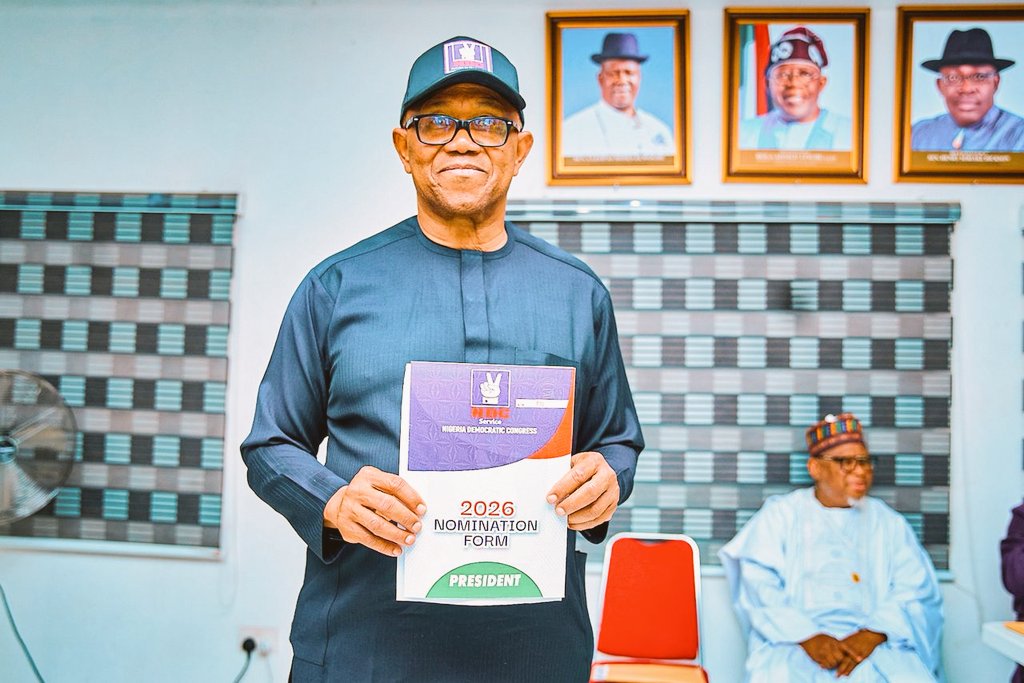
Have you been watching the drama happening in ADC? I have, and I have been thoroughly amused doing so. Have you been following the television appearances of Rotimi Amaechi recently? Did you see how the former Governor of Rivers State had been vibrating, assuring of his victory at the party’s presidential primaries?
Did you hear him boasting how he was going to vanquish Atiku Abubakar, former Vice President and now the presidential candidate of the party, indicating that ADC members would prefer him over the seventh-time election-contesting Nigerian record holder, because of his (Amaechi’s) records?
Did you see the vehemence with which he warned that television host, to “stop that nonsense,” for suggesting that he could end up as the VP candidate to the same Atiku? Did you see how he rolled his bulging eyes and how angry he sounded?
Did you read the statement of the former Minister of Transportation, rejecting the outcome of the ADC presidential primaries, even before it was finally announced on Wednesday.
Now, pan the camera to the Abuja home of the same Amaechi – by the way – I could swear the ambiance could compete with the palace of the Sultan of Brunei – how did he do it – but how could I forget his wife is a money-minting machine!
Did you see the selfsame man with Atiku? Did you notice the difference? Did you notice the robustness, the comicalness? Did you watch the chumminess and the camaraderie? What meaning did you read into it? You actually have to be an initiate to correctly read everything perfectly.
Just wait for a few days to hear the announcement. I won’t be the one to tell you that the huffing and puffing, the air-punching and the table-banging is all for one thing – the VP position.
For those who had advocated that Obi stayed back and contested with Atiku, it would have been a fatal gambit. He would have come a distant third in the contest, competing with Mohammed Hayatu-Deen. Not because it will be so by the desires of the members, but the goons, wanted it so and would have made it so.
Even the position of the VP which hitherto had been bandied as his for the asking, would have eluded him. Amaechi was there to pick it up.
You heard Dele Momodu an accomplice in that plot telling you that Amaechi was more experienced than Obi in that interview with Charles Aniagolu on ARISE NEWS Television’s Prime Time.
It was all figured out. If Peter Obi had fallen to the plot he would have been the greatest political mugu of the century. He would have rubbished the rock-strong foundation on which his profile was built and stands today – as businessman and politician.
Indeed the plot appeared skewed towards not only making him wave goodbye to politics forever, but caast a huge slur on his exhilarating credentials that account to his being celebrated as one of the most successful Nigerian business tycoons today.
Only a few seconds and the trap would have snapped. Had he waited a few days more in that ADC environment, it would have been over. He would have been trapped in the odd situation of point of no return.
By now he would have become an object of mockery and an item of sport for his enemies. Tons of them would be having a bellyful of laughter over his ordeal by now – had he wasted a second more.
But having that laugh would mean that the eagle has lost its lustre. Obi isn’t Obi just by name. Now, here is the Obi they wanted to trick into a trap. Still in his early 20s, he drove three cars he bought with his own money before graduating from the university.
First year – a Volkswagen Beetle (today’s Venza) – second year a Peugeot 505 (today’s Prado) – third year – a BMW (Today’s Maybach). Now think of yourself as a student then. Think of your children that are students today. That would bring you closer to the persona in question.
It didn’t end there. Still as an undergraduate, he owned the supermarket on campus. There was more. He built residential houses and became a landlord to students and locals in the university community – one of them, said to be Abubakar Sa’ad, the current Sultan of Sokoto, who was then a military officer.
De hear o! This same Obi, was among the 1,000-ONLY, UK customers the American Express Bank gave their Platinum Cards. You know what that means. In the whole of the UK – including oyibo people of all nationalities doing business.
Before his 33rd birthday, this Obi, had become Chairman of a commercial bank and director of other blue-chip companies. At the same age when his colleagues still clutch files in their armpits in pursuit of jobs, he was already heading a conglomerate of firms dealing with supplies and distribution of goods.
So, add all these up! Imagine the number of intriguing situations he must have dealt with in this long journey. Imagine the boardroom politics. Imaging the various business tricks he must have survived.
In politics, this same Obi practically cut off the head of the political monster prowling Anambra for years.
Before his arrival, the whole of the state was one huge conflagration and cataclysm. Elements sponsored by patrons of evil had razing down structures including the Government House of governor’s residence. Anambra was all chaos – a huge bedlam!
But all these Obi faced and conquered, arresting the tempest, quietening the tide and smoothening the waves – not without battles – there was a deluge of them – but with willpower, wisdom, tenacity, consistency, and above all – courage.
He battled the electoral heist that stole his original mandate, won, then impeachment, triumphed, then abrupt tenure termination, challenged it and returned to power – battled entrenched interests in the labour unions – teachers, doctors, workers – et al – prevailed and handed down a new Anambra sitting on the foundation of sobriety and good behaviour.
Now this was the man they wanted to trick. Obi’s case would have been that of the late John Chukwu, the hero in the tragicomedy, Isubru Ekperi – described as the crab which swam across the mighty ocean, but fell in the woman’s pot of soup.
Had Obi, stayed in ADC to contest against Atiku, his fate would have mimicked Okonkwo in Chinua Achebe’s Things Fall Apart, whom for fear of being thought weak, destroyed his own destiny by killing Ikemefuna and ended up committing suicide! But providence was on his side;
Thankfully, he did not. And today, NDC provides a new horizon. Nigerians are being provided the opportunity of a new country, that could rise from the ashes of the old order – a clean break from the past – a new hope of awakening the sleeping giant!
The Tiny Voice!
By Sunny Igboanugo
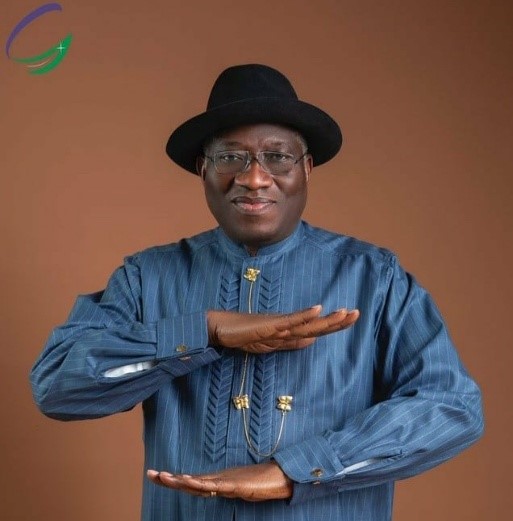
On Wednesday, April 22, 2026, Goodluck Jonathan, Nigeria’s 14th leader and the fourth elected President was at the Presidential Villa, Abuja, on a visit to President Bola Tinubu. Nobody knew the content of that visit because discussions were conducted closed doors.
However, knowing Tinubu, would anything concerning him ever be free of politics, especially given the nuances of the season? Would the snake ever give birth to a creature that is short?
Naturally, as it is wont with Nigeria where one event takes over from the other in quick successions, the Jonathan visit, naturally disappeared – buried inside the reservoir of public consciousness.
But then, things have begun to unfold that people are not only now returning to that April visit, but are taking notes as well as connecting the dots.
Nothing yet seems definite, except in the realm of the popular local saying that when a witch cries at night and the baby dies in the morning, the people know where to look.
Indeed, the droppings of the caterpillar on the ground is making people look up to the tree to see if they are actually eating the green leaves on them. Naturally, events around the 14th President, do not look ordinary – at least not that ordinary to escape more than a scant public scrutiny.
So, when on Thursday May 7, 2026 youths stormed the Abuja office of the ex-President urging him to run for the office he left in 2015, after his historic defeat by Muhammadu Buhari, it elicited a deeper interest from the previous attempts. Yes! It wasn’t the first time Nigerians would be making the pitch. Several groups had tried in the past, even as far back as the 2023 elections.
So, the attempt three weeks ago, was not new. But, this time, eyebrows were raised all the same because it seemed to conduce more intriguing interpretations. Therefore, instead of mere passing interests, Nigerians are now interrogating deeply, putting two and two together.
How much did the former President know about that visit? Did those youths ambush him or was he in the know that such a visit would take place? Was it what is known here as an arrangee – a well-crafted political facade?
Then came the angle of the Peoples Democratic Party (PDP). A long time ago, when speculations were rife that Peter Obi, was being courted by the former ruling party to return and run for the 2027 presidential election on its platform, Jerry Gana, a stalwart of the party had served notice that they even had a more seducing and deliverable option. It turned out to be Jonathan.
So, long before the Nyesom Wike devastating blow on the party that has kept it in its prostrate state, Jonathan had been on the cards as the number one option for the party. Therefore, it follows that the current steps the party is taking to draft him in, to run as its candidate in the election, is normal. But is it?
The argument in PDP quarters for the Jonathan choice is because he is the only one constitutionally barred from contesting a second term, he is the most fitted to satisfy all shades of political interests in Nigeria today, especially the North eager to return to power. Quite scintillating.
But seducing as this appears, there is a hugely compelling argument against the move. A groundswell of analysts swear that the ex-President is being pushed into the ring as an instrument to stop Peter Obi, the current moving train threatening to crush the ambition of Tinubu to remain in office beyond 2027. In other words, the sole reason is to play the spoiler role.
Supposing this is the reason. Then what is before us is more fatal than critical. This is the same Jonathan whose singular act of calling Buhari that morning on March 31, 2015 to concede defeat, suddenly catapulted him to a global democratic icon – the same that hops into presidential planes to other countries in Africa to straighten crooked democratic roads.
Now, would the same Jonathan swear with his church mind that Tinubu’s model of democracy is what he would prescribe even for an enemy country, let alone Nigeria? What aspect of the country has Tinubu not damaged. So, what would make him a Tinubu’s ally in the further destruction of Nigeria, if he truly loves the country?
This was the same Jonathan who swore that his ambition was not worth the blood of any Nigerian. Is he not aware that the land on which he’s standing is already soaked with the blood of the same citizens by the sheer butchery that is happening daily in the country under the nose of the most underwhelming President yet? Isn’t this the issue now?
Indeed, not a few people have argued that Jonathan should be in the forefront of the Obi project. For one, Obi was once his appointee apart from being a sworn ally. So, he would be in a position to ascertain his true qualities first hand and confirm that he’s the only one among the lot that could fix the country. Even an imbecile knows that Obi would create the clean break from the past that Nigeria needs today to build the future everyone desires.
Besides, he Jonathan, if anything is substantially part of the reason the South East is in its current state at the moment, the level of support the area gave him throughout his tenure is part of the reason the late Buhari increased his hatred for the Igbo a million times more – a phenomenon he transferred through the APC to Tinubu – and which the current President has been unable to extricate himself from.
Okay, is the former President not aware that the position Tinubu is sitting on today belongs to the South East – the zone that took him like one of them that they even gave him an Igbo name – Ebele. If everyone else shortchanges Ndigbo, would he also join, given the foregoing? What manner of ingratitude would that be?
O yes! He has had his Villa meeting. PDP has adopted him as their candidate. Even the legal barrier that would have stopped him, was cleared on Monday when Justice Peter Lifu of the Federal High Court, Abuja, handed him the all-clear sign. He has told the world that he is consulting. While at it, hopefully, more people would tell him the home truth.
Fortunately, he was the one who said it is easy to wake someone that is actually asleep than someone pretending to be asleep. Regrettably, by his silence since the obscene drama began, it appears he prefers the latter. Therefore, his action would not derive from ignorance.
If he finally bites at the apple, it wouldn’t be because he didn’t know how much Tinubu has messed up Nigeria and the implication of reinforcing him with another four years.
His complicity wouldn’t mean that he doesn’t know what to do to reverse the trend. It would only mean that personal interest has taken the better part of him and not the love of the country.
If he deliberately makes that choice, with both eyes open, then he’s welcome in the hall of infamy rather than honour. Fortunately, there is still a window to prove that the foregoing was a mere political nightmare and not reality. But otherwise, it would be apposite for Nigerians to say in unison – GOODLUCK?
My name is Sunny Igboanugo, I’m The Tiny Voice!



-
 News4 weeks ago
BREAKING: US-Nigeria troops slaughter 175 ISWAP fighters
-
 Columns4 weeks ago
Dear General Gowon: That apology you’re running from is your nemesis
-
 News2 weeks ago
BREAKING: Terrorists strike Ibadan again! Abduct ex-Minister’s sister, twin children
-

 News4 weeks ago
BREAKING: Wait over! Arsenal are CHAMPIONS! Win EPL after 22 years hiatus
-
 Columns3 weeks ago
See Tinubu’s terrible damage on Option A4 and its precious memories
-
 News4 weeks ago
BREAKING: Jonathan emerges presidential candidate *Gets automatic PDP ticket!
-

 News4 weeks ago
Presidency: Obi met all requirements – NDC *Cleared to contest primaries
-
 News2 days ago
BREAKING: Troops rescue wife of kidnapped General! *Terrorists flee scene