

News
Bobrisky: He had a room to himself – Report *We’ll deal with compromised officials – FG


Idris Okuneye, Nigeria’s popular crossdresser, otherwise known as Bobrisky, actually did not cohabit with other inmates but had a room to himself, though inside custody, contrary to reports that he lived outside the walls of the Nigerian Correctional Services (NCS) facilities for the period he served his six-month sentence for abuse of the naira.
This much was the revelations of a report of the findings of how the crossdresser served his terms, following the investigations called by the Federal Government, after it was reported that he actually lived in a cozy apartment outside the prison walls with domestic servants and other privileges to boot.

The investigation came on the heels of an audio tape played on social media by one Vincent Otse, alias VeryDarkMan, where a voice purportedly belonging to the crossdresser, also known as Mummy of Lagos, was overheard, claiming that a top NSC official secured an apartment for him following the intervention of one of his “godfathers.”
Part of the said tape also recorded him saying how he also paid N15million to the Economic and Financial Crimes Commission (EFCC) to drop the money laundering allegations that came alongside the naira abuse charge and how he also paid N10million to the chambers of Femi Falana, a renowned human rights activist, to secure presidential pardon for him over his conviction.
While the EFCC denied the allegation that its officials was compromised, saying the initial allegation was dropped because its lawyers found it unmeritorious, both Folarin Falana, through which the money was allegedly paid, and Femi his father not only debunked the allegation, but recently obtained a relief for N500million against VDM and an order from a Lagos High Court to stop further publication of the allegation.
In the latest development, an investigative panel led by Uju Agomoh, Executive Director and founder of Prisoners’ Rehabilitation and Welfare Action (PRAWA), said it did not find merit in the report that Bobrisky did not live inside the cells of the NCS.
The report, which is coming from the brief handed the panel by Olubumi Tunji-Ojo, Minister of Interior on September 30, with Magdalena Ajani, Permanent Secretary of the Ministry of interior, said it “did not find any evidence thus far that suggested that Mr Okuneye slept outside the custodial centre during the period of his imprisonment, which was from 12th April 2024 to the 5th August 2024, which is a six-month correctional sentence with the usual remission applicable.”
Tagged: Panel on Alleged Corruption & Other Violations Against the Nigerian Correctional Service, the members, however said they found issues with the documentation of Bobrisky’s transfer between custodial centers, highlighting violations of the Nigerian Correctional Service’s regulations.
In the same, report however, there was another revelation that the son of Abdulrasheed Maina, ex-Chairman of the Pension Reform Task Team (PRTT) convicted in 2021 for laundering N2.1billion belonging to the body, and currently serving his terms in the NSC facility, transferred money into the personal account of the Deputy Controller of Corrections (DCC), Kelvin Iloafonsi Ikechukwu, for his father’s welfare, a practice deemed unethical.
Agomoh, who red the report, said Bobrisky did serve his sentence in a correctional center from April 12, 2024, to August 5, 2024, adding that the crossdresser was transferred from Ikoyi Custodial Centre to Kirikiri Medium Security Custodial Centre and later to Kirikiri Maximum Security Custodial Centre.
Maintaining that the body did not find any evidence that he slept outside the custodial centers during his sentence, she said the members picked holes in the transfer of the Mummy of Lagos, between the facilities as part of the process actually violated sections of the Nigerian Correctional Service Act, as proper documentation was not provided at the time of his transfers, adding: “These documents were backdated and filed much later, breaching protocol.”
Part of the report, read: “Bobrisky was granted numerous privileges while in custody, including a specially furnished single cell, access to various comforts, and preferential treatment.
“The panel recommended further investigation to determine if these privileges were financially motivated and rooted in corruption by correctional officers. It also called for clear guidelines to avoid discriminatory practices based on socio-economic status in the future.”
“Regarding the transfer of money by Abdulrasheed Maina’s son to DCC Kelvin Ikechukwu’s personal account, the panel found the action unethical, noting that it tarnished the image of the Nigerian Correctional Service. Even if Maina approved the transaction, it violated institutional regulations.
“The report also identified widespread issues of corruption, indiscipline, and unethical behavior within the Nigerian Correctional Service. It recommended proper training for officers, especially those assigned to lead custodial centers, and highlighted the need to improve funding, welfare, and working conditions to curb corruption.”
Tunji-Ojo, who assured that the report would not be ignored and promised that all indicted officials would face appropriate disciplinary measures, emphasised the government’s commitment to reforming the correctional service to create a rehabilitative and corrective institution, rather than a punitive one.
“This report marks the beginning of a broader reform process. We will ensure that those responsible are held accountable, and the necessary actions are taken to build a service that rehabilitates inmates and gives them a second chance at life,” the minister stated. He reaffirmed his commitment to transparency and accountability, assuring that the report would be made public and followed by concrete actions,” he said.









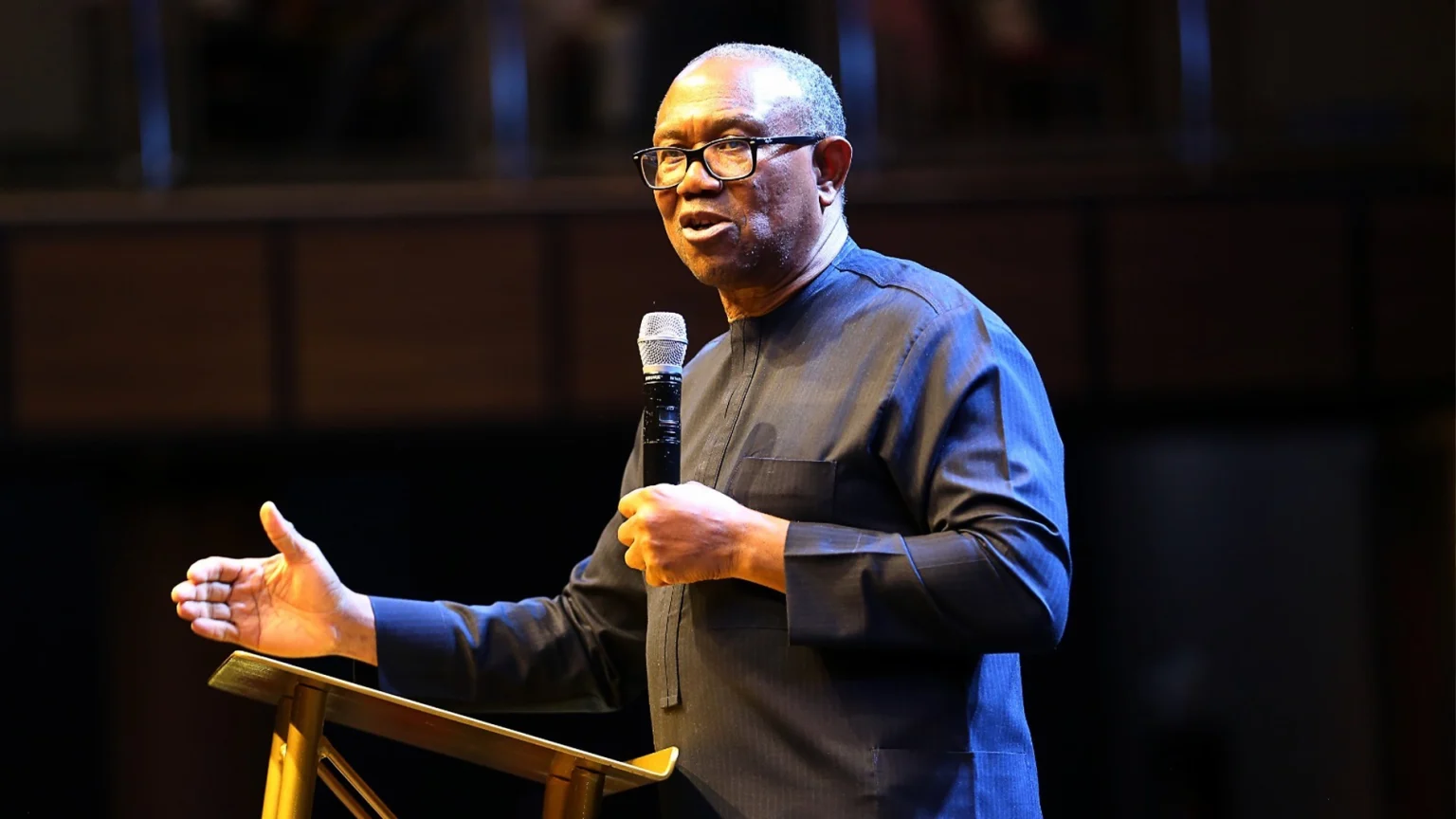
Peter Obi, candidate of the Nigeria Democratic Congress (NDC), is not thinking of losing next years presidential election, bur is preparing instead to run a government in which all Nigerians will have a stake, particularly the opposition parties, in the decision-making of government and running of same.
Obi, in his latest interview with DW, told his host that he was confident of winning the election, in which President Bola Tinubu, the incumbent is running for a second term, told his host that he was confident of ousting the President, because of his woeful performance in the last three years, which had pitted him negatively against Nigerians.
Maintaining that he would use the four years he promised to stay in office to heal Nigeria, transform its economy and place it on a sound footing for future generations, Obi, former Governor of Anambra State and candidate of the Labour Party (LP), in the 2023 election, he said, having suffered enough, the 2027 edition, would be between Tinubu and Nigerians.
Hear him: “I will not lose because the election is now between the people and the government. I believe that the people have suffered enough. It is not me that will tell the people what to do. It is the people that will lose against the government. So, whatever they will do, I don’t know, because I’m not controlling them.
“Even if they have to go to court, it will be the people suing the government. So, this election is between the people and the government. I’m only being used as a tool to serve the people. If I win, we’ll follow the rule of law. One of the things I’m sure I’ll bring back is the rule of law. We must have law and order.
“The system must function properly. I will never persecute anybody. I will never do anything knowingly wrong in office, because it will benefit me. I’ll never go after my opponents. I’ll make sure we’ll have strong opposition, strong parties that will stand and say no and in times of problems, I’ll invite them.
“If I were President and what is happening in the north is happening, I’ll invite all the opposition parties. I’ll go and sit down with stakeholders in the north and discuss it and find solution to it. If I were President and what happened in Oyo State happens, I must face it. I’ll go there within days and I must invite the opposition to come with me and say. let’s discuss this.
“Once the election is over, I’ll be serving everybody and I’ll want every idea. And since I don’t have monopoly of knowledge, I’ll listen to others and I’ll learn from them and I’ll do the right thing for the Nigerian people.”


By Olumide Bajulaiye
Since the inauguration of the 10th National Assembly in June 2023, Senate President Godswill Akpabio has positioned the Senate as a critical partner in implementing President Bola Ahmed Tinubu’s Renewed Hope Agenda. While the Executive formulates and implements policies, the legislature provides the legal framework that enables those policies to succeed. Under Akpabio’s leadership, the Senate has focused on passing reforms aimed at economic recovery, institutional strengthening, education, investment, social welfare and democratic governance.
Rather than maintaining an adversarial relationship with the Executive, the 10th Senate has pursued what Akpabio describes as constructive legislative engagement—supporting government reforms while exercising its core constitutional responsibilities. This approach has allowed several key reforms to move from policy proposals into enforceable laws.
Economic Reform Through Legislative Backing
One of the strongest pillars of the Renewed Hope Agenda is economic transformation. Recognising that policy reforms require legal support, the Senate under Akpabio has prioritised legislation designed to improve fiscal management, attract investments and modernise Nigeria’s financial system.
Among the notable legislative achievements are tax reform measures, the Investments and Securities Act, insurance reforms and the revenue administration legislation intended to simplify taxation, strengthen capital markets and improve investor confidence. These laws provide the institutional backbone for the Federal Government’s economic reforms.
Expanding Access to Education
The Senate has also supported the administration’s human capital development agenda by strengthening legislation that expands educational opportunities.
The Student Loan framework, implemented through NELFUND, represents one of the landmark legislative interventions of the 10th Senate. By providing legal hacking for student financing, the Senate has helped remove financial barriers that previously prevented many young Nigerians from accessing tertiary education.
Supporting Workers and Social Welfare
Another significant contribution has been legislation supporting improved welfare for Nigerian workers.
The Senate approved amendments relating to the National Minimum Wage, providing the legal basis for improved worker remuneration while introducing tax relief measures aimed at cushioning economic pressures. These legislative actions align with the Renewed Hope Agenda’s objective of improving citizens’ living standards.
The National Social Investment Programmes Act has also given statutory backing to government social intervention programmes, helping ensure continuity, accountability and sustainability beyond individual administrations.
Strengthening Democratic Institutions
Beyond economic legislation, Akpabio has consistently argued that sustainable development depends on stronger institutions.
The Senate has continued work on constitutional amendments, electoral reforms and governance legislation designed to improve accountability, transparency and democratic stability. Constitutional review efforts have examined issues relating to governance, security and institutional effectiveness, reflecting the Senate’s long-term focus on nation-building.
Legislative Productivity
Perhaps the most measurable indicator of the Senate’s performance under Akpabio is its legislative output.
According to official legislative records, the 10th Senate has processed more than one thousand bills through first reading, over four hundred through second reading, while more than one hundred have been passed. Reports from the Senate leadership also indicate that dozens of these bills have already received presidential assent, making the current Senate one of the most productive since Nigeria’s return to democracy in 1999.
Promoting Transparency and Public Engagement
Akpabio has also attempted to improve public understanding of legislative work through initiatives such as the National Assembly Open Week.
The initiative seeks to make parliamentary activities more transparent by allowing citizens, civil society organisations and stakeholders to engage directly with lawmakers and better understand the legislative process. Akpabio has argued that many criticisms of the legislature arise from limited public awareness of how laws are made and how legislative oversight functions.
Balancing Cooperation with Constitutional Responsibility
Supporters of Akpabio argue that the Senate has demonstrated that cooperation with the Executive does not necessarily undermine legislative independence. While critics have occasionally accused the National Assembly of being too supportive of the Presidency, the Senate leadership maintains that its role is to facilitate reforms that benefit Nigerians while retaining oversight powers over government agencies.
This philosophy reflects a model of governance where legislation serves as a catalyst for policy implementation rather than a barrier to development.
Conclusion
As President Bola Tinubu pursues the Renewed Hope Agenda, the 10th Senate under Godswill Akpabio has emerged as a significant legislative partner. Through economic reforms, education financing, social welfare legislation, institutional strengthening and constitutional reforms, the Senate has sought to provide the legal foundation for many of the administration’s policy objectives.
Whether measured by legislative output, reform-oriented bills or efforts to strengthen democratic institutions, the 10th Senate has made lawmaking a central instrument in advancing national development. Ultimately, the long-term impact of these laws will depend not only on their passage but also on effective implementation, oversight and the tangible benefits they deliver to Nigerians.
* Olumide Bajulaiye is a public affairs commentator
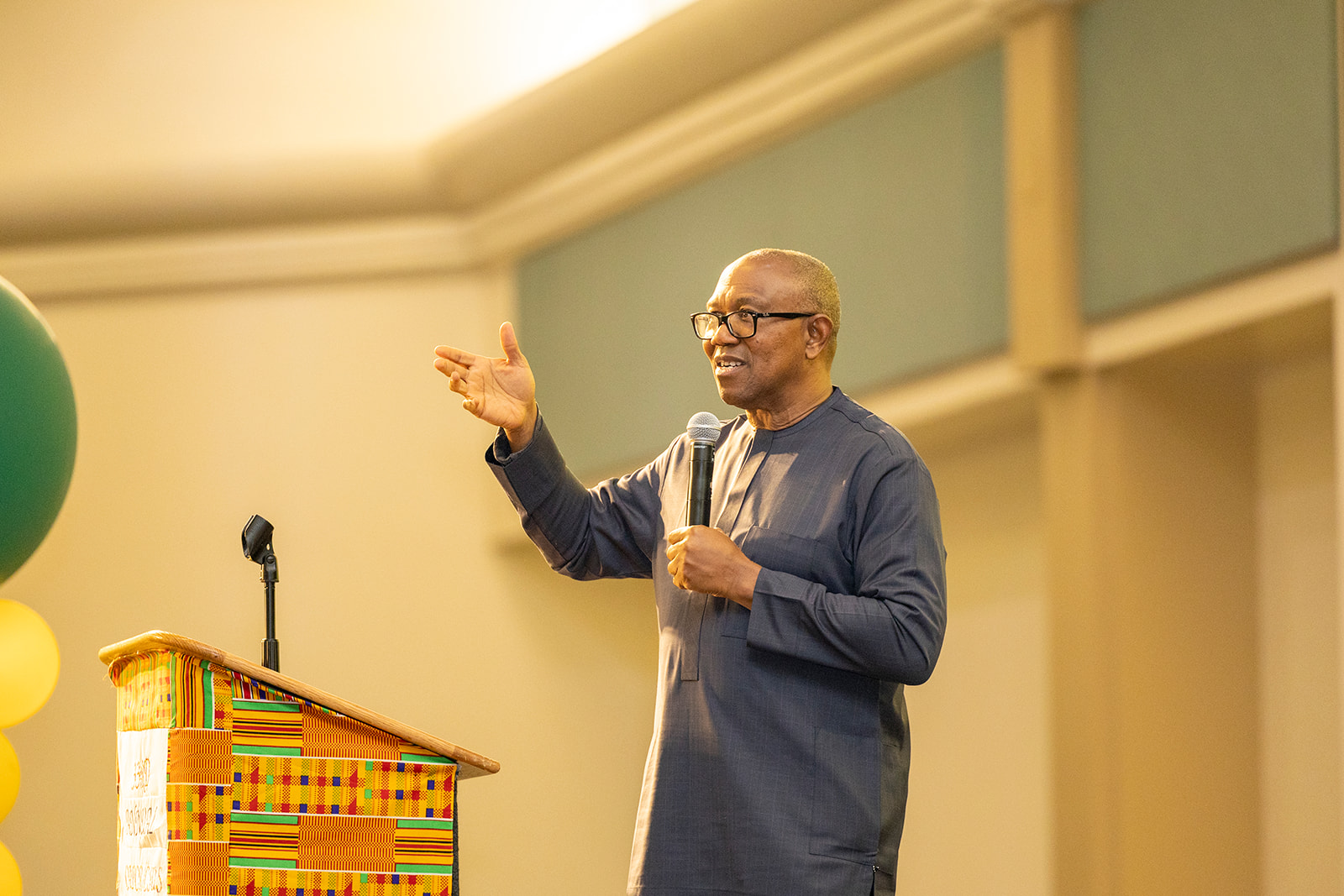

The Greek biographer Plutarch, in the preamble to his “Life of Alexander”, observed: “I am writing biography, not history; and the most brilliant exploits do not always manifest a man’s virtue or vice so well as a slight thing, a word or a jest, which often tells us more of his character than a siege where ten thousand die.” He understood that greatness is often revealed not by monumental achievements but by seemingly insignificant habits and moments. Thus, in seeking to understand Alexander, he did not begin with his conquests but with the youthful prince taming the wild horse Bucephalus after discerning that the animal feared only its own shadow. It was a small incident that revealed an extraordinary mind.
The same approach is useful in understanding Mr. Peter Obi as he marks his sixty-fifth birthday. As I set out on this task, which I have rather rashly laid upon myself, I keep asking: Can this feeble brain that aches at a little calculus ever hope to comprehend the complex immensity of life that defines Obi? Much has been written about his public achievements, political journey, and philosophy of leadership. Yet the man is perhaps better understood, as Plutarch suggests, through his odd quirks – those quiet habits, amusing peculiarities, and seemingly trivial actions that illuminate his character far more vividly than speeches or public office. It is these little things, often overlooked, that reveal the principles by which he lives and the philosophy that has shaped both the man and the leader.
Those who know Obi only as the austere public figure of today may be surprised to learn that, as a young man, he embraced life with enthusiasm. He was reputed among his contemporaries to be one of the finest dancers at parties and clubs, and, like many of his peers, he also discovered the charms of women. Yet, even in those carefree years, one thing consistently took precedence over sentiment: business. The instinct to identify opportunities and seize them was already deeply ingrained. He began trading while still in primary school and has pursued it almost continuously ever since.
One story from those years illustrates this remarkably well. Obi was driving some friends, including his then-girlfriend, in his newly acquired Peugeot 505 when a group of admirers stopped to inspect the car and eventually asked whether it was for sale. Realising that the proceeds could finance a business venture he had been contemplating, Obi sold the car there and then. His astonished companions completed their journey by public transport, while Obi, within forty-eight hours, was on a flight to London to pursue the opportunity. When the venture succeeded, he simply bought himself a brand-new BMW. To him, an asset existed not to impress onlookers but to create greater value.
There is another memorable motoring episode. On one occasion, while attending the wedding of his cousin, Obi Uko, Obi was standing by the roadside trying to flag down a taxi to the wedding venue. As the convoy of the newlyweds passed by, it stopped out of respect to offer him a ride. Noticing that the vehicles were already full, he politely asked them to continue, assuring them that he would join them later. One of the young women in the convoy remarked that he looked like a poor man who probably did not appreciate their kind gesture. She was astonished when she later discovered that all three cars in the convoy actually belonged to him.
Feeling embarrassed by her earlier remark, the young lady later visited his hotel room, ostensibly to apologise for her indiscretion, though her real intention was to get to know him better – to woo him. Recalling the encounter years afterwards, Obi joked that her admiring gaze, the brandishing of deadly ogle, was enough “to melt even an unloving heart.” They subsequently became friends.
His long-time friend, Mr. Benji Uba, recalls another revealing episode from the 1980s when both of them travelled to London on business. They stayed with a family friend who would often give them money to run errands and ask them to keep the change as young men struggling to find their feet and yet to afford the luxury of staying in hotels. Then came the surprise. Very soon, in 1987, Obi stunned everyone by purchasing his first house in London outright, without a mortgage. Around the same period, he also began investing in both the London and Nigerian stock markets, laying financial foundations that politics neither created nor enlarged.
This deeply ingrained discipline persists today, often to the bewilderment of those who travel with him. To journey with Obi is to undergo an education in prudence. If a flight lands at nine in the morning and the hotel’s check-in time is noon, the typical dignitary simply pays the premium for early access. Not Obi. He quietly approaches the reception desk, presents his high-tier membership card and politely requests an early check-in which some of the cards guaranteed him. More often than not, the request is granted. Turning to his aides, he explains that no one with a proper sense of economy should pay extra for just two or three hours. “Why should we pay for such a short time?” he asks. “We are not going anywhere until three pm. Sit comfortably in the lobby, answer your emails and phone calls. The hours are not worth the dollars.”
The same philosophy governs departure. Rather than allow everyone to pay for a late check-out, Obi negotiates for only one room to remain available until the afternoon. He then instructs his entourage to vacate their rooms at the stipulated time and move their luggage into that single room, where they all wait until it is time to leave for the airport. At first, one may wonder why a man of his means and standing would go to such lengths over what appears to be a small expense. Travel with him long enough, however, and the wisdom begins to dawn on you. What initially seems excessive gradually becomes a lesson in disciplined stewardship of resources.
His philosophy of the buffet table is no less revealing. Whenever he travels, he prefers to eat buffet. However, he chooses it only when he is genuinely hungry. His reasoning is characteristically practical: if he is going to pay for a buffet, he believes he should derive full value from it. Watching me return with my usual modest plate, he often shakes his head in humorous mock despair and says, “Val, I regret paying for your buffet. You eat as if you ordered from the normal menu. You have ignored the juices, the pastries, the fruits and everything else. That is not the spirit of a buffet!”
I only hope Obi does not read this next revelation. He may never forgive me for exposing one of his best-kept travel habits. He knows, perhaps better than most frequent travellers, that hotels do not stock their minibars as an act of hospitality. Those attractive assortments of drinks and snacks are usually sold at prices many times magnified. Rather than patronise them, he would much rather buy whatever he needs from a supermarket or nearby shop. He invariably warns those travelling with him not to touch the hotel’s minibar unless they are prepared to pay the premium.
I learnt this lesson the hard way during my first trip to Italy with him in 2007. Out of curiosity, I opened the minibar, took out several drinks to examine them, and carefully returned them, unaware that in many hotels simply removing an item automatically registers it against the room bill. At checkout, those drinks appeared on my bill. Obi immediately refused to let the charge pass without question. He insisted that if I had consumed the drinks, I should pay for them from my own pocket. Fortunately, it was eventually confirmed that the drinks had been returned untouched, and the charges were reversed. Curiously, Obi seemed even more relieved than I was. I still remember Fr. Cosmas Ebebe, who was then studying in Rome, visiting us at the hotel and jokingly asking Mrs. Margaret Peter-Obi, “How have you managed Peter’s strange ideas?” I laughed because Fr. Cosmas himself may not realise that he, too, is full of even stranger ideas – a convergence of greatness!
Behind such amusing episodes lies a remarkably consistent philosophy of consumption. Peter Obi is neither a miser nor a spendthrift. Once he concludes that an expenditure is justified, he believes it should be fully utilised. What he cannot abide is paying unnecessarily for convenience or wasting resources that could be put to better use. In his moral economy, waste is almost an offence against prudence. Resources, however abundant, are meant to be managed responsibly rather than consumed carelessly.
Another episode, which occurred on 6 July 2018 in Awka, illustrates this trait even more vividly. Obi had just arrived through Enugu Airport and asked me to buy bananas before joining him in Awka. Knowing that Agulu is renowned for selling some of the finest bananas in the country, I contemplated driving there to buy them before returning to Awka. When I casually mentioned my plan to him, he immediately stopped me.
When I eventually joined him, he spent the better part of thirty minutes lecturing me on the economics of the needless journey I had contemplated. How much fuel would be consumed driving from Awka to Agulu and back? How much time would be wasted? What exactly justified such an expense? “Why would anyone drive from Awka to Agulu because of bananas?” he asked. “Unless a doctor says that only Agulu bananas can save life, such a journey is sheer wastefulness.”
Then, in his characteristic style, he made the point even more practical. “Have you not noticed that I buy Agulu bananas only when I am passing through Agulu? If I am in Onitsha, I eat Onitsha bananas. Val, even if the President was coming and insisted on eating something close to bananas, go to the supermarket and buy “kpekele” (fried plantain) for him. You do not burn fuel and time chasing bananas.”It was vintage Obi. What began as a simple request for fruit became an enduring lesson on opportunity cost, prudent spending and the avoidance of needless waste.
When he ascended to the governorship of Anambra State, this private philosophy of economy naturally became public policy. He famously startled the political class by declaring that Government House was “not a restaurant.” At a time when Government Houses had become synonymous with endless banquets, the daily slaughtering of cows and extravagant entertainment, official residences dined like Lucullus. Readers may still remember the story of Lucius Licinius Lucullus, which I recounted in a “ThisDay” newspaper article I wrote in 2004 entitled, “My Colleague, My Friend and Our Profession.”
“Lucius Lucullus was noted for his dinners, which were culinary events of the Roman year. Cicero once sought to discover how Lucullus ate when alone. He asked Lucullus to invite him and a few friends to dinner that evening, with the condition that he should not send any warning to his servants. Lucullus agreed, merely stipulating that he be allowed to notify his servants that he would dine in the ‘Apollo Room’. When Cicero and the others arrived, they found a lavish banquet awaiting them. Lucullus had several dining rooms in his city palace, each designated according to the splendour of the feast to be served. The Apollo Room was reserved for meals costing the equivalent of over ₦300,000.”That was in 2004. Today, such a banquet would undoubtedly cost several millions of naira. By a strange odyssey that characterises philology, to dine “Lucullanly” has entered the lexicon of classics.
Obi was determined that Government House should cease to be a Nigerian version of Lucullus’ palace. He drastically reduced the number of habitual guests, insisting that public funds were meant for public service, not private hospitality. I recall hearing how some people joked that, during previous administrations, they freely drank some of the most expensive wines in Government House. Under Obi, they lamented, the finest they could hope for were “Four Cousins” and “Two Oceans.” The remark was made in jest, but it aptly captured the dramatic shift in attitude towards public expenditure.
The same philosophy informed his decision regarding government guest houses. Upon discovering that the state maintained about fifteen guest houses scattered across different parts of Anambra, he questioned the rationale for such an arrangement. What, exactly, were those guest houses maintained for? He eventually closed them, arguing that governors and other senior public officials should complete the day’s work and return to the warmth of their homes and families rather than maintain an expensive network of official residences. Government, in his view, exists to serve the people, not to provide unnecessary comforts for those in public office. This is why he remains one of the few governors whose tenure was not marked by scandals involving gallantry, intrigues, or liaisons. Every avoidable expenditure, he believed, represented resources that could instead have been invested in schools, hospitals, and other pressing needs of the people. The could be connected with his attitude towards birthdays.
Peter Obi’s attitude towards birthdays has always reflected his philosophy that life should be measured not by the years one has lived, but by the value one has added to society. Unlike many public figures who mark birthdays with lavish celebrations, he has consistently preferred quiet reflection and service. During his tenure as Governor of Anambra State, numerous institutions, associations and groups sought to celebrate his birthdays with receptions and ceremonies. More often than not, he politely declined, urging them instead to channel the funds into projects that would benefit the public.
As a result, many schools built libraries, equipped science laboratories, purchased computers, renovated classrooms and provided scholarships, while health institutions acquired medical equipment and improved their facilities. In Obi’s view, a birthday should leave behind a legacy rather than memories of a feast. To him, the greatest birthday gift is not praise or presents, but the knowledge that another year of life has inspired investments that improve education, strengthen healthcare and positively transform the lives of others.
He does not dress to impress anyone. His guiding principle is simple: let the clothes fit well and always be neat. He has little interest in fashion trends or designer labels. Indeed, he can sew five outfits in exactly the same senator style without the slightest concern that they all look alike. For him, clothing is meant to serve a purpose—to provide decency, comfort, and dignity—not to advertise wealth or social status.
What is the true value of a wristwatch? What is the real worth of a pair of shoes? These are the questions Peter Obi quietly compels those around him to ask. To him, the value of such possessions lies not in the prestige of the brand or the price paid for them, but in the purpose they serve. Once a wristwatch tells time accurately or a pair of shoes provides comfort and durability, their essential function has been fulfilled. That philosophy explains why, for years, he has been content with owning just one wristwatch and only two pairs of shoes at any given time.
Material possessions are, in his view, transient; they neither define character nor leave an enduring legacy. Unfortunately, many shallow-minded observers continue to debate the simplicity of his lifestyle without grasping the deeper philosophy behind it. They see only the watch and the shoes, missing the principle that resources are better invested in educating children, equipping hospitals, creating opportunities, and improving lives than in accumulating possessions that are ultimately fleeting and serve no lasting purpose beyond momentary gratification.
His simplicity in travel became almost legendary among the political elite accustomed to the privileges of office. He travelled light, often carrying his own bags, and for a man of considerable private means, many found it curious that he would frequently choose economy class, even when his wife was seated in business class on the same aircraft. Whenever questioned about this, he would laugh and ask his critics to calculate the difference in cost for a journey lasting barely forty minutes. After hearing the amount, he would pose a simple question: what meaningful comfort could justify such a premium for such a brief period? His conclusion was always the same – the savings were better directed towards something more enduring, such as supporting a school, a hospital or a person in need.
The attitude of many Nigerians who fly business class further illustrates the distinction Obi makes between utility and vanity. For some, the attraction lies not necessarily in the additional comfort but in the recognition that comes from being seen there. They often glance around the cabin, their eyes moving hither and thither, almost to ensure that economy-class passengers making their way to their seats notice them, because the privilege itself must be seen. Their satisfaction is sometimes derived less from the comfort of the seat than from the social message they think it conveys.
Obi’s approach is entirely different. He does not reject comfort; he rejects comfort pursued merely for display. To him, a seat on an aircraft is a means to an end, not a badge of importance. What matters is not where one sits on the plane, but what value is created after the plane lands. Yet this was never an obsession with discomfort or an exhibition of austerity. Obi understands the difference between necessity and vanity. On long and demanding intercontinental journeys, where proper rest is essential for effective engagements upon arrival, he has no hesitation travelling business or first class. For him, comfort has value when it serves a practical purpose; it becomes wasteful when it exists merely to satisfy status.
What makes this philosophy even more remarkable is that he did not impose on others the privileges he denied himself. His commissioners and senior officials were not permitted to fly business class on official assignments, regardless of the destination. His argument was straightforward: public office is a call to service, not an opportunity for personal comfort. If government could save on unnecessary privileges enjoyed by officials, those resources could be redirected towards education, healthcare and other areas that directly improve the lives of the people.
Obi is wisdom personified. His practical, ethical and political insights have made him, in many respects, the very definition of a sage. He represents a form of practical, worldly wisdom – one shaped not merely by books and theories but by experience, observation and a deep understanding of human behaviour. His influence on Nigerian political thought and governance rests on this triumph of reason. The same wisdom, and indeed the same economy of effort that governs his approach to resources, also defines his encounters with political adversaries. Where others respond with lengthy diatribes and emotional exchanges, Obi prefers the short, sharp rapier of wit. He does not expend energy where a carefully chosen sentence can achieve the desired effect.
When Professor Charles Soludo launched a lengthy academic critique against him, Obi brought the matter to a close with a single memorable observation. He noted that while he had done the work of a mere “trader” in Anambra, it was now left for Soludo to do the work of a “professor.” The people, he added, would ultimately be the final judges. It was a typically Obi response – brief, pointed and leaving the verdict where he believed it belonged.
When Engr. Dave Umahi, a man driven by an insatiable desire to appropriate credit and often unwilling to allow broader humanitarian considerations to temper his actions, repeatedly sought to draw him into public exchanges over road infrastructure, Obi again refused to engage in a prolonged argument. Having patriotically pointed out a road that required urgent attention, and with Umahi subsequently acting by fixing it, Obi considered the matter/debate concluded. Any further debate, he remarked, would require the participants to be “qualified” for it – a subtle yet devastating observation that, as far as Nigerians were concerned, effectively brought the exchange to an end. Umahi, however, has continued to revisit the issue, bringing to mind the Igbo proverb: “Na ofeke amaghi mgbe ekeru nku ukwa” – the foolish person does not know when enough has been said.
Whether dealing with the combative rhetoric of Nyesom Wike, whose pertinacity in clinging to youthful romanticism baffles; or the persistent and puerile criticisms of Reno Omokri, the fountainhead of sycophancy; Bayo Onanuga, an instructive study in the senile aftermath of quality journalism; Kenneth Onuku Okonkwo, the double-mouthed hypocrite; Femi Fani-Kayode, the Agadi ekwe nka of the tribe, who, like Odysseus of old, can hardly speak without lying or act without treachery; or the recently added Dr. Joel Chukwudi Kpontus Okafor, the youthful Omasi-born sexual pervert of the “homosexual” category, Obi rarely raises his voice or allows himself to be drawn into endless battles. He delivers his responses almost in passing, but with remorseless logic, leaving his opponents to expend their energy against his calmness. His silence is not weakness; it is the quiet confidence of a man who understands that not every provocation deserves a war, and that sometimes the most powerful answer is the one delivered without noise.
While he argues for institutional efficiency and a more effective use of public resources, what he often encounters are attacks from those who seem unable to appreciate the deeper philosophy behind his approach. These “little demons without respect for holy water,” as one might humorously describe them, continue their assaults without pause. Yet, beneath the controversies lies a consistent principle: Obi’s preference is always for systems and institutions that have demonstrated the capacity to deliver results.
Nowhere is his aversion to waste more visible than in his preference for institutional efficiency. He often illustrates this with a characteristic comparison: if a sum of money is given directly to voluntary agencies to build a school or hospital, the project could already be at the roofing stage, while the same amount passing through government machinery might still be trapped at the foundation stage, with officials debating variations, procedures and, sometimes, the hidden interests that slow down execution.
His closeness to faith-based institutions is therefore not merely a product of personal piety. It is also rooted in a practical, managerial calculation. He sees many of these institutions as effective channels through which resources can reach the people directly, bypassing some of the inefficiencies, delays and leakages often associated with state bureaucracy. For Obi, the central question is not who delivers the service, but who can deliver it most efficiently, transparently and with the greatest benefit to the people.
To Obi, wealth is never a trophy to be displayed but a tool to be utilised. He has little patience for the ostentatious exhibitions of affluence that have come to define success in modern society. He does not measure prosperity by the size of a man’s garage, the number of houses he owns or the brands he displays, but by the number of lives lifted from hardship and the positive difference his resources create in the world. This philosophy naturally leads to what may be called the final expression of his simplicity.
On one occasion, we attended a funeral ceremony where more than thirty bishops were present. As often happens in our society, such gatherings can become occasions for displaying influence, social standing and the number of important people one commands. To many, the grandeur of one’s funeral becomes a final statement of one’s importance. Obi has always viewed such matters differently. During that occasion, he quietly confided in me that when his own earthly pilgrimage comes to an end, he would be perfectly content if only his parish priest officiated at his burial Mass. Indeed, if necessary, he would make his wishes known clearly beforehand.
To a society accustomed to elaborate funerals, endless tributes and posthumous displays of grandeur, such a request may appear almost unimaginable. Yet it is entirely consistent with the man. Just as he has repeatedly rejected unnecessary display in life, he intends to reject it even in death.
For Peter Obi, whether in the management of a state, the choice of a hotel room, the utilisation of public resources, or the final transition of the soul, the philosophy remains the same: reduce waste, maximise value, and allow one’s life to speak for itself. It is a philosophy rooted in discipline and the quiet satisfaction of doing what is right. This is why he has been able to achieve a tranquillity born of self-control – a serenity that neither praise inflates nor criticism diminishes.
History may record the great campaigns, electoral contests, and public achievements, the president he will soon become, but, as Plutarch understood, it is often in the quiet habits, the seemingly insignificant decisions, and the stubborn peculiarities that the true measure of a person is revealed. Long after the noise of politics has faded and the passions of the moment have subsided, it is these small, consistent acts that endure as the clearest testimony to character. They reveal the invisible principles by which a person lives and the moral compass that guides his choices when no audience is watching.
If future generations seek to understand Peter Obi, they will certainly study his speeches, policies, and public service. They may consult preserved written and spoken words of the likes of Prof. Chinyere Stella Okunna, Prof. Patrick Obi, Prof. Okey Ikechukwu, Barr. Joe-martins Uzodike and this humble writer and get their perspectives. Yet they may learn even more from his odd quirks, for it is through these seemingly insignificant habits that he demonstrates the importance of choosing simplicity over extravagance, prudence over waste, and virtues over vices. In the end, a life is measured not merely by the offices it occupies or the honours it accumulates, but by the values it embodies and the example it leaves behind. That, perhaps, is the enduring lesson of Peter Obi at sixty-five.



-

 News1 week ago
BREAKING: Mystery death! *Female student dies a day after arriving Umahi’s home!
-

 News1 week ago
Don’t jump to conclusion! *Umahi speaks on mysterious death of female students!
-

 News4 weeks ago
BREAKING: Court sentences Nigerien, two others to death over terrorism
-
 News3 weeks ago
BREAKING: EX-SSG mowed down by gunmen! *He resisted being kidnapped – driver
-
 News6 days ago
BREAKING: Terrorists strikes another school! *Kidnap principal, students, NECO official!
-

 News4 weeks ago
Abductors of Oyo teachers panicking, freedom coming for victims soon!
-
 News4 weeks ago
Chicagogate: Nigerians return to court! *Move to stop Tinubu from 2027 polls
-
 News4 weeks ago
Obi to Tinubu: You’ve done enough harm, resign now! *President worse than Starmer