

News
BREAKING: Tinubu talks tough on protest! *Those with political agenda won’t destroy Nigeria


After days of entreaties from prominent Nigerians, President Bola Tinubu, finally spoke to the nation on Sunday, over the 10-day nationwide protest, called by some interest groups to complain about the massive hunger in the land, brought about by the parlous state of the economy, which commenced on Thursday, and has been sustained in many parts of the country.
But, it was a tough-talking President, who adopted what seemed a carrot and stick approach, on the one hand, all but declaring the protest as politically motivated and on the other, calling for the leaders of the action, to shield their swords in place of dialogue, on the same day, it was reported that the incident has claimed scores of lives.

Hear him: “Notably among the protesters were young Nigerians who desired a better and more progressive country where their dreams, hopes, and personal aspirations would be fulfilled. I am especially pained by the loss of lives in Borno, Jigawa, Kano, Kaduna and other states, the destruction of public facilities in some states, and the wanton looting of supermarkets and shops, contrary to the promise of protest organisers that the protest would be peaceful across the country. The destruction of properties sets us back as a nation, as scarce resources will be again used to restore them.
“ I commiserate with the families and relations of those who have died in the protests. We must stop further bloodshed, violence and destruction. As President of this country, I must ensure public order. In line with my constitutional oath to protect the lives and property of every citizen, our government will not stand idly by and allow a few with a clear political agenda to tear this nation apart.
“ Under the circumstances, I hereby enjoin protesters and the organisers to suspend any further protest and create room for dialogue, which I have always acceded to at the slightest opportunity. Nigeria requires all hands on deck and needs us all – regardless of age, party, tribe, religion or other divides, to work together in reshaping our destiny as a nation.”
It was also on a day the President, spoke on the issue of ethnic-baiting in parts of the country, which has led to rising tension, saying his government had no place for such divisive tendencies, adding that those promoting the dangerous programme, must be ready to face the full weight of the law, as security agents had been put on notice to go after them.
The President, who did not mention names, spoke against the backdrop of calls by prominent Nigerians, including former Vice President, Atiku Abubakar and former Governor of Anambra State, Peter Obi, for him to arrest and prosecute a group of Igbo-must-go campaign, being promoted by some Yoruba elements, demanding the complete evacuation of Igbo indigenes from Lagos.
His words: “To those who have taken undue advantage of this situation to threaten any section of this country, be warned: The law will catch up with you. There is no place for ethnic bigotry or such threats in the Nigeria we seek to build. Our democracy progresses when the constitutional rights of every Nigerian are respected and protected.
“Our law enforcement agencies should continue to ensure the full protection of lives and properties of innocent citizens in a responsible manner. My vision for our country is one of a just and prosperous nation where each person may enjoy the peace, freedom, and meaningful livelihood that only democratic good governance can provide – one that is open, transparent and accountable to the Nigerian people.”






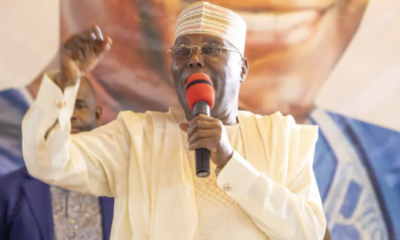


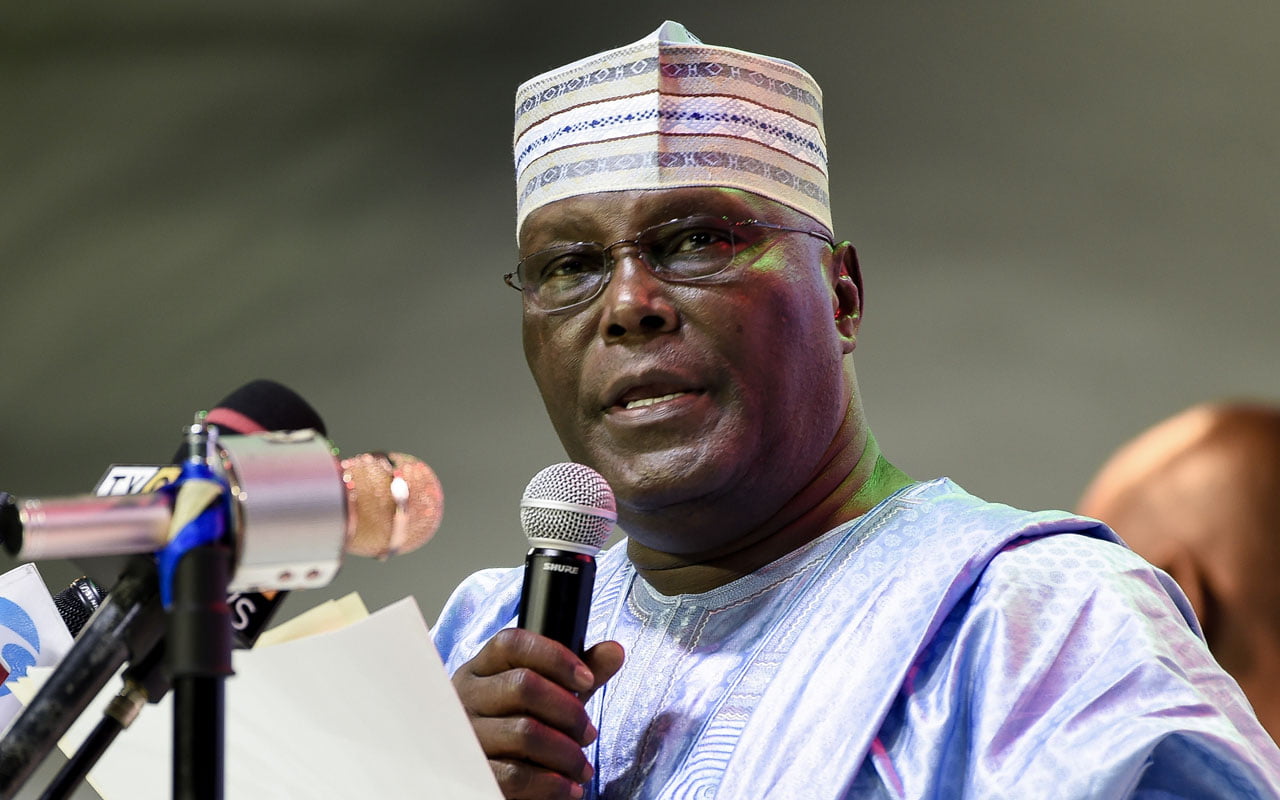
Atiku Abubakar seventh attempt at the presidency has been halted by the Court of Appeal in Abuja, which held that David Mark is not the fit and proper person to assume the position of the National Chairman of the African Democratic Congress (ADC) – the camp that produced the former Vice President as candidate of the party.
Hours after the former VP, who had attempted the bid for the nation’s number one job and is on the seventh edition by virtue of his nomination for the 2027 presidential election by the Mark, agreed with the position of the Federal High Court, Abuja, restraining the Independent National Electoral Commission (INEC) from recognising or participating in any state congresses organised by the former Senate President.
Justice Okon Abang, while reading the lead-judgement in the three-to-one split, said there was no reason for the appellate court to set aside the April 29 order by the lower court, adding that Justice Joyce Abdulmalik, who barred Mark and his executives from interfering with the tenure and functions of the party’s elected state executives, was in order.
Agreeing that the responsibility for conducting state congresses of political parties rested with elected state executive committees and not with the national leadership, he ordered INEC not to recognise the executive produced as a result of the defective process.
Though his position was echoed by Donatus Okorowo in the majority, Justice Abba Mohammed, who disagreed sharply, with a dissenting judgment, held that the case that precipitated the restraining order bordered on a non-justiciable internal affair of a political party, adding that lower court was wrong to have assumed jurisdiction to entertain the matter.

By Ken Harries Esq
Some speeches disappear with the applause that greets them. Others acquire greater force with the passing of time. Their words do not change; history simply grows into them. Years later, they resonate with fresh power, not because they have been rewritten, but because the nation has finally arrived at the realities they foresaw.
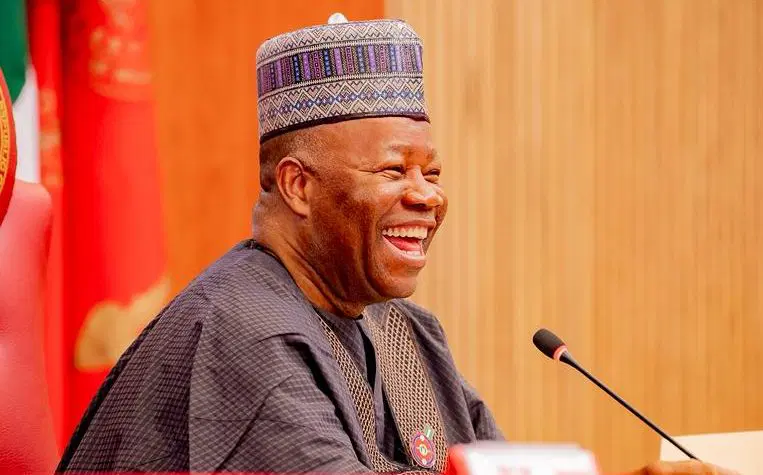
One such speech was delivered in April 2012 at the 2nd South South Economic Summit in Asaba. There, Senator Godswill Akpabio, then Governor of Akwa Ibom State, presented what many regarded as an ambitious vision for maritime corridor and blue economy development.
Speaking before political leaders, investors, and development stakeholders at the 2nd South South Economic Summit in Asaba, Akpabio outlined what many regarded as an ambitious vision for a model state in particular and regional development in general. Long before the Ibom Deep Seaport became a national priority, he argued that Nigeria needed new maritime gateways, integrated industrial clusters, aviation maintenance facilities, and modern logistics infrastructure to unlock economic growth. His vision was not simply about building a port; it was about creating an economic ecosystem capable of transforming a region and strengthening the nation’s competitiveness.
Fourteen years later, those remarks read less like political advocacy and more like an economic blueprint whose underlying logic has steadily been vindicated by events and times. Looking back today, his address appears almost prophetic—not because it predicted the future in mystical terms, but because Nigeria has gradually grown into the ideas it contained.
Truly visionary speeches never fade; they gather strength with time. This one deserves renewed attention, not because every prediction has materialised exactly as envisioned, but because it reveals a quality increasingly scarce in public leadership: the ability to think beyond electoral cycles.
Nigeria has never lacked projects. What it has often lacked are leaders willing to imagine the infrastructure of tomorrow while grappling with the demands of today. Akpabio’s vision was shaped by precisely that instinct.
At a time when public discourse was largely focused on roads and recurrent expenditure, he spoke instead of logistics corridors, industrial ecosystems, aviation maintenance, manufacturing clusters, export processing zones, maritime and blue economy opportunities, and security reform—not as isolated initiatives, but as interconnected pillars of national competitiveness.
His vision for the then proposed Ibaka Deep Seaport, now known as the Ibom Deep Seaport, best illustrates this broader philosophy. Rather than presenting it as another state prestige project, he framed it as a strategic response to structural inefficiencies in Nigeria’s maritime sector and the wider economy. He argued that the Lagos ports were already burdened by severe congestion, with vessels waiting for extended periods to berth, driving up costs, disrupting supply chains, and delaying the delivery of critical imports, including pharmaceuticals.
His objective, however, was never to rival Lagos, but to complement it. The distinction is fundamental. No major trading nation concentrates all its strategic maritime infrastructure within a single corridor. Successful economies spread capacity, ease bottlenecks, and create multiple gateways through which commerce can flow efficiently. Nigeria has long recognised this principle in policy documents; Akpabio was among the few public leaders articulating it so clearly more than a decade ago.
Equally significant was his emphasis on geography. He reminded his audience that Ibaka possessed a naturally deep coastline requiring little or no dredging, with water depths of approximately fifteen to seventeen metres. According to his account, the location had been identified as suitable for a deep seaport as far back as 1963, yet decades passed without meaningful progress. His observation that “being a minority area, there was nobody to push it” reflected a broader concern that strategic national investments have too often been influenced by political considerations rather than economic merit.
Whether one agrees entirely with that assessment is, in many respects, secondary. The larger point is that Akpabio consistently argued that national infrastructure should be driven by economic logic, strategic necessity, and long-term national interest rather than sentiment or political convenience. More than a decade later, that remains a lesson Nigeria is still striving to learn.
Yet, to see the 2012 Asaba address merely as a speech about a deep seaport is to miss its larger significance. The Ibom Deep Seaport was never presented as an end in itself. It was conceived as the anchor of a much broader economic ecosystem—a platform around which industries, manufacturing, aviation, logistics, free trade, and investment could flourish.
Akpabio envisioned the acquisition of about 14,000 hectares of land to support a self-sustaining industrial city comprising fertiliser and ammonia plants, refining capacity, manufacturing facilities, and a Free Trade Zone. What development economists today describe as industrial clustering was already embedded in his thinking. The port was simply the gateway.
That broader vision deserves a discussion of its own. Today, Ibom Deep Seaport in that Asaba Speech has berthed.
•Ken Harries Esq is an Abuja-based Development Communication Strategist.
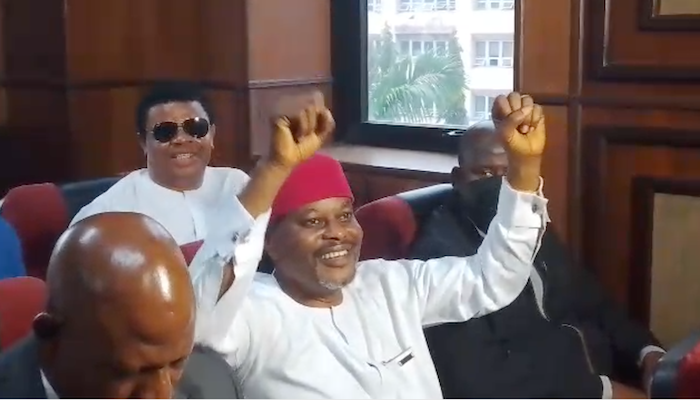
Justice Joyce Abdulmalik of the Federal High Court in Abuja, on Monday, granted allowed Uche Nnaji former Minister of Science and Technology, to go home, on the condition of a N20million bail bond.
Nnaji, who was arrested at Nnamdi Azikiwe International Airport (NAIA), Abuja on July 1 by officials of the Independent Corrupt Practices and other Offences Commission (ICPC), while returning to Abuja, was granted bail after pleading not guilty to a six-count certificate forgery charge.
The anti-corruption agency alleged that Nnaji, Minister of Science and Technology between August 16, 2023 and October 6, 2025, when he resigned office after a crisis regarding his university degree broke out is currently the governorship candidate of the Peoples Democratic Party (PDP) in Enugu for in the 2027 general election, squaring up against Peter Mba, the incumbent, who incidentally won his office in 2023 under the same PDP, before defecting to the ruling All Progressives Congress (APC).
He was accused of forging his academic credentials, especially a degree certificate from the University of Nigeria, Nsukka (UNN) alongside presenting a bogus National Youth Service Corps (NYSC) discharge certificate during his ministerial screening process in 2023.
At the proceedings on Monday, the former Minister pleaded not guilty to the charges, and following an application by James Onoja (SAN), his lawyer, was granted to bail in the sum of N20 million with one surety in the like sum, who must also be a civil servant resident in Abuja, not be below grade level 15.
The court, which ordered the surety to depose to an affidavit of means, mandated the former Minister to also surrender his international passport and not travel outside the country without permission, while fixing September 21 for the commencement of the trial.



-

 News2 days ago
BREAKING: Mystery death! *Female student dies a day after arriving Umahi’s home!
-
 News4 weeks ago
BREAKING: Troops rescue wife of kidnapped General! *Terrorists flee scene
-
 News4 weeks ago
BREAKING: Count me out, Okonkwo tells Atiku *Amaechi VP’s choice an insult to Ndigbo
-

 News3 weeks ago
BREAKING: Court sentences Nigerien, two others to death over terrorism
-

 News2 days ago
Don’t jump to conclusion! *Umahi speaks on mysterious death of female students!
-
 News1 week ago
BREAKING: EX-SSG mowed down by gunmen! *He resisted being kidnapped – driver
-

 News3 weeks ago
Abductors of Oyo teachers panicking, freedom coming for victims soon!
-
 News3 weeks ago
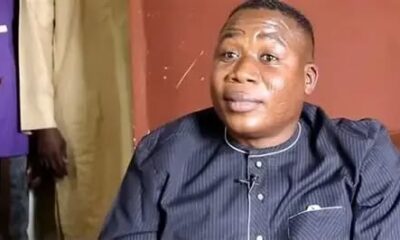
Two hours after Igboho’s ‘red-eyes’ to ‘Fulani’ leaders, gunmen free kidnap victims!