

News
Oborevwori: Navigating the path less traveled


By Felix Ofou
“No one has learned the meaning of life until he has surrendered his ego to the service of his fellow men” – Beran Wolfe

A lot of politicians are driven by ego. Some by King size egos and others by not too big egos. They are self centered and propelled mainly by what benefits them directly. Only very few politicians could be described as being selfless with eyes fixed on milestones and enduring legacies.
Rt Hon Sheriff Oborevwori, Governor of Delta State, clearly belongs to the category of leaders seeking to make their mark on the sands of time. He is not afraid to thread the path less traveled. We can safely posit that he is more concerned about delivering the dividends of democracy, not minding the cost or the price to achieve the purpose.
Since assumption of office a year ago, Governor Oborevwori has opted for a trajectory that ensures continuity in government by ensuring that projects inherited from past administrations are completed for commissioning, while at the same time, initiating new ones to complete the cycle.
This resolve to pursue continuity in government has evidently set the Delta Governor apart from some of his colleagues, past and present. Consequently, there are abundance of projects to show for Oborevwori’s one year in office. And Deltans are definitely happier for the armada of projects spread across the length and breath of the state.
Take the case of Lagos State, for example, where former Governor Akinwunmi Ambode simply abandoned projects initiated by his predecessor, Raji Fashola (SAN). Or the case of Governor Nyessom Wike, who turned a blind eye to projects of Rotimi Amaechi, his predecessor .
In both instances, the Governors and their predecessors belonged to the same political party and were sired by a common godfather: Ambode and Fashola by now President Bola Tinubu; Wike and Amaechi by former Governor Peter Odili. The same can be said of many other states where successors ignored projects of their predecessors. The outcome is the abandonment of a plethora of laudable projects that would have been of immense benefit to the people.
By contrast, Governor Oborevwori embraced and took on programmers and projects of his predecessors with unparalleled gusto. He saw government as a continuum and ensured that work did not stop in any of the sites inherited. This is apart from new projects initiated by his administration since assumption of office on May 29, 2023.
It is remarkable that Oborevwori has continued with projects started by former Governors, Chief James Onamefe Ibori (1999-2007), Dr Emmanuel Eweta Uduaghan (2007-2015 and Senator Ifeanyi Arthur Okowa who ruled from 2015 to 2023. We can say there has been no distinction or discrimination as far as projects initiated by these political gladiators are concerned.
At least 401 road projects were inherited by the Governor, who is the immediate past Speaker of the Delta State House of Assembly. He has within a year in office awarded contracts for new 311 roads, apart from embarking on several intangibles that have made the government extremely popular and acceptable to the people, especially at the grassroots.
Among the projects inherited is the Benekuu bridge and its adjoining spurs that is more than 98 percent completed. Then, there is the Ughelli – Asaba, a Federal Highway, for which Section C is nearly completed, and Section A in which massive work is ongoing, a development that is clearly unprecedented in our clime.
Today, motorists drive uninterrupted from Asaba to Ogwashi-uku, thereby reducing accidents on this corridor, which is the first phase of the Section A of the Asaba – Ughelli highway. This is thanks to the ingenuity and pragmatic leadership deployed by Oborevwori in handling this project that has lasted for more than 10 years.
It was Ogiame Atuwase III, the Olu of Warri, who recently heralded the great work being done by the Sheriff Oborevwori administration on the Trans Ode – Itsekiri road started 14 years ago. The elated royal father drove to ‘Big Warri’, as Ode Itsekiri is called, for the first time, a feat that was almost unthinkable a few years back.
The 27 km Trans Ode Itsekiri road is made up of 19 bridges with 15 already completed. Work on the remaining four is ongoing and it is hoped that this would be rounded up in no distant time. But history was made when the Olu of Warri drove to Big Warri, stopping only at Ajaja, where his car was transported via pontoon.
Also worthy of note is the completion of the headquarters of the judiciary in Asaba, the Emevor -Orogun road and Okpanam-Ibusa bypass and Isheagu bridge, with the accompanying road, Orere and Bedesegha bridge, among many others.
Notable projects initiated by Oborevwori include the N78 billion bridges and accompanying road expansion awarded to construction giant, Julius Berger Nigeria Plc, meant to transform the twin cities of Warri and Uvwie. It is on record that no Governor has engaged Julius Berger for any job. Oborevwori took everyone by surprise and got a bulls eye on that score. The same can be said of Umutu-Abraka-Eku old road which is almost completed. The Governor simply got tired of the Federal Government’s inertia on the Agbor-Abraka-Eku road and decided on providing an alternate routes for motorists to use.
Virtually every part of the state has been transferred into a huge construction site. Urban renewal and expansion are going on at a dizzying pace. Both the uplands and the creeks are affected in line with Oborevwori’s M.O.R.E agenda.
This treatise would however be incomplete if we fail to acknowledge the giant strides made to bring succour to pensioners in the local government system and civil servants previously owed pensions and gratuities as well as arrears of promotion allowances. The Governor promptly guaranteed a loan of N40 billion to clear the backlog for the pensioners and approved N5 billion for the affected civil servants. No worker promoted under Oborevwori’s watch is owed an allowance.
Similarly over 50,000 persons in the civil and public service benefitted from palliatives of N10,000 paid consecutively for three months. Over 2000 teaching and non teaching staff were absorbed into the local government system, while technical education and the health sector have been revamped to meet with expectations of the founding fathers of the state.
With the unveiling of Delta Cares Programme and the M.O.R.E Grant scheme in which thousands of traders, artisans and indigent persons were empowered, Governor Oborevwori further demonstrated empathy and concern for the welfare of the people.
Despite being the longest serving Speaker of the Delta State House of Assembly, and definitely, the only one to have transited from the legislature to the executive arm of government, Rt Hon Sheriff Oborevwori has maintained an uncommon humility, focus and determination to deliver the dividends of democracy to all, without fear or discrimination.
No doubt, this new Sheriff in town is not driven by ego, arrogance or sense of entitlement. Instead, he has consistently attributed his emergence as governor and successes in government to Providence and the Grace of God. Nothing more can be added to a man’s rise from relative obscurity to the number one citizen of oil rich Delta State.
No wonder Governor Oborevwori opted for continuity in governance, knowing that the unmerited favour of God brought him this far and would sustain him beyond the foreseeable future. He is not in contest with his predecessors; totally focused in fulfilling promises made to the people, which is to better their lot and enthrone enduring legacies for generations unborn.
“Ofou is Executive Assistant on New Media to Rt Hon Sheriff Oborevwori, Governor of Delta State.


For the first time in six years, Nigeria has recorded a crude oil and condensate production increase of an average of 1,735,398 barrels per day in June 2026, after posting consecutive four-month growth.
The Nigerian Upstream Petroleum Regulatory Commission (NUPRC), which made the announcement on Sunday, also indicated that the also met its production quota set by the Organisation of Petroleum Exporting Countries (OPEC).
Against the backdrop of scenarios, where oil theft and other shortcomings in the industry, which seemed peculiar had previously hampered crude production, which at a point dipped to as low as 700,000bpd, the agency through Eniola Akinkuotu, its spokesman, stated that in June, crude oil production hit 1.56mbpd while 0.18mbpd of condensates was produced, meaning the figure exceeded the OPEC quota of 1.5 mbpd by four per cent.
In strict crude oil terms (excluding condensates), the 1.56 million daily average production Nigeria witnessed in June is the highest that Africa’s biggest oil producer has recorded since April 2020, thus representing a 74-month high, the statement added.
Stressing the feat, the agency said in June, the peak combined crude oil and condensate production was 1.89mbpd, reflecting Nigeria’s potential to reach two million barrels per day in the near term, but however, the lowest production was 1.57mbpd for the period in review.
The NUPRC, while also stating that the improved performance was primarily driven by stable production operations across most producing assets, said the absence of any major pipeline outages during the period under review, resulting in enhanced operational stability supported improved production uptime and crude evacuation efficiency.
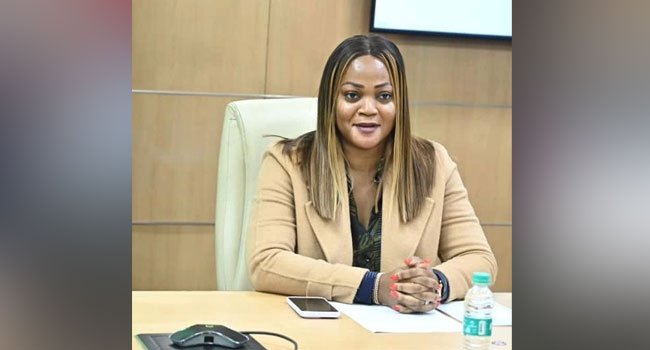
If a marching order by President Bola Tinubu, is achieved, every Nigerian would be captured in in the national identity database before the end of 2026, going by the signals coming from the National Identity Management Commission (NIMC).
Abisoye Coker-Odusote, Director General and Chief Executive Officer, who gave the out the information, said the President, the directive formed part of the Federal Government’s efforts to establish a comprehensive national identity system capable of supporting effective governance, planning, and service delivery.
A guest on Sunday Politics, a public affairs programme on Channels Television, the NIMC boss, told her host: “The President has given us till the end of this year to make sure that we capture every single Nigerian.
“What we have done is we have partnered through the World Bank ID4D project with front-end partners. They are part of the digital identity ecosystem. These are private citizens that we’ve enabled and given jobs to enrol citizens on our behalf.”
Stressing that the mandate of the agency, she explained that the National Identification Number (NIN) remained a unique identifier, ensuring that every individual is registered only once, stating that presently, Nigeria’s actual population remains uncertain, with estimates ranging from 200 million to 250 million, making a comprehensive identity database essential for national planning.
She said: “That’s why it’s called a unique identifier, so that you’re only enrolled once. It is estimated that we’re 200 million. When we’re done enrolling, we will then know the actual numbers that we have. Some estimates say 230 million, while a few people say 250 million.
“Your identity is basically the foundation for effective governance and service delivery. How can you plan if you don’t know the total number of persons that you have? We have been mandated by Mr President to go down to the community levels to enrol every single Nigerian.”
Dismissing the possibility of double registration under different guises, she said the NIMC boss said the commission’s biometric verification system prevents such occurrences, adding that while the previous system could accept duplicate enrolments before detecting them later, the current process automatically identified and invalidated multiple registrations.
“The legacy system had no way of verifying at the front end whether you had already been captured. Once the record comes into the system, it flags it as a duplicate or that the person already exists in the database.
“You would only have one identity generated for you. The other record goes into a deduplication bucket where it is invalidated. One of the things that this Act has done is to cement our role in capturing biometrics. Private and public sector organisations will no longer capture biometrics independently. They will validate identities through API integration with NIMC.
“The telcos are already doing that with us. If you need a SIM card, they capture your facial biometrics, which are matched against our database in real time to confirm that you are who you claim to be. We’re using biometric validation to tighten security around identity confirmation.”
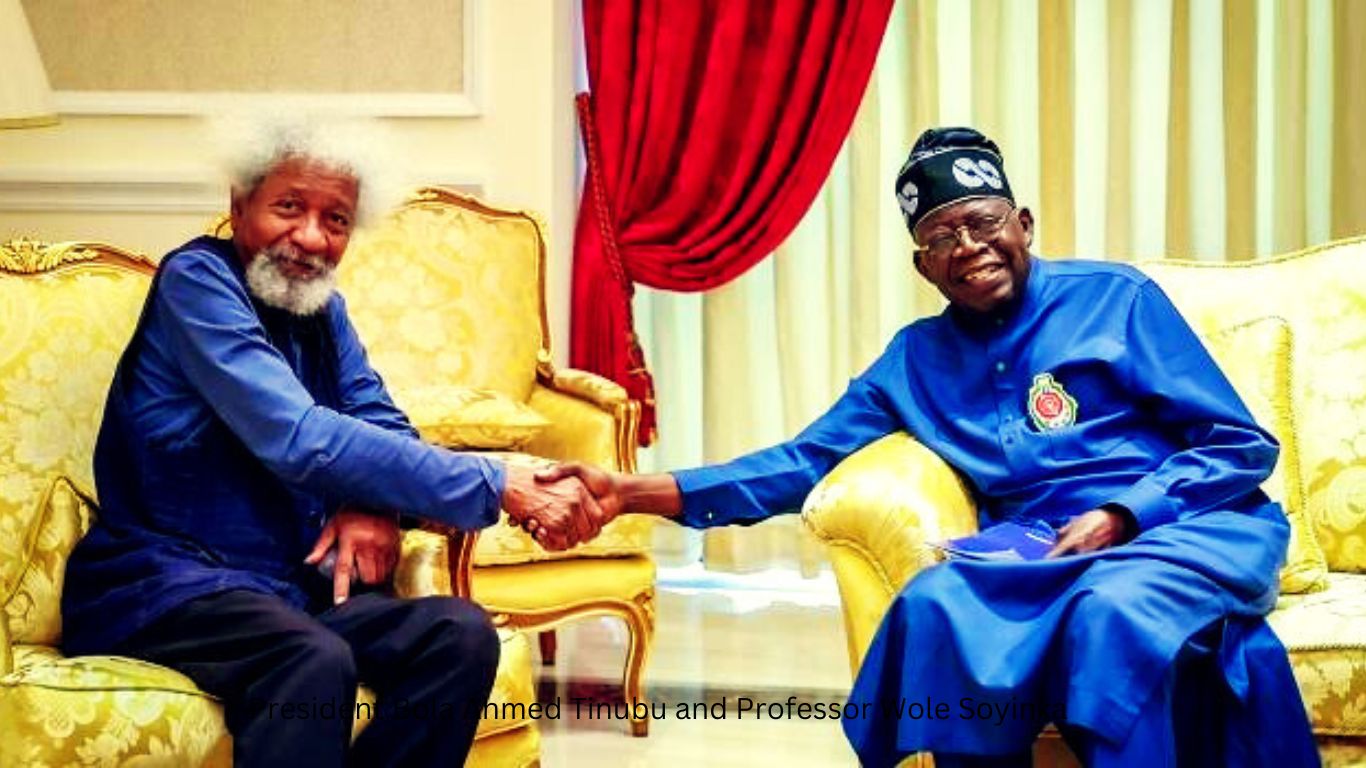
“Exceptional individuals like Professor Soyinka do not come often in a generation, men who illuminate the paths for humanity to follow across diverse endeavours, who are not afraid to go against convention, and who do not let the man die in the face of oppression and injustice.”
These were the words of President Bola Tinubu, with which he rolled out the red carpets at the Presidential Villa Abuja, to celebrate Wole Soyinka as “a gift we will always treasure” as the renowned playwright, author and activist turned 92 on Monday.
In the emotion-dripping tribute, conveyed through a the State House on Sunday, the President spoke of Soyinka’s contributions to literature, democracy and good governance, describing him as one of Nigeria’s most influential public figures.
Praising the nonagenarian for showcasing courage and commitment to justice, Tinubu said: “Today, I celebrate a global icon and our nation’s literary star, Professor Akinwande Oluwole Babatunde Soyinka, on his 92nd birthday, July 13.”
The President recalled Soyinka’s achievements, including becoming the first African to win the Nobel Prize in Literature in 1986, and also reflected on Soyinka’s role in Nigeria’s democratic struggle, reminiscing on Professor Soyinka’s “valiant struggle against military dictatorship for decades, and his efforts in the June 12 struggle, for which we were both in the trenches.”
Describing the literary icon as a national treasure, Tinubu said: “Today, I salute one of our nation’s living repositories of history, knowledge, and courage. That he is with us is a gift we will always treasure. I thank him for his undying faith in the Nigerian project and wise counsel.”
The President said he joined people around the world in celebrating Soyinka’s influence on generations of writers, scholars and activists, adding: “I wish ‘Kongi’ many more years in excellent health.”



-
 News2 days ago
BREAKING: Mystery death! *Female student dies a day after arriving Umahi’s home!
-
 News4 weeks ago
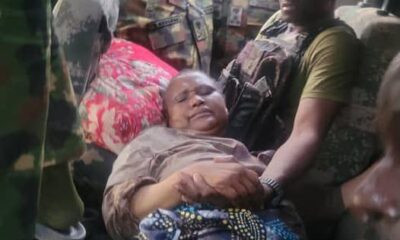
BREAKING: Troops rescue wife of kidnapped General! *Terrorists flee scene
-
 News4 weeks ago
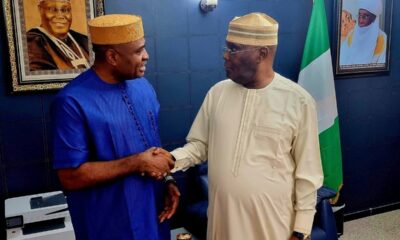
BREAKING: Count me out, Okonkwo tells Atiku *Amaechi VP’s choice an insult to Ndigbo
-
 News3 weeks ago
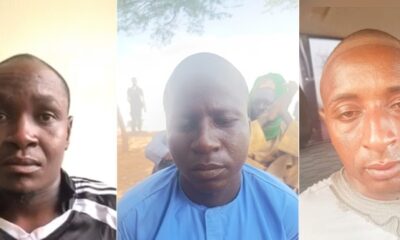
BREAKING: Court sentences Nigerien, two others to death over terrorism
-

 News2 days ago
Don’t jump to conclusion! *Umahi speaks on mysterious death of female students!
-
 News1 week ago
BREAKING: EX-SSG mowed down by gunmen! *He resisted being kidnapped – driver
-
 News3 weeks ago
Abductors of Oyo teachers panicking, freedom coming for victims soon!
-
 News3 weeks ago
Two hours after Igboho’s ‘red-eyes’ to ‘Fulani’ leaders, gunmen free kidnap victims!