

News
We don’t know about any removal order, Ganduje remains Chairman – APC

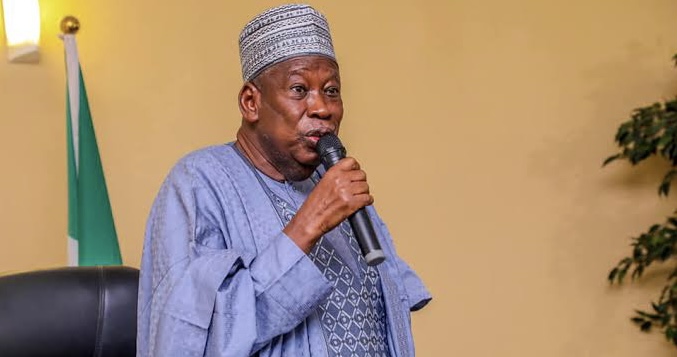
There is no valid order stripping Abdullahi Ganduje of his position of National Chairman of All Progressives Congress (APC), known to the party and therefore, he will continue his duties as prescribed, the National Working Committee (NWC), has insisted, debunking that he is no longer a member of the party by the orders of the courts.
Felix Morka, spokesman of the party, who made this declaration on Wednesday, on Arise Television, maintained that neither Ganduje himself nor the party, was served with the orders, said to have been obtained against the party boss by his ward in Kano State, where he served as a two-term governor between 2015 and 2023.


Insisting that Ganduje’s position remained intact, explained that the ruling party would disregard the said court order affirming Ganduje’s suspension as APC national chairman and only honour the recent Kano Federal High Court ruling ordering a stay of the order.
The declaration is coming on a day Justice AM Liman of the Federal High Court, Abuja overturned the said suspension of Ganduje by his ward executives in Dawakin Tofa Local Government area of Kano State.
The party boss, had obtained the ruling through another ex-parte motion in which he sought to enforce his fundamental right to a fair hearing, in a suit, in which he also joined the Nigerian Police Force (NPF), Department of State Services (DSS ), Nigeria Security and Civil Defence Corps (NSCDC) and nine other individuals.
Morka told his hosts: “The order issued by the first court was very disturbing, for some reasons. First, the plaintiffs who purportedly filed that action are not recognised members of our party and therefore shouldn’t have the locus standi to invoke the authority of the court to make any such order.
“Secondly, every lawyer in this country is aware that from the Supreme Court up to the NJC, there is this cautiousness that judges don’t make orders that are far-reaching in effect on an ex parte motion or application”









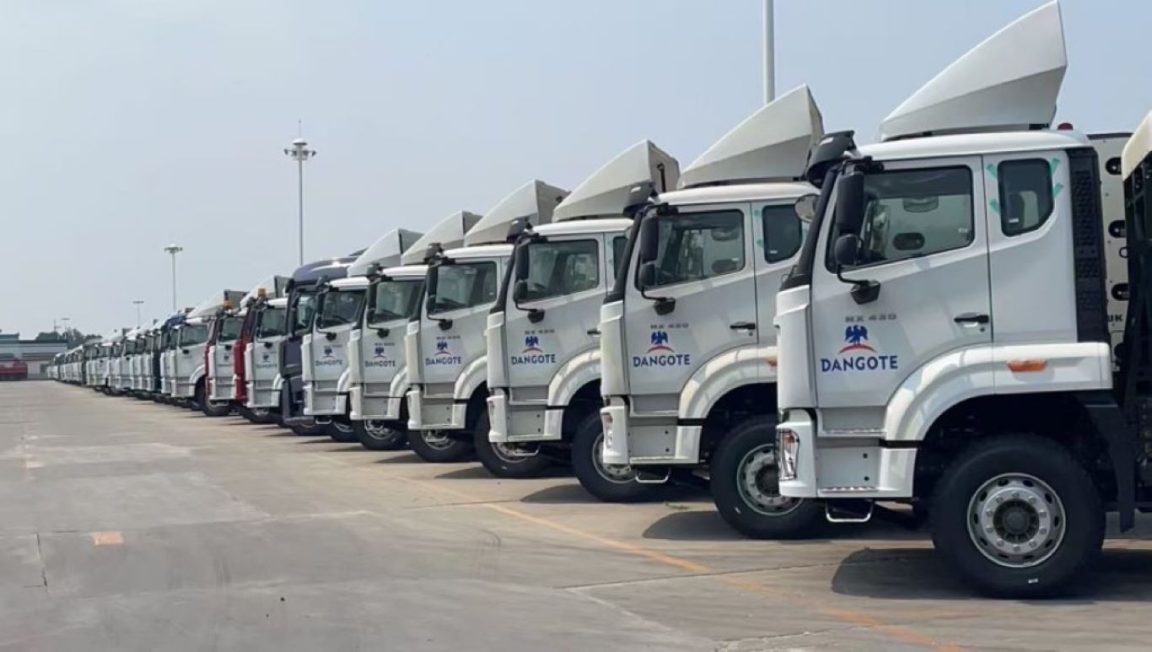
Anybody with credible information on the wrong use of its trucks will be richer by a whopping N500,000, going by signals coming from Dangote Industries Limited (DIL) – an initiative to encourage whistleblower to report sharp practices within its operations.
The company, which said the move is part of efforts to curb unauthorised haulage activities and protect the integrity of its nationwide logistics operations, encouraged the public to report any suspected cases of its trucks being used to transport unauthorised goods or passengers.
The conglomerate in a statement on Sunday, reiterating it consistent warning that only approved products were permitted to be conveyed by trucks belonging to its subsidiaries, maintained that Dangote Cement trucks are authorised to transport only cement, limestone, high-grade gypsum, coal and clinker, Dangote Sugar Refinery trucks, to sugar products while those of NASCON Allied Industries were designated for Dangote Salt and DanQ Seasoning products.
Part of the statement, read: “Dangote Packaging vehicles are to carry bags and packaging materials, Dangote Petroleum Refinery and Petrochemicals trucks are approved for polypropylene products, while Dangote Fertiliser Limited vehicles are authorised to transport urea fertilizer.
“Anyone with verifiable information that leads to the arrest of persons involved in illegal haulage activities or the recovery of unauthorized goods transported on Dangote trucks will receive a cash reward of Five Hundred Thousand Naira.”
In the programme, whistleblowers would be required to to provide details such as the truck type, registration plate number, cab number, location, description of the goods being transported, colour of the vehicle, and photographs where possible, to aid investigations through dedicated hotlines across its operations to receive reports of illegal haulage activities.
Stating that law enforcement agencies, including the police, have been authorised to arrest drivers found using Dangote trucks for unauthorised commercial haulage, the company reiterated its zero-tolerance stance against logistics-related fraud, saying the whistleblower programme is aimed at strengthening transparency, accountability and compliance across its logistics network.
It added: “Public cooperation remains critical in our efforts to eradicate illegal haulage activities. We encourage anyone with credible information to come forward and help us maintain the integrity of our transportation system.”

Except any miracle happens, it is becoming obvious that no member of the Kabiru Tanimu Turaki-led Peoples Democratic Party (PDP), will contest the 2027 general elections at any level, as the door has obviously been slammed on the face of the camp by the Independent National Electoral Commission (INEC).
This fact became evident with the opposite camp led by Nyesom Wike, Minister of the Federal Capital Territory (FCT), fully uploading the names of its own candidates in the commission’s nomination portal.
After ostensibly losing out in the bid to remain the National Chairman of the party, on the strength of the PDP convention held in Ibadan in November 2025, Turaki, had a lee-way when he was announced by the party’s Boad of Trustees (BoT), as the Chairman of a 13-man Caretaker Committee, inaugurated by Adolphus Wabara on May 4 this year.
INEC appears not swayed over the Wabara initiative, and has continued to deal with the Wike group, despite the argument that the verdict of the Supreme Court also decapitated the wings upon which it sought to fly by upholding the suspension of Sam Anyanwu, as National Secretary, and thus rendered the meeting he called that led to the opposite leadership, INEC, appears swayed.
Abdulrahman Mohammed, National Chairman, of the Wike camp, who announced the latest development in a statement on Sunday, said: “This is a clear demonstration of our commitment to the promise we made that, under my leadership, the PDP will fully participate in the 2027 General Elections. Today, we have taken another decisive step towards fulfilling that promise.
“As we await the conclusion of the upload of our Governorship and State Houses of Assembly candidates, I, on behalf of the National Working Committee of our Party, extend my heartfelt congratulations to all PDP members across Nigeria and around the world. Together, we will continue to build a stronger, more united Party and a better future for our nation.”
On May 26, the Wike-backed PDP named Sandy Onor, a former senator, as its presidential candidate.
On May 30, the opposition party faction led by Kabiru Turaki announced former President Goodluck Jonathan as its standard-bearer for the 2027 elections.
On July 10, Wike said it would be difficult for the PDP to win a presidential election unless it first resolved its lingering internal crises.
The minister added that political parties hoping to win the presidency must surmount their internal challenges and strengthen their grassroots structures.
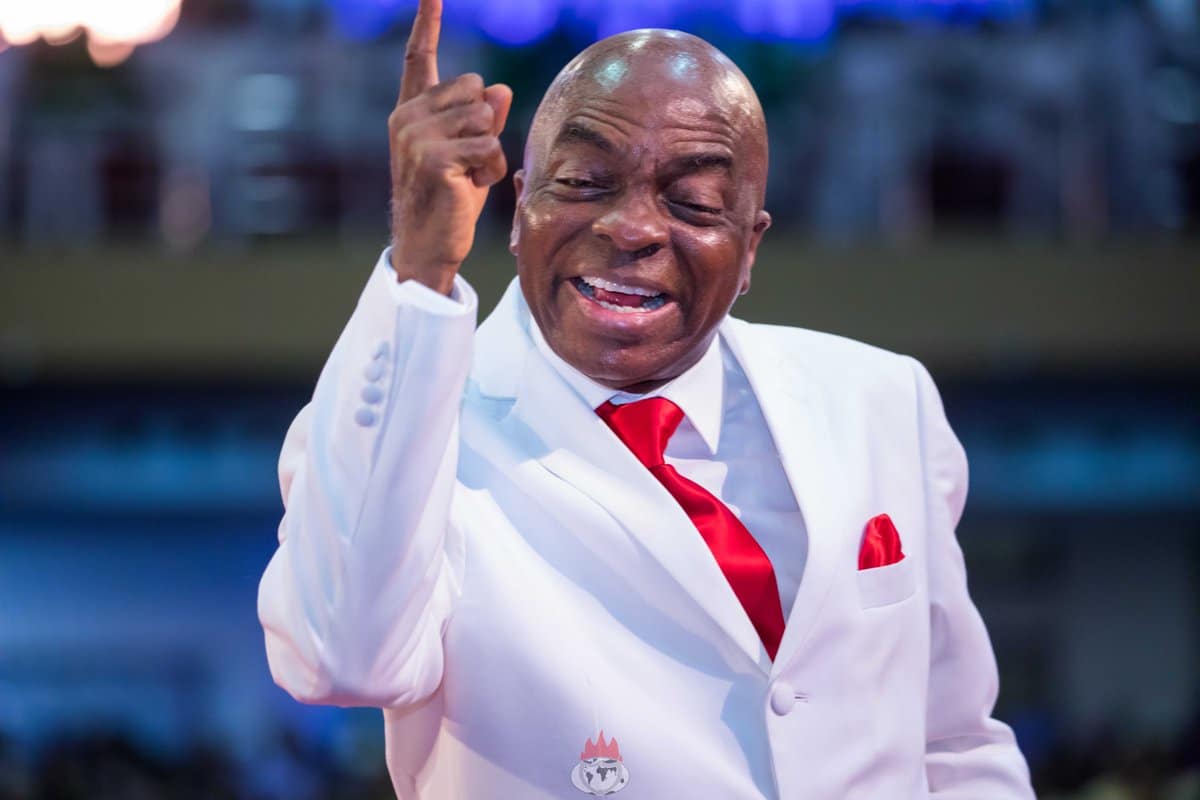
“We are not passers-by in our nations. We are bona fide citizens of the nation. We have a right to participate in who governs us,” were the exact words with which David Oyedepo, Presiding bishop of the Living Faith Church Worldwide, sought to rouse the consciousness of Nigerians to directly get involved in the affairs of the country.
Oyedepo, a known critic of President Bola Tinubu, directly asked members of the church to obtain their voter cards to do the needful, through active participation in the electoral process as responsible citizens.
On Sunday during the church’s service at the Faith Tabernacle in Ota, Ogun state, Oyedepo said Christians have a civic responsibility to participate in deciding who governs their countries, the fiery cleric admonished his flock: “We have a civic responsibility as responsible citizens of our various nations. This church is today in 144 nations.
“So, endeavour to secure your voter cards. You are men and women of the spirit. You should know on your own personal conviction where to cast your vote.
“You, as bona fide citizens of your respective countries should not remain indifferent to the electoral process. So, please go ahead. It’s part of our policy; you will find it in our mandate. So, go ahead and ensure that you secure your voter’s right. And this church, with the millions that we have, we have a say in it. So, be part of it.”



-

 News2 days ago
BREAKING: Mystery death! *Female student dies a day after arriving Umahi’s home!
-
 News4 weeks ago
BREAKING: Troops rescue wife of kidnapped General! *Terrorists flee scene
-

 News3 weeks ago
BREAKING: Court sentences Nigerien, two others to death over terrorism
-
 News4 weeks ago
BREAKING: Count me out, Okonkwo tells Atiku *Amaechi VP’s choice an insult to Ndigbo
-

 News2 days ago
Don’t jump to conclusion! *Umahi speaks on mysterious death of female students!
-
 News1 week ago
BREAKING: EX-SSG mowed down by gunmen! *He resisted being kidnapped – driver
-

 News3 weeks ago
Abductors of Oyo teachers panicking, freedom coming for victims soon!
-

 News3 weeks ago
Two hours after Igboho’s ‘red-eyes’ to ‘Fulani’ leaders, gunmen free kidnap victims!