

Opinion
Soludo: Two years on, how far with Anambra-Dubai-Taiwan?


By Sunny Igboanugo
From the first time he mentioned the concept in 2006 at the Anambra State Development Summit, hosted by the League of Anambra Professionals, through the gamut of his campaigns in 2009, the first time he stepped into the arena to contest for the governorship of the state, Chukwuma Charles Soludo, had always spoken about the Dubai-Taiwan-Silicon Valley model as his idea of development in Anambra State.

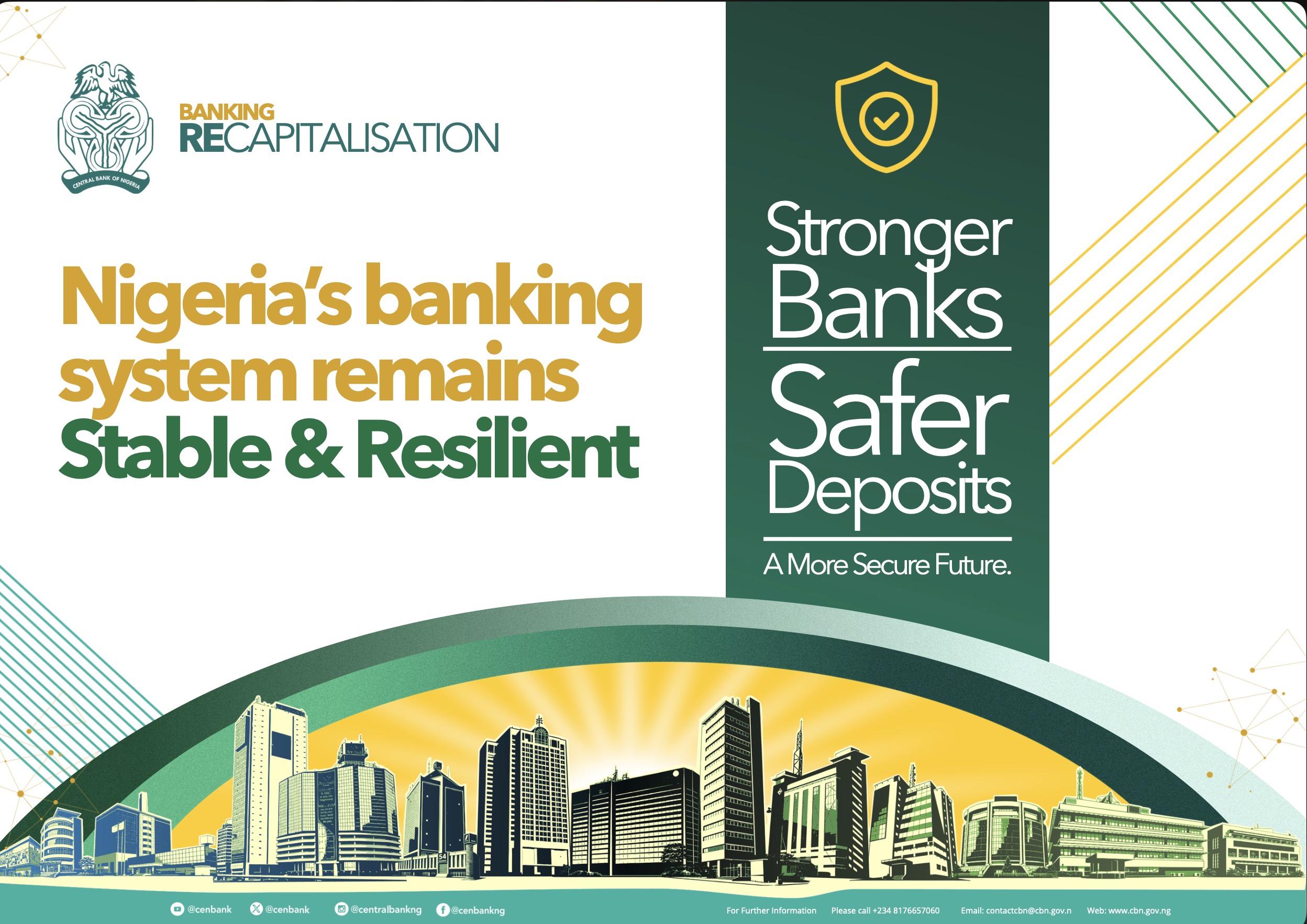
The ADT – Anambra-Dubai-Taiwan, the concept had remained a singsong even till 2021, when he campaigned, contested and won the election to the number one job in the state and the first citizen to boot.
Apparently latching on his alluring idea, Ohanaeze Ndigbo, the pan-Igbo socio-cultural organisation, upped the ante by raising a 100-member Planning and Strategy Committee for the economic development of the South East, which it handed over to Soludo to design and lead. This was in June 2017, about five clear years before he became governor.
Read by then President, Chief Nnia Nwodo, the apex decision-making body of Ndigbo, home and abroad, mandated the team to come up with the best strategy that would enable the South-east zone become self-reliant, to articulate and formulate sound strategic economic and political policies for Ndigbo, enable the Igbo body formulate integrative economic programmes for the respective states within the zone, including those outside core Igboland like Rivers and Delta States respectively.
Particularly, the team would articulate the framework for integrated railway network linking all the seven Ohanaeze states; an annual growth of one million palm trees in each of the states within the next five years; a corresponding growth of attractive processing industries for the palm produce but on high, medium and small scale levels and a policy for maximisation of the zones coal resources for power generation.
It was also to develop a geological inventory of all mineral resources and a carefully scripted plan for engaging the federal government in their exploitation; the development of a refinery for petroleum resources; a paradigm shift to greenhouses methodology for vegetable production using the Netherlands experience as a typology and a deliberate policy for development of ICT hubs in the states of the region to encourage human capital development.
Ohanaeze also charged the committee to look at an educational curriculum geared towards the development of skills amongst men and women in the region; recommendation of appropriate policies to states to improve the educational standards in their schools at all levels and growth of reliable financial institutions for mortgage, small scale business financing and research.
I had to bring this up today, for two major reasons – first, to remind Charlie Nwa Mgbafo, the name he says we should call him, of this very task and the implication thereof, to relay back to him the promises he made to Anambra people – but more importantly, to remind him of the son of whom he is, in the unlikely case he has forgotten.
From the foregoing, it is very clear Ndigbo do not think him just a journey man. No he is not what some people derisively derogate as anyhow person. Rather, the implication of centering and building the development of the entire Igboland around him, even far back before becoming governor, means he is the Star Boy of the South East.
But how are all these panning out right now? This is exactly the raison d’etre for this effort from this end – the reason I’m here doing this. Except that there is a secret firmament outside the South East, or even Anambra State that I know, or there is a magic wand or genie that would spring out of the magic lamp somewhere, capable of waving a hand and things start happening, there are no indication there will be any major transformation of the South East in the mould described above or an Anambra that will be the Taiwan-Dubai of Africa – certainly not the Taiwan or Dubai that I know – with breathtaking edifices or business hubs that translate to robust economic wellbeing of the people. Certainly not!
I was wondering if there was anything I missed in terms of this grand plan. Google came to my rescue to assure me that I didn’t miss much when I read a piece entitled Soludo’s African Dubai Taiwan vision fully on course. The piece was written by Chris Aburime, the governor’s spokesman. I quickly rushed through to see any tangible milestone achieved in this direction which I must have missed. Unfortunately, I found none. Rather everything was still at the promissory level.
Here’s what he wrote: “Since Prof. Soludo became Governor last year, cynics have wondered if the vision is no longer there. Of course, the vision is fully on course. Most times, rain doesn’t suddenly start falling without first gathering clouds. It is necessary to note that the implementation and realization of such a vision as ADT would involve various challenges, including infrastructure development, investment attraction, policy dynamics, resource allocation planning, and more.
“As naysayers ponder the feasibility of Governor Soludo’s ambitious quest, they must be reminded that the path to greatness is never linear. The governor’s far-reaching vision is not just an arbitrary dream, but a calculated and informed aspiration that holds within it the seeds of a prosperous Anambra. History is replete with instances of visionaries who faced initial skepticism, only to prove their critics wrong with resounding success. Anambra’s journey won’t be different.
“Now, what is really happening? How is the vision shaping up? Well, the right foundation is being laid, block by block. The enabling environment for African-Dubai Taiwan to emerge a reality is being quietly and steadfastly created. Governor Soludo’s multi-faceted approach, characterised by ongoing infrastructural investments and projects across various sectors, is a clear testament to the meticulous groundwork required for transformation on such a grand scale.” Poor Chris! He had to do his job!
I don’t want to doubt the existence of these foundations being laid “block by block,” lest I be grouped among the “naysayers.” But how really do I hear about them, or see them, assuming I’m too far in Lagos and Abuja? After all, our elders say you must see the droppings of the caterpillars – the lava eating green leaves – on the ground before looking up to the tree (a ga afu nshi igu n’ana were nebe anya ne’nu).
Those droppings of the caterpillars, I’m yet to hear about, let alone see. Or my fellow ndi-Anambra, have you seen? Help me. I don’t want to be a naysayer. Mind you, the piece by Chris was published on September 1, 2023, just a few months back. So, I’m not talking about 2022 to say one is expecting too much too soon. You mean by September 2023, you’re still doing the spadework for a project that ought to be completed in less than 24 months or at least supposed to get you to the stage, where you apply for a renewal with Anambra people to complete it? That’s the big worry.
The bigger worry is rather the unedifying and highly disturbing stories that have replaced what every Anambra indigene should be celebrating by now. Instead of news about big things – big events – what you hear daily is one squabble here and another altercation there – little events that ought not have a place in a trajectory associated with someone like Soludo. It is either Soludo is fighting with keke or okada riders or wrangling with one Igwe somewhere or talking about burial laws.
Yes! Nobody is saying that maintaining domestic laws or generating local revenues are not important, but they oughtn’t be the dominant narratives around such an economist of world renown? The other day it was a story of a bus driver escaping death by the skin of his teeth because some toughies unleashed on Anambra roads in the guise of revenue officers attacked and left him half-dead. You don’t want to hear the offence the said driver reportedly committed to be so brutalised and traumatised. Such silly narratives, being offered by an otherwise supposed urbane crowd, the world was told contained by high-octane professionals that scared many people from applying to be taken. It simply rankles!
A few days ago, it was the same Soludo, this time suspending two traditional rulers for giving chieftaincy titles to Ifeanyi Uba, a politician and likely rival in next year’s governorship election and another of getting himself entangled with religious leaders over burial issues in the state. Haba! Does it mean he doesn’t know his classmates? Does it have to take Archbishop Val Okafor to remind him about the big things he should be focusing on?
How he didn’t realise that such a gambit of the title palavar, was to draw him to a battle in the mud, surprises me? Being seized of the Anambra political crowd myself, I know that this was what got the late Chinwoke Mbadinuju to where he was as governor of Anambra State, because instead of doing the needful by doing project, he decided to engage some loafers in the state who were prepared to drag anyone into the gutters where they dwelled.
The only thing the former governor succeeded in doing was throwing Anambra money to the waiting hands of some hounds at Wadata Plaza, home of the PDP and the remaining to others found inside the Presidential Villa, all which amounted to nothing. Instead of any meaningful gains, he went down with sorrow and tears – with the damning record of losing the bid for a second term, the main reason he stepped into the ring with his traducers. Today, the same forces are out with the same gameplan and Soludo is blind to it? Terrible!
Okay, how could revenues from Okada riders or keke operators be the benchmark for raising funds necessary for creating the ADT? How much are all the kekes in Anambra State put together worth? Mind you, I’m not talking about Soludo as any other governor in Nigeria. I’m talking about Soludo, the world class economist who not only teaches the subject but consulted and perhaps still consults for some of the most influential global institutions. I’m talking about a former Governor of the Central Bank of Nigeria!
He’s not just a backwater political thug somewhere like many of his colleagues, who earned their positions through acts of brute force and political brigandage. He’s heads and shoulders high and above all his contemporaries in Nigeria today in matters of the economy and surrounding elements. Is pursuing keke operators or altercations with political enemies or enforcing burial and chieftaincy laws all we’re going to get from this tall profile? Tufia kwa! Chukwu a ju!
The World Economic Forum (WEF), has just opened in Davos Switzerland. Soludo should be heading one of the committees or chairing one of the sessions at that meeting starting from January 15 and ending on the 19. He should be seen shaking hands with Jeff Bezos or emerging from crucial meetings with the Elon Musks of this world on how to build the biggest and largest electric car factories in Anambra or at least one of the component parts either at Mgbuka Obosi or Mkpor Old Road.
That is the type of discussions that will transform Anambra and achieve the ADT dreams and not chasing after keke or okada or confronting Odumeje in Okpoko. The optics we should be relating to his name and the soundbites that should be emerging from Awka, should have some global contents and not these little pictures and concomitant odious stories therefrom.
Before anyone asks for it, I have the locus not only to say so, but to demand so. One, I’m Igbo – the type the late Ikemba Nnewi, Emeka Odumegwu Ojukwu called Igbo gbogborigbo. I’m also from Anambra and more importantly from OAU – Old Aguata Union, same as he. So, between Soludo and me is the distance between the left hand and the buttocks – uturuhu na akaekpe. He’s my brother, he’s our own – occupying our position and share in Anambra.
Incidentally, I’d only come at close range with Soludo on two occasions. That was several years back – at the beginning of his campaign in 2009 when he fired the first shot at his current office and at the end of it when he lost. I recall at the first event was inside the Oriental Hotels in Lekki, Lagos, with Ngozi Okonjo-Iweala also present. I can’t recall what it was all about or who invited me. But that was where I formed the first real impression that he was an all-round gifted person after listening to him – a man gifted in education and native intelligence.
One of the analogies that accentuated my admiration, in the quite witty delivery that night, which was laced with a lot of wisecracks, was when he told the audience that in the journey he was embarking on, despite the ties and agbada, there would also be a time to remove the shirt, throw down the slate and decide the matter physically. Many of us who could relate, having also passed through primary schools where roforofo fights were used to decide disputes were also fascinated that apart from his high attainment, he could still recall home.
During another meeting at the Chinese restaurant along Isaac John in Ikeja GRA, where he met with a group of top editors after he lost the election, he not only displayed his great intellect in articulating his plans for the state but the passion to carry them out that at the end of it all, many were wondering how Anambra could sidestep such great opportunity of not hiring him for the job. Of course, I had no answer for those who posed this question to me directly as his brother.
Incidentally, now he has the opportunity, what are we hearing? Keke, agboro, Ndi-igwe, burial! No now! I hope it is not the overdose of the roforofo fight idea. If nobody is telling him, let me do so. Charlie Nwa Mgbafo, time is running out. We want to see the droppings of the caterpillars on the ground. We don’t want to see the great crash that will come otherwise.
Here, I’m not talking about winning the next election or second term. In Anambra State where Willie Obiano, whose tenure posted the most insipid, wasteful and calamitous era in Anambra State, could win a second term, which governor will not. All it requires is to visit Abuja, empty the purse of the state there and the rest will be easy. I hope that will not be the story of Soludo, who was an insider in that dark era. I truly hope.
Ndi Anambra must see what the late Chukwuemeka Ezeife called eye-marked projects that indicate the roads to the much-advertised ADT. Time was yesterday. But there is still room even now. All it requires is to get over whatever the elements that imprison governors in offices until the final hour.
Let me end with this story. There was once this governor who was a very good friend. We were quite close before he became a governor and even closer in the first few months in office. I used to end the day with him before returning home as he requested just to brief him as his eyes and ears, though in unofficial capacity.
For the period this arrangement endured, he did so well that he became the toast of the state and even in many parts of the country. Then one day, as usual, we were relaxing when he told me something that dampened my spirit, indicating that the politicians had finally captured him. You see all these projects, they’re just for two years. The remaining years will be to prepare for the election. Then it got eerier – in that election, even if it entails importing soldiers from North Korea, I’ll do it!
But why would you need to import soldiers when you’re doing so well? Nobody can beat you in any election with the way you’re going? His answer – you don’t know politics. This was a man, as a rookie, I consulted for and provided the media backbone, now telling me that I didn’t know politics.
Of course, need I say that he got his second term? But he turned out one of the most underwhelming governors that ever sat in that office in the history of Nigeria. Naturally, I was no longer there when he earned that reputation, having been gradually edged out and finally becoming an enemy. Today, my good friend might not win a local government in a free and fair election in the same state, should he try.
So, the argument is not about winning the next election. With INEC now wearing the inglorious tag of the most corrupt institution not only in Nigeria, but globally and with the recent elections in which election results were already in the hands of governor days before, with some of them posting victory in all their local governments in the manner of council elections, and boasting about it, Soludo will be contesting against himself.
Mana agbachaa oso a guo mile. What about the Soludo brand? What about the ADT? That is the issue. What would he be leaving behind? Peter Obi didn’t promise anyone ADT. Yet, today, he remains the biggest reference point in Anambra State for big things despite futile efforts to blight that enviable record.
In fact only recently, one of his traducers had attempted to rewrite history, by claiming during a heated argument – “all the roads Peter Obi did in Anambra have collapsed,” he said with some haughty cavalier arrogance of Mr. Know-all. Unfortunately for him, the forum had a good sprinkling of Anambra indigenes, who went for his jugular.
In my own case, I cited the Aguata-Aguluezechukwu-Ogboji-Ndiokpalaeze-Akpu-Ajalli road, which passes through my community, as one of those that have stood the test of time and would likely do so for the next decades except there’s a deliberate effort to destroy it.
His posting in the last election and current rating now, is of course an evidence that Nigerians have eyes and could also hear the echoes no matter how far they’re coming. Res ipsa loquitur – the fact speaks for itself, the lawyers would say. How many people will stand and throw such defence in favour of Soludo outside his government today, not to talk about when this is over. That’s the challenge. But is it too late? Mind you, there’s more where this came from!
My name is Sunny Igboanugo and I’m The Tiny Voice!







By Ken Harries Esq
There are few spectacles more embarrassing in politics than a man arguing passionately against himself while pretending to be attacking someone else. Psychologists call this cognitive dissonance. The rest of us call it eating your own words without choking. It is a difficult performance. The audience remembers the speech made earlier out of conviction, the newspapers preserve the quotes, and the politician is left insisting that black is white and that he has always believed the reverse of what he said. This is a classic Catch-22 situation.
Senator Adams Aliyu Oshiomhole is presently engaged in such a trial. He finds himself confronted not by Senator Godswill Akpabio, but by a far more formidable adversary: his own words. The evidence against him is not supplied by his enemies. It is supplied by his own mouth. The falcon cannot hear the falconer.
In May 2025, Oshiomhole stood on the floor of the Senate and delivered one of the most effusive endorsements ever offered by a senator to another. Under Akpabio’s leadership, he posited, opposition politicians were joining the APC voluntarily and happily. The atmosphere in the Senate had become more cordial. Political tensions were easing. Defections were taking place without intimidation, coercion or conflict.
Then came the line that would become impossible to forget. “Mr Senate President, I thought that you would enter the Guinness Book of Records.”
For Oshiomhole, Akpabio’s leadership was not merely effective but profound. It was exceptional. He described it as “truly uncommon and increasingly uncommon.” He praised Akpabio’s patience, warmth and ability to attract political opponents through persuasion rather than pressure. He spoke admiringly of the Senate President’s smile and suggested that his leadership style had succeeded where others had failed. This was not a routine parliamentary courtesy. It was lavish public endorsement and heartfelt sentiments.
Indeed, Oshiomhole went even further to contextualize his praise of Akpabio. He reminded his audience of his reputation as someone who always speaks out of conviction, and added that public figures had an obligation to acknowledge success when they saw it.
That was Oshiomhole speaking. That was Oshiomhole’s standard. That was Oshiomhole’s record. That was Oshiomhole being Oshiomhole.
Now, fast forward to June 2026.
Appearing on a podcast, the same Oshiomhole launched one of his strongest (and strangest) attacks yet on Akpabio. Among other claims, he alleged that the Senate President’s daughter had secured employment at the Nigerian National Petroleum Company Limited through improper influence and outside normal procedures. The allegation was serious and spurious. It was also, according to Akpabio’s colleagues, completely false.
The Senate President’s Spokesperson stated that it is trite that whoever alleges must proof. He asserted further that none of Akpabio’s children work at NNPC or any of its subsidiaries. Suddenly, the issue was no longer about Akpabio. The issue became a test of Oshiomhole’s integrity and conscience.
How does a former labour leader, former governor, former national chairman of the ruling party and serving senator make such a damaging allegation without first establishing a basic fact: whether the person in question even works where he claims? More troubling still was Oshiomhole’s own explanation for the allegation: “Somebody told me.”
Those three words should worry every Nigerian. Not because politicians should never raise concerns about public institutions. They should. Not because powerful people should be shielded from scrutiny. They should not. But because a democracy cannot function when public accusations are built on hearsay rather than evidence.
The low standards expected from a roadside gossip are not the standards expected from a senator of the Federal Republic. And that is what makes this episode so disappointing and worrisome. Like the first Adam, this Adams gave Eve the apple of lies and digested it.
Adams should have known better. He is not an ordinary politician. His place in Nigeria’s political history compels him to be more circumspect in his communication. He rose through the labour movement to become one of the country’s most recognisable public figures. He challenged military rule. He led workers’ struggles. He governed Edo State. He chaired the APC at a critical period in its development.
Few public figures have accumulated such political capital. Yet the path he toed which made Oshiomhole formidable now appears increasingly to be covered with indignity and less than noble motives.
For much of his career, he thrived on confrontation. There was always a cause to champion, an adversary to challenge or an institution to hold accountable. That instinct served him well when it was anchored in facts and robed with decency.
The danger comes when confrontation becomes an end in itself. Then the need to fight begins to outweigh the need to verify. Then attention becomes more important than accuracy. Then the line between advocacy and recklessness begins to disappear. The contradiction in Oshiomhole’s treatment of Akpabio is therefore impossible to ignore.
A little over a year ago, he was publicly suggesting that Akpabio deserved a place in the Guinness Book of Records. Today, he paints him with tar brush as a beneficiary of nepotism. A little over a year ago, he praised Akpabio’s leadership as a model of political inclusion and persuasion. Today, he portrays him as a leader whose conduct deserves public suspicion. A little over a year ago, he was urging Nigerians to acknowledge what was working. Today, he is making allegations that appear incapable of surviving basic scrutiny and integrity test.
What changed? Did new evidence emerge? Did Akpabio suddenly become a different person? Or is something else at work? Some observers point to Oshiomhole’s growing frustration with developments within the Senate itself, particularly debates around the chamber’s rules and leadership structure. Whether that explanation is accurate or not, it highlights an uncomfortable reality about Nigerian politics and politicians’ sweet descent.
Too often, political disagreements that should remain institutional become personal. Policy disagreements become personality conflicts. Procedural disputes become vendettas. Legitimate criticism becomes a vehicle for settling scores. And when that happens, truth is usually the first casualty. This is where Senator Oshiomhole risks damaging something far more valuable than any political rivalry.
He risks damaging his credibility. Credibility is a strange asset. It takes decades to build and only moments to diminish. It is the reason people listen when a public figure speaks. It is the foundation upon which influence rests. Once it begins to erode, every future intervention becomes harder to take seriously.
That is the tragedy here. Oshiomhole does not need sensational allegations to remain relevant. He has already earned relevance. He does not need unverified claims to command attention. His record already guarantees attention. He does not need to manufacture controversy and peddle rumours. His experience alone should mean his voice would always matter in national conversations.
What he needs is the discipline that once distinguished him from countless others in public life. The discipline to verify before accusing. The discipline to separate evidence from rumour. The discipline to recognise that prominence carries responsibilities. History is often kinder to politicians than their contemporaries. It overlooks many mistakes and forgives many errors. But history is also unforgiving when it comes to patterns.
And a pattern appears to be emerging. The labour leader who once built a reputation on speaking truth to power now risks becoming associated with speaking before establishing the truth. The politician who once demanded accountability now finds himself facing questions about his own standards. The man who urged others to “put a record” when things were going well now stands accused of abandoning the record altogether when it became politically convenient.
That is why this story is ultimately not about Godswill Akpabio. It is about Adams Aliyu Oshiomhole. It is about the danger of allowing ambition, frustration and ego to eclipse judgement. It is about how distinguished careers are rarely destroyed by a single scandal or a single defeat.
More often, they unravel through a series of avoidable choices. A careless allegation here. An unverified claim there. A growing willingness to sacrifice accuracy for effect. For a man of Oshiomhole’s stature, that should be the real concern. Because the greatest threat to his legacy is not Akpabio but ego and himself
It is the possibility that, after spending decades building a reputation for courage and credibility, Adams Oshiomole may now be remembered for diminishing both with reckless falsehoods and needless ego of his own making.
•Ken Harries Esq is an Abuja based Development Communication Strategist



-

 News5 days ago
BREAKING: Mystery death! *Female student dies a day after arriving Umahi’s home!
-

 News5 days ago
Don’t jump to conclusion! *Umahi speaks on mysterious death of female students!
-

 News3 weeks ago
BREAKING: Court sentences Nigerien, two others to death over terrorism
-
 News2 weeks ago
BREAKING: EX-SSG mowed down by gunmen! *He resisted being kidnapped – driver
-
 News4 weeks ago
Two hours after Igboho’s ‘red-eyes’ to ‘Fulani’ leaders, gunmen free kidnap victims!
-

 News3 weeks ago
Abductors of Oyo teachers panicking, freedom coming for victims soon!
-
 News1 day ago
BREAKING: Terrorists strikes another school! *Kidnap principal, students, NECO official!
-
 News3 weeks ago
Chicagogate: Nigerians return to court! *Move to stop Tinubu from 2027 polls