
Connect with us

News

South East roads: Will Umahi make or mar them?

Published

on

By Chudi Okologbu Uwandu
Will the Hon Minister for works, Senator, Chief, Nweze Umahi, gladen the hearts of South Easterners and embolden them to travel to their homeland this Christmas , or scare them away with potholes, craters and broken bridges?
Soon, in less than 25 days, it will be Christmas and Easterners, especially, Igbos, will begin their traditional exodus from all parts of the world to their communities to perform pilgrimages of sorts, to reconnect with their umbilical cords
The yearly visits have become, more or less, a ritual, traceable to time immemorial, before the creation of Nigeria and before the first celebration of Christmas in Badagry, Lagos, 181 years ago.
Christmas in Badagry was the first in history to be marked in the territory that later became Nigeria in 1914, after the amalgamation of the Southern and Northern protectorates by the colonialists.
Two West European Missionaries, Reverend Thomas Birch Freeman, a pioneer Methodist Missionary and Reverend Henry Townsend, his Anglican counterpart , were said to have organised the historic Christmas for the earliest freed slaves and some newly converted locals on December, 25, 1842.
Christmas is celebrated widely in the world to mark the birth of Jesus Christ whom Christians believe, is the son of God. It is a period they use to particularly appreciate God for sending His only son to die to save humanity from sin.
But for the Igbos, Christmas, or, these end-of- year visits, means a lot more. After a year or two of sojourning in far-away lands, they find it difficult to resist the urge to return to their homeland.
Like mechanical vehicles, they drive home to refuel with energy and inspiration, from their ancestral filling stations, to strengthen their entrepreneurial acumen and brother’s- keeper spirit.
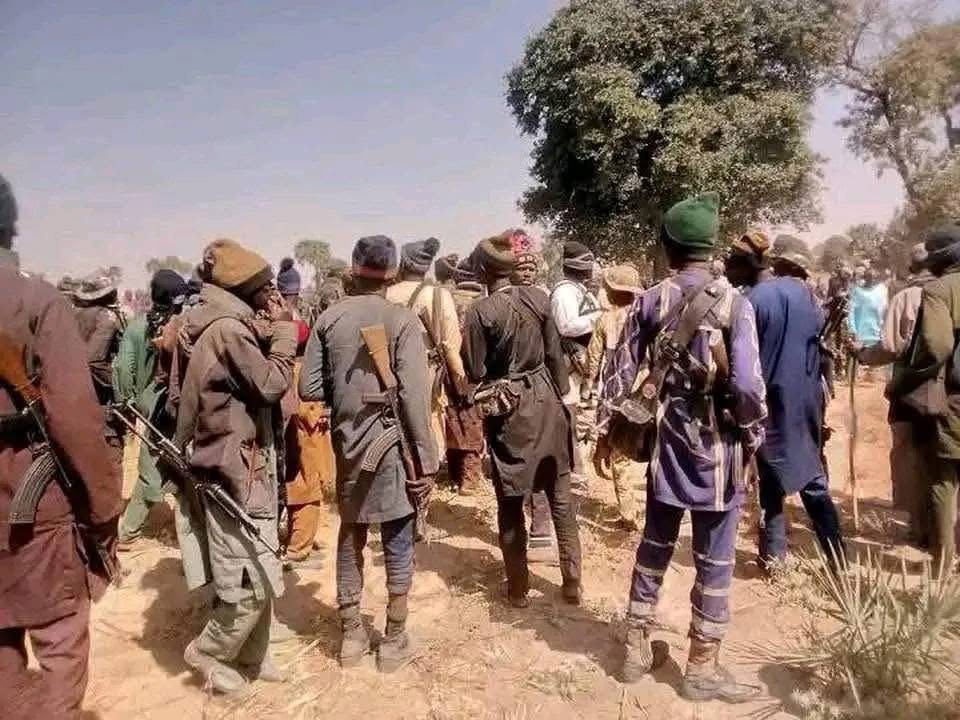
May be an image of 8 people
This home-coming, is so significant for many reasons among which are: family reunions, search for marriage mates and celebrations of marriages, rest from the hustles and bustles of the year and commemoration of festivals coloured with masquerades and dances .
In addition, it has recently, become a veritable season to organise and launch community development programmes and projects. In short, activities in Igbo communities, at Christmas, turn into carnivals for various reasons considered too important to be missed by any “Nwafo,” true Igboman.
Unfortunately, not so much any more from the recent past. The lure to spend Christmas at home, has lately become weak, primarily because of bad roads and insecurity.
Obviously, road, as a major infrastructure, facilitates these movements. Good roads help to improve citizens’ quality of life and greases economic activities. The Igbos, more than any group in Nigeria, take these advantages home every Yuletide.
But in their current dilapidated and worn-out condition, roads to and in the South East, have become very difficult and challenging to use. Some of them have become near impassable at several points, thereby, negating these benefits.
Consequently, travels to destinations now take three to four times their normal durations. Vehicles get knocked and damaged; sometimes, abandoned in the middle of nowhere, to the mercy of robbers, bandits and terrorists.
For instance a journey to Umuahia from Abuja, a distance of about 700 kilometers, which would normally take nine and half hours, now takes about 14 to 16 hours, depending on the type of car used.
The increased wave of insecurity occasioned by clashes between sponsored non-state actors and federal and state security agencies is another reason going home at Christmas and embarking on such end-of-year visits, have become less attractive and a risky venture.
Considering other benefits of good roads which include: improved connectivity between other parts of the world and homeland, attraction and repatriation of investments, free flow of products and services as well, as, increased economic stability and quality of life , the call for the rehabilitation, reconstruction and construction of strong, paved roads to the east, can therefore, not be overemphasised.
Their rehabilitation, will consequently go a long way in restituting the confidence and desire of Igbos to revive their waning homeland spirit.
It is in this light that the appointment of Senator, Chief Nweze Umahi, as the Minister of works by President Bola Tinubu, has ignited hopes of redemption among the Igbos, nay, Easterners, that Christmas 2023, may be be a turning point for their demoralised homeland spirit.
Chief Umahi, himself, a core Igboman and an astute politician was a former Governor of Ebonyi State. His deployment to the works ministry by President Bola Tinubu, is an absolute testimony to his transformation of Ebonyi into a modern state through the provision of infrastructure in various departments of that state’s economy.
Any wonder, then, his appointment has raised the hopes of many Igbos and a euphoria for the revival of the mass return.
As a key agent of Mr President’s “Renewed Hope” mantra and the first Igboman in recent history to be appointed to the portfolio, the big question many Igbos are asking is: “will the roads leading to and in the east, be built now, that our son is in charge or will he leave them in their current ruinous and parlous state?
The Honourable Minister, is aware of the state of the roads in the South East, as well as other parts of the country. He is also aware of the expectations of his kinsmen to make a difference in his administration of road infrastructure in the region this time around.
For instance , at one of his meetings with Contractors handling roads, in the six geo-political zones in the country, the thoroughbred structural engineer, admitted as much.
He was quoted as saying: “I shed tears for the kind of hardships our people are enduring. I travelled through the roads myself and I was brought to tears by the pain our people are experiencing… I was glad that I experienced the hardships firsthand.”
At another meeting, where he got emotional, he added, that there was no evidence of good roads in the South East.
His other statements that “we will get it right. The time to do a good job is here. If you were doing a bad job before, this period is not for you. We must work 24 hours to do a good and acceptable construction that will last,” evidence his strong commitment to deliver on his mandate.
The Federal government recently allocated four hundred billion naira (N400billion), for roads and infrastructure in the 2023 supplementary budget, but the Minister says over seven trillion naira,(N7trn), will be needed to reconstruct South Eastern roads.
The – Enugu- Abakaliki- Ogoja, and the Amawbia – Ekwulobia – Nnokwa roads, are among the 20 road construction projects across the six geo- political zones recently billed for dualization at he cost of fifty- billion naira(N58 billion) naira, while sources at the Federal ministry of works add that eight billion, four hundred million naira(N8.4billion), has been allocated to the rehabilitation of highways in the South East.
Additional statements made and actions taken by the Minister on the roads, seem to be thawing the doubts in the minds of South Easterners and reassuring them that the roads will be built.
For example, while inspecting the state of the roads, he directed contractors handling road projects in the region, to redesign them and to use concrete to complete the remaining dilapidated sections.
Again, , the prompt attention the Minister gave to the collapsed fly-over bridge at the Enugu end of the Enugu- Port Harcourt expressway is another indicator that he will rise up to the expectations of the people of the South -East.
It demonstrated his sensitivity to the pains users of the road which links Rivers, Cross Rivers, Akwa Ibom, Delta and Edo states would have experienced if they dared travel the route this December in its damaged state.
Aready, palliative work has begun on the bridge. Full reconstruction of both of its lanes has been slated for the middle of December.
Following the development, an elated Governor of Enugu state, Dr. Peter Mbah praised Chief Umahi for quickly mobilising for the repair of the failed bridge immediately it collapsed.
The Governor, recalled that the Minister visited the bridge within 48 hours of its failure, to demonstrate his preparedness to walk his talk in respect of building and reconstructing eastern roads.
May be an image of road
Bad roads have been the major worry of Igbos since the end of the civil war. Major arteries destroyed during the unfortunate conflict have remained so, more than 60 years after the war.
It is one of the major reasons Igbos feel marginalised and have not trusted the leaderships of the Central governments since the return to civilian rule in 1999.
Some political analysts have propounded that President Bola Tinubu, appointed an Igbo to the prominent ministry of works as a strategy to win the confidence and support of the Igbos, who barely voted for him in this years general elections.
There is little doubt that if roads in the South East are rehabilitated, reconstructed and constructed by the Tinubu administration, many Igbos will review their assessment and perception of Mr. President and the All Progressive Congress (APC).
Until then, the question in the hearts and mouths of many Easterners will remain ” Will Umahi mar, or, make our roads?”
Uwandu, foremost journalist, senior citizen, wrote from Abuja

Share this story:
Continue Reading
Advertisement
Click to comment

Leave a Reply

Your email address will not be published. Required fields are marked *

News

Why Prominent Individuals Pay Premium for Online Credibility in the Digital Age – Ayobami Eruobami

Published

on

As the global economy becomes increasingly digital, Eruobami Ayobami, Chairman of Erumedia Group & Charity Trust who also doubled as the founder of Pressford , has shared a bold perspective on the rising demand for online credibility and why individuals are now investing significantly to build it.

In a world dominated by platforms such as Instagram, LinkedIn, and TikTok, first impressions are no longer made in rooms but on screens.

“Credibility today is no longer something people wait to discover about you. It is something they search for instantly,” Ayobami stated. “If your digital presence does not validate your value, you are already at a disadvantage.”

This shift has transformed credibility into a high value digital asset one that professionals, founders, and public figures are now actively building through media exposure, strategic storytelling, and search visibility.

Advertisement

Erumedia Group: Building the Narrative Behind Credibility

As a Public Relations, communications and media company, www.erumediagroup.com focuses on shaping the foundation of credibility helping individuals and organizations define, structure, and communicate their stories with clarity and authority.

“Before visibility comes narrative. Many people struggle not because they lack value, but because they lack structured positioning,” Ayobami explained. “At Erumedia Group, we help clients refine their voice, their message, and the way they are perceived before they ever go public.”

Through brand development, storytelling strategy, and reputation positioning, the company ensures that credibility is not just visible but meaningful and consistent.

Pressford: Distributing Credibility at Scale

Advertisement

While narrative builds the core, Pressford plays a different role amplification.

As a press release distribution and digital PR platform, Pressford enables individuals and organizations to translate their credibility into verifiable public presence across media channels.

“Pressford exists because credibility must not only be built it must be seen, indexed, and validated publicly,” Ayobami said. “It gives individuals the infrastructure to show up in search results, in news mentions, and in conversations that matter.”

By making media visibility more accessible, Pressford addresses one of the biggest gaps in the digital credibility cycle: discoverability.

The Business of Being Seen

Advertisement

Ayobami notes that the increasing willingness to pay for credibility is not driven by vanity, but by necessity.

“Opportunities today are often given to those who appear prepared, visible, and validated. The market responds to perception before it investigates performance,” he stated.

However, he also warns against mistaking visibility for substance.

“If credibility is only built on aesthetics without real value behind it, it will fail. The goal is not to look credible it is to be credible and ensure that credibility is visible.”

A Shift That Cannot Be Ignored

Advertisement

As digital ecosystems continue to shape human interaction and business decisions, Ayobami believes the importance of intentional credibility building will only grow stronger.

“The future belongs to individuals who understand that credibility is not accidental. It is designed, positioned, and distributed,” he concluded.

Eruobami Ayobami is a Professional Public Relations Executive, Media Entrepreneur, Personal Brandinf Expert and communications strategist.

He Chairs Erumedia Group and Charity Trust and Founded Pressford. His work focuses on helping individuals and organizations build, structure, and amplify their digital credibility.

Advertisement
Share this story:
Continue Reading

News

Jonathan to Atiku: I don’t play God *I still achieved, though imperfect

Published

on

From Goodluck Jonathan, Nigeria’s former  President, came a mild rebuke to Atiku Abubakar, former Vice President, who in assessing the quality of his six-year tenure as Nigerian leader, all but dismissed him as “inexperienced.”

Atiku, a guest of Prime Time, a public affairs programme on ARISE NEWS Television, last week, told his host that Jonathan was inexperienced, saying his tenure was marked by notable missteps.

“I know Goodluck Jonathan very well. He is a decent young man, but also inexperienced, and I believe that contributed to his inability to manage the affairs of the country, particularly when he was faced with challenges,” Atiku, currently chasing the number one job the former President exited in 2015 for the seventh time, said.

But in a measured riposte at the 2025 Association of Retired Career Ambassadors of Nigeria awards ceremony in Abuja on Monday, Jonathan, while acknowledging that he must have made some mistakes, argued that errors were inevitably with human beings as only God could be perfect,

Advertisement

Reacting to Atiku’s remarks, he told his audience: “So not too long ago, a very senior politician said, ‘Oh, Jonathan was too young and probably that’s why he made mistakes.’

“If I made mistakes, yes, nobody who becomes a governor or a president will say you did not make mistakes. Even when you promote yourself to the level of a god, you become a deity.

“All human beings must make mistakes. I became president in 2010 at the age of 53. I left in 2015 at the age of 58, and they say I was too young. Must it have been 100 years before I ran the affairs of the state?

“I’m talking to diplomats, so I can say that during my period, I knew what I did for us to appear in the UN Security Council two times… If I were so naive, I don’t think I would have been able to navigate through that process.”

Jonathan also spoke on regional affairs, warning that political instability remains a major obstacle to economic growth across West Africa. He stressed that without stable governance systems, meaningful development in the sub-region would remain elusive.

Advertisement

“We cannot progress economically if we are very unstable societies politically,” he said.

Jonathan noted that while the founders of ECOWAS envisioned strong economic cooperation, persistent political crises have hindered progress, particularly in enforcing democratic standards among member states.

“That means that ECOWAS must interfere with the internal affairs of the states, and the issue of sovereignty becomes a problem,” he said.

Jonathan urged leaders in the region to work collectively towards stability, saying, “The heads of states of ECOWAS must continue to work together and agree on concrete terms and make sure that the sub-region is politically stable.”

He added that economic integration efforts would falter without solid democratic institutions and called on Nigerian diplomats to properly document foreign policy experiences for future leaders.

Advertisement

Paying tribute to ECOWAS founders, including former Head of State Yakubu Gowon, Jonathan described the creation of the bloc in 1975 as a bold and necessary step toward regional unity and economic integration.

Gowon, who was also honoured at the event, recounted the origins of ECOWAS, linking its formation to post-war diplomatic engagements across West Africa.

According to him, “It was as a result of the various efforts of all Nigerians when we went through a very difficult period, and I had to go to the various countries to say thank you.”

He said discussions with regional leaders at the time led to a shared vision for broader cooperation.

“Why don’t we also think about having something that we can at least have in agreement for all of us when we are working together?” he said.

Advertisement

Gowon emphasised that ECOWAS was the product of collective effort rather than individual ambition, crediting government institutions and civil servants for its success.

“This would not have been possible without the support of all the staff of the Ministry of External Affairs and the Ministry of Economic Development,” he stated.

He added that the recognition bestowed on him should be shared widely.

“The honour that is being done to me today should really go back to all the staff that worked so hard to make sure that this became a reality,” he said.

Also speaking, the President of the Association of Retired Career Ambassadors of Nigeria, Joe Keshi, highlighted the importance of honouring excellence in diplomacy, noting that the awards celebrate dedication and service to Nigeria and the continent.

Advertisement

“Diplomacy is one profession where success is often invisible, reflected not by news coverage, but by maintained stability, prevented conflicts, cultivated partnerships,” he said.

Keshi noted that the event coincides with the 50th anniversary of ECOWAS, describing the organisation as “a bold experiment in regionalism,” and urged diplomats to adapt to evolving global challenges.

The Chief of Army Staff, Lt Gen Waheed Shaibu, also praised Gowon, describing him as a symbol of national unity and visionary leadership.

He said the recognition offers a chance to reflect on a legacy “defined by visionary leadership, courage, and unwavering commitment to the unity, stability, peace, and progress” of Nigeria.

Shaibu added that Gowon’s leadership reflected “patriotism, resilience, and a profound sense of duty,” while commending ARCAN for its continued contribution to diplomatic discourse and Nigeria’s global engagement.

Advertisement

Share this story:
Continue Reading

News

BREAKING: FG opts for open court trial of coup plotters against Tinubu

Published

on

After months of official hiatus, the Federal Government, on Tuesday finally got on the way with the trial of those fingered in the alleged plot to oust President Bola Ahmed Tinubu through a coup, including Timipre Sylva, former Minister of State for Petroleum.

The move, which apart from the former Governor of Bayelsa State, came with the filing of a 13-count charge before the Federal High Court, Abuja, against the alleged plotters including Mohammed Ibrahim Gana, a retired General in the Nigerian Army, Erasmus Ochegobia Victor, a retired Naval Captain, Ahmed Ibrahim, a serving police inspector, Zekeri Umoru, Bukar Goni, and Abdulkadir Sani.

Sylva, whose name surfaced as one of the plotters when the news first broke and believed to be the major financier of what would have led to another military government in Nigeria after the last ended in 1999, was listed as being at large – on the run.

The charge, filed on Monday by the Office of the Attorney-General of the Federation and signed by the Director of Public Prosecutions, Rotimi Oyedepo (SAN), accuses the defendants of offences ranging from alleged treason and terrorism to failure to disclose security intelligence and money laundering linked to terrorism financing.

Advertisement

The prosecution alleged that the defendants conspired in 2025 “to levy war against the state to overpower the President of the Federal Republic of Nigeria”, an offence punishable under Section 37(2) of the Criminal Code.

The Federal Government further alleged that the defendants had prior knowledge of a planned treasonable act involving one Colonel Mohammed Alhassan Ma’aji and others, but failed to alert authorities.

Furthermore, the defendants were also accused, according to the charge, of, while “knowing that a treasonable act was intended to be committed, did not give information thereof with all reasonable despatch to either the President… or a peace officer.”

They were also accused of failing to take preventive steps and “did not use any reasonable endeavours to prevent the commission of the offence”.

Beyond treason, the defendants are facing terrorism-related charges of conspiracy under the Terrorism (Prevention and Prohibition) Act, 2022, as they “conspired with one another to commit an act of terrorism in the Federal Republic of Nigeria”.

Advertisement

Inspector Ahmed Ibrahim and Zekeri Umoru were specifically accused of attending meetings linked to the alleged plot “in a bid to further a political ideology which may seriously destabilise the constitutional structure of the Federal Republic of Nigeria.”

The charge also accused the defendants of providing support for terrorism, alleging that they “knowingly and indirectly rendered support” to facilitate acts of terror.

The prosecution alleged deliberate suppression of intelligence, stating that the defendants “had information which would be of material assistance in preventing the commission of the act of terrorism but failed to disclose the information to the relevant agency as soon as practicable”.

Financially, several defendants were accused of handling funds linked to terrorism financing, in violation of the Money Laundering (Prevention and Prohibition) Act, 2022.

Bukar Kashim Goni allegedly “indirectly retained the aggregate sum of N50,000,000, which forms part of the proceeds of an unlawful act, to wit: terrorism financing”, while Abdulkadir Sani allegedly retained N2m from a similar source.

Advertisement

According to the charge, Zekeri Umoru “without going through a financial institution accepted a cash payment of the sum of N10,000,000″ and also retained an additional N8.8m suspected to be proceeds of terrorism financing.

Inspector Ahmed Ibrahim was also accused of taking possession of “the sum of N1,000,000, being part of proceeds of terrorism financing”.

Alleged Coup Plot, Protests

After the Federal Government cancelled the parade to mark Nigeria’s 65th independence anniversary on October 1, 2025, reports had claimed that the move was linked to an alleged coup attempt.

The Defence Headquarters (DHQ) dismissed the claims, however, saying the parade cancellation had nothing to do with the alleged coup attempt.

Advertisement

In January 2026, the DHQ confirmed that there was an attempt to overthrow President Tinubu.

The DHQ Director of Defence Information, Samaila Uba, said investigations showed some military personnel were involved in the alleged coup plot.

According to Uba, the officers have been detained and would be arraigned before military judicial panels.

Last month, families of the military officers detained over the alleged coup plot appealed to Tinubu to allow the suspects to be tried in an open court.

Human rights activist Omoyele Sowore protested alongside the detained officers’ families. They also asked for access to the alleged coup plotters.

Advertisement

Share this story:
Continue Reading

Trending