
News
Adamawa invasion: Soldiers acted like Boko Haram – IG *Takes matter to Tinubu


Authorities of the Nigerian Army, may have to explain to President Bola Tinubu, the reason for the allege invasion of the Adamawa State Police Command headquarters by its personnel, a development Kayode Egbetokun, Inspector-General of Police (IG) described as no different from the onslaught of terrorists,
A visibly incensed IG, who indicated that he had taken the matter to the President, during a visit to the command on Monday, vowed that the incident, which took place on Wednesday, November 21, would be the last time soldiers would attack the police under his watch, while condoling with those affected in the attack, especially over the death of one Inspector Daniel Jacob.


He said: “It was an unfortunate incident which should never have happened. I believe this is going to be the last time it will happen in Nigeria. These people came like bandits and carried out the attack on our facility in a manner similar to invasion by Boko Haram. Inspector Jacob Daniel was an officer, on duty at the quarter guard on Wednesday last week when he was murdered, following an invasion on this headquarters by some recalcitrant soldiers, in an attack that was unwarranted, carried out in a manner reflecting the activities of Boko Haram by their invasion on this facility.”
“I am in your midst this afternoon to share the grief that you have. I learnt that he was an officer that was committed to his duty. He always demonstrated the highest level of dedication to duty. But unfortunately, we lost him to the attack that was unwarranted and barbaric.”
After observing a minute silence for the slain cop, Egbetokun admonished officers of the force not to allow the incident to dampen their morale. He insisted that justice would be served and explained that the two security agencies were not at war with each other, adding that they were sister agencies working towards the same goal of securing the nation.
The Commissioner of Police, Adamawa State command, Afolabi Babatola, drew wide applause from officers when he tabled the request for armoured personnel carriers, gun truck and Hilux vehicles to maintain the “tempo” of the force.
The CP had said: “In fact the command in particular and the state in general would have been in a state of total calmness if not for the unfortunate incident that happened on Tuesday 21st November, 2023. I will like to use this opportunity to request for Armoured Personnel Carriers (APCs), gun trucks and Hilux Vehicles to maintain the tempo.”

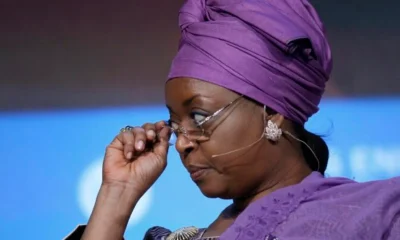









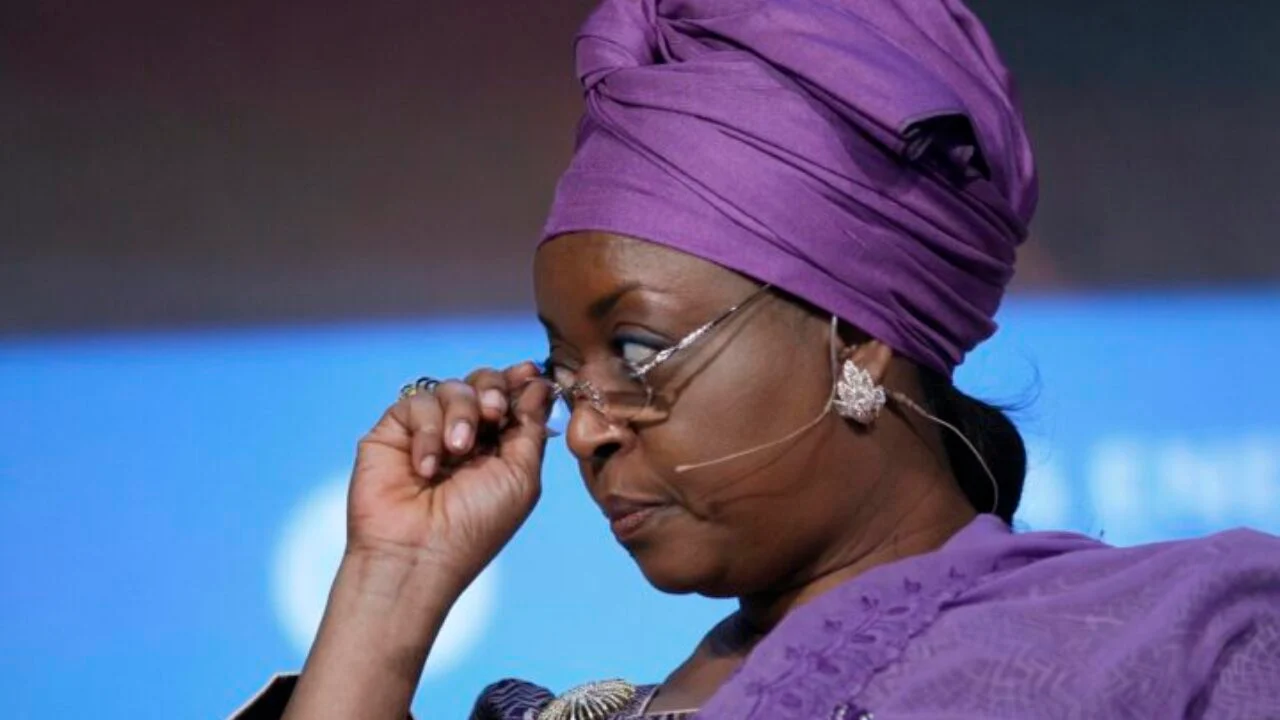
For Diezani Alison-Madueke, there is nothing more to prove to anyone as God has finally fought her battle and restored her dignity, with here exoneration from allegation of massive looting on Nigeria during her years as Minister of Petroleum Resources.
Emerging from the Southwark Crown Court in London, where she was eventually exculpated from blames after many months of trial, the former Minister, who had been living in the UK since 2015, as a fugitive, having escaped the claws of the government of Muhammadu Buhari, Nigeria’s former President, which had accused her of multiple cases of sleaze, she told reporters that everything would be kept in abeyance to enable her enjoy her freedom which had been denied for so long.
But before then, she attributed her acquittal on bribery charges which said had ended years of “unjust vilification,” to the handiwork of God while thanking those who stood by her during the trial period she described as “arduous” and “traumatic.”
The court had freed the once very powerful Minister, who ended up in the petroleum ministry after hitherto serving in different capacities of all six charges after hours of deliberation on Wednesday, after six months of trial, which began in January when the UK government charged her in August 2023 over an alleged £100,000 bribe.
Part of the prosecution in the UK court was that she accepted bribes in the form of luxury goods and use of high-level properties from industry figures in return for awarding multi-million-pound oil and gas contracts during her time in office.
But in her defence, the former Minister through her lawyers, told the jury that she had limited control over oil contract approvals during her time in office, as most decisions were made before reaching her desk.
After the court agreed with her, she told reporters: “I’m just thankful to God. It’s been a very, very arduous and long, almost 11 years. It’s been traumatic not just for me but for my family, for friends, for all those who have stayed and supported, for my 93-year-old mother in Port Harcourt, for my son, and for all those who love us, friends and family. We’re surrounded by friends here. So it has been a hard journey.
“But I tell you this, God will always do as God wills, and God will be God. God is not a man that he should lie. So, when he promises you something, he will see it through.
“It has been almost 11 years I’ve been here. I did my job to the best of my ability, but like I said, God is not a man that he should lie. God is God, and we thank him.”
Also, in a statement issued by Bolouere Opukiri, her representative, Alison-Madueke said “a decade of unrelenting and unjust vilification, condemnation, and scrutiny has finally concluded.
“I give thanks to Almighty God for His faithfulness and for the complete vindication I have received. I am grateful to my legal counsel for their diligence and to my family and friends for their steadfast support and encouragement throughout this period. I am profoundly relieved. My name has been cleared, and this ordeal has come to an end.”
Allison-Madueke said she would speak about the events of the past decade and her future plans “in due course” but, in the meantime, would focus on embracing what she described as the freedom she had been unjustly denied for many years.

Nigeria is sure to witness an impending doomsday sooner than later if the Federal government fails to take definite and decisive steps to arrest the current parlous state of the nation’s medical system.
Association of Medical Doctors (ARD), which dropped the warning, cited how Nigeria currently boasts of just 55,000 doctors to serve a population of more than 220 million people, warning that with the current paucity in its healthcare system, an impending doomsday was only a matter of time.
The doctors, who raised the alarm at the Ordinary General Meeting and Scientific Conference of the association, held at the Federal Neuropsychiatric Hospital (FNPH), Yaba, Lagos, the doctors, among whom were mental health experts, also said the present situation was worsening access to psychiatric care and leaving millions of vulnerable Nigerians untreated.
Citing no fewer than 16,000 Nigerian doctors, who have emigrated in the last five years, had worsened an already dire manpower shortage in the country’s health sector, they warned that the sustained exodus of healthcare workers under the “Japa” syndrome had severely depleted the country’s mental health workforce, widened treatment gaps, increased the cost of care and placed enormous pressure on the few specialists remaining in the system.
Vanguard quoted Omoti Ernest, President of Nigerian Medical Association (NMA), as saying that recent data showed that the Medical and Dental Council of Nigeria (MDCN), had registered over 130,000 doctors but noted only about 55,000 are actively practicing within Nigeria.
Stressing that with a population exceeding 220 million, this translated to roughly one doctor for every 3,600 to 4,000 people, he added: “This ratio is far below the World Health Organisation’s recommended threshold of one doctor to about 600 people, highlighting the significant shortage of medical personnel and the strain on healthcare delivery.
“Many Nigerian-trained doctors have emigrated or are no longer engaged in active clinical practice, contributing to the country’s healthcare workforce shortage. The emigration of skilled professionals in search of better opportunities abroad has had a significant impact on Nigeria’s hospitals and healthcare workforce.
“Thousands of doctors and other healthcare professionals have left the country in recent years, leading to severe staff shortages, increased workload for those who remain with many suffering from burnout, longer waiting times for patients, and declining quality of care in many public hospitals.
“Rural and under-served communities have been particularly affected, as they already struggle with limited access to healthcare services. ’The reasons behind this migration include poor remuneration, inadequate working conditions, insecurity, limited opportunities for career advancement, and insufficient investment in healthcare infrastructure, among others.
“Many professionals are attracted by better pay, improved facilities, and more stable environments in countries such as the United Kingdom, Canada, and the United States.”
‘What can be done’
To address the trend, he said the Federal Government should prioritise salaries and welfare packages for healthcare workers, invest more in modern medical equipment and hospital infrastructure, expand residency and specialist training opportunities, and create clear career progression pathways.
“Strengthening security, ensuring timely payment of wages, and providing incentives for professionals to work in under-served areas will also help retain talent. ’In addition, partnerships with the private sector and diaspora engagement programmes could encourage Nigerian healthcare professionals abroad to contribute their expertise and support development of the country’s healthcare system.”
Yesir Kareem, a Consultant Psychiatrist at the Neuropsychiatric Hospital, Aro, also lamented how Nigeria’s doctor-to-patient ratio had fallen to about one doctor for more than 10,000 patients, far below the World Health Organisation’s recommended ratio of one doctor to 600 people.
The consequences, he argued were particularly devastating for mental healthcare, he said, adding: Only about 55,000 doctors remain to serve a population of over 220 million Nigerians. More than 40 million Nigerians suffer from mental health disorders, yet about 85 per cent of them do not have access to mental healthcare services,” Kareem said.
He noted that Nigeria’s shortage of psychiatrists and other mental health specialists has reached alarming levels, warning that untreated mental illnesses contribute to family breakdowns, substance abuse, unemployment, delayed diagnosis and premature deaths.
“The economic consequences are equally devastating, with billions of dollars lost annually due to untreated mental health conditions. Over 94,000 doctors and nurses have left Nigeria since the Japa syndrome started some years ago due to poor remuneration and delayed salaries, competitive salaries in destination countries, overwhelming patient loads (1:10,000+), better work-life balance and conditions, and inadequate medical equipment & facilities.
He listed access to modern medical technology, limited career advancement opportunities, professional development and training, unsafe working conditions and long hours, unstable political and economic environment and insecurity and socioeconomic instability as factors encouraging migration of doctors from the country.
Vanguard, also quoted Veronica Nyamali, President of the Association of Psychiatrists in Nigeria (APN) as saying that the manpower shortage was a crisis that had forced consultants to abandon higher-level responsibilities, such as research and specialist care, in order to fill gaps left by departing doctors.
She said: “There are gaps everywhere. Work that should be done by four psychiatrists is now being handled by one or two people. Consultants are increasingly forced to work at lower levels because the doctors they are supposed to supervise are no longer there.
“Those we train are leaving. Junior registrars, senior registrars, many complete their examinations and return abroad. The result is that we have shortages at every level of care. Nigeria has less than 150 psychiatrists. The dwindling number of specialists is making mental healthcare increasingly expensive and inaccessible, especially for patients in rural communities where psychiatrists are virtually non-existent.
“When specialists become scarce, services become more expensive. Access becomes difficult because patients must travel long distances to find care. This is contrary to the principle of universal health coverage, where mental health services should be available, affordable and accessible to everyone.

Lagos State Police Command, has thrown a security cordon around university communities in the state to prevent any form of mishap as a result of recent concerns that they could come under attack.
On Wednesday, Olohundare Jimoh, Lagos State Commissioner of Police, gave the hint while conducting an on-the-spot security assessment at Pan-Atlantic University, Lekki, following the circulation of a viral video showing two masked individuals emerging from a forest area adjoining the institution.
The visit, carried out alongside operational personnel of the command, was part of efforts to evaluate the security situation around the university and reassure students, staff and parents of measures being taken to ensure their safety.
The police boss, in a meeting with the university’s management while stressing the need to continually strengthen the institution’s security architecture to forestall potential threats, also advised on practical steps to enhance security within and around the campus, cautioning against actions that could inadvertently weaken existing security structures.
Emphasising the importance of adopting proactive security measures, particularly in the areas of perimeter protection, access control and collaboration with relevant security agencies, he said as part of efforts to boost security operations in the area, the Lagos State Security Trust Fund (LSSTF), had deployed surveillance drones to support law enforcement activities around the university and neighbouring communities.
The measure facilitated by the Lagos State Government, is expected to enhance aerial surveillance, intelligence gathering and crime-prevention efforts within the axis, he said stating that the command was fully committed to protecting lives and property across the state.
He assured the management, staff, students and parents of Pan-Atlantic University of the police’s readiness to respond swiftly to security concerns and maintain a safe environment conducive to learning and other lawful activities, urging the institution to sustain close collaboration with security agencies and remain vigilant in addressing emerging security challenges.
“The Command remains committed to the protection of lives and property across Lagos State. The university community must support security efforts by promptly reporting suspicious activities. We are resolved to maintain peace, public safety and security across the state. We urge residents to remain security-conscious and provide credible, timely information to law enforcement agencies. Residents are also encouraged to make use of the Command’s emergency lines to report security-related incidents and suspicious movements.
The assessment followed heightened public concern generated by the viral video, with authorities moving swiftly to reassure the public and strengthen surveillance around the institution and its environs.



-
 Columns4 weeks ago
Dear General Gowon: That apology you’re running from is your nemesis
-
 News2 weeks ago
BREAKING: Terrorists strike Ibadan again! Abduct ex-Minister’s sister, twin children
-

 Columns3 weeks ago
See Tinubu’s terrible damage on Option A4 and its precious memories
-
 News4 days ago
BREAKING: Troops rescue wife of kidnapped General! *Terrorists flee scene
-

 News2 weeks ago
Emeka Ike: I’ll make example of Lere Olayinka for prying into my privacy
-

 News4 weeks ago
Cooking gas inches N2,000 per kg price *We fear the worst – marketers
-

 News3 weeks ago
BREAKING: All clear for Jonathan! Ex-President eligible to run in 2027 – court
-

 News3 weeks ago
BREAKING: Like Hayatu-Deen, Amaechi rejects ADC primaries, as total fraud!