

News
Billionaire’s war! I’ve borne your wickedness for 32 years, BUA counters Dangote


There seems no letup in the internecine war between BUA Group and Dangote Industries Limited (DIL), two of Nigeria’s elite industrial concerns, indicating that Nigerians might be in for a long period of bitter clatter of offensive weapons that might be coming from the pair as they dip deeper into the morass the seemingly endless conflict.
On Friday, Dangote, owned by Africa’s Richest Man (ARM), came out smoking, accusing BUA, owned Abdul Samad Ishiaku Rabiu, of being behind the campaign that DIL of underhand deals with the Central Bank of Nigeria (CBN), under the now embattled Governor, Godwin Emefiele, where it was said to have illegally obtained a whopping $3billion.


The BUA group, which incidentally is in the same business of sugar, cement, and other concerns, was specifically accused of sponsoring publications in the media to smear Dangote, a move which it reportedly began in 2016, while denying that it ever engaged in untoward practices in its dealings, including that of engagement with the apex bank.
But in a quick riposte, BUA came out with a detailed story of Dangote’s series of attacks against the company in apparent bid to sink its operations, directly accusing the ARM, of direct involvement, including influencing several governments for this purpose, but had at each point not succeeded, while also denying that it had no hand in the present ordeal of the rival company.
Read the detailed story: “It’s with a profound sense of responsibility and a heavy heart that we address the claims and very cheap attempts at blackmail levelled against BUA by Aliko Dangote in a recent 7-page editorial following months of sponsored campaigns of calumny against us using third-party platforms. To put things in perspective, it’s imperative to revisit history—a history not of rivalry but of resilience; not of enmity, but of endurance.
“In August 1991, a young BUA was doing its commodities trading business just as Nigeria faced a scarcity of sugar. As sugar was scarce, BUA was lucky to be one of the few with any stock for sale, and we stood prepared to supply the nation’s needs as best as our stock could. It was during this period Aliko Dangote approached us to purchase sugar. If only we knew he was setting the first of many traps in our business history. He gave us a Societe Generale Bank of Nigeria Cheque, which bounced upon presentation to the bank. Unbeknown to us, this was a ruse that would lead to a court-sanctioned freeze of our assets orchestrated by Dangote.
“For three agonising months, our accounts were garnisheed, warehouses shuttered, and our spirit tested. Yet, from the ashes of deceit, BUA survived. (see attached court order)
“Fast forward a few years later, we decided that since we were making good progress in our various businesses, we should open a sugar refinery. We approached one Usman Dantata (now late), Aliko Dangote’s uncle, and leased his NPA waterfront land (4.5 hectares) at the Tincan Island port, ‘Polo House’. We took the land, signed an agreement with the consent of NPA, and paid all applicable dues. Dangote waited until our contractors and equipment had been mobilised to the site, then he went to former President Obasanjo. President Obasanjo had the land revoked entirely and gave the lease to Dangote. As a result, even his uncle lost the land. BUA was only given 24 hours to vacate the land.
“It took us over a year to get another land. How? Our survival as a business especially our Lagos sugar refinery is a legacy handed to us by a loving father who, seeing his son’s distress, did what only the noblest and kindest of hearts could do. With unwavering faith, our Chairman’s late father—may his soul rest in eternal peace—handed him the land on which our Lagos Sugar Refinery stands today. This land was the location of one of his thriving businesses with a warehouse, which he shut down and handed to us without asking for compensation. He just saw the pain of our chairman, Abdul Samad Rabiu, called him one day and handed him the papers to the land. His gesture was a beacon of hope in one of our darkest hours. And so, BUA survived again another Dangote trap. Today, we are now the largest Sugar refining concern in West Africa.
“Our businesses continued to surge forward amid several other attempts, too many to mention now. In 2007, under President Yar’Adua’s visionary mandate to broaden Nigeria’s cement industry and break the monopoly in the sector, BUA was among the six companies selected and granted licenses. Our approach was unconventional but effective: we introduced a floating terminal – ‘BUA CEMENT I’, which is a cement factory built into a large ship, as a stopgap while we were working on securing our land-based cement plant.
“What followed, however, was another act intended to drive us out of business. Our application to dock the floating terminal in Lagos met with resistance. We then decided to berth the ship at the terminal we owned in Port Harcourt. Despite this, we faced considerable pushback and it took the decisive intervention of late President Yar Adua, who directed that the Minister of Transport and the Chairman of NPA honour our right to contribute to the nation’s growth.
“But the hurdles didn’t end there. The drama intensified when Orwell Brown, a Deputy Comptroller General who was also an older brother to a Dangote Staff, launched a sudden strike, attempting to deport our vessel’s entire expatriate crew. It was a Friday that is forever seared into our memory—the shock of our expatriates rounded up, their confusion as they were shepherded onto a Dangote-funded one-way local flight from Port Harcourt to Lagos en-route Asia via Emirates.
“Upon hearing of what had happened, we reached out to Tanimu Yakubu, the then Chief Economic Adviser, who acted with the urgency that the situation demanded. His call to the CG of Immigration was a lifeline, and our expatriate team was brought back from the Emirates aircraft and not deported. The aftermath was swift action by the President, who ensured that such a misuse of power would not go unchecked. DCG Brown, caught in a tangle of undue influence, admitted what he did to the Minister, and he was later dismissed.
“Through all these tribulations, BUA’s resolve has only strengthened. These events narrate not just the trials of a company but the resolve of its people, bound together by a shared vision and an unwavering belief in justice and fairness.
We also know what transpired whilst we were building our Edo Cement Plant. Everyone knows the issues we faced. The plant we are operating in Edo would not have been operating and contributing immensely to the economy, if not for the former President Buhari who had to intervene by calling Governor Obaseki that no staff must lose their jobs and the plant must not be shut down, no matter what happens. We cannot say more as the matter is currently sub-judice – and is at the Supreme Court. During that time, Edwin Devakumar and Sunday Esan (two long-time and current staff of Dangote) were caught in leaked emails, whose content were not limited to sending thugs to foment trouble, close our factory as well as pushing bad press against us (See emails attached).
“Same thing happened again with our Port Harcourt sugar refinery – the only sugar refinery in Nigeria that is outside Lagos. Dangote utilized every means possible to ensure the refinery did not take off and we raised the alarm. At some point, the terminal was taken away from us and was to have been given to someone else at the behest of Dangote. There had to be a presidential intervention again for NPA to do the right thing. Yet, we survived.
“For over 32 years, we have been cast as the antagonists in a narrative woven with malice. We have not just survived; we have thrived, expanding our operations and contributing to Nigeria’s economy without resorting to subterfuge.
“To Mr. Dangote and the Dangote Group, we say: Let us build, not belittle. Let us cultivate, not conquer. While we may share the marketplace, we need not share malice. We have nothing to do with your self-inflicted issues. Blame no one but yourself.
In closing, we at BUA remain committed to our ethos of innovation, integrity, and inclusiveness. Our history is not one of being handed anything on a silver platter. We will continue to serve our beloved country and its people with the diligence and honour they deserve. Our past, present, and future activities are rooted in the prosperity of Nigeria, undeterred by the winds of unfounded criticism. We remain focused on building and developing Nigeria.”






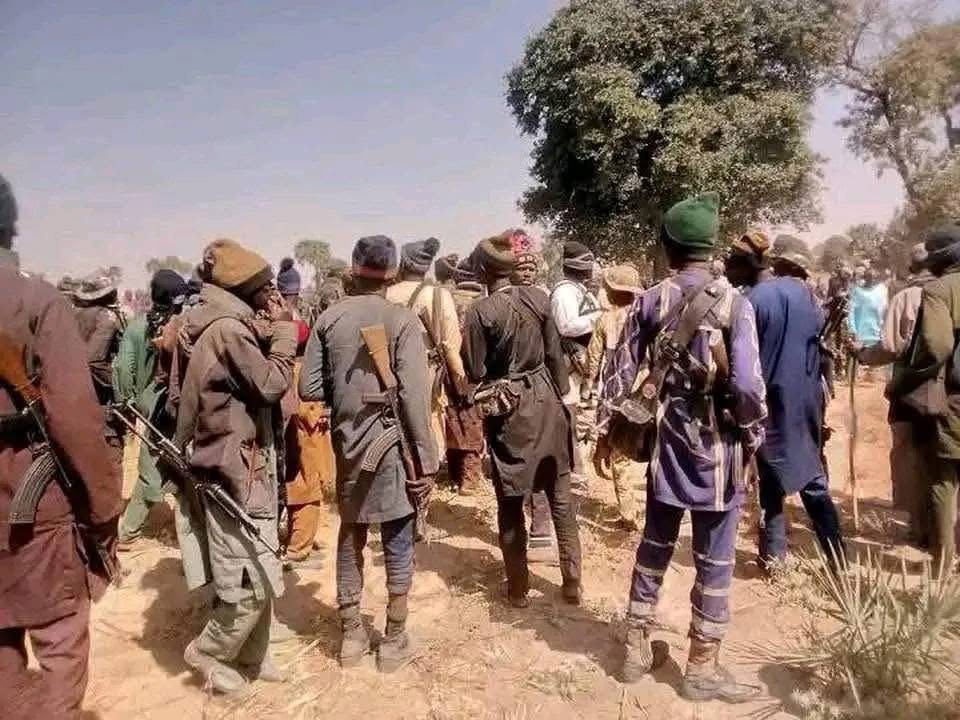
The echoes of the drums rolled out to celebrate the rescue of the 44 teachers and students, kidnapped from some schools in Oyo State, after 56 days in the bush, would surely be disrupted abruptly, with the divergent echoes of a fresh abduction, this time coming from Kogi State.
Reports indicate that the gunmen, struck on Tuesday at the Government Secondary School, Odo-Ekina, in Dekina Local Government Area of the state, abducting four students, the school principal and a National Examinations Council (NECO) ad hoc staff member.
Authorities of the Kogi State Police Command, who immediately unleashed their operatives in hot pursuit of the abductors, said the attack occurred at about 5:25 p.m. while the students were writing their NECO examination.
Saliu Oyiza Afusat, an Assistant Superintendent of Police (ASP) and spokesman of the command, said a combined team of police personnel and other security agencies has launched a search-and-rescue operation following the incident.
Informing that one of the students was actually rescued immediately, she said efforts were ongoing to secure the release of the remaining victims and apprehend the attackers, adding that Naziru Bello Kankarofi, the state Commissioner of Police, alongside the Brigade Commander and the State Security Adviser to the Governor, Commodore Jerry Omodara (Rtd), were already on the way to the scene for an on-the-spot assessment.

Oil prices are expected to go down now with the announcement of Donald Trump, US President that he will no longer impose a 20 percent “safe passage” fee on ships passing through the Strait of Hormuz.
The POTUS, hinged his reversal of the decision on the intervention from some Gulf countries, who pleaded with him not to toe the line due to the massive economic impact the decision would make on the region.
Indeed, oil prices had shot up immediately Trump announced the new levy on Monday while declaring the US ‘the guardians of the Hormuz strait,’ a measure which he said was to pay for the cost of guarding the volatile area in order keep supply of oil flowing.
Reports said that Gulf allies of the US worked frantically to get Trump on the phone in time to talk him out of the idea altogether, while a flurry of appeals came from Saudi Arabia, the United Arab Emirates, Bahrain and Qatar.
In response, the POTUS, posting on his Truth Social platform, wrote: “Based on highly productive conversations with Middle East leadership, I have decided to replace the 20% United States Reimbursement Fee with Trade and Investment Deals that the various Gulf States will be making into the United States.”
Trump, who said the investments would be “MASSIVE but, at the same time, extraordinarily good for them, and their future,” added that the deals would see factories, plants, and equipment pour into the US at “Historic levels.”
The Gulf nations have committed to invest trillions of dollars in the US, though it remains unclear how much of that they will actually spend over the next several years.
Meanwhile, the US continues to bomb Iran in what appears to be a resumption of active conflict between both countries, despite an ongoing roadmap to end the conflict.
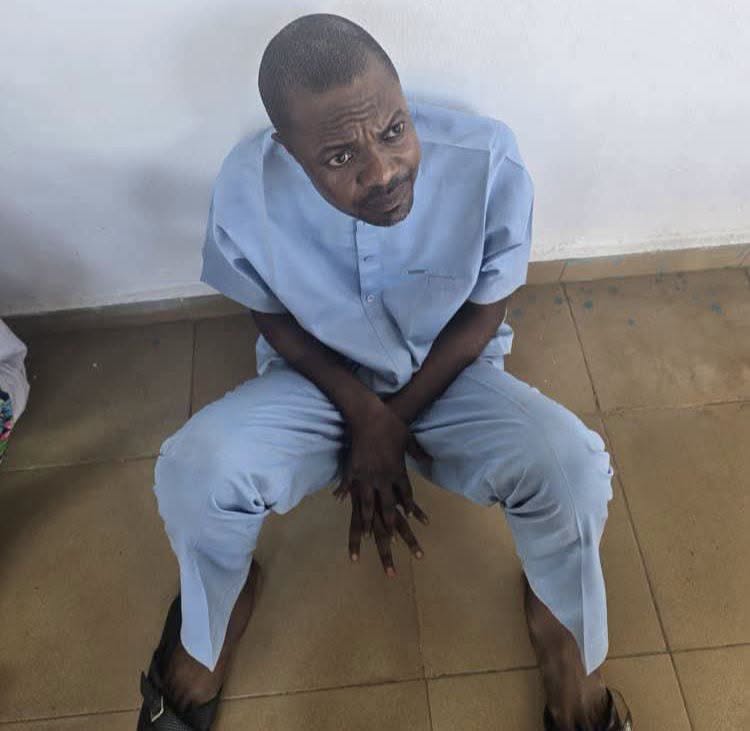
Reports say operatives of the Osun State Police Command, and those of the Department of State Services (DSS) had tracking the trail of Adeniyi Adeyemi, controversial Director General of the Presidential Foreign Intervention Promotion Council (PFIPC), for weeks, before he was eventually pulled out of his hole on Tuesday.
However, the duo, were said to have pulled back after failing to track him through his mobile phones, which he had reportedly switched off for about two days, making it difficult to locate him, leaving the stage for the members of the Police Intelligence Response Team (PI-RT) led by Moses Lohor, a Chief Superintendent of Police (CSP).
Lohor, said to have previously served as the Commander of the Anti-Kidnapping Squad of Osun State, and reported to have been involved in high-profile security operations and controversies, after taken over fielded his men to pick up signals from their well-oiled signal networks.
Regarded by many Osun residents as one of the key security officers who contributed significantly to the peace and stability enjoyed in Ilesa and other parts of the state during his tenure, he was said to have relied on his contacts before his transfer out of the state, said to have raised concerns from the public about the security situation he would be leaving behind.
His exit from the state was said to be hinged on an incident in 2024, in which he allegedly shot one Iyanda Alowonle, then Chairman of Osun State Motor Transport System, in the stomach at the police station in the state prompting an order for his arrest by then Inspector General of Police (IGP).
His effort was said to have paid off when he successfully tracked down the controversial PFIPC, boss, who was seen on Tuesday evening, in a shot video on social media undergoing interrogation, and eventually handed him over to Ibrahim Gotan, Commissioner of Police in the state.
The PUNCH quoted one of the sources as saying: “The arrest (of Adeyemi) took place on Tuesday morning by the IRT squad, who immediately moved him to Abuja. After he was arrested, he was taken to Ibadan and from there to Abuja.”



-
 News5 days ago
BREAKING: Mystery death! *Female student dies a day after arriving Umahi’s home!
-

 News5 days ago
Don’t jump to conclusion! *Umahi speaks on mysterious death of female students!
-
 News3 weeks ago
BREAKING: Court sentences Nigerien, two others to death over terrorism
-
 News2 weeks ago
BREAKING: EX-SSG mowed down by gunmen! *He resisted being kidnapped – driver
-
 News4 weeks ago
Two hours after Igboho’s ‘red-eyes’ to ‘Fulani’ leaders, gunmen free kidnap victims!
-
 News3 weeks ago
Abductors of Oyo teachers panicking, freedom coming for victims soon!
-
 News21 hours ago
BREAKING: Terrorists strikes another school! *Kidnap principal, students, NECO official!
-
 News3 weeks ago
Chicagogate: Nigerians return to court! *Move to stop Tinubu from 2027 polls