

News
BREAKING: I’m done! Nigerian youths know what to do to Tinubu – Atiku *Demands six-year rotational presidency


Though he claimed to be very much around, a triumphant Atiku Abubakar, who is beating his chest for exposing President Bola Tinubu as not deserving of holding Nigeria’s number one job, with the depositions he got from the US, said on Monday that he is leaving the choice of what to do with the situation entirely in the hands of the nation’s youth population.
Speaking on a day, he reacted for the first time in person to last week’s decision by the Supreme Court to throw away his petition, not only challenging the President’s declaration as winner of the February 2023 presidential election, he said it is left for Nigerians to also decide what to make of the decision of the apex court given the evidence he brought back showing that Tinubu was not fit and proper to be in power.


“His words: “Here’s my take. The judgments of the PEPC and the Supreme Court have very far-reaching grave implications, including the following: One is the erosion of trust in the electoral system and our democracy. Nigerians witnessed as the National Assembly changed the electoral law to improve transparency in the process.
“Of particular importance was the introduction of modern technology to help eliminate the recurring incidents of electoral manipulation, particularly during the collation of results. Nigerians and the world also witnessed as the leadership of the INEC, especially its Chairman and National Commissioner for Voter Education reassured Nigerians on national television multiple times that the use of that technology would be mandatory.
“Yet that same INEC undermined the use of that technology during the elections and collation process and declared as winner someone who clearly did not win the Presidential election. They then went further to take sides in the courts in a dogfight to defend their illegality. Who would convince the millions of Nigerians to vote in future elections after they suffered endlessly on queues to register to vote, to collect PVCs and to vote, based on INEC’s assurances only to see their votes stolen and given to someone they did not vote for?
“When people lose trust and confidence in elections, democracy is practically on life support. And by affirming and legitimising the continued lack of transparency in our electoral system the courts are continuing to usurp the rights of voters to elect their leaders. The other grave implication is that contestants in Nigeria’s elections should do whatever is necessary to be declared the winner. That includes identity theft, impersonation, forging of educational and other documents, perjury, and violence.
“And, as they do so, they should ignore whatever the law says and whatever assurances from the leadership of the electoral umpire about what the law says and what they would do in compliance. And they would do so knowing that our courts would approve of their behaviour or at best pretend not to take any notice of it. The third is that if you are robbed of victory, do not bother going to court for redress because your glaring evidence of the robbery will be ignored in favour of the mandate bandit.
“Also, your lawyers, however distinguished and accomplished, may be ridiculed by the judges who may also go out of their way to make even a stronger case for the so-called “winner” than even their own lawyers were able to do. These are clearly self-help strategies and actions bereft of the law and constitutionalism. Only lawlessness and anarchy will result from such, with violence, destruction and implosion and loss of our country likely to follow.”
Atiku, who admonished that the nation should not give up hope, added: “I believe that we still have a small window to prevent these from happening. I still believe that we can rescue this country from the strange imposters that have seized it illegally and are holding it by the jugular. Let me caution that the leaders of those African countries that have completely collapsed into chaos never came together one day and agreed to collapse their countries.
“Rather their countries collapsed because of the incremental and compounding individual and collective utterances and actions of those leaders. Nigerians know more about the person sitting in office as their President and how he got there, and the dangers that it portends for them and the country. It is for them, especially the younger generation whose futures are to be shaped by that man, to decide what they want to do with the knowledge.”
Supporting his position with the brief history of the democratic trajectory of Nigeria in recent years, he said it was the desire to change the political nature of Nigeria that led to the 1995 constitutional conference, in which he was a member to propose for a single six-year tenure of the President of Nigeria to rotate among the six geo-political zones to make it impossible to exclude some ethnic groups in Nigeria, a proposal which the then military killed for no reason.
Hear him: “In the build up to the current democratic dispensation, agitation was rife amongst members of the political class and a large number of civil society bodies to envision a constitution that would operate a democracy in a functional order after the nasty military regimes. These agitations and necessities of the circumstances of that time led to the convocation of the 1995 Constitutional Conference, which I was privileged to be a part of, alongside other prominent political actors.
“The Constitutional Conference was expected to create the frameworks upon which a new constitution would be built in order to make the dreams of a democratic society. A number of far-reaching reforms and recommendations were made, which drew from our past experiences and aimed at safeguarding the new constitution from the mistakes of the past.
“One such headline recommendation was the concept of rotational presidency anchored on the principle of 6 years single term among the 6 geopolitical blocks. Even the notional idea of delineating the country along geo-political blocks was a creation of the 1995 conference. Another thematic recommendation at the conference was that the Federal Capital Territory should be given the democratic opportunity to elect for itself a mayor who shall emerge from popular franchise. These two recommendations were part of the landmark reforms that were submitted to the military government that convoked the Constitutional Conference.
“However, and rather disappointingly, the government that midwifed the current democratic dispensation and enacted what is now known as the 1999 Constitution, expunged these two recommendations from what eventually became the body of legislation to govern our fledgling democracy.
“As for me and my party this phase of our work is done. However, I am not going away. For as long as I breathe I will continue to struggle, with other Nigerians, to deepen our democracy and rule of law and for the kind of political and economic restructuring the country needs to reach its true potential. That struggle should now be led by the younger generation of Nigerians who have even more at stake than my generation.
“So, let me make a few proposals that I believe will help. We can urgently make constitutional amendments that will prevent any court or tribunal from hiding behind technicalities and legal sophistry to affirm electoral heists and undermine the will of the people. Our democracy must mean something; it must be substantive. Above all, it must be expressed through free, fair and transparent elections that respect the will of the people.
“Firstly, we must make electronic voting and collation of results mandatory. This is the 21st century and countries less advanced than Nigeria are doing so already. It is only bold initiatives that transform societies. Secondly, we must provide that all litigation arising from a disputed election must be concluded before the inauguration of a winner. This was the case in 1979.
“The current time frame between elections and inauguration of winners is inadequate to dispense with election litigations. What we have currently is akin to asking thieves to keep their loot and use the same to defend themselves while the case of their robbery is being decided. It only encourages mandate banditry rather than discourages it.
“Thirdly, in order to ensure popular mandate and real representation, we must move to require a candidate for President to earn 50% +1 of the valid votes cast, failing which a run-off between the top two candidates will be held. Most countries that elect their presidents use this Two-Round System (with slight variations) rather than our current First-Past-the-Post system.
“Examples include France, Finland, Austria, Bulgaria, Portugal, Poland, Turkey and Russia, Argentina, Brazil, Ivory Coast, Sierra Leone, Namibia, Mozambique, Madagascar and even Liberia where a run-off is expected to hold in the coming days.
“Fourthly, in order to reduce the desperation of incumbents and distractions from governing and also to promote equity and national unity, we need to move to a single six-year term for President to be rotated among the six geo-political zones. This will prevent the ganging up of two or more geo-political zones to alternate the presidency among themselves to the exclusion of other zones.
“@inecnigeria should be mandated to verify the credentials submitted to it by candidates and their parties and where it is unable to do so – perhaps because the institutions involved did not respond in time – it must publicly state so and have it on record.
“A situation where a candidate submits contradictory credentials to INEC in different election cycles and the electoral umpire accepts them without question points to gross negligence, at best, or collusion to break the law by the leadership of the INEC, at worst. The submission of contradictory qualifying documents by a candidate as well as those found to be forged or falsified should disqualify a candidate even if the falsification or forgery is discovered after the person had been sworn into office.
“The burden of proving that a document submitted to INEC is forged should not be on the opposing candidates in the election. It is never the responsibility of an applicant for a job to prove that the person who eventually got the job did so with forged documents.
“In addition to these proposed constitutional amendments, the Electoral Act should be amended to provide that, except where they explicitly violate the Constitution and other laws, the rules and procedures laid down by the electoral umpire and made public for the benefit of the contestants and the voters will be treated as sacrosanct by the courts in deciding on election disputes.
“A referee cannot be allowed to set the rules for the game only to change or ignore them when one side has scored a goal or is about to win the match. We must restore confidence in our electoral system which the current leadership of INEC has completely eroded and undermined. Also, we need well-thought out provisions in the legislation and regulations to reform the judiciary, including the introduction of an automated case assignment system; transparency in the appointment of judges; a practice directory that stresses that the goal of judges in election cases should be to discover and affirm voters’ choice rather than disregarding voters’ choice for the sake of technicalities.
“There should also be publicly available annual evaluation of the performance of judges using agreed criteria. By improving the transparency of the electoral process and reducing the incentives to cheat, in addition to transparency in the appointment of judges and other judicial reforms, the number of election petitions as well as corruption in the judiciary will be significantly reduced. More importantly, we would have succeeded in taking away the right to elect leaders from the courts and return it to the voters to whom it truly belongs.”









In a quick riposte on Saturday, Dave Umahi, Minister of Works, has cautioned Nigerians to be circumspect in the manner they react to the story of the death of a female student in his home in Ebonyi State, warning against the temptation of jumping to conclusion.
Conveying his position on the highly-volatile matter through Francis Nwaze, his spokesman, Umahi, former Governor of Ebonyi State and a key figure in the government of President Bola Tinubu, said caution was needed to enable the police conduct unfettered investigation into the matter.
It was his response to breaking of how one Mary Habila, a female physiotherapist reportedly died in his palatial home at Uburu, Ohaozara Local Government Area of Ebonyi State, on June 27, hours after arriving the day before.
Nwaze, a Senior Special Assistant on Media and Publicity, specifically cautioned against speculations by “tale bearers,” while conveying the Minister’s shock over the matter and his eagerness for the authorities to get at the root of the matter through forensic investigations.
He wrote in the statement: “The attention of the Media Office of the Honourable Minister of Works, Senator Engr. David Nweze Umahi, has been drawn to a publication by a publication concerning the unfortunate passing of Miss Mary Habila in Uburu, Ebonyi State, alleging that the circumstances surrounding her death were shrouded in secrecy.
“The Honourable Minister received the news with profound shock and sadness and has since extended his heartfelt condolences to the bereaved family. For the avoidance of doubt, immediately the unfortunate incident occurred, appropriate emergency steps were taken. Medical personnel, including the Chief Medical Director of the David Umahi Federal University of Health Sciences, Uburu, were contacted without delay, while the Nigeria Police was promptly notified in accordance with the law.
“Following confirmation of Miss Habila’s passing, the Honourable Minister personally received her parents, conveyed his sincere condolences, and advised that an autopsy be conducted to scientifically establish the exact cause of death. At the time, however, the family declined the recommendation.
“It is important to clarify that Miss Mary Habila and Miss Anita Baski are employees of the David Umahi Federal University of Health Sciences, Uburu, who had been on secondment to the Federal Ministry of Works as physiotherapists for the past three years until the unfortunate passing of Miss Habila.
“Following the recent developments and in the interest of ensuring that the truth is established beyond doubt, the Honourable Minister has again reiterated his position that an autopsy must be conducted. He remains convinced that this is the most credible and responsible path to resolving all questions surrounding the unfortunate incident.
“We therefore urge the public to exercise restraint, refrain from speculation or premature conclusions, and allow the relevant authorities to carry out their responsibilities without interference. At this difficult time, our thoughts and prayers remain with the family of the deceased, and we pray that God grants them the strength to bear this irreparable loss.”
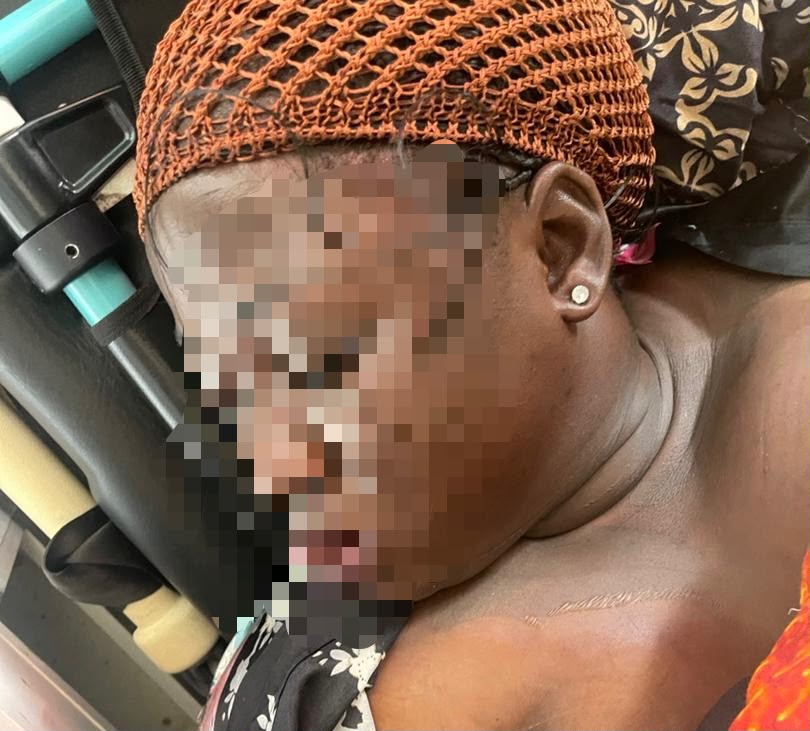
The circumstances that led to the sudden death of Mary Habbila, a Nigerian female student died in the Uburu, Ohaozara Local Government Area of Ebonyi State, home of Dave Umahi, Minister of Works, has now thrown the entire household and environs into serious quandary.
SaharaReporters, which first broke the revealed that the incident, which happened since June 27 this year, has been shrouded in secrecy, with both the Ebonyi State Government and the state police command maintaining silence over the matter.
The incident, the report, added, took place barely a day after Habbila and another woman, Anita Baski, both from Kaduna State, were reportedly brought to the minister’s residence, triggering a police investigation, with the case transferred from the Ohaozara Divisional Police Headquarters to the Ebonyi State Criminal Investigation Department (SCID) in Abakaliki.
Habbila and Baski reportedly arrived at the minister’s residence on June 26 to “attend” to him, only for Habbila to be found dead inside the residence the following morning under circumstances investigators are still trying to establish.
Police sources were quoted by the paper as saying that Jonathan Bawado, a police officer who serves as Senator Umahi’s Personal Assistant and previously worked as his Aide-de-Camp (ADC) during his tenure as Governor of Ebonyi State, alerted medical personnel after Habbila was discovered unresponsive.
Subsequently, a doctor and an ambulance were dispatched to the residence, while Tobechukwu Godwin, Chief Superintendent of Police (CSP) Divisional Police Officer (DPO) of Ohaozara Police Division, was notified of the incident, the report said, adding that at the hospital Chihurumnanya Alo, a Professor and Consultant Public Health Physician, Infectious Diseases Specialist and Chief Medical Director of the David Umahi Federal University Teaching Hospital (DUFUTH), Uburu, was also alerted about the incident.
The police who subsequently conveyed Habbila’s body to a mortuary, were said to have handed over the identification tag attached to Habbila’s to the Ebonyi State Police Command by the said DPO, as part of the ongoing investigation.
SaharaReporters, quoted a senior police officer, with knowledge of the case as saying: “The case has been transferred to the State Criminal Investigation Department in Abakaliki,” but, however declined to provide further details, citing the ongoing investigation.
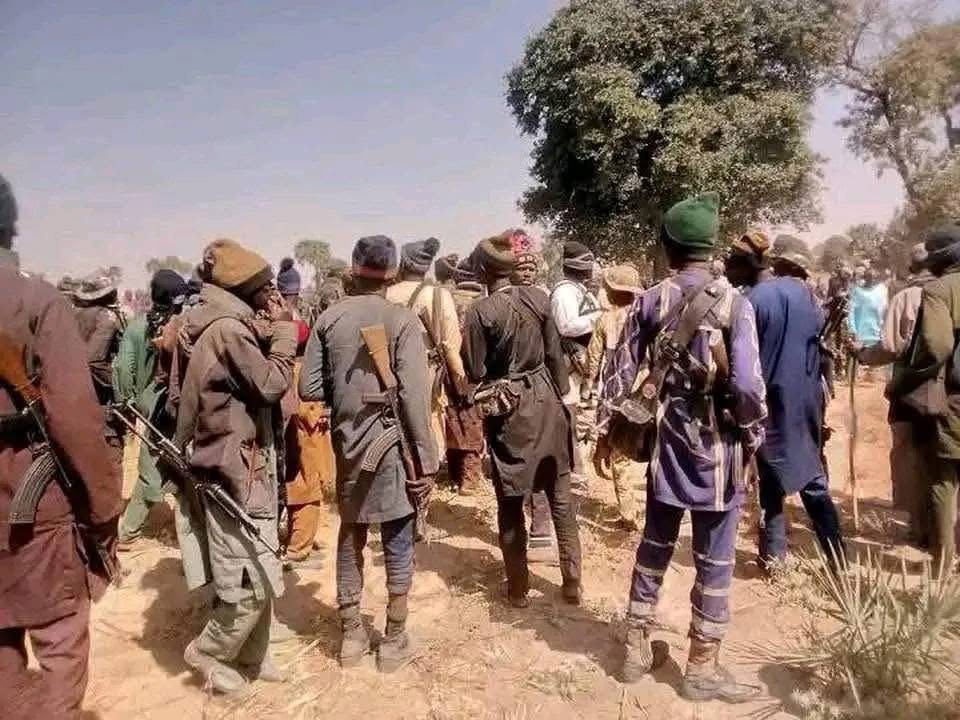
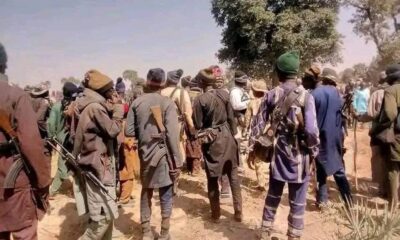
Unlike in other cases, security operatives in Nigeria have upped the ante by adding the arrest of perpetrators to the menu of rescue operations, with the announcement of the capture of eight terrorists who participated in the abduction of school teachers and students in Oyo State on May 15.
All the 46 pupils, students and teachers abducted by terrorists from three schools in Oriire Local Government Area of Oyo State, regained their freedom on Friday, after about 56 days in captivity, with several others reportedly also neutralised during the operation.
Giving a clue of what transpired during the operation, Bayo Onanuga, who broke the story of the feat, said it was the outcome of sustained security operations, which also foiled the attempt by the abductors to secure the release of one of their captured leaders.
Onanuga, Special Adviser to the President on Information and Strategy, using his X handle to give details about the operation, said: “Finally, all the kidnapped pupils and teachers in Orire, Oyo have been rescued by our security agencies. In the course of the rescue operation, eight of the kidnappers were arrested and are now in DSS custody, while some of them were neutralised.”
“There was no quid pro quo in the rescue as one of the terrorists, a kingpin, that the kidnappers demanded his release, is being prosecuted for his atrocities. The security agencies will give full account soon.”
The victims were abducted on May 15 when heavily armed bandits attacked Community Grammar School, Baptist Nursery and Primary School, and L.A. Primary School in the Esiele and Yawota communities of Oriire Local Government Area, seizing dozens of pupils, students and teachers.
The abduction sparked nationwide outrage, with parents, labour unions, traditional rulers and civil society groups mounting sustained pressure on the authorities to secure the victims’ release.
The incident also triggered an indefinite strike by the Nigeria Union of Teachers in Oyo State over growing insecurity in schools.
President Bola Tinubu had condemned the attack and ordered security agencies to intensify intelligence-led operations to rescue the captives and bring the perpetrators to justice.
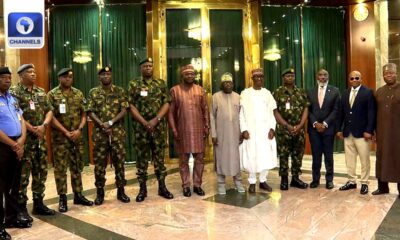
The President subsequently dispatched a high-powered Federal Government delegation to the affected communities, approved the deployment of specialised rescue assets and authorised the recruitment of 1,000 forest guards to strengthen security across Oyo State.



-
 News4 weeks ago
BREAKING: Troops rescue wife of kidnapped General! *Terrorists flee scene
-
 News8 hours ago
BREAKING: Mystery death! *Female student dies a day after arriving Umahi’s home!
-
 News2 weeks ago
BREAKING: Court sentences Nigerien, two others to death over terrorism
-
 News4 weeks ago
BREAKING: Count me out, Okonkwo tells Atiku *Amaechi VP’s choice an insult to Ndigbo
-
 News1 week ago
BREAKING: EX-SSG mowed down by gunmen! *He resisted being kidnapped – driver
-
 News3 weeks ago
Abductors of Oyo teachers panicking, freedom coming for victims soon!
-
 News3 weeks ago
Two hours after Igboho’s ‘red-eyes’ to ‘Fulani’ leaders, gunmen free kidnap victims!
-
 News3 weeks ago
Chicagogate: Nigerians return to court! *Move to stop Tinubu from 2027 polls