

News
You’ve messed up the judiciary, retiring judge blasts CJN *Cites exclusion of S’East from S’Court


“My lords, distinguished invitees, ladies and gentlemen, it is obvious that the judiciary I am exiting from is far from the one l voluntarily joined and desired to serve and be identified with. The institution has become something else,” were part of the exact words with which Justice Musa Dattijo Muhammad, until last Friday, Justice of the Supreme Court, came down heavily on Olukayode Ariwola, his colleague at the apex court and currently the Chief Justice of Nigeria (CJN), stopping short at directly calling him a corrupt judge, but left little unsaid, regardless.
On the same day he retired from the apex court, after a 40-year stretch at the judiciary, Muhammad, loosened his tongue to reveal activities at the highest court in the land, with damning verdict linked to Ariwola’s handling of his job as the CJN, including nebulous handling of its funds of the court.


While delivering his address at the valedictory session, before a large audience, comprising his colleagues at the Supreme Court of Nigeria (SCN), other judges at the various courts down the ladder, lawyers and stakeholders in the country, he accused Ariwola of abusing his power, citing particularly, his deliberate exclusion of Igbo judges from the apex court bench.
Stressing how the CJN possessed absolute power over the National Judicial Council (NJC), the Federal Judicial Service Commission (FJSC), the National Judicial Institute (NJI), and the Legal Practitioners Privileges Committee (LPPC), he regretted its misuse by the CJN in appointing judges and other judicial officials, as well as to control the budget of the third arm of government.
Citing a situation where the Supreme Court comprised only judges from the South West, South-South, North West with none from the South-East, he said such a situation was clearly antithetical to democratic principles and unhelpful to Nigeria’s diversity, adding that even the North-Central, where he came from had suffered the same fate, since Ariwola had refused to appoint his replacement, even when he was aware of his impending exit.
Accusing the CJN of using this power to his advantage and the detriment of the judiciary, he pointed out how ignoring the South East from the apex court, even though the zone was entitled to seats in it, he said the action was a direct threat to the principle of representation, which the judiciary must reflect, a situation he added had weakened public confidence in the judiciary.
His words: “To ensure justice and transparency in presidential appeals from the lower court, all geopolitical zones are required to participate in the hearing. It is therefore dangerous for democracy and equity for two entire regions to be left out in the decisions that will affect the generality of Nigerians. This is not what our laws envisaged. Justice Chima Centus Nweze died on July 29, 2023, Justice Sylvester Ngwuta, died on July 7, 2021, and since then, no appointment has been made to fill the vacuum.
“The South East no longer has any presence at the Supreme Court” he said, adding “it has been two years and seven months since the previous justice from the South East died and no appointment was made. Also, it was clear ab-initio that I will be leaving the court this day on attaining the statutory age of 70. It is then not in doubt that there has been sufficient time for suitable replacements to have been appointed. This is yet to occur. It is evident that the decision not to fill the vacancies in the court is deliberate. It is all about the absolute powers vested in the office of the Chief Justice of Nigeria and the responsible exercise of the same.”
Muhammad, who also revealed his personal experience as the next in command to Ariwola, before his retirement, stressed that the absolute powers the CJN enjoyed over the appointments in the NJC, FJSC, NJI, the LPPC, responsible for the appointment of Senior Advocates of Nigeria (SANs), could only breed corruption.
Regarding himself, he said his role as the next most senior justice of the apex court before his retirement, was no better than the ugly fate of a deputy governor who was not consulted by his principal over any decision.
“As chair of the NJC, FJSC, NJI and LPPC, appointments as council, board and committee members are at his pleasure. He neither confers with fellow justices nor seeks their counsel or input on any matter related to these bodies. He has both the final and the only say. The CJN has power to appoint 80 percent of members of the council and 60 percent of members of FJSC. The same applies to NJI and LPPC. Such enormous powers are effortlessly abused. This needs to change,” he said, calling for the reduction of the CJN’s powers.
Warning of how the continued denial of the existence of this threatening anomaly weakened effective judicial oversight in Nigeria, called for improved welfare of judicial officers, adding that beyond the issue of judicial officers’ salaries that had remained static for 15 years, what the judiciary die with its allocations in the budget ought to be scrutinised as well.
“Who is responsible for the expenditure? An unrelenting searchlight needs to be beamed to unravel how the sums are expended. President Muhammadu Buhari in 2016 ordered the forceful entry into the houses and the arrest of justices some of whom were serving at the apex court. Not done, in 2019 the government accosted, arrested and arraigned the incumbent Chief Justice before the Code of Conduct Tribunal for alleged underhand conduct. With his retirement apparently negotiated, he was eventually let off the hook.
“In 2022, in a letter signed by all the other justices of the Supreme Court, including the current Chief Justice, the aggrieved protested against the shabby treatment meted to them by the head of court and the Chief Registrar. At the centre of the friction was their welfare and the cavalier attitude of the Chief Registrar thereto. In the event, his lordship Ibrahim Tanko Muhammad disengaged ostensibly on grounds of ill-health.
“Now, it must be said, Chief Femi Falana is right that the safeguard in our appointment procedures against judicial appointments for improper motives is increasingly being compromised. Certainly, by Rule 8.3 of the Judicial Code of Conduct “any judge who takes advantage of his judicial office for personal gain or for gain by his or her relative or relation abuses the power vested in him!!!.
Regretting a situation where the Chief Registrar earned N1.2 million per month as against the take home N751,000 for the judges, he said: “That the unjust and embarrassing salary difference between the justices and the Chief Registrar still abides remains intriguing to say the least. Valedictory session after valedictory session lapses and challenges that should be nipped are restated to no avail. Why the silence and seeming contentment?”
He added: “A couple of years ago, appointment to the bench was strictly on merit. Sound knowledge of the law, integrity, honour, and hard work distinguished those who were elevated. Lobbying was unheard of. I never lobbied, not at any stage of my career, to secure any appointment or elevation. As much as possible the most qualified men and women were appointed. That can no longer be said about appointments to the bench.
“The judiciary must be uniquely above board. Appointments should not be polluted by political, selfish, and sectional interests. The place of merit, it must be urged, cannot be over-emphasised. Public perceptions of the judiciary have over the years become witheringly scornful and monstrously critical. It has been in the public space that court officials and judges are easily bribed by litigants to obviate delays and or obtain favourable judgments.”
“Recently, fresh allegations have been made that children and other relatives of serving and retired judges and justices are being appointed into judicial offices at the expense of more qualified candidates lacking in such privilege and backing. It is asserted that the process of appointment to judicial positions are deliberately conducted to give undue advantage to the ‘children, spouses, and mistresses’ of serving and retired judges and managers of judicial offices. At the Court of Appeal, it is also asserted, presiding Justices are now being appointed out of turn.”
“A number of respected senior members of the bar inter alia, citing the Ahmed Lawan, the former President of the Senate and Imo governorship appeals, claim that decisions of even the apex court have become unpredictable. It is difficult to understand how and where, by these decisions, the judicial pendulum swings. It was not so before, they contended.
“In some quarters the view is strongly held that filth and intrigues characterize the institution these days! Judges are said to be comfortable in companies they never would have kept in the past. It is being insinuated that some judicial officers even campaign for the politicians. It cannot be more damnifying! The judiciary I just retired from is way below the standard compared to when I joined. There must be urgent judicial reforms.”
On his part CJN, who spared no words in eulogising the retiring jurist while acknowledging the difficulties in the judiciary, including the fact that how the apex court now posted the lowest justices in its history (10 instead of 21), maintained that Muhammad would still be remembered for his intellectual prowess, regardless.
“With Justices Musa Dattijo leaving us today after the retirement of Hon. Justice Adamu Amina Augie a few weeks ago, we are now left with just 10 Justices on the Supreme Court Bench; being the lowest we have ever had in contemporary history of the Court.
“However, I can confidently assure all the litigant public that efforts are in top gear to get on board a sizable number of Justices to boost our rank and complement the tremendous effort we have been investing in the business of the Court. I am so emotionally overwhelmed, and at the same time, profusely exhilarated to personally witness this uncommon valedictory session.
“This is not because I have never witnessed or presided over valedictory sessions before; but for the fact that we are honouring a quintessential judicial icon with dazzling qualities and alluring stature who could, in one breath, be classified as a model of excellence that transcends the legal profession.
“My Lord Hon. Justice Musa Dattijo Muhammad in whose honour we assemble here today, is an epitome of jurisprudential finesse; an insuperable lion with an irrepressible voice in the temple of justice.”










In a quick riposte on Saturday, Dave Umahi, Minister of Works, has cautioned Nigerians to be circumspect in the manner they react to the story of the death of a female student in his home in Ebonyi State, warning against the temptation of jumping to conclusion.
Conveying his position on the highly-volatile matter through Francis Nwaze, his spokesman, Umahi, former Governor of Ebonyi State and a key figure in the government of President Bola Tinubu, said caution was needed to enable the police conduct unfettered investigation into the matter.
It was his response to breaking of how one Mary Habila, a female physiotherapist reportedly died in his palatial home at Uburu, Ohaozara Local Government Area of Ebonyi State, on June 27, hours after arriving the day before.
Nwaze, a Senior Special Assistant on Media and Publicity, specifically cautioned against speculations by “tale bearers,” while conveying the Minister’s shock over the matter and his eagerness for the authorities to get at the root of the matter through forensic investigations.
He wrote in the statement: “The attention of the Media Office of the Honourable Minister of Works, Senator Engr. David Nweze Umahi, has been drawn to a publication by a publication concerning the unfortunate passing of Miss Mary Habila in Uburu, Ebonyi State, alleging that the circumstances surrounding her death were shrouded in secrecy.
“The Honourable Minister received the news with profound shock and sadness and has since extended his heartfelt condolences to the bereaved family. For the avoidance of doubt, immediately the unfortunate incident occurred, appropriate emergency steps were taken. Medical personnel, including the Chief Medical Director of the David Umahi Federal University of Health Sciences, Uburu, were contacted without delay, while the Nigeria Police was promptly notified in accordance with the law.
“Following confirmation of Miss Habila’s passing, the Honourable Minister personally received her parents, conveyed his sincere condolences, and advised that an autopsy be conducted to scientifically establish the exact cause of death. At the time, however, the family declined the recommendation.
“It is important to clarify that Miss Mary Habila and Miss Anita Baski are employees of the David Umahi Federal University of Health Sciences, Uburu, who had been on secondment to the Federal Ministry of Works as physiotherapists for the past three years until the unfortunate passing of Miss Habila.
“Following the recent developments and in the interest of ensuring that the truth is established beyond doubt, the Honourable Minister has again reiterated his position that an autopsy must be conducted. He remains convinced that this is the most credible and responsible path to resolving all questions surrounding the unfortunate incident.
“We therefore urge the public to exercise restraint, refrain from speculation or premature conclusions, and allow the relevant authorities to carry out their responsibilities without interference. At this difficult time, our thoughts and prayers remain with the family of the deceased, and we pray that God grants them the strength to bear this irreparable loss.”
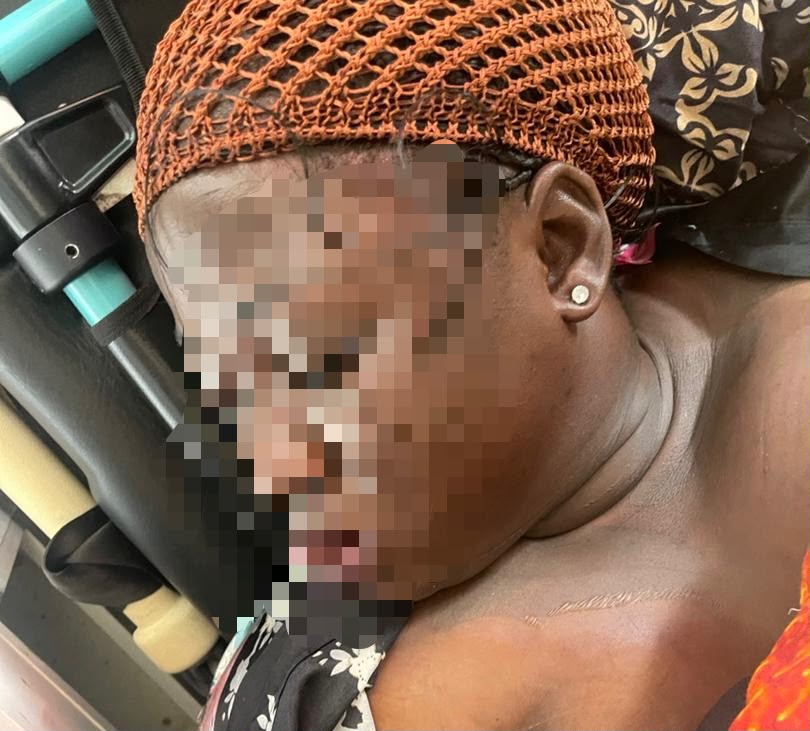
The circumstances that led to the sudden death of Mary Habbila, a Nigerian female student died in the Uburu, Ohaozara Local Government Area of Ebonyi State, home of Dave Umahi, Minister of Works, has now thrown the entire household and environs into serious quandary.
SaharaReporters, which first broke the revealed that the incident, which happened since June 27 this year, has been shrouded in secrecy, with both the Ebonyi State Government and the state police command maintaining silence over the matter.
The incident, the report, added, took place barely a day after Habbila and another woman, Anita Baski, both from Kaduna State, were reportedly brought to the minister’s residence, triggering a police investigation, with the case transferred from the Ohaozara Divisional Police Headquarters to the Ebonyi State Criminal Investigation Department (SCID) in Abakaliki.
Habbila and Baski reportedly arrived at the minister’s residence on June 26 to “attend” to him, only for Habbila to be found dead inside the residence the following morning under circumstances investigators are still trying to establish.
Police sources were quoted by the paper as saying that Jonathan Bawado, a police officer who serves as Senator Umahi’s Personal Assistant and previously worked as his Aide-de-Camp (ADC) during his tenure as Governor of Ebonyi State, alerted medical personnel after Habbila was discovered unresponsive.
Subsequently, a doctor and an ambulance were dispatched to the residence, while Tobechukwu Godwin, Chief Superintendent of Police (CSP) Divisional Police Officer (DPO) of Ohaozara Police Division, was notified of the incident, the report said, adding that at the hospital Chihurumnanya Alo, a Professor and Consultant Public Health Physician, Infectious Diseases Specialist and Chief Medical Director of the David Umahi Federal University Teaching Hospital (DUFUTH), Uburu, was also alerted about the incident.
The police who subsequently conveyed Habbila’s body to a mortuary, were said to have handed over the identification tag attached to Habbila’s to the Ebonyi State Police Command by the said DPO, as part of the ongoing investigation.
SaharaReporters, quoted a senior police officer, with knowledge of the case as saying: “The case has been transferred to the State Criminal Investigation Department in Abakaliki,” but, however declined to provide further details, citing the ongoing investigation.
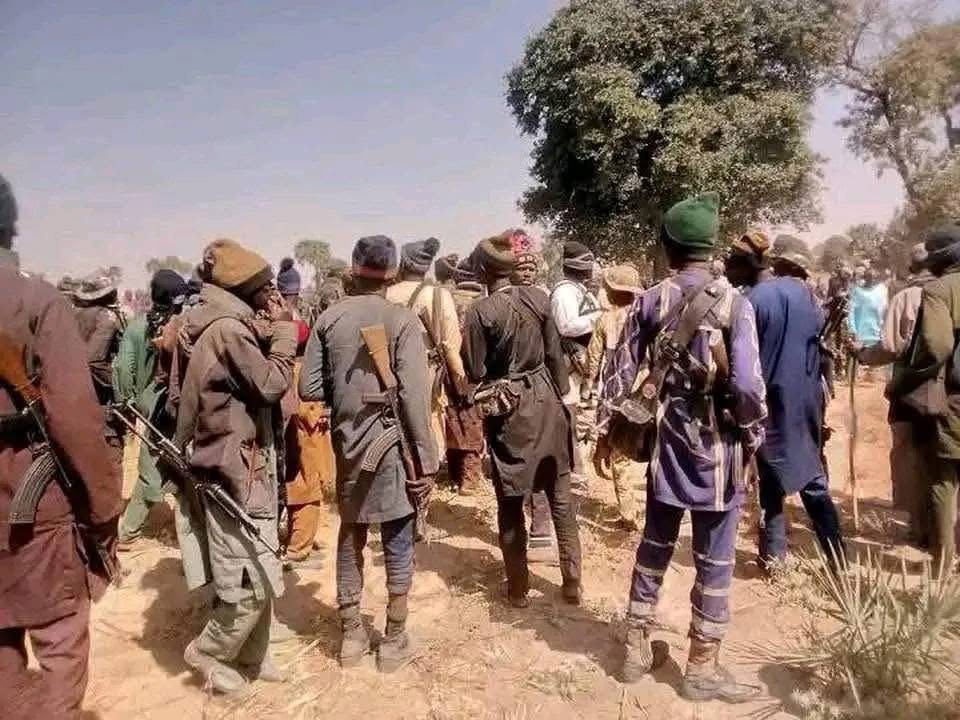
Unlike in other cases, security operatives in Nigeria have upped the ante by adding the arrest of perpetrators to the menu of rescue operations, with the announcement of the capture of eight terrorists who participated in the abduction of school teachers and students in Oyo State on May 15.
All the 46 pupils, students and teachers abducted by terrorists from three schools in Oriire Local Government Area of Oyo State, regained their freedom on Friday, after about 56 days in captivity, with several others reportedly also neutralised during the operation.
Giving a clue of what transpired during the operation, Bayo Onanuga, who broke the story of the feat, said it was the outcome of sustained security operations, which also foiled the attempt by the abductors to secure the release of one of their captured leaders.
Onanuga, Special Adviser to the President on Information and Strategy, using his X handle to give details about the operation, said: “Finally, all the kidnapped pupils and teachers in Orire, Oyo have been rescued by our security agencies. In the course of the rescue operation, eight of the kidnappers were arrested and are now in DSS custody, while some of them were neutralised.”
“There was no quid pro quo in the rescue as one of the terrorists, a kingpin, that the kidnappers demanded his release, is being prosecuted for his atrocities. The security agencies will give full account soon.”
The victims were abducted on May 15 when heavily armed bandits attacked Community Grammar School, Baptist Nursery and Primary School, and L.A. Primary School in the Esiele and Yawota communities of Oriire Local Government Area, seizing dozens of pupils, students and teachers.
The abduction sparked nationwide outrage, with parents, labour unions, traditional rulers and civil society groups mounting sustained pressure on the authorities to secure the victims’ release.
The incident also triggered an indefinite strike by the Nigeria Union of Teachers in Oyo State over growing insecurity in schools.
President Bola Tinubu had condemned the attack and ordered security agencies to intensify intelligence-led operations to rescue the captives and bring the perpetrators to justice.
The President subsequently dispatched a high-powered Federal Government delegation to the affected communities, approved the deployment of specialised rescue assets and authorised the recruitment of 1,000 forest guards to strengthen security across Oyo State.



-
 News4 weeks ago
BREAKING: Troops rescue wife of kidnapped General! *Terrorists flee scene
-
 News7 hours ago
BREAKING: Mystery death! *Female student dies a day after arriving Umahi’s home!
-

 News2 weeks ago
BREAKING: Court sentences Nigerien, two others to death over terrorism
-
 News4 weeks ago
BREAKING: Count me out, Okonkwo tells Atiku *Amaechi VP’s choice an insult to Ndigbo
-
 News1 week ago
BREAKING: EX-SSG mowed down by gunmen! *He resisted being kidnapped – driver
-

 News3 weeks ago
Abductors of Oyo teachers panicking, freedom coming for victims soon!
-
 News3 weeks ago
Two hours after Igboho’s ‘red-eyes’ to ‘Fulani’ leaders, gunmen free kidnap victims!
-
 News3 weeks ago
Chicagogate: Nigerians return to court! *Move to stop Tinubu from 2027 polls