
News
INEC cries out: We’re being targeted *Enemies destroying Nigeria through fake news


“Election-related disinformation has become a major strategy used by nefarious individuals and groups in the political space to manipulate the general public to their advantage, regardless of the consequential effect such propaganda may have on the peace and stability of the electoral process and the country at large.”
These were the exact words with which the Independent National Electoral Commission (INEC), bewailed the impact of the negative attacks targeted at it by a groundswell of Nigerians, with the unholy intention of plunging the country into anarchy and chaos, through fake news and misinformation.


Stressing the negative impact on the management of elections in the country, the commission, said the phenomenon must be nipped in the bud or the country as a whole could be affected.
Kunle Ajayi, spokesman of the commission, who described as distasteful, its experience with fake news, hate speech and misinformation during the 2023 general elections, maintained that disinformation was being used to provoke religious and tribal sentiments which have already polarised the country.
Ajayi, National Commissioner and member of the Information and Voter Education Committee of the Commission, who was speaking at a two-day capacity-building workshop for members of the INEC Press Corps, bemoaned the ugly situation.
At the workshop with the theme Ethical, Safety Practices and Critical Issues Relating to the Kogi, Imo, and Bayelsa Governorship Elections, sponsored by the Development Alternatives Incorporated (DAI), Ajayi said elections-related disinformation had become a major strategy used by nefarious individuals and groups in the political space to manipulate the general public to their advantage, regardless of the consequential effect such propaganda may have on the peace and stability of the electoral process and the country at large.
He said: “I would like at this juncture, to draw the attention of the media to a crucial issue that poses a serious threat to the election process in Nigeria. That is the issue of fake news. The Commission’s distasteful experience with fake news in the 2023 General Elections has shown that, if not nipped in the bud, fake news can become the bane of election management in Nigeria.
“The alarming prevalence of misinformation, ‘fake news’, hate speech, and the weaponisation of disinformation has become very worrisome to the Commission. Disinformation is used to provoke religious, political, and tribal sentiments in an already polarised society such as ours, especially, during election season, which is often the leading cause of electoral violence and uprisings.”
Team Leader for DAI, Rudolf Elbling, said the media was an essential part of any democracy, adding that a democratic election without the media is impossible as they act as a crucial watchdog to democratic elections, safeguarding the transparency of the process.
He explained that to fulfill their roles, Journalists need to maintain a high level of professionalism, accuracy, and impartiality in their coverage, stressing that transparency is required on many levels including for access to information; accountability, and legitimacy of individuals, institutions, and processes themselves; and for rightful participation and public debate.



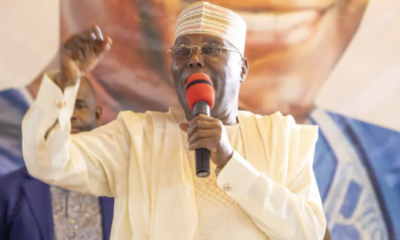


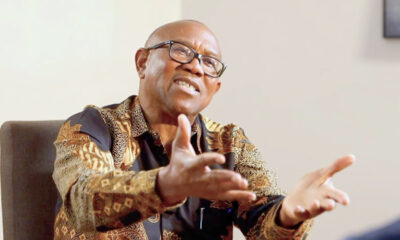





Peter Obi, candidate of the Nigeria Democratic Congress (NDC), has given assignment to Nigerians to put all those aspiring to take up political positions in the country through the grill to ascertain their level of integrity, saying it was required as a sine qua non for the job they seek.
Obi, who has been a subject of discussion in the polity since the allegation of corruption was levied against him by Kenneth Okonkwo, spokesman of his campaign in 2023, over the conduct of the party’s primaries to choose candidates for the 2027 general elections, said the grilling must start with his own person.
A guest in an interview on a podcast with Rufai Oseni, a popular television anchor, the former Governor of Anambra State, stated that it was actually for this reason that he had now sworn to see the litigation he instituted against Okonkwo through.
His take is that the Nollywood actor should use the courtrooms to give all the details of bad behaviour, following his threat to expose him fully, after alleging that he was collecting money from aspirants in the said election for electoral favours.
Hear him: “The issue of taking Kenneth Okonkwo to court wouldn’t have arisen if he had stopped at those allegations. But he claimed he still has more he would expose about me in the future. So, I am very happy to take him to court so that he can expose me publicly, alongside other Nigerians. If any of them has any criminal allegations against me, they should bring them to court.
“Not just Kenneth, everybody should now say those things they know that is bad about me or I did that is wrong because it’s good for the system, it’s good for the society,” Obi said.
“So, if you know that when we were in primary school, this man was cheating or didn’t go to the primary school, didn’t go to secondary school, didn’t do, if you know this man has done something criminal somewhere, this is time to bring it up.”
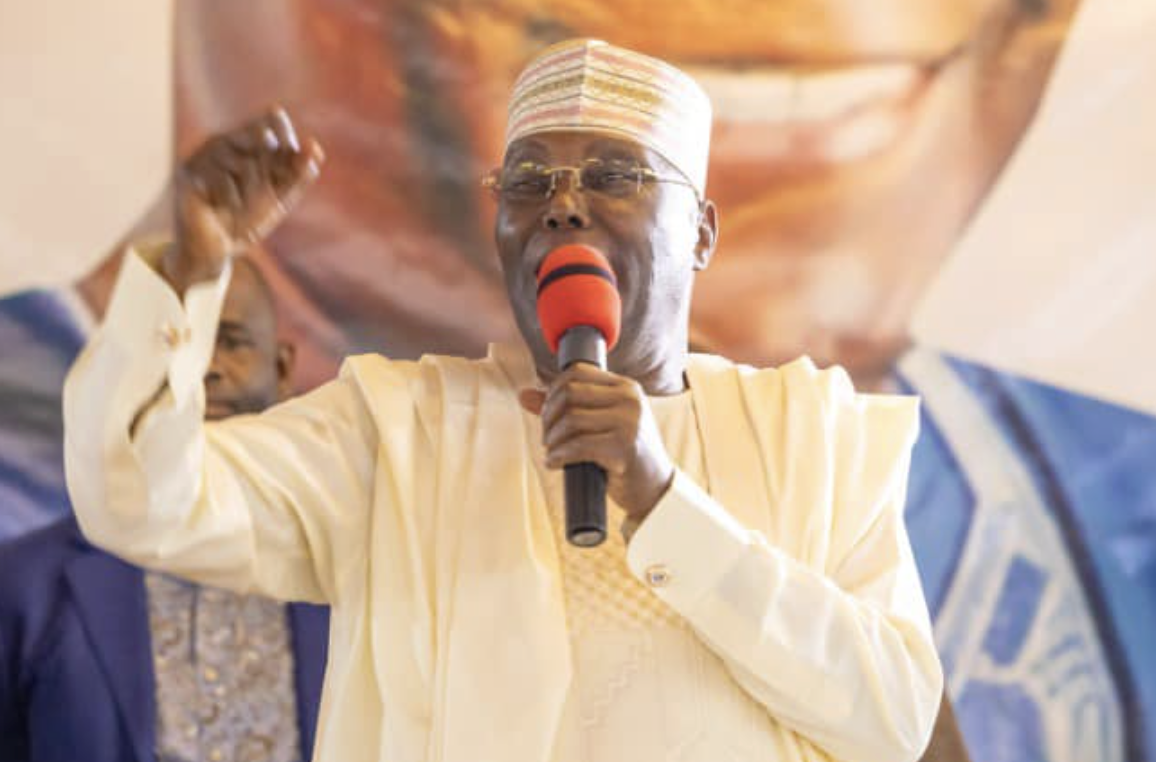
For the umpteenth time, Atiku Abubakar, former Vice President Atiku Abubakar has warned about the dangerous implication of using state institutions, particularly the judiciary to destroy Nigeria’s democracy, saying it is an ill-wind that blows nobody any good.
Atiku, presidential candidate of the African Democratic Congress (ADC), speaking on the heels of Tuesday’s verdict of the Court of Appeal, halting the de-registration order by the Federal High Court, insisted that judicial officers must not lend themselves to any act capable of undermining the nation’s democratic process.
The appellate court had ordered a stay of execution on the order made on Monday by Justice Peter Lifu of the Federal High Court Abuja, for the Independent National Electoral Commission (INEC) to deregister the ADC alongside four other political parties).
A totally scandalised Court of Appeal, sitting in Abuja, had taken umbrage, sparing no hard words in upbraiding the lower court judge, stating that his likes were unfit to sit on the bench.
In a unanimous ruling by a three-man panel, the court held that Lifu’s action was “the highest form of judicial impertinence”, stressing that the Supreme Court previously held that a judge who acted in such a manner.
Describing his conduct as the height of judicial rascality, the upper court, stated: “Courts are enjoined to protect their integrity. This Court has supervisory authority over the trial court.
“The decision of the lower court to proceed with the judgment despite the express order of this court is a brazen violation of the hierarchy of the court and the 1999 Constitution.
This court has the duty to invoke its powers in ensuring that its orders are obeyed. The application for a stay of execution is here yet granted. The enforcement of the judgment is stayed.”
Atiku, who hailed the position of the higher court, which restored his hope to be on the ballot as presidential candidate in the 2027 election, also noted the role of INEC as “significant.”
He said: “I welcome the Court of Appeal’s decision to stay the execution of the Federal High Court judgement seeking the deregistration of our great party, the ADC, and four other political parties. It is particularly significant that INEC itself initiated the application for the stay.
“The development reflects growing public concern over judicial contradictions and politically charged rulings within the judiciary. “Any attempt to undermine Nigeria’s hard-won democracy through judicial manipulation is a grave danger to the Republic. If our democracy suffers further injury, history will demand accountability from those entrusted with dispensing justice.
Outside ADC, Lifu’s order, also included: Action Democratic Congress (ADC), Action Peoples Party (APP), Action Alliance (AA), Accord Party (AP) and Zenith Labour Party (ZLP), similarly slammed for allegedly failing to meet the constitutional requirements for continued registration and participation in elections.

“He is running in contempt of the court. Justice Lifu should be arrested because he is acting in contempt of the court which is a criminal act,” were the exact words with which the African Democratic Congress (ADC), demonstrated its angst over the court ruling on Monday, ordering its de-registration as a political party in Nigeria.
A furious Bolaji Abdullahi, spokesman of the party, told his host while appearing as a guest on Monday’s edition of Politics Today, a public affairs programme on Channels Television that the judge of the Abuja Federal High Court who gave the order was actually playing with fire because of the consequences.
Directly accusing him of playing the script of the All Progressives Congress (APC), to ensure that President Bola Tinubu emerged the sole candidate for the 2027 presidential election, the party spokesman, was emphatic that the plan would not work, as head or tail, ADC must be on the ballot in all the elections.
Hear him: “There is a Court of Appeal order saying don’t hear this case until October 27. So, on what basis? You can’t place something on nothing. The Court of Appeal said don’t act on this until I hear it on October 27. So, on what basis did he deliver the judgement
“So, for us in the African Democratic Congress, what we’re convinced and they know is what they have done has no leg to stand on legally. What they want to do is to create doubts in the minds of the people that this ADC has too many legal cases, can we actually run on this? And to distract us. But we’re not distracted.
“We’re very clear. It was in spite of all they have done since ADC came on board that we ran one of the best and one of the most comprehensive direct primaries in the history of democracy in Nigeria. So, we are strong enough to withstand this. And that’s why I’m saying that we are going to contest in 2027. We’re ADC. We don’t buckle before dictatorship.”
Stressing on the implication of the judgement, which also affected Accord Party (AP), Action Peoples Party (APP), Action Alliance (AA), and Zenith Labour Party (ZLP) for allegedly failing to meet constitutional and electoral performance requirements, following a suit by the National Forum of Former Legislators, he said it portended grave danger.
He added: “We are not surprised. We know that the Nigerian people believe that there is a problem with the judiciary, but what we did not expect is the level of judicial rascality that was demonstrated today.
“What we are saying is that we reject it in its totality, and we are saying that the people behind this are playing with fire. Hundreds, if not thousands, have obtained nomination forms and contested elections and emerged as candidates on the platform of the ADC.”



-

 News4 weeks ago
BREAKING: US-Nigeria troops slaughter 175 ISWAP fighters
-
 Columns4 weeks ago
Dear General Gowon: That apology you’re running from is your nemesis
-

 News2 weeks ago
BREAKING: Terrorists strike Ibadan again! Abduct ex-Minister’s sister, twin children
-

 News4 weeks ago
BREAKING: Wait over! Arsenal are CHAMPIONS! Win EPL after 22 years hiatus
-
 Columns3 weeks ago
See Tinubu’s terrible damage on Option A4 and its precious memories
-
 News4 weeks ago
BREAKING: Jonathan emerges presidential candidate *Gets automatic PDP ticket!
-

 News2 days ago
BREAKING: Troops rescue wife of kidnapped General! *Terrorists flee scene
-

 News4 weeks ago
Presidency: Obi met all requirements – NDC *Cleared to contest primaries