
News
Over 150 million Nigerians now go to bed on empty stomach – PDP


“It is horrifying that in the last two months, over 150 million Nigerians can no longer afford their daily meals with families now going to bed on empty stomachs,” were the exact words with which the Peoples Democratic Party (PDP) underscored the present hunger in Nigeria under the government of President Bola Tinubu.
The main opposition party, in a statement by its spokesman, Debo Ologunagba, PDP, bewailed how Tinubu’s leadership has created an atmosphere and feeling of absence of governance in the country.


Using his X platform, he said: “The Peoples Democratic Party (PDP) alerts that Nigeria is asphyxiating, in dire straits and fast grinding to a halt under Senator @officialABAT and the All Progressives Congress (APC). @OfficialAPCNg. The Party laments that Nigeria is at the edge of the precipice under the Tinubu-led APC hold which lacks the acceptability and followership of citizens; a situation that has created an atmosphere and feeling of absence of governance in the country.
“Our Party is alarmed that there is a serious disconnection between the government and the citizens arising from the ill-planned and hasty implementation of policies that have brought excruciating hardship, horrifying insecurity and a general sense of apprehension that is already threatening the peace, unity and corporate existence of our nation.
“The administration’s lack of ingenuity, tact and sensitivity towards the wellbeing of Nigerians in the removal of subsidy and floating of the Naira inflamed unbearable high cost of living, crippled our national productivity, crashed millions of businesses and sparked massive job loss with attendant escalated poverty, hunger, insecurity and hopelessness across the country.
“Moreover, the PDP describes as distressing that the APC government had turned a blind eye to the plight of Nigerians with no concrete commitment towards the safety of lives of our citizens despite the killing of over 500 Nigerians in Plateau, Benue, Niger, Kaduna and other States of the federation, with many more abducted since May 29, 2023.
“The failure of the APC government to decisively act since the abduction of eight corps members who were on their way to Sokoto State for their one-year mandatory national service is another ugly testament of the APC government’s insensitivity towards the security, safety and wellbeing of citizens.
“More disturbing is the recent downing of a Nigerian military aircraft with attendant loss of lives of our brave and gallant military personnel without a corresponding reassuring statement from the APC government. Currently, under the APC, life expectancy in Nigeria has plummeted.
“Citizens and residents live in constant apprehension and cannot move freely across the country for fear of being killed or abducted. Instead of protecting Nigerians, the APC government is desperate to plunge our nation into a needless war in Niger Republic over a conflict in that nation that does not constitute any threat whatsoever to our National Interest.
“Our Party is concerned that the general sense of despondency, anxiety, distress and disconnection in the country, if not urgently addressed, could deteriorate into a serious crisis. We urge Nigerians to remain calm, and law-abiding and continue to support one another in their quest for a secure and economically thriving nation.”




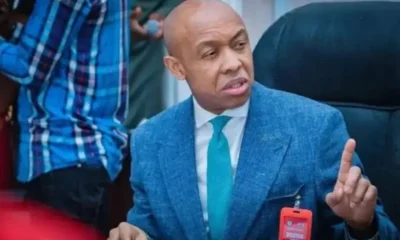








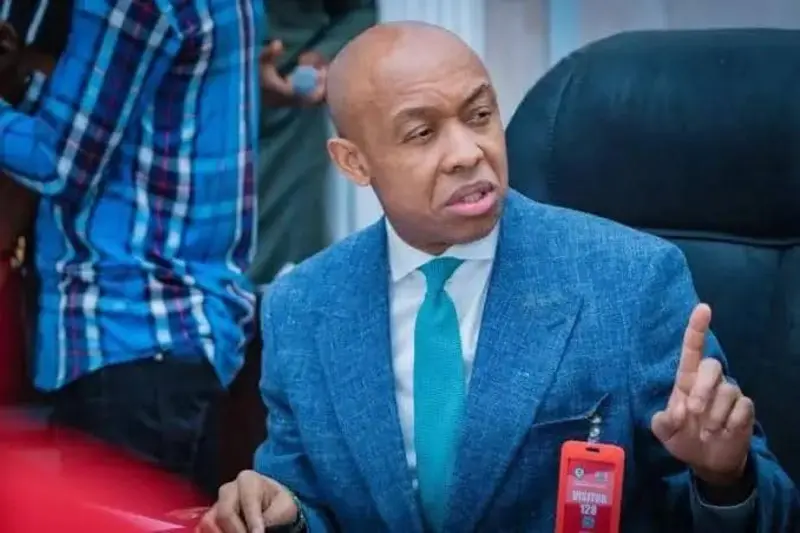
Chidi Odinkalu, Nigeria’s fiery lawyer, law teacher and former Chairman of the National Human Rights Commission (NHRC), is emphatic that President Bola Tinubu is pushing to perpetuate himself in office, beginning with gaming the electoral process in 2027.
Odinkalu, Professor of Practice in International Human Rights Law at the Fletcher School, told his host Naija Unfiltered, a popular Nigerian podcast programme, that he was as sure as death that the President would not exit office in 2031, if he succeeded with his current gambit to remain in power beyond next year.
Hear him: “Yes. But as I said, let me repeat myself. There’ll be a third term. President Tinubu has not done all of this just for another four years. There will be a third term. And anybody who is doing, ‘it is not our portion,’ is not reading the evidence.”
To achieve this aim, the activist, who was also emphatic that the National Assembly, would play a role, added: “The current National Assembly is anything but national or an assembly. And if it’s an assembly, it’s not a parliamentary one. Many people have called it a rubber stamp, but I think that is actually abusive of rubber stamps. I think this National Assembly is a disgrace.
Citing how bizarre and completely compliant the national legislature had become to Tinubu, the ex-NHRC’s boss, stated: “If you can change your national anthem in less than 24 hours with no public hearing, no public consultation, no public involvement, it tells you you don’t have a country because a national anthem is fundamental to the construction of a national identity.”
Also referring to the current move by the President to introduce state police, Odinkalu, wondered how the Nigerian Senate would introduce the bill to that effect and proceed towards the first and second readings, as well as committee stage and passage in less than two hours, questioning how that was possible in normal clime.
Hear him: “Once we finish our elections, we’re going to amend our Constitution, introduce a single six-year presidential term. The current incumbent will be elected until 2031. In 2031, what will happen? The question will be, will he be entitled to run on the six-year term or will he not?
“You will then get the best Senior Advocates in Nigeria telling you the law is not retrospective. That is why the administration is supporting the litigation over President Jonathan’s tenure—not because the Constitution is not clear, but because they will say there is precedent. There will be a third term, and I’m prepared to bet on it.”



-
 News4 weeks ago
BREAKING: Troops rescue wife of kidnapped General! *Terrorists flee scene
-
 News4 weeks ago
BREAKING: Count me out, Okonkwo tells Atiku *Amaechi VP’s choice an insult to Ndigbo
-

 News2 weeks ago
BREAKING: Court sentences Nigerien, two others to death over terrorism
-

 News4 weeks ago
Dickson: Obi, a big asset to NDC, we’re working together … but!
-

 News4 weeks ago
Ovia, ex-Zenith Bank boss swings into luxury apartments *Flats hit $2.8million price tag
-
 News7 days ago
BREAKING: EX-SSG mowed down by gunmen! *He resisted being kidnapped – driver
-

 News3 weeks ago
Abductors of Oyo teachers panicking, freedom coming for victims soon!
-

 News3 weeks ago
Two hours after Igboho’s ‘red-eyes’ to ‘Fulani’ leaders, gunmen free kidnap victims!