
News
Coups in Africa will be crushed – Tinubu *Enthuses on $15billion Lagos-Abidjan Corridor Highway


President Bola Ahmed Tinubu, on Sunday said Africa could maintain its relevance in a competitive global arena, only through its ability to feed its people, adding that it must be active to compete globally, affirm and defend their continental unity, and reject “a new scramble for the continent.”
Tinubu, Chairman of the Economic Community of West African States (ECOWAS) Authority of Heads of States and Government, while arguing that the continent had no place for passive leadership anymore, stressed that it should rather be proactive to deal with the odds stacked against the people.

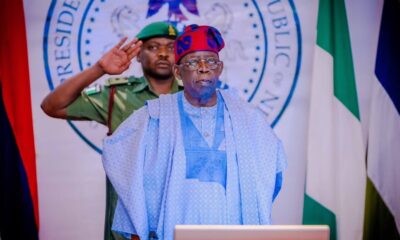
Rejecting the notion of a new scramble for Africa at a time the historic plundering and exploitation of the past should be consigned to the heap of history, the President, who spoke in Nairobi, Kenya, during the Fifth Mid-Year Coordination Meeting of the African Union (AU), the Regional Economic Communities (RECs), the Regional Mechanisms (RMs), and African Union Member States, also bemoaned the twin challenges of terrorism and the re-emergence of coups, which he saw as reversal of democratic changes of government.
Tinubu’s address at the session, conveyed by his spokesman, Dele Alake, who quoted his boss as saying that ECOWAS Authority was set to strengthen its Standby Force for deployment to fight terror and resist coups, while highlighting the progress made by the sub-regional body in its integration process, including trade, free movement of persons, investment promotion, infrastructure development, and security.
In his speech, entitled: Address on Status of Regional Integration in ECOWAS, the President was said to have emphasised the need for Africa to overcome its challenges and work towards a prosperous future, focusing on inclusive growth, good governance, and leveraging the opportunities provided by the African Continental Free Trade Area (AfCFTA).
Urging African leaders to foster good governance to ensure a prosperous future for the continent, President Tinubu said: “As Africans, we forge ahead, no matter the barriers thrust before us. The world we inhabit is often unkind and uncertain. History and current global difficulties argue against our future success.
“Lessons of the past few years teach us that the world economy can be disrupted in ways that halt progress and invite downturn. Our nations can suddenly find themselves in dire situations if we choose to be passive observers of our fate. Africa will not permit the repeat of scramble, exploitation and plundering of the continent.”
On peace, security, and stability, the President said the sub-region should be liberated from terrorism and anti-constitutional changes in government.
He added: “We sit here in meaningful discussion of vital economic matters. Yet, it will be impossible to bring full meaning to what we attempt unless we give due consideration to the instability and conflict that now scar many of our nations.
“The fullness of the integration we seek will elude us as long as several of our nations stand in the mist on violence and war. The trade and commerce we talk of today refers to valued goods and services that improve life.
“The trade and commerce these nations suffer is of destruction and disorder that takes lives and steals opportunity. We cannot integrate Africa and attain the prosperity we seek while our nearby brothers and sisters suffer in pain and anguish; they should not suffer. We must advance as one continent toward peace and prosperity.
“Otherwise, we risk the creation of two or more Africa, one a select group of nations moving steadily while the rest remain trapped in the age-old mire of poverty, conflict and lack of hope. It is very clear that in the area of peace, security, and stability, our region is confronted with the twin challenges of terrorism and reversal of democratic gains through undemocratic changes of government.
“To address these challenges, the ECOWAS Authority, which I have the honour to chair, has given directive regarding the enhancement of the role of the ECOWAS Standby Force for deployment to fight terrorism and undemocratic changes in government.
“The Authority has also resolved to raise our funding internally to finance the peace support operations in our community. Meanwhile, we have continued to monitor the transition programmes in Mali, Burkina Faso, and Guinea.”
President Tinubu recounted that during the recently concluded ECOWAS Summit in Bissau, West African leaders resolved to maintain engagement with Mali and Burkina Faso to assiduously work towards the implementation of the 24-month transition calendars agreed with ECOWAS.
To assist Burkina Faso and Mali in defending their territories from terrorists, he said ECOWAS had decided to provide support for their security agencies, while appealing to international partners to provide the necessary support that would ensure the restoration of democratic order in these West African countries.
Tinubu who emphasised that ECOWAS had achieved the Free Trade Area and was working on establishing the Customs Union and Common Market, however, expressed concern about the low level of intra-community trade among member-states, noting that the European Union (EU) remained the major trading partner for the region, followed by Asia, North America, and the rest of Africa.
Highlighting efforts made by ECOWAS to consolidate the gains of its trade liberalisation scheme and support the implementation of the AfCFTA, he said the ECOWAS Commission had been assisting member-states in the negotiations, ratification, and implementation of the AfCFTA.
He noted that 13 of the 15 ECOWAS member-states have ratified the agreement, saying the body had commenced action towards the implementation of the Harmonized Visa-Regime (ECOVISA) to facilitate the free movement of non-ECOWAS citizens.
Tinubu, who reaffirmed ECOWAS’ focus on building regional infrastructure, including the Lagos-Abidjan Corridor Highway, to promote economic activities and integration, added: “The Feasibility and Preliminary Design and Studies show a significant investment cost of nearly US$15 billion for the whole highway with an average economic rate of return of 15 per cent per annum.
“In the same vein, preparations are underway for the development of the other corridors, namely the Abidjan-Praia-Dakar.”
On intra-regional cooperation, the President said a joint border post between Nigeria and Cameroon was recently commissioned and handed over in November 2022 to the authorities of the two countries.
He described the project as a bridge between ECOWAS and ECCAS (Economic Community of Central African States) and a solid foundation for future cooperation and integration between the regions and ultimately the African continent.
Tinubu also provided an update on the energy sector, expressing delight that several generation and interconnection projects had been implemented within the region, explaining that with the completion of the electric interconnection between Cote d’Ivoire-Liberia-Sierra Leone- Guinee (1,300 km) and between Senegal-The Gambia-Guinee Bissau and Guinee (1,700 km), all the 15 countries in West Africa had now been interconnected.
He said: “The completion of the Information and Coordination Centre of the West African Power Pool (WAPP) will enable member-states to buy and sell electricity in the region as this centre will act as a regional system operator within the framework of the regional electricity market.”
The ECOWAS chairperson also provided updates on investment promotion and the ECOWAS Cybersecurity Agenda to combat cybercrime and improve cybersecurity capabilities in member states.







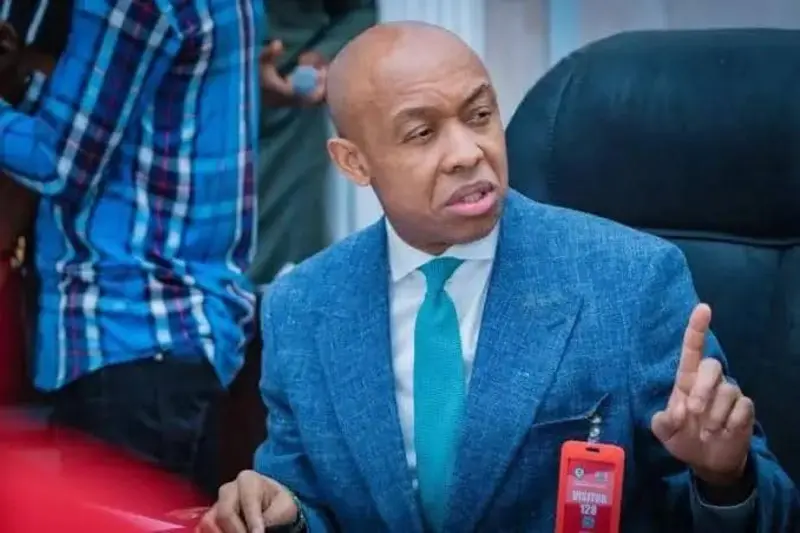
Chidi Odinkalu, Nigeria’s fiery lawyer, law teacher and former Chairman of the National Human Rights Commission (NHRC), is emphatic that President Bola Tinubu is pushing to perpetuate himself in office, beginning with gaming the electoral process in 2027.
Odinkalu, Professor of Practice in International Human Rights Law at the Fletcher School, told his host Naija Unfiltered, a popular Nigerian podcast programme, that he was as sure as death that the President would not exit office in 2031, if he succeeded with his current gambit to remain in power beyond next year.
Hear him: “Yes. But as I said, let me repeat myself. There’ll be a third term. President Tinubu has not done all of this just for another four years. There will be a third term. And anybody who is doing, ‘it is not our portion,’ is not reading the evidence.”
To achieve this aim, the activist, who was also emphatic that the National Assembly, would play a role, added: “The current National Assembly is anything but national or an assembly. And if it’s an assembly, it’s not a parliamentary one. Many people have called it a rubber stamp, but I think that is actually abusive of rubber stamps. I think this National Assembly is a disgrace.
Citing how bizarre and completely compliant the national legislature had become to Tinubu, the ex-NHRC’s boss, stated: “If you can change your national anthem in less than 24 hours with no public hearing, no public consultation, no public involvement, it tells you you don’t have a country because a national anthem is fundamental to the construction of a national identity.”
Also referring to the current move by the President to introduce state police, Odinkalu, wondered how the Nigerian Senate would introduce the bill to that effect and proceed towards the first and second readings, as well as committee stage and passage in less than two hours, questioning how that was possible in normal clime.
Hear him: “Once we finish our elections, we’re going to amend our Constitution, introduce a single six-year presidential term. The current incumbent will be elected until 2031. In 2031, what will happen? The question will be, will he be entitled to run on the six-year term or will he not?
“You will then get the best Senior Advocates in Nigeria telling you the law is not retrospective. That is why the administration is supporting the litigation over President Jonathan’s tenure—not because the Constitution is not clear, but because they will say there is precedent. There will be a third term, and I’m prepared to bet on it.”

“If we continue to pay ransom, we are encouraging these criminals to kidnap more people. The cycle will only continue unless we stop rewarding criminality,” were the words of Dauda Lawal, Governor of Zamfara State, with which he blamed those in the habit of paying ransoms as the major factor fuelling the current wave of kidnapping incidents across the country.
Lawal, on Thursday at the ARISE News/THISDAY Town Hall Conference on State Police and National Security in Abuja, told his audience how he flatly refused to pay a ₦300 million ransom demanded by kidnappers who abducted his brothers in 2019.
Reiterating his opposition to negotiating with bandits and renewed his support for the establishment of state police, Lawal, while recounting the incident, said: “My own brothers were kidnapped in 2019, and the kidnappers demanded about ₦300 million. I told them I was not going to pay a dime. If they wanted to kill them, they could go ahead.”
Stating that his brothers were eventually released without any ransom being paid, he argued that paying ransom usually emboldened criminal groups by providing financial incentives for further kidnappings.
He added: “My position on ransom payments remains unchanged. I will not negotiate, and I will not pay ransom to any criminal, no matter what happens.”
Endorsing the move for the establishment of state police, to enable governors have greater operational authority over security within their states, he regretted that the current constitutional arrangement left governors with responsibility for security without corresponding powers to direct security agencies.
His words: “In as much as I am called the chief security officer of the state, I do not have the command-and-control authority to direct the operations of the security agencies. I’m prepared to support the funding of state police if the proposed policing structure is established. I’m confident that decentralised policing will improve intelligence gathering, response time and the overall fight against insecurity.”
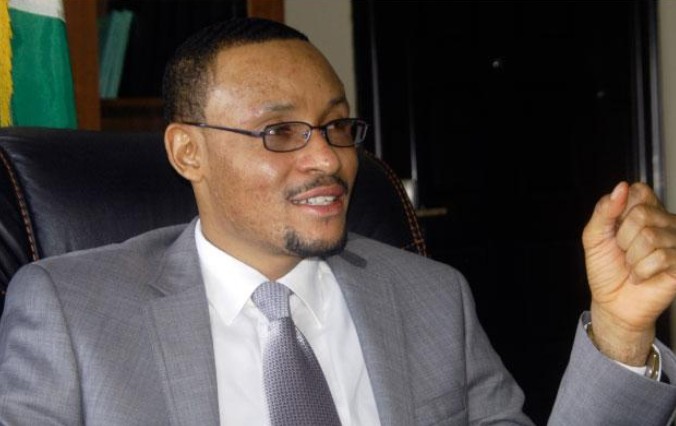
Exactly seven years, two months and four days after he forced Walter Onnoghen, the 16th Chief Justice of Nigeria (CJN) out of office, Danladi Umar, former Chairman of the Code of Conduct Tribunal (CCT), on Thursday, found himself in Kuje prison.
Justice Peter Kekemeke, of the High Court of the Federal Capital Territory (FCT), sitting in Maitama, handed the ex-CCT boss the unwelcome package on Thursday, following his arraignment by the Federal Government on a four-count corruption charge.
Umar’s ordeal began after an investigations revealed that he abused his official position by conferring an undue advantage on himself while serving as head of the tribunal, having in 2021, reportedly using his wife’s bank account to collect the sum of N5.5 million from a contractor engaged to paint the headquarters of the CCT in Abuja.
He was also accuse of using the same account to collect another N6million on January 25, 2024, from a contractor who handled the digitisation of the CCT’s records and yet another N2.43 million a contractor paid as tuition fee of his daughter at Baze University, Abuja.
After pleading not guilty to offences, said to be punishable under section 19 of the Corrupt Practices and Other Related Offences Act, 2000, Christopher Mshelia, lawyer to the FG, prosecuting the matter, applied for his remand in a correctional facility, while urging the court to set a date for the commencement of trial.
His pleas to be freed on bail pending the determination of the case, was opposed by the prosecution, which drew the court’s attention to the fact that it had just been served with the bail application, saying it needed time to respond to it, forcing Kekemeke to adjourn the case till July 15 for hearing while the former CCT boss remained behind bars.
Umar, had as CCT Chairman, on January 23, 2019, issued a controversial ex parte order that led to the removal of a serving Chief Justice of Nigeria (CJN), Justice Walter Onnoghen.
Following the ex parte order, the late President Muhammadu Buhari, on January 25, swore in the next most senior jurist of the Supreme Court, Justice Tanko Muhammad, to take over the leadership of the judiciary as Acting CJN.
Even though Onnoghen later voluntarily resigned his position as CJN on April 4, Umar went ahead and convicted him on April 18, 2019, on the federal government’s allegation that he had failed to properly declare his assets as required by law.
He gave the federal government the go-ahead to confiscate all monies in five accounts belonging to the former CJN, and also removed him as Chairman of both the NJC and the Federal Judiciary Service Commission (FJSC).



-
 News3 weeks ago
BREAKING: Troops rescue wife of kidnapped General! *Terrorists flee scene
-
 News4 weeks ago
BREAKING: Count me out, Okonkwo tells Atiku *Amaechi VP’s choice an insult to Ndigbo
-
 News2 weeks ago
BREAKING: Court sentences Nigerien, two others to death over terrorism
-
 News4 weeks ago
Dickson: Obi, a big asset to NDC, we’re working together … but!
-
 News4 weeks ago
Ovia, ex-Zenith Bank boss swings into luxury apartments *Flats hit $2.8million price tag
-
 News7 days ago
BREAKING: EX-SSG mowed down by gunmen! *He resisted being kidnapped – driver
-
 News3 weeks ago
Abductors of Oyo teachers panicking, freedom coming for victims soon!
-
 News3 weeks ago
Two hours after Igboho’s ‘red-eyes’ to ‘Fulani’ leaders, gunmen free kidnap victims!