
News
Lagos demolition: Top journalist who lost N70million home leads protest to NASS


Felix Oguejiofor Abugu, former Editor of The Guardian on Saturday, whose N70million Lagos home was demolished recently by the Federal Airports Authority of Nigeria (FAA), is leading a group of other victims to the National Assembly to protest the inhuman act.
The group under the aegis of Association of Victims of Runview/Mercy Estate Lagos Demolitions, petitioned NASS over the incident, which occurred on Friday, April 28, 2023, when bulldozers sent by agents of FAAN, brought down their homes, with many of them not allowed to pick out even a broom.

In protesting “the wrongful destruction of our houses by the Federal Airports Authority of Nigeria (FAAN) and its agents,” the victims, in a petition signed by Abugu and countersigned by five others of the 13 victims of the controversial exercise, asking the members of the House of Representatives Committee on Aviation to intervene, the group insisted the action was wrongly done by FAAN (which owns Runview/Mercy Estate).
They described the treatment as “unfair, even lacking in common sense,” especially with the fact that the same FAAN, which, ab initio, gave them approval to build on their plots would later turn around, after the empty lands had been developed, to claim that “we built on unauthorised area.”
Outside Abugu, the group’s spokesman, others who signed the document, dated May 4, 2023, included Olufemi George Adewunmi, Francis Okechukwu Eke, Mr. George and Mrs. Victoria Egwakhe and two others, the petition recalled that “on Friday, April 28, 2023, bulldozers hired by FAAN from Lagos State Building Control Agency (LASBCA) rolled into our Estate and demolished 13 buildings.”
The statement, said: “Out of this number, we protest that six of the buildings belonging to our members were wrongfully demolished,” the petitioners asserted, adding that “had FAAN or any of its agents given us audience prior to the demolitions, they would have discovered that there was no cogent reason for their action (because) we have evidence to prove that the plots on which we built were legitimately acquired under an arrangement put in place by FAAN itself.
“In 2015/2016, long before most of us started developing our property, FAAN undertook an enumeration of all the plots of land in what was originally Richfield Estate (named after a school called Richfield Schools, the first development on that piece of real estate), later renamed Runview/Mercy State by the Airports Authority.
“Termed ‘Regularization’, the idea of the enumeration was to streamline all titles to plots of land in the Estate at the payment of N2m (two million naira only) per plot to the Landlords Association acting in behalf of FAAN.
“Sir, there is available evidence that more than half of the six landlords whose houses were destroyed had paid more than half of the 2m ‘Regularisation’ fee (some N1m, some N1.2m, some 1.5m, among others) demanded by FAAN, long before they even started building their houses.
“What that means is that FAAN had way back recognised us as bonafide owners of property in the Runview/Mercy Estate. The question is, if our members had complied with the Airports Authority’s demands ab initio, why did FAAN then turn around to demolish our houses without any cogent reasons?
“As we read in the press, LASBCA, which merely deployed its equipment and personnel to carry out the demolitions for FAAN, said our buildings were destroyed because they were built on an oil pipeline. However, to the best of our knowledge, Sir, none of our members built their house on any oil pipeline as no such a thing exists in our section of the Estate.
“As a matter of fact, FAAN itself, aided by the Landlords’ Association, had in April last year carried out an excavation on one of members’ property to find out if there was any pipeline running underground through that stretch of land covering six buildings on IK Peter’s Close, but did not find any. Indeed, it is on record that FAAN/Landlords Association offered to pay for the cost of that excavation but one of our members eventually picked the bill.
“So, how could our buildings have been demolished on the grounds that they were built on a non-existent oil pipeline? Is this a case of giving a dog a bad name in order to kill it? Obviously!”
The group, which presented a copy of the petition to the Chairman of the House Committee on Aviation, Hon. Nnolim Nnaji, who led members of his Committee on a fact-finding tour of the demolition site over the weekend, consequently appealed that in the light of the ‘obvious miscarriage of justice’ in the “wrongful demolition of our members’ houses, we plead with you, Sir, and members of your committee to use your good offices to ameliorate the physical and psychological trauma our families who were roughly thrown out on the streets as a result of the demolitions, have suffered.”
“We insist that we did not do any wrong in all the transactions we have had with FAAN at Runview/Mercy Estate and should, therefore, not be treated with such indignities as have been meted out to us by the Airports Authority.
“Please, save us from this inhuman treatment by an agency of government that ought really to treat citizens with some level of empathy, respect and dignity,” the group pleaded.
Hon. Nnaji’s team was later received at the FAAN head office in Lagos, where the Airports Authority’s officials and representatives of the Runview/Mercy Estate’s Landlords Association strove to justify the demolitions.
In his remarks, a former Chairman of the Landlords’ Association (name withheld) in whose tenure the plots on which six of the demolished houses were built were enumerated and receipts given for payments made, thanked FAAN for demolishing the houses, claiming that the victims defied the Association’s order not to build on the property.
According to findings, it was incidentally the same former Chairman who negotiated, at a commission, the purchase of the plot on which one of the victims built his now demolished house.








Columns
The Three-Month Sprint (1): Philosophical Architecture of an Intellectual Trilogy of State Decay
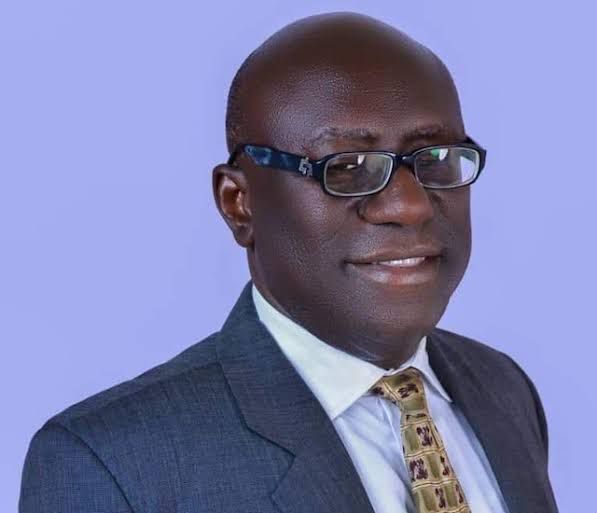

Last week on The Sunday Stew, we unveiled the Decoupling Sovereignty Index (DSI), a quantitative metric I developed as an extension of the Trinity of State Decay. It is meant to be a mathematical instrument for measuring the degree of separation between a state’s juridical sovereignty and its lived reality. I had planned to follow up today with the first instalment of a three-part series on the methodology and indicators of the DSI.
Then, from the middle of last week, there was a development that sent me into a sustained period of reflection.
On Wednesday, Zenodo — the open-access repository developed by CERN, the European Organisation for Nuclear Research, and the European Commission — published my 16,315-word theoretical treatise, ‘The Trinity of State Decay (Part 1): Sovereign Decoupling and Rival Sovereignty — A Theoretical Statement.’ On Thursday, Harvard Dataverse, owned and operated by Harvard University, published the same work. On Friday morning, an email arrived from the Social Science Open Access Repository (SSOAR), operated by GESIS — the Leibniz Institute for the Social Sciences in Germany — confirming that they too had accepted, published, and archived the paper.

Late Prof. Edward Said
I sat with that for a while. It is exactly three months since The Sunday Stew made its debut. In those three short months, we have produced an original analytical framework (The Insecurity Triad), a comprehensive theoretical formulation (the Trinity of State Decay), and a quantitative index (DSI). Within the same period, the framework entered global scholarly circulation, and now the theoretical paper has been published by three of the world’s most respected scholarly repositories within seventy-two hours of each other. I found myself thinking about the symmetry of it: three months. A trilogy of original contributions. A triple publication in a single week.
Numbers sometimes carry meaning far beyond arithmetic. This one felt like it was trying to tell me something.
I. The Seed Planted in a Library
When The Sunday Stew was conceived, I did not set out to become a framework architect, a theorist, or an index creator. But looking back, I think the seed was planted much earlier — by accident, in the history section of the University of Calabar library.
I was preparing a term paper on Nigerian history. Our lecturer was the late Dr. Erim O. Erim — a man you had to do your absolute best to satisfy. I was moving along the shelves when I stopped. What arrested me was a name on a spine: Sigmund Freud. His biography. I could not understand what such a book was doing in the history section. I took it anyway, borrowed it, and in one week read it cover to cover.
Of everything I read about Freud’s life, one idea lodged itself in my subconscious and has never left: Freud’s concept of immortality. He defined it simply but profoundly: immortality is being known by many anonymous people. Not a mystical phenomenon, but a psychological and systemic one. It is the act of leaving behind an intellectual footprint so distinct that your ideas are absorbed by millions of people who may never meet you, but who must use your language to understand their own reality.
Freud did not merely write a theory. He changed the global vocabulary. Because of Freud, anonymous people who have never read a page of psychoanalysis use the words ego, subconscious, projection, and defence mechanism every single day. They are operating within his architecture without ever knowing it. That, he argued, was immortality.
I was a young man in a university library who had come looking for Nigerian history and stumbled into a philosophy of intellectual legacy. I did not know, at the time, that I had been given a compass.

•Late Antonio Gramsci
II. The Book C.Don Handed Me
Several years later, when I lived in Lagos, I had someone who was (and still is) a friend, a big brother, and a mentor. The home of C.Don Adinuba — then at Ilupeju — was like my second home. I could walk in at any time. C.Don was the perfect host, and his wife a hostess of uncommon warmth. There was never a dull moment in that house. He knew I loved books, and he is himself one of the most intellectually deep people I have ever encountered.
On one of those days, he pulled a book from his shelf, handed it to me, and said: “Go and read this.” I looked at it. The author was unfamiliar. I asked: “Who is Edward Said?” He replied: “Just go and read the book.”
Representations of the Intellectual — which grew out of Said’s 1993 Reith Lectures for the BBC — turned out to be, apart from the Bible, one of the most impactful books I have ever read. In its pages I first encountered Antonio Gramsci, whose Prison Notebooks has made an enduring impression on my intellectual formation and theoretical development. Said’s argument — that the intellectual’s vocation is to speak truth to power, to represent the unrepresented, and to refuse the comfort of specialisation in favour of the discomfort of genuine engagement — became a way of understanding what journalism, practised seriously, is actually for.
And from Antonio Gramsci, particularly his broad conception of the intellectual, I came to understand that intellectuals are not confined to universities, research institutes, or academic titles. Gramsci argued that intellectual activity exists wherever people help shape ideas, interpret reality, organise knowledge, and influence how society understands itself. Through that lens, I realised that journalism is not merely a profession of reporting events; it is an inherently intellectual vocation.
As a journalist, I do more than gather facts and relay information. I help frame public conversations, interrogate power, highlight social challenges, preserve collective memory, and contribute to the global marketplace of ideas. This understanding deepened my sense of responsibility to society. It reinforced the belief that journalism carries a duty not only to inform but also to enlighten, challenge assumptions, encourage critical thinking, and provide citizens with the knowledge necessary to make informed decisions.
Gramsci’s perspective helped me see that the journalist occupies a vital bridge in the relationship between structured knowledge and public life. The responsibility is therefore not simply to report what happens, but to pursue truth rigorously, interpret developments thoughtfully, and contribute constructively to the intellectual and moral development of society. In that sense, journalism became for me not just a career, but a pure form of public intellectual engagement.
These two books — one stumbled upon by accident, one pressed into my hands by C.Don — formed the philosophical foundation on which everything that follows in this column rests. I did not know that at the time. I know it now.

Late Sigmund Freud
III. The Question That Started Everything
When The Sunday Stew made its debut on March 8th, I initially envisioned a column anchored broadly on faith, character, and the structural forces that shape society, with a focus on Nigeria and Africa in a global context. But the second edition on March 15 inspired our current trajectory. Entitled ‘A Country Without Earthquakes — Yet Shaken by Itself’, it explored the tragic reality of Nigeria manufacturing catastrophic man-made disasters while other nations contend merely with natural ones. The insights that came from writing that piece—drawing heavily from an expansive interview a former colleague and I conducted with the late Professor Jubril Aminu in 2012—inspired the rigorous analytical direction this column ultimately took, beginning with the development of The Insecurity Triad.
At the outset, I only set out to understand why Nigeria keeps bleeding. I wanted to discover why the same communities bury the same dead in the same circumstances decade after decade, while the state issues the same predictable condemnations, commissions the same redundant reports, and recommends the same superficial reforms that are never implemented. I set out, in other words, to do journalism.
What I did not anticipate was that the honest, uncompromising pursuit of that question would eventually produce what the academy calls a macro-theoretical framework—and that this framework would, in time, find its home at Harvard and other top-tier scientific repositories.
The Trinity of State Decay did not arrive fully formed. It emerged from a profound frustration—the frustration of a scholar-journalist who has spent years watching analytical frameworks imported wholesale from external academic traditions fail to explain the immediate reality happening in front of his eyes.
Failed state theory, useful as far as it goes, describes a static outcome. It names the corpse but completely fails to trace the actual cause of death. The Fragile States Index produces superficial comparative rankings but isolates no mechanisms. What was missing was an indigenous framework that could explain the operational process—the structural logic by which sovereign authority fractures and is progressively displaced by rival formations.
The insight, when it came, was disarmingly simple: states do not lose control randomly. They lose it systematically along three specific axes—Money, Land, and Mind. When the state loses its command of fiscal and economic legitimacy, when it loses territorial authority over its physical space, and when it loses ideological and psychological hold over the behavioural psyche of the population, something else moves in. Not chaos. Something far worse than chaos: a disciplined, purposeful Shadow Order, which is often more efficient at its enforcement functions than the formal state it is displacing.
This is what the Trinity of State Decay theorises. Not the mere failure of the state—but the active production of an alternative to it.
The geography of legitimate knowledge production has long maintained a centre and a periphery. The global centre produces the theoretical frameworks; the periphery receives them, submissively applies them, and occasionally pushes back against them in minor footnotes. What is happening right now with the Sundiata Post Intelligence Unit (SPIU)—with The Insecurity Triad already circulating in global academic repositories and the Trinity of State Decay now anchored across multiple institutions—is a clear demonstration that intellectual rigour does not possess a postal address.
The publication of the Trinity of State Decay on global scholarly platforms is not an end point. It is the formal opening of a conversation three decades in the making. If in the months, years, and decades to come, a professor at Harvard, a post-doctoral fellow in Legon, a PhD candidate in Oxford, or an undergraduate in Makerere writing a term paper finds it useful and engages with it, our purpose will have been fulfilled. None of them may ever know me personally, just as I never knew Freud, Gramsci, or Said.
Coda: The Symmetry Completes Itself
I began this reflection thinking about the symmetry of three: three months, a trilogy of contributions, a triple publication. But symmetry, I have come to understand, is not always visible at the beginning of a journey. It reveals itself exclusively in retrospect—which is, incidentally, also how Sovereignty Decoupling becomes visible to those who are living through it.
A young man borrowing a biography of Freud by accident in a university library. A mentor handing him Edward Said across a table in Ilupeju. Several years of frontline journalism asking the same stubborn questions about why our nation bleeds. A column that began as political commentary and rapidly transformed, by structural necessity, into a site of deep theoretical production. And now: Harvard, Zenodo, GESIS-SSOAR, all in a single week.
Three months. A trilogy. A triple publication. And with SSOAR’s confirmation arriving on Friday morning, our overall global archival footprint expands to seven critical institutional repositories when we include the foundational papers of The Insecurity Triad: SSRN, Harvard Dataverse, Zenodo, SocArXiv, SSOAR, ResearchGate, and Academia.edu. The symmetry, it appears, was not done with me yet.
The Trinity of State Decay is now available on Harvard Dataverse (doi:10.7910/DVN/ZQWEM7), Zenodo (doi.org/10.5281/zenodo.20580627), SSOAR (nbn-resolving.org/urn:nbn:de:0168-ssoar-110533-8), ResearchGate, and Academia.edu. Read it. Push back against it. Apply it. Find its limits. That is exactly what it is there for.
Trust is sacred. Stay seasoned.
•Dr. Max Amuchie is a Scholar-Journalist, Media CEO, and Lead Researcher at the Sundiata Post Intelligence Unit (SPIU). He is the architect of The Insecurity Triad framework for African security analysis, the Trinity of State Decay theory, and the Decoupling Sovereignty Index (DSI)—original, indigenous analytical frameworks for understanding, categorising, and measuring conflict, state decay, and sovereignty in the Global South. He writes The Sunday Stew, a weekly syndicated column on faith, character, and the structural forces that shape society, with a focus on Nigeria, Africa, and the Global South in a changing world.
X (formerly Twitter): @MaxAmuchie | Email: max.a@sundiatapost.com | Tel: +234(0)8053069436
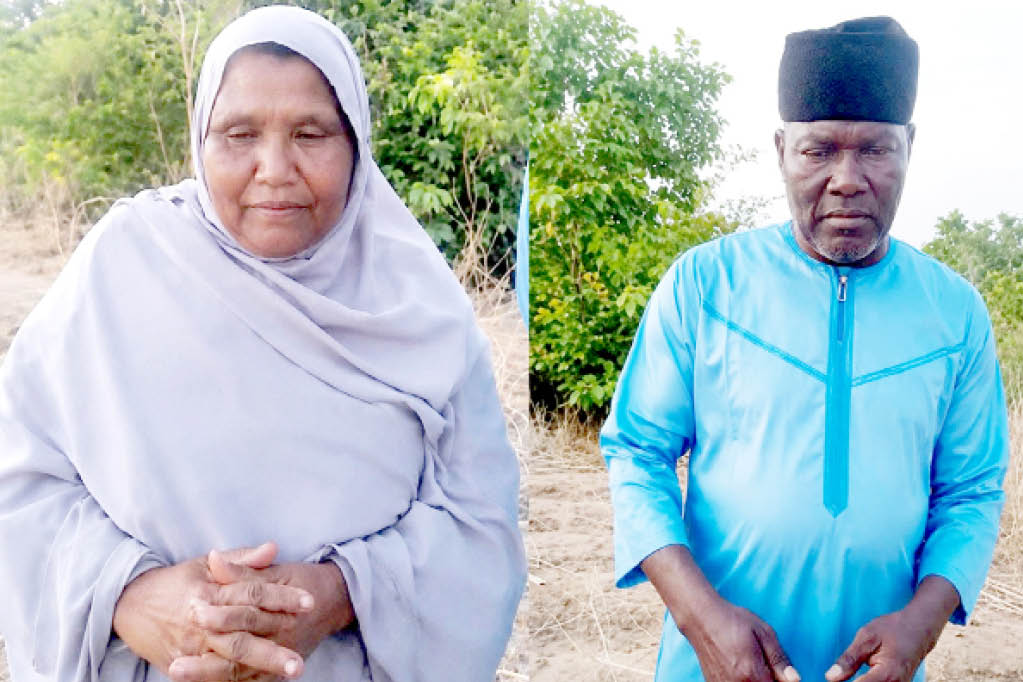

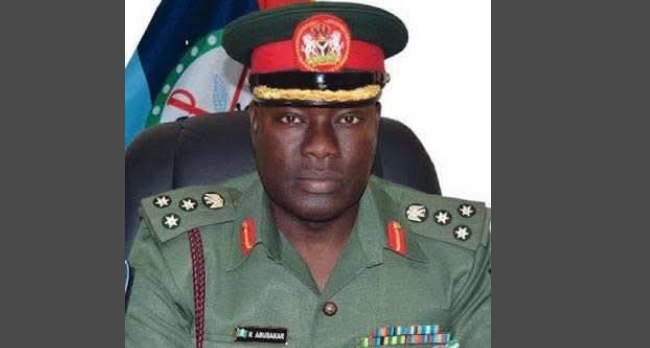
Abubakar Rabe, retired Major General former spokesman of the Nigerian Army who was abducted by bandits in Katsina State exactly two weeks ago, has died in captivity, reports coming from the state, one of the hotbeds of terrorist activities in Nigeria, confirmed on Saturday.
The retired senior military officer was kidnapped alongside his wife around the Matazu area of Katsina State while traveling to attend a wedding ceremony, was said to have died of complications from diabetes and high blood pressure in the camp of his abductors.
Nasiru Mu’azu, Commissioner for Internal Security and Home Affairs, in the state, who confirmed the incident, in a statement, said the government received the news with heavy heart and deep sense of loss.
He wrote: “It is with profound sadness that we confirm the General’s death while in bandits captivity. Despite the relentless and concerted efforts of the State Government and various Security Agencies to secure his safe release, the situation ended in this tragedy.
“The deceased Retired General died a natural death from complications of diabetes and hypertension. His abduction and subsequent death are not only a loss to his family and Katsina State but a monumental loss to the entire country.
“His Excellency, the Executive Governor of Katsina State Malam Dikko Umaru Radda, PhD, CON, extends his deepest condolences to the family of the late General and the country at-large.
“The Governor has described this incident as a “dark moment” and a reminder of the urgent need for a collective and intensified front against the criminal elements threatening the peace of our communities.
“The Katsina State Government remains committed to working with the Federal Government and security forces to ensure that those responsible for this heinous act are brought to justice. We assure the citizens of Katsina State that our resolve to eliminate banditry and ensure the safety of all residents remains unshaken.
“Our thoughts and prayers are with the bereaved family during this difficult time. May the soul of the departed Retired Major General Rabe Abdulakdir rest in eternal peace.”



-

 News4 weeks ago
BREAKING: US-Nigeria troops slaughter 175 ISWAP fighters
-
 News2 weeks ago
BREAKING: Terrorists strike Ibadan again! Abduct ex-Minister’s sister, twin children
-
 Columns3 weeks ago
Dear General Gowon: That apology you’re running from is your nemesis
-

 News4 weeks ago
BREAKING: Wait over! Arsenal are CHAMPIONS! Win EPL after 22 years hiatus
-
 Columns3 weeks ago
See Tinubu’s terrible damage on Option A4 and its precious memories
-

 News4 weeks ago
BREAKING: Jonathan emerges presidential candidate *Gets automatic PDP ticket!
-

 News4 weeks ago
Presidency: Obi met all requirements – NDC *Cleared to contest primaries
-

 News2 weeks ago
Emeka Ike: I’ll make example of Lere Olayinka for prying into my privacy