
News
To Ngozi Chimamanda Adichie: Wipe your tears, help, lies not with Biden or US…but


By Sunny Igboanugo

Reading through the letter of my dear sister, Ngozi Chimamanda Adichie to Joe Biden, the only plausible conclusion that I could make of it, is the popular adage of the mother hen, when the kite takes its chick away. It says the hysteria in flapping its wings, running around and shouting at the top of its voice, is for the world to hear its voice and not for the assailant to have pity and drop the baby or the hope for help.
Of course, our Joe, or Sleepy Joe, as Donald Trump would call him, would definitely read the letter. It would be part of the “briefings” his appointees on African Affairs, who have their eyes permanently glued on Nigeria, would file. But you can be sure that the issue of interest to him, would be completely different from the details Ngozi laboured to present. No, that would be a waste of time. You would be surprised that apart from enjoying the elegant prose and beauty of her language power, they would focus on the nuances rather than the substance of the issues she raised. It would not be about changing their mind in anyway, but to update her personal dossier. If not before, she has become a person of interest henceforth. She would be further trailed and profiled to determine how her actions and inaction would affect the US interest going forward. That’s the best her letter could attract.
I would be surprised if Ngozi, my sister does not understand that the people she wrote that letter to are not far ahead of her in piecing together what happened in the 2023 Nigerian general elections at whatever level. Every detail of that exercise, had already gathered, studied, analysed and filed to Washington, well in time before Nigerians woke up to the reality. In other words there is nothing they didn’t know or still don’t know.
So, outside shouting so that the world will hear her voice, there is nothing that letter will achieve. Absolutely nothing! America, just like their counterparts across the world, are fully on ground. You cannot even take it past them that they are not neck-deep or hand-deep into the construct that birthed that exercise, described aptly as the worst election in the history of Nigeria.
I’d rather charge my sister, Ngozi with the hysteric shouting of the mother hen, than accuse her of being naive, because, apart from being one of the richest minds that has come out of ala Igbo, Nigeria, Africa, and the world, she, as a citizen, stays close to them and could easily perceive the stench of their breath more than me.
Now, why does anyone believe that the US would want to help Nigeria, or indeed, Africa, secure a thriving democracy in which the votes would count and leaders would emerge freely out of people’s will? What would be the endgame of such a conduct? Wouldn’t that be suicidal and a complete betrayal of the legacy their forebears handed down to them?
Do you know what would happen the day, Africans began to elect their own leaders through credible process? Let’s start with Nigeria. It would mean the reduction of bad behaviour in governance if not complete eradication of same. It would mean that politicians would have something to fear from the polity. It would mean that portfolio-bearing foreigners would no longer come into the country, spread few dollars to the gatekeepers and have access to the top ogas in power, who would equip them with the power of ingress, to enable them insert hoses into the ground and begin to siphon the riches of the land.
It would mean that a whole shipload of oil, would no longer disappear from the creeks of the Niger Delta. It would mean that oil companies would no longer create multiple pipelines to tube the oil away leaving Nigeria with only a fraction of what they actually produced.
Yes! It would mean the disappearance of the Abachas of Nigeria and his mates all over Africa, who ferry catches of dollar-filled bags to America to deck their banks, would no longer have the chance of getting close to the public till because a vigilant and effective electorate will check them.
I could imagine the faces at the White House as they study that letter, as they zero in on her persona. How dangerous would she be to the US interest? Could this be another troublesome, irritant African? Who could best handle this? In fact, the next American you see in the local Abba market in Dunukofia Local Government Area of Anambra State, might not be a tourist coming to see how local marriages are conducted. He might as well be there to pick the minutest information on the Adichie family that would further help to profile their daughter.
How would anybody seized of good knowledge in global affairs and international politics particularly the relationship between the West and Africa believe that countries like the US would favour stability of a nation like Nigeria, the most influential and most important African nation. The day that happens would signal the end of the slumbering of the sleeping giant. Africa would wake up. How could the lion be gazing at an antelope with good intention? That is the question. The West would always want Africa for dinner.
Indeed, I pitied Peter Obi, Labour Party (LP) presidential candidate, when he was telling his compatriots, to the hearing of these people, how he was going to transform Nigeria from consumption to production.
Of course they knew he was not bluffing. He governed Anambra, arguably the most difficult state in Nigeria not only without borrowing a kobo throughout eight years but with such success. If anything, his leaving behind a princely N75billion without stealing it, must also have helped to give him out as not a typical African in power. Because a non-thieving African, is a danger to the Western interest, it won’t be difficult for them to figure out what to do. He must have given them the jitters with those utterances issuing from his mouth.
Obi would be naive not to know what he was standing up against. But how else could he sprung it. How could he have connected with Nigerians particularly the youthful population, for whom he represented their future. Indeed, for as long as he toed the line ditching the old way, it was like shooting himself in the leg. Surely, he couldn’t have thought that those stealing Nigerian oil would go to sleep, hearing him say that the stealing would stop from the first day he takes office as President.
He couldn’t have thought that giving hope to the millions of youths in the North, who form the bulk of Boko Haram, Islamic State of West African Province (ISWAP), and the bandits who go on rampage, kidnapping, killing and maiming people, to engage in productive ventures would be good music or earn him loving kisses from vested interests. What then happens to the syndicate they represent?
Didn’t he realise for instance that mouthing his popular mantra of transforming the vast areas of land in the North into serious production hubs for agricultural goods, would mean that the bandits in Niger and Borno, including Sambisa Forest would be forced to disappear?
Besides, apart from making Nigeria self-sufficient in food and therefore no longer a dumping ground of such items, many of them Genetically Modified, in the first place, what happens to bullet and guns the terrorists in those forests carry and their sources? That angle is also important.
It doesn’t have to take the wisest man on the earth to realise what the end-game would be. In fact, the moment there is no longer strife in Africa and the Middle East, where brothers continue to kill one another under the supervision of the suppliers of those guns and bullet, the result would be obvious. Nobody will buy the weapons anymore and that source of income will dry up. So, what happens to the factories that produce them? Are their owners going to eat the guns and bullets?
The moment you transform Sambisa from an axis of terror and a habitat for gunmen, mostly youths fed on drugs and other intoxicating substances, to a hub for the production of fattened cows that would produce fresh meat and rich milk, equivalent to what comes out of Holland or Australia or produce rice in such quantity that you no longer have to look towards China or Thailand, you not only make food available locally, but you also export to earn foreign exchange, which would set off a string of positive chain effects, and ultimately lead to the ultimate end of becoming a world power.
Would they watch you create that transformation? Who wants Nigeria as a world power. Who wants an African country as world power? That’s not even where it ends. The fact that the lion is a violent predator, which devours its prey with mindless brutality, doesn’t mean it has no right to food? Don’t those behind the syndicate stealing Nigerian oil deserve right to opulence and luxury – to own the latest yachts from the proceed their crime and cruise around the world? What does it mean even if millions die as sacrifice? Aren’t they even being benevolent by just mere stealing? Didn’t their fathers do worse by ship-loading your fathers to work in their sugarcane fields?
Now, who didn’t know that Bola Ahmed Tinubu, presented himself as the worst of the three major candidates in the 2023 election? He was the one without a clear identity, who just happened on the scene, without details of birth, parentage and education – all buried in mystery. He was the one who uttered incoherent and unrecognisable mumble-jumble at rallies, was the one who would raise his walking stick, while the National Anthem was being sung, the one to be supported by aides at the back, to prevent him from falling, who dodged debates and avoided interviews – he was the one who, against the run of play, chose to present a Muslim-Muslim ticket and above all, the one tainted with stories of dealing in drugs – one of the highest crimes in the world. Yet he “won.”
If you are still at sea as to the reason for this miraculous triumph over the others, it means you’re a learner. It means that you believe that those who killed Patris Lumumba and replaced him with Mobut Sese Seko have suddenly disappeared or changed from whom they are. It means that you believe that Congo DR, the richest country in the world in terms of mineral resources has remained a killing field till date because their people love the sight of blood.
It means you believe that Muammar Gaddafi, who made every Libyan practically walk on pure gold, was killed by his compatriots, because “he was killing his people,” as Hilary Clinton, Barack Obama and his NATO forces who, with glee, bombed down some of the world’s most renowned histories and forced the once thriving and robust enclave into a shadow of itself with fiefdoms of fighting warlords on hand to finish the job, told you. Then, your name is, Sorry.
So, my dear sister, Ngozi, hara wa, nne. Ebezina. Wipe your tears! We know how you feel. But we also know that where you’re looking for help, is where the predator is actually lurking behind the grass. The State Department, wouldn’t have issued the congratulatory message in the first place without the say-so of Biden. That he’s not given his personal endorsement yet, is all part of the game. Pretend that you care. But go for the kill.
Don’t also worry yourself about the UK. Julius Malema, the South African activist, put it clearly, recently. The Pounds is the strongest currency in the world today, because of the gold backing. England has the highest gold reserves in the world without a single goldmine. How come? That’s the catch! Figure it out. If you thought the worst has again happened, think again. Haven’t we seen and conquered worse?
We know Tinubu didn’t win the election. So, you’re not alone. So, fichaa anya, nne. There is still one place to run for shelter – A Just God! You never know what He’s thinking. For His ways are not our ways. Don’t forget, He’s still the author and finisher. Ya diba!

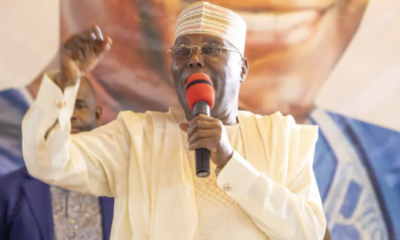







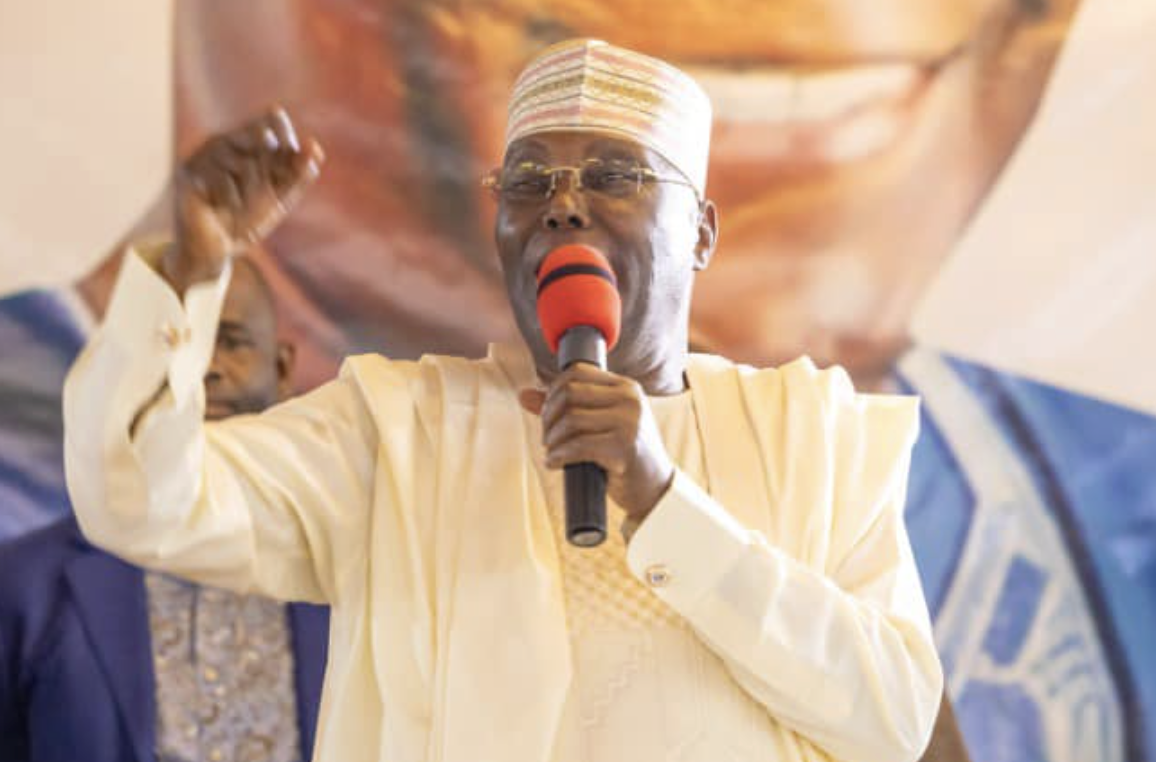
“Nothing must happen to Peter Obi. An injury to one is an injury to all. When one opposition leader is intimidated, every opposition voice is diminished,” came the immediate reaction of Atiku Abubakar candidate of the African Democratic Congress (ADC), in the 2027 presidential election on Thursday.
It was a day Atiku, who came second in the 2023 election and Obi, third, in the declaration made by the Independent National Electoral Commission (INEC), also asked for the release of Nasir el-Rufai, former governor of Kaduna, warning that democracy is threatened when opposition figures are intimidated.
Obi, Governor of Anambra State between 2006 to 2014, had accused the federal government of deliberately frustrating his means of livelihood and targeting opposition figures, while appearing on #WithChude podcast, a programme hosted by Chude Jidonwo, a popular Nigerian social media host.
On the same Tuesday, Obi’s outing broke on social media, where he claimed that the way the Tinubu government was pursuing him, he was not sure of making it to the 2027 election alive, the family of the former Kaduna State Governor, also came publicly to describe stark details of what the family head, currently in detention since February this year, has been facing.
Conveying his distaste on the two situations through, Phrank Shaibu, his spokesman, Atiku, Nigeria’s Vice President between 1999 and 2007, added: “When one citizen begins to fear because of his political beliefs, democracy itself becomes the casualty.”
In a quick riposte to the scant regard, Aso Rock seemed to have placed on Obi’s fears, the former VP, said: “The Presidency must understand that democratic leadership demands composure, not contempt. When a citizen, particularly an opposition figure, voices concerns about the state of the nation or his personal safety, the first duty of government is to reassure through statesmanship, facts and responsible conduct—not through insults.
“Democracies are strengthened by reasoned engagement, not by invective. A government that answers every criticism with abuse projects insecurity, not confidence. The opposition is not the enemy of Nigeria.
“Poverty is the enemy. Hunger is the enemy. Insecurity is the enemy. Corruption is the enemy. Kidnapping is the enemy. The daily bloodletting across our communities is the enemy. A government that devotes more energy to attacking its critics than confronting these existential challenges has confused political survival with the purpose of governance. There are schoolchildren and teachers still waiting to be reunited with their families. There are countless innocent Nigerians languishing in the camps of kidnappers,” he said.
“These are the emergencies that deserve the full machinery of government—not endless political sparring with opposition figures. The Federal Government must devote the same urgency it applies to political communication to rescuing kidnapped Nigerians and restoring public confidence in national security.”
Regarding the plight of el-Rufai, Atiku stated: “The continued detention of Mallam Nasir El-Rufai has generated widespread public concern. Every Nigerian, irrespective of political affiliation, is entitled to due process, equal protection under the law and the presumption of innocence until proven guilty by a competent court. Justice must never create the appearance of selective application.
“Public confidence is not restored through insults or propaganda. It is restored through openness, accountability and the courage to answer legitimate questions,” he said.
“Governments earn trust by confronting controversy with facts, strengthening institutions and demonstrating that no one is above scrutiny. Our elders say: ‘When the drums of injustice beat for your neighbour, do not dance, for tomorrow they may beat for you. Every Nigerian, regardless of political affiliation, has a stake in defending the democratic space. Release Mallam Nasir El-Rufai.
“Bring home every abducted schoolchild, every teacher and every innocent Nigerian still languishing in the hands of kidnappers.
“Stop chasing political opponents and start confronting the crises that are bleeding our nation. History will not remember how fiercely a government fought its critics.
“It will remember whether it protected its citizens, upheld justice, rescued the vulnerable and preserved the democracy entrusted to its care.”

“They apologised to me privately. I said they should put it on social media. They said they will not put it on social media, it will affect their credibility, because it’s not just them, but their other programmers at the Al Jazeera network too.”
These were the words of Daniel Bwala, while giving further insight into what has transpired along the line since his controversial interview with Mehdi Hasan of Al Jazeera, a global television network in March 2026, stating that the station privately apologised to him.
Bwala, who appeared on The Morayo Show, a private talk-show programme, hosted by Morayo Afolabi-Brown, a popular television presenter, however said because both Mehdi and Al Jazeera, refused to make the apology public, he was prompted him to instruct his lawyers in England to sue for defamation.
Clips on the controversial outing in which Bwala, spokesman for the campaign of Atiku Abubakar during his presidential bid in 2023, were in the public domain for several weeks after where a groundswell of commentators believed his performance was not only underwhelming, but he was outrightly disgraced.
He added: “The substance of the apology was that they should have told me that part of what they discussed with me was a talking point, that they were also going to interrogate me on my credibility for supporting the person I had attacked before.
“By their own ethics, they ought to have told me that, but they said they were sorry they didn’t. If you’re bold, if you call yourself a journalist, a fact-checker, you run your programme live and let people judge live.
“If you’re thinking straight, that’s what you’d do. You took creative control of the programme. You made a recorded programme. Ethics demanded you publish it exactly as it was recorded.”
Informing that the programme ran for one hour and 30 minutes but Al Jazeera published only 49 minutes, he accused the network of skewing the footage in Hasan’s favour, adding: “The deeper point is that they cut out the parts where I was fact-checking him and the crowd was clapping for me, and instead kept the parts where he was speaking and people were clapping for him. He’d ask me a question, I’d deny it, then he’d play the old clip. We call that ‘cut and joined’ in media. After doing that, which amounts to a smear campaign, he didn’t give me the chance to react to it.
“Instead, he let it appear that I was simply asked a question, denied it, was shown the clip, denied it again, was shown another clip, and denied it again. He removed that part, because if he’d left it in, anyone watching would understand that I had already answered the question upfront, and that my later denials were a response to his repeated bringing it up. That’s where the unethical conduct of a professional issue arose.
“When they apologised, I said no, put it on social media. They refused. So, I instructed my lawyers in England to go to court. The case is currently in court. Because my advisers in England said it’s defamation of character.”
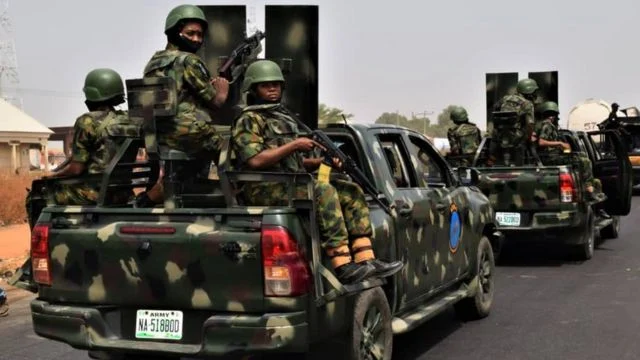
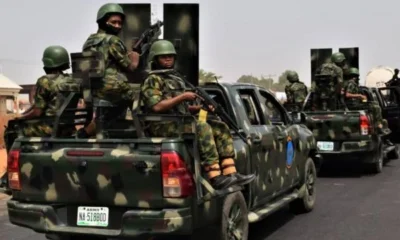
More successes are being recorded by Nigerian forces trying to rout out terrorist in parts of the country, with emerging reports indicating that the perpetrators are currently running scared from the hot onslaughts they are getting from the operatives.
Channels Television, is quoting military authorities at the Operation Hadin kai (OPHK) conducting military blitzkrieg against the terrorists in the North East as saying that the troops received six Islamic State of West African Province (ISWAP), one of the major terrorist groups operating in the area, who surrendered alongside their families, at the 192 Battalion (Main) Sector 1 of the body.
Quoting a statement on Wednesday by Mohammed Goni, spokesman of the military operation, with headquarters in Maiduguri, Borno State, the report, said that among the items recovered from the terrorists and their families included a cumulative sum of more than N1.5 million, two Tecno mobile phones, and other items.
Th statement, added that troops of 115 Task Force Battalion, while conducting ongoing search and rescue operations in Askira/Uba Local Government Area of Borno State, on July 7, rescued two additional abductees from a terrorist hideout, where they also recovered cash of N1.2 million suspected to be proceeds of criminal activities, food items, and other logistics believed to have supported terrorist operations.
The rescued victims have since been evacuated to a secure location where they are receiving appropriate medical care and psychosocial support, the report said, adding that during the same period, the troops noted that it contained a coordinated attack by ISWAP terrorists in Borno, and one of the soldiers was killed.
“Although the insurgents briefly exploited a section of the base’s defensive perimeter during the intense firefight, the troops rapidly regrouped, mounted a determined counter-offensive and decisively expelled the attackers, inflicting significant casualties and forcing the surviving terrorists to flee with varying degrees of gunshot wounds.
“Regrettably, one gallant soldier paid the supreme price, while two gun-trucks and some combat enablers sustained damage during the engagement. The situation at FOB Logomani remains firmly under the control of Operation HADIN KAI troops, with reinforcements deployed, exploitation operations ongoing and additional measures being implemented to further strengthen the defensive resilience of the location.”
Detailing how troops of 232 Battalion apprehended a notorious criminal in Gombi Local Government Area of Adamawa State, the statement, said: “Follow-up exploitation of the arrest led to the recovery of one AK-47 rifle, two magazines, and twenty-eight rounds of 7.62mm special ammunition.
“The suspect and recovered items are currently in military custody, while further investigations are underway to identify and apprehend other members of the criminal network.”
Similarly, the statement said troops of the 149 Battalion arrested two suspected terrorist logistics suppliers in the Mobbar Local Government Area of Borno State.
The recovered items include cash sums, a Volkswagen Golf vehicle, construction materials, household items, and other supplies suspected to have been destined for terrorist elements.
The suspects are currently undergoing interrogation, while the recovered items remain in military custody as investigations continue.
As part of ongoing offensive operations, troops of 24 Task Force Brigade, in conjunction with members of the Civilian Joint Task Force, conducted a clearance operation on known terrorist enclaves around Wulgo.
During the operation, the troops said they exploited the terrorists’ hasty withdrawal and recovered a sack containing assorted illicit drugs abandoned by the fleeing insurgents.
“The recovery further underscores the sustained pressure being mounted on terrorist elements, denying them freedom of movement and disrupting their operational capabilities.”
Relatedly, the troops apprehended a suspected BHT/ISWAP logistics supplier at the Molai checkpoint in possession of large quantities of medical supplies without due clearance. The suspect and items recovered are in custody for further interrogation.
Again, in Sector 2 Area of Responsibility, Troops of 233 Tank Battalion, in conjunction with local hunters, intercepted and arrested a suspected BHT/ISWAP terrorist logistics supplier from Ngirya village of Tarmuwa LGA with five motorcycle tires. The suspect and items are in military custody for investigation.
“These latest operational gains underscore the effectiveness of sustained offensive operations, actionable intelligence and the seamless collaboration among security agencies and auxiliary forces in dismantling terrorist logistics networks, disrupting criminal activities and protecting vulnerable communities across the North East”, the statement added.
Headquarters Operation HADIN KAI assured the public that ongoing search and rescue operations will continue with unwavering resolve until every abducted person is accounted for and safely reunited with their families.
“The Theatre Command also issues a stern warning to individuals involved in supplying food, fuel, construction materials, transportation or any other form of logistics to terrorist groups to immediately desist. Anyone found aiding, abetting or collaborating with terrorist elements, directly or indirectly, will be identified, apprehended and prosecuted in accordance with the law.”



-
 News3 weeks ago
BREAKING: Troops rescue wife of kidnapped General! *Terrorists flee scene
-
 News3 weeks ago
BREAKING: Count me out, Okonkwo tells Atiku *Amaechi VP’s choice an insult to Ndigbo
-
 News2 weeks ago
BREAKING: Court sentences Nigerien, two others to death over terrorism
-
 News4 weeks ago
Dickson: Obi, a big asset to NDC, we’re working together … but!
-
 News4 weeks ago
Ovia, ex-Zenith Bank boss swings into luxury apartments *Flats hit $2.8million price tag
-
 News6 days ago
BREAKING: EX-SSG mowed down by gunmen! *He resisted being kidnapped – driver
-
 News2 weeks ago
Abductors of Oyo teachers panicking, freedom coming for victims soon!
-
 News3 weeks ago
Two hours after Igboho’s ‘red-eyes’ to ‘Fulani’ leaders, gunmen free kidnap victims!