
News
BREAKING: Soyinka fights back! Declares Obidients the worst *Challenges Datti-Ahmed to open debate


Wole Soyinka, Nobel Laureate, finally removed his gloves on Friday in fight of hard knuckles with supporters of Peter Obi, Presidential Candidate of Labour Party (LP), followind days of lashing on the social media by the group, which goes by the name Obidients.
The renowned playwright in a statement on Friday, also threw shades at Obi himself, by referring to the audio tape that surfaced recently in which the former Governor of Anambra State, was depicted as calling the February 25 presidential election, a religious war, while allegedly speaking on phone with the founder of the Living Faith Church Worldwide, otherwise known as Winners Chapel.


The full text of his statement, read: “It would appear that a record discharge of toxic sludge from our notorious smut factory is currently clogging the streets and sewers of the Republic of Liars. It goes to prove the point that provoked the avalanche EXACTLY!
“The seeds of incipient fascism in the political arena have evidently matured. A climate of fear is being generated. The refusal to entertain corrective criticism, even differing perspectives of the same position has become a badge of honour and certificate of commitment. What is at stake, ultimately is – Truth, and at a most elementary level of social regulation: when you are party to a conflict, you do not attempt to intimidate the arbiter, attempt to dictate the outcome, or impugn, without credible cause, his or her neutrality even before hearing has commenced. That is a ground rule of just proceeding. Short of this, Truth remains permanently elusive.
The ensuing cacophony has been truly bewildering. It strikes me as a possible ploy to smother recent provocations by other, far more trenchant issues, such as revelations of declarations of a religious war. If so, let it be known that I have long declared war against religious fundamentalism, the nature of which justifies the butchery, kidnapping and enslavement of students in the name of religion. That aspirant’s alleged gaffe cuts no ice with me.
“Far more alarming was the grotesque fantasy of the Chief Justice of the Supreme Court disguised as a wheelchair, zooming off in space to a secret meeting with other parties of the conflict. On its own, that is sufficiently scary. Swiftly followed thereafter by a television tirade of intimidation, it strikes one as more than the mere antics by the mentally deranged. The tactics are familiar: ridicule, incriminate, then intimidate. Objective: undermine the structure of justice. Just as a reminder: this writer was not being rhetorical when he declared, on exiting prison detention: Justice is the first condition of humanity.
“The instigating contest – Nigerian Democracy 2023 – has witnessed much that is innovative – largely in the retrogressive vein. Violence and ethnic profiling. “Spiritual” warfare in the shape of sacrificial rams to keep “disloyal” communities under restraint – in short, intimidation yet again! Easily overlooked however are those missives of violence directed against dissenting voices, real or suspect. Such, for instance, were the virulent attacks and threats to the musician Seun Kuti, his family and iconic music Shrine. His crime consisted of nothing more than declaring the name “Obidient” derogatory to his sense of civic dignity and activist history.
“Such beginnings – and instances are numerous – have culminated in the open intimidation of the Court of Last Resort, even before proceedings have begun. By the way, I do agree with Seun Kuti; ‘Obidients’ is one of the most repulsive, off-putting concoctions I ever encountered in any political arena. Some love it, however, and this is what freedom is about. Choice. Taste. Free emotions. By contrast, I have no quarrel with “Yes Daddy”. Roman Catholics are used to saying “Yes, Father”. Secularists say “Enh, Baba”. The context and content are what matters, and lies – where established – raise bothersome issues such as Integrity Deficiency.
“Let us remind ourselves of the following: in any adjudication, society finds it unacceptable that a party to the dispute resort to influencing tactics by extra-judicial means – such as bribery. Intimidation and threats are merely the obverse complements of material inducement. Those who fail to appreciate this are entirely free to their existence in an illusory world.
“We shall add the following pointer for this particular electoral tussle – the news may be unpleasant, but here it comes. Quite a few pundits have set out in some impressive – not necessarily persuasive – detail the possibility that the complainants in this presidential election are not as strongly planted on the victory podium as they presume – see, for instance – Ambassador Haastrup’s fascinating analysis in Newspeak etc. April 6. Right or wrong? That is not the issue.
“What the nation needs to know right now is if you are planning to send assassins after such negative analysts. Coming to terms with an unpalatable projected eventuality – sorry – possible eventuality, counsels deep reflection, not demonization of the bearer of sour news. For the seriously committed, it requires pulling back the horns a little in order to regroup, rethink and resurge. Democracy is sometimes a long haul. Some of us have been at it for quite a while
“I am well aware that the foregoing is further invitation for more nauseous bilge from the besotted. Please, be my guest. It is, after all, one of those special seasons of convergence of two seasons of self-flagellation. Fasting makes bearers of constricted minds even more light-headed. Delusions fill the vacuum.
“Oh yes, could these rabid parochial minds of easy excitation also kindly stop flattering themselves that one’s energies are consecrated solely to the nation space known as `Nigeria? The whines of “silence” are relative to the reading scope and world knowledge of idle complainants as well as their grasp of the chain of continuity.
“I choose my methods of intervention without the permission of social media border patrols, so where you find a gap, just pick up the baton where last deposited and stop whining and belly-aching – “he stopped talking all this while, why now?” etc etc ad nauseum. Flat, easy disposable lies that gain traction by repetition. However, even more importantly, they remain irrelevant to the rights and wrongs of ongoing material issue. Sadly, these virtue vigilantes succeed with the ignorant and susceptible – especially among the younger, confused generation.
“The consequence is that the nation is plagued by fake CVs compiled by all kinds of amateur commentators, still wet behind the ears, who have too few truths to build on before they are corralled into positions of No-Retreat. Nowhere has this been more evident than in the effrontery of attempts to place the present contention on the same podium as the twenty-year-old anti-Abacha struggle! This gross abuse of historic licence actually provides smug satisfaction for rookie activists. I advise them to seek out the school of survivors where pertinent lessons still exist for those with sufficient humility to LEARN before MOUTHING! Otherwise their world of false mythologies will collapse under their feet, and leave them dangling in the void.
“May I seize this opportunity, by the way, to condemn the sanctions imposed on CHANNELS Television which anchored the performance of the LP candidate. As stated, I watched the programme keenly – saw the valiant efforts of the interviewer to ensure fair hearing. I fail to understand just where the station could be faulted, except from a disposition for injustice.
“To sustain that penalty is to give joy to others who turn Internet into a soakaway for their rancid emissions, yet feel that others should be silenced. If CHANNELS feels up to it, I offer myself willing to engage Mr. Datti – or any nominee of his – on its platform on this very bone of contention – one-on-one – without the malodorous intervention of media trolls, and with the same interviewer as mediator. That should be taken as a serious offer.
“Project NIGERIA, I must confess, has become near terminally soul-searing. Do I still believe in it? I am no longer certain but – first, we must rid ourselves of the tyranny of the ignorant and the opportunism of time servers. In any case, there is not much else to engage one on a foundation of ownership stakes. There is of course, always the possibility of a Revolution, with a clarity of purpose and acceptance of all attendant risks, including costly errors.
“Revolutions are not however based on the impetus of speculative power entitlement. No matter, until that moment, the structures that ensure just and equitable cohabitation must be protected from partisan appropriation – be it from material inducement, fake news, or verbal terrorism – the last being the contribution of one who is positioned to assume co-leadership of the nation, no less. Revolution is not about lining up behind the nearest available symbol. When a symbol does emerge however, we are still obliged to examine every aspect of what is fortuitously on offer, and continue to guard our freedoms every inch of the way.
“Before I take myself off for – well, next port of call – the final word goes to a favourite maverick, propagated even as he matched his words by action. I suspect that in this instance we find ourselves on opposite sides of the strategic fence – that is democracy. This now coopted watchword of his formulation remains apt, applicable to all who strive for authentic social transformation: Your mumu don do! Ramadan Kareem. Happy Easter!”








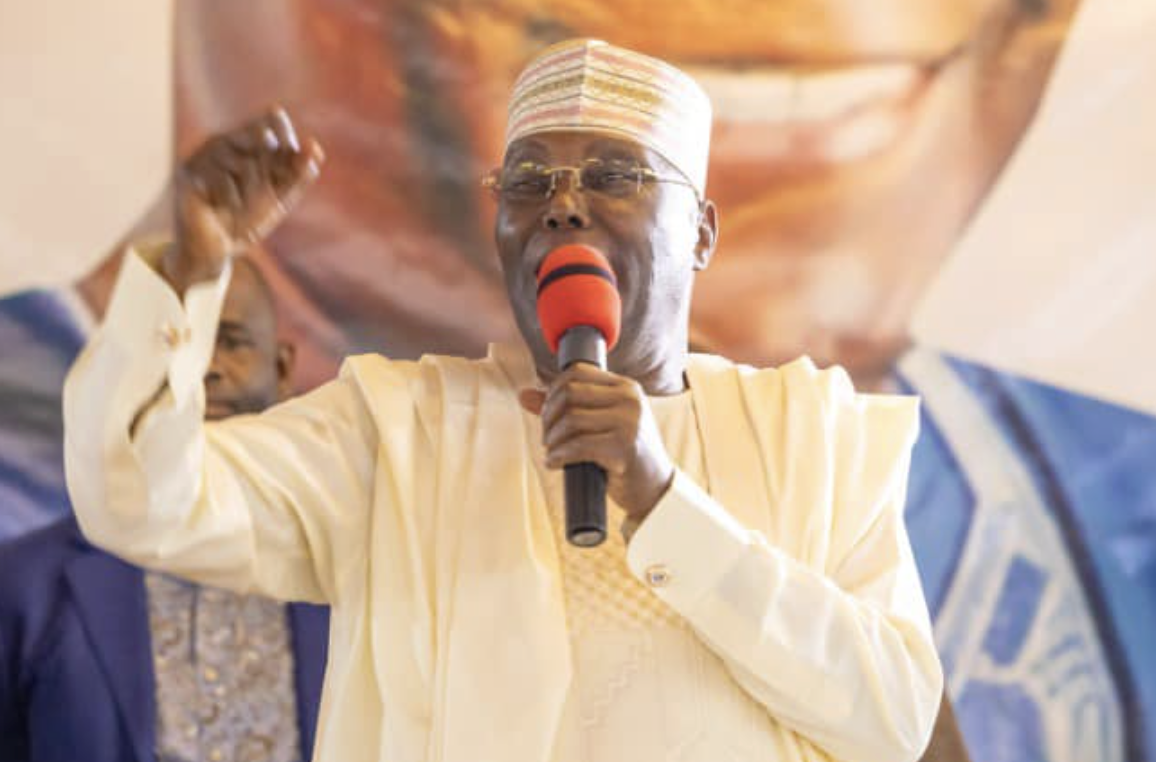
“Nothing must happen to Peter Obi. An injury to one is an injury to all. When one opposition leader is intimidated, every opposition voice is diminished,” came the immediate reaction of Atiku Abubakar candidate of the African Democratic Congress (ADC), in the 2027 presidential election on Thursday.
It was a day Atiku, who came second in the 2023 election and Obi, third, in the declaration made by the Independent National Electoral Commission (INEC), also asked for the release of Nasir el-Rufai, former governor of Kaduna, warning that democracy is threatened when opposition figures are intimidated.
Obi, Governor of Anambra State between 2006 to 2014, had accused the federal government of deliberately frustrating his means of livelihood and targeting opposition figures, while appearing on #WithChude podcast, a programme hosted by Chude Jidonwo, a popular Nigerian social media host.
On the same Tuesday, Obi’s outing broke on social media, where he claimed that the way the Tinubu government was pursuing him, he was not sure of making it to the 2027 election alive, the family of the former Kaduna State Governor, also came publicly to describe stark details of what the family head, currently in detention since February this year, has been facing.
Conveying his distaste on the two situations through, Phrank Shaibu, his spokesman, Atiku, Nigeria’s Vice President between 1999 and 2007, added: “When one citizen begins to fear because of his political beliefs, democracy itself becomes the casualty.”
In a quick riposte to the scant regard, Aso Rock seemed to have placed on Obi’s fears, the former VP, said: “The Presidency must understand that democratic leadership demands composure, not contempt. When a citizen, particularly an opposition figure, voices concerns about the state of the nation or his personal safety, the first duty of government is to reassure through statesmanship, facts and responsible conduct—not through insults.
“Democracies are strengthened by reasoned engagement, not by invective. A government that answers every criticism with abuse projects insecurity, not confidence. The opposition is not the enemy of Nigeria.
“Poverty is the enemy. Hunger is the enemy. Insecurity is the enemy. Corruption is the enemy. Kidnapping is the enemy. The daily bloodletting across our communities is the enemy. A government that devotes more energy to attacking its critics than confronting these existential challenges has confused political survival with the purpose of governance. There are schoolchildren and teachers still waiting to be reunited with their families. There are countless innocent Nigerians languishing in the camps of kidnappers,” he said.
“These are the emergencies that deserve the full machinery of government—not endless political sparring with opposition figures. The Federal Government must devote the same urgency it applies to political communication to rescuing kidnapped Nigerians and restoring public confidence in national security.”
Regarding the plight of el-Rufai, Atiku stated: “The continued detention of Mallam Nasir El-Rufai has generated widespread public concern. Every Nigerian, irrespective of political affiliation, is entitled to due process, equal protection under the law and the presumption of innocence until proven guilty by a competent court. Justice must never create the appearance of selective application.
“Public confidence is not restored through insults or propaganda. It is restored through openness, accountability and the courage to answer legitimate questions,” he said.
“Governments earn trust by confronting controversy with facts, strengthening institutions and demonstrating that no one is above scrutiny. Our elders say: ‘When the drums of injustice beat for your neighbour, do not dance, for tomorrow they may beat for you. Every Nigerian, regardless of political affiliation, has a stake in defending the democratic space. Release Mallam Nasir El-Rufai.
“Bring home every abducted schoolchild, every teacher and every innocent Nigerian still languishing in the hands of kidnappers.
“Stop chasing political opponents and start confronting the crises that are bleeding our nation. History will not remember how fiercely a government fought its critics.
“It will remember whether it protected its citizens, upheld justice, rescued the vulnerable and preserved the democracy entrusted to its care.”

“They apologised to me privately. I said they should put it on social media. They said they will not put it on social media, it will affect their credibility, because it’s not just them, but their other programmers at the Al Jazeera network too.”
These were the words of Daniel Bwala, while giving further insight into what has transpired along the line since his controversial interview with Mehdi Hasan of Al Jazeera, a global television network in March 2026, stating that the station privately apologised to him.
Bwala, who appeared on The Morayo Show, a private talk-show programme, hosted by Morayo Afolabi-Brown, a popular television presenter, however said because both Mehdi and Al Jazeera, refused to make the apology public, he was prompted him to instruct his lawyers in England to sue for defamation.
Clips on the controversial outing in which Bwala, spokesman for the campaign of Atiku Abubakar during his presidential bid in 2023, were in the public domain for several weeks after where a groundswell of commentators believed his performance was not only underwhelming, but he was outrightly disgraced.
He added: “The substance of the apology was that they should have told me that part of what they discussed with me was a talking point, that they were also going to interrogate me on my credibility for supporting the person I had attacked before.
“By their own ethics, they ought to have told me that, but they said they were sorry they didn’t. If you’re bold, if you call yourself a journalist, a fact-checker, you run your programme live and let people judge live.
“If you’re thinking straight, that’s what you’d do. You took creative control of the programme. You made a recorded programme. Ethics demanded you publish it exactly as it was recorded.”
Informing that the programme ran for one hour and 30 minutes but Al Jazeera published only 49 minutes, he accused the network of skewing the footage in Hasan’s favour, adding: “The deeper point is that they cut out the parts where I was fact-checking him and the crowd was clapping for me, and instead kept the parts where he was speaking and people were clapping for him. He’d ask me a question, I’d deny it, then he’d play the old clip. We call that ‘cut and joined’ in media. After doing that, which amounts to a smear campaign, he didn’t give me the chance to react to it.
“Instead, he let it appear that I was simply asked a question, denied it, was shown the clip, denied it again, was shown another clip, and denied it again. He removed that part, because if he’d left it in, anyone watching would understand that I had already answered the question upfront, and that my later denials were a response to his repeated bringing it up. That’s where the unethical conduct of a professional issue arose.
“When they apologised, I said no, put it on social media. They refused. So, I instructed my lawyers in England to go to court. The case is currently in court. Because my advisers in England said it’s defamation of character.”
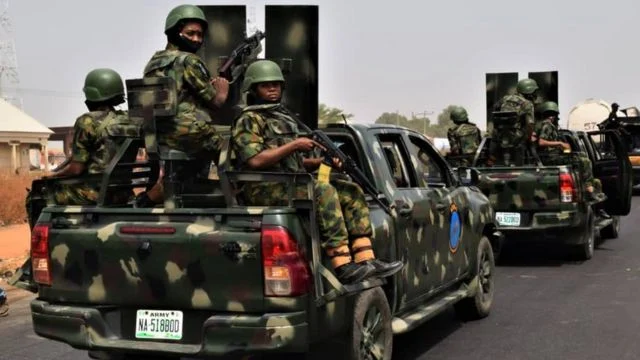
More successes are being recorded by Nigerian forces trying to rout out terrorist in parts of the country, with emerging reports indicating that the perpetrators are currently running scared from the hot onslaughts they are getting from the operatives.
Channels Television, is quoting military authorities at the Operation Hadin kai (OPHK) conducting military blitzkrieg against the terrorists in the North East as saying that the troops received six Islamic State of West African Province (ISWAP), one of the major terrorist groups operating in the area, who surrendered alongside their families, at the 192 Battalion (Main) Sector 1 of the body.
Quoting a statement on Wednesday by Mohammed Goni, spokesman of the military operation, with headquarters in Maiduguri, Borno State, the report, said that among the items recovered from the terrorists and their families included a cumulative sum of more than N1.5 million, two Tecno mobile phones, and other items.
Th statement, added that troops of 115 Task Force Battalion, while conducting ongoing search and rescue operations in Askira/Uba Local Government Area of Borno State, on July 7, rescued two additional abductees from a terrorist hideout, where they also recovered cash of N1.2 million suspected to be proceeds of criminal activities, food items, and other logistics believed to have supported terrorist operations.
The rescued victims have since been evacuated to a secure location where they are receiving appropriate medical care and psychosocial support, the report said, adding that during the same period, the troops noted that it contained a coordinated attack by ISWAP terrorists in Borno, and one of the soldiers was killed.
“Although the insurgents briefly exploited a section of the base’s defensive perimeter during the intense firefight, the troops rapidly regrouped, mounted a determined counter-offensive and decisively expelled the attackers, inflicting significant casualties and forcing the surviving terrorists to flee with varying degrees of gunshot wounds.
“Regrettably, one gallant soldier paid the supreme price, while two gun-trucks and some combat enablers sustained damage during the engagement. The situation at FOB Logomani remains firmly under the control of Operation HADIN KAI troops, with reinforcements deployed, exploitation operations ongoing and additional measures being implemented to further strengthen the defensive resilience of the location.”
Detailing how troops of 232 Battalion apprehended a notorious criminal in Gombi Local Government Area of Adamawa State, the statement, said: “Follow-up exploitation of the arrest led to the recovery of one AK-47 rifle, two magazines, and twenty-eight rounds of 7.62mm special ammunition.
“The suspect and recovered items are currently in military custody, while further investigations are underway to identify and apprehend other members of the criminal network.”
Similarly, the statement said troops of the 149 Battalion arrested two suspected terrorist logistics suppliers in the Mobbar Local Government Area of Borno State.
The recovered items include cash sums, a Volkswagen Golf vehicle, construction materials, household items, and other supplies suspected to have been destined for terrorist elements.
The suspects are currently undergoing interrogation, while the recovered items remain in military custody as investigations continue.
As part of ongoing offensive operations, troops of 24 Task Force Brigade, in conjunction with members of the Civilian Joint Task Force, conducted a clearance operation on known terrorist enclaves around Wulgo.
During the operation, the troops said they exploited the terrorists’ hasty withdrawal and recovered a sack containing assorted illicit drugs abandoned by the fleeing insurgents.
“The recovery further underscores the sustained pressure being mounted on terrorist elements, denying them freedom of movement and disrupting their operational capabilities.”
Relatedly, the troops apprehended a suspected BHT/ISWAP logistics supplier at the Molai checkpoint in possession of large quantities of medical supplies without due clearance. The suspect and items recovered are in custody for further interrogation.
Again, in Sector 2 Area of Responsibility, Troops of 233 Tank Battalion, in conjunction with local hunters, intercepted and arrested a suspected BHT/ISWAP terrorist logistics supplier from Ngirya village of Tarmuwa LGA with five motorcycle tires. The suspect and items are in military custody for investigation.
“These latest operational gains underscore the effectiveness of sustained offensive operations, actionable intelligence and the seamless collaboration among security agencies and auxiliary forces in dismantling terrorist logistics networks, disrupting criminal activities and protecting vulnerable communities across the North East”, the statement added.
Headquarters Operation HADIN KAI assured the public that ongoing search and rescue operations will continue with unwavering resolve until every abducted person is accounted for and safely reunited with their families.
“The Theatre Command also issues a stern warning to individuals involved in supplying food, fuel, construction materials, transportation or any other form of logistics to terrorist groups to immediately desist. Anyone found aiding, abetting or collaborating with terrorist elements, directly or indirectly, will be identified, apprehended and prosecuted in accordance with the law.”



-
 News3 weeks ago
BREAKING: Troops rescue wife of kidnapped General! *Terrorists flee scene
-
 News3 weeks ago
BREAKING: Count me out, Okonkwo tells Atiku *Amaechi VP’s choice an insult to Ndigbo
-
 News2 weeks ago
BREAKING: Court sentences Nigerien, two others to death over terrorism
-
 News4 weeks ago
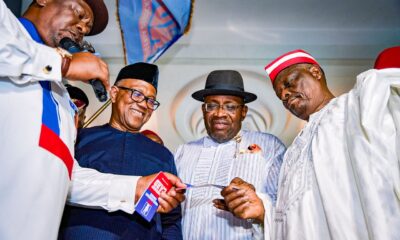
Dickson: Obi, a big asset to NDC, we’re working together … but!
-

 News4 weeks ago
Ovia, ex-Zenith Bank boss swings into luxury apartments *Flats hit $2.8million price tag
-
 News6 days ago
BREAKING: EX-SSG mowed down by gunmen! *He resisted being kidnapped – driver
-
 News2 weeks ago
Abductors of Oyo teachers panicking, freedom coming for victims soon!
-
 News3 weeks ago
Two hours after Igboho’s ‘red-eyes’ to ‘Fulani’ leaders, gunmen free kidnap victims!