
News
Owo ward result: The monkey hand in Enugu governorship election magic

By Sunny Igboanugo
Government magic! Babanla nonsense! Democrazy! Demonstration of Craze! Crazy Demonstration! These were the words of Fela Anikulapo, the late Afrobeat king with which he tried to capture Nigeria’s variance of democracy. Hear him: People no go vote, dem come get big-big numbers – thousands to thousands – millions to millions. Na decocrazy be that!

Now this was after the 1983 elections. How long is that now? That’s 40 clear years. Now, in those 40 years, the same people who brought the idea of democracy to Nigeria, have practically turned man into woman and vice versa – something nobody thought was ever possible. They call it transgender. In 1983, when Fela sang of the sorry state of Nigerian election, who could have thought that a woman in her farm at Eha-Amufu would pick up her phone and call her son in Lagos or Maiduguri to complain of her ailing knees and get the instant soothing words she needs to carry on or that one would enter a car and programme it, sit comfortably and be watching a movie, while the car takes him to his destination, safely and comfortably, without having to shout at his driver.
That’s the level the world has moved. Yet in Africa as retrogression remains the name of the game, the people continue to grapple with most basic elements of life, not because they are completely ignorant of what happens elsewhere, or because they lack the template to redeem themselves, but because they have become prisoners to the most retrogressive enablers of bad behaviour – primordial sentiments.
As Fela sang: In Africa, as time de gooo things just de bad, de bad more and more. Poor man de cry, rich man de mess! Yes, because of the mess the big man makes, the poor have remained the butt of the society, have remained at the receiving end of a swivelling, tempestuous, whirlwind of vicious cycle. They have remained in their sedate, innate and sedimentary state, simply because they lack the means to extricate themselves from the vice grip of their traducers – too helpless to act and failing to act because they are helpless.
Just like many other states, Enugu presents a demonstrably perfect example of this vicious cycle. In the last 24 years, it has found itself in this vice grip, where a political tendency, which burst into the state with some uncanny fanfare, has virtually taken a life of its own, growing into a monstrous behemoth, stamping down on any sort of organic growth that managed to sprout out from the ground with the prospect to give the people a new lease of life.
That nobody can turn the taps in Enugu today, as in most cities in Nigeria and water will flow from a public source, flows from the direct consequence of the illicit, but powerful force that seems to have taken permanent residence in the state since the inception of the current regime the purveyors refer as democracy, but which the majority see in Fela’s apt description as – democrazy.
Just like in previous editions, Enugu, the capital of former Eastern Nigeria presents its variant of the macabre dance the world is being regaled with in Nigeria. It is a dance in which chieftains of the Peoples Democratic Party (PDP) and the Independent National Electoral Commission have taken the front row to demonstrate one of the oddest if not the most grotesque forms of electoral heist that has marked the 2023 general elections.
The Owo ward of Nkanu East Local Government Area of the state, was the venue, where the weird political performance was displayed. There, the dramatis personae engineered the crooked construct that made Peter Mbah of the PDP prevail over Chijioke Edeoga of the Labour Party (LP) in a manner that has kept many mouths agape as they see the curtain fall after the outlandish drama that characterised the March 18 governorship election.
The full story of that uncanny episode was captured by Eze Sabinus Oscar O, Professor in the department of biochemistry and Dean, Faculty of Biological Sciences, University of Nigeria Nsukka (UNN), who as the Collation Officer for the ward, saw it all.
Here is how he recorded his story entitled: Why Owo Ward Of Nkanu East LGA, Of Enugu State Is In The Eye Of The Storm he gave a graphic picture of his encounter with some people that could only be described as electoral brigands, gave a clear impetus to to why many people have described the 2023 election as the worst in the history of Nigeria.
His account: “My fellow colleagues and the general public. Having observed the turmoil arising from the results collated from Nkanu East LGA and also having served as the Governorship Collation Officer for Owo ward in Nkanu East LGA, I stand in a proper position to put the records straight and clear some pockets of doubts as follows:
*Collation of results at the INEC office near the LGA secretariat started around 7.30 pm with the arrival of PO’s (Polling Officers) from different wards
*As at 1.30am on Sunday morning, the PO’s from Owo Ward had not returned to INEC office to submit their results.
*As at such late time, majority of the collation officers had already completed their collation assignments from wards under them.
*The PO’s at Owo ward finally returned around 2.00am but collation couldn’t start immediately as the SPO (Supervisory Presiding Officer) was nowhere to be found, as reported by POs.
*Collation of the results finally started around 2.30am
*It was observed that only polling units 008, 009, 010 and 011 used BVAS machines for accreditation of voters, while seven polling units (001- 007) did not use BVAS machines.
*Steps 5 and 6 of the guideline for collation of results were activated but no response was observed.
*This was immediately brought to the attention of the EO but couldn’t yield good result
*Step 17 of the guideline (Form 40G) on collation was activated, as the hard copy of the Form 40G was not issued to CO (Collation Officer) alongside other collation materials, but still failed.
*When all these actions were taken and all efforts to justify results returned from Owo could not stand, it became imperative that the only alternative was to cancel those results from Owo where these BVAS machines could not work.
*All these were brought to the attention of the LGA collation officer who also doubles as the LGA returning officer for gubernatorial election.
*I categorically made it clear to the LGA collation officer that he should not collate the results for Owo ward, especially where BVAS machines could not work, and that the election in the affected areas without BVAS machines should be cancelled so that a re-run should be fixed since the RATECH (Registration Area Technician) claimed that those BVAS machines malfunctioned.
*The LGA collation officer for gubernatorial election claimed that he would not adopt my advice because his life would be in danger thereafter.
*All my efforts to get the results from Owo Wards (polling units 001 to 007) cancelled generated a lot of tension as the news permeated everywhere that I want to cancel the gubernatorial election held at Owo.
*The cloud of tension and animosity became too thick to the point that I was advised from both within the area and outside Nkanu to make effort to leave the scene as my life was visibly in danger.
*At this point, all other collation officers from other Wards had already left back to Enugu with the only two buses that conveyed all collation officers to the INEC office at Nkanu East, thereby leaving only me behind.
*As efforts to get the results from polling units 001 to 007 canceled with a view to rescheduling a re-run failed, I decided, as a last option, to do a letter of complaint to the REC through the LGA collation officer/returning officer. Unbelievably, the LGA Collation/Returning Officer refused to accept this letter from me, insisting that unless the EO endorsed it, he would not collect the letter.
*The EO, on the other hand, also declined to endorse the letter.
*This particular action taken by me to initiate the process of cancellation of the polling units results, skyrocketed the tension in the area and it became visibly obvious that my life was in danger since I have been abandoned with no vehicle to exit the area.
*The total number of registered voters in Owo ward was 6129.
*How the number in (20) above translated to 30,000 votes from Nkanu East LGA is not known to Owo ward collation officer?
*Note that all the results sheets from all the eleven polling units in Owo has only one political party with votes and other parties scored zero.
*The recording of zero to other political parties was done at the polling units level and not at the Ward collation level.
*When I did not obtain the protection and support of the EO to secure the rejection/cancellation of the results for a rerun, and given the clear threats from a plethora of thugs, and without any security protection, it was clear that I was on my own and that my life was in obvious danger. How, I as Owo ward collation officer left the area and arrived at Enugu should be better imagined. The dead does not tell the story but the living.
Now, while many would be quick to capture the incredulity of the story, many more, would simply dismiss it as as an open and shut case, given the glaring and obvious ingredients in relation to the the guidelines used by the Independent National Electoral Commission (INEC).
But not when vested interests are involved – politicians with bags of money chasing willing electoral officials at the highest level, whose only interests are to either complete some shopping malls in some cities across the country, acquire more housing estates in choice areas of Lagos and Abuja or buy properties in Europe and America – as opposed to those seeking better and nobler ideals for humanity and for country.
So, what do you have? They went to work, after apparently sealing their deal. In the end, the totally scandalised people of Enugu, have again been served one of the wackiest offerings on the Nigerian electoral menu – the Owo breakfast – a pot of soup with the hanging hand of the axiomatic monkey with all the garnishing to boot.
Indeed many believe that the Enugu miracle is a direct counter to the February 25 presidential election in which the Labour Party (LP) through its presidential candidate, Peter Obi, shocked the entire nation by virtually stop a moving train with bare hands. There is the talk that the INEC officials were only acting a script forbidding the party, from capturing any state across the federation in order to asphyxiate the party of the needed oxygen early enough and ensure it ceases to be a formidable force capable of posing any form of threat to the powers that be now and in future.
To achieve this, the INEC in Abuja, where the case was referred, which ought to cancel the entire election in Owo, as a result of not using the BVAS and the glaring fact of over-voting only managed the skim off some votes from the 30,000 recorded for the PDP, leaving it with just 16,000. Case closed.
Now the questions. The ward in issue has just 7,000 accredited voters on the BVAS. From where then did INEC that announced double that figure get the extras? In the first place, is INEC not supposed to cancel election in the ward and call for a rerun, as contained in its guidelines. What is the fate of Enugu people from hence. The answer can only be obtained in those three words – Go to court! Tragedy!







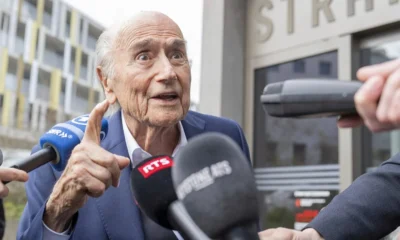


“They apologised to me privately. I said they should put it on social media. They said they will not put it on social media, it will affect their credibility, because it’s not just them, but their other programmers at the Al Jazeera network too.”
These were the words of Daniel Bwala, while giving further insight into what has transpired along the line since his controversial interview with Mehdi Hasan of Al Jazeera, a global television network in March 2026, stating that the station privately apologised to him.
Bwala, who appeared on The Morayo Show, a private talk-show programme, hosted by Morayo Afolabi-Brown, a popular television presenter, however said because both Mehdi and Al Jazeera, refused to make the apology public, he was prompted him to instruct his lawyers in England to sue for defamation.
Clips on the controversial outing in which Bwala, spokesman for the campaign of Atiku Abubakar during his presidential bid in 2023, were in the public domain for several weeks after where a groundswell of commentators believed his performance was not only underwhelming, but he was outrightly disgraced.
He added: “The substance of the apology was that they should have told me that part of what they discussed with me was a talking point, that they were also going to interrogate me on my credibility for supporting the person I had attacked before.
“By their own ethics, they ought to have told me that, but they said they were sorry they didn’t. If you’re bold, if you call yourself a journalist, a fact-checker, you run your programme live and let people judge live.
“If you’re thinking straight, that’s what you’d do. You took creative control of the programme. You made a recorded programme. Ethics demanded you publish it exactly as it was recorded.”
Informing that the programme ran for one hour and 30 minutes but Al Jazeera published only 49 minutes, he accused the network of skewing the footage in Hasan’s favour, adding: “The deeper point is that they cut out the parts where I was fact-checking him and the crowd was clapping for me, and instead kept the parts where he was speaking and people were clapping for him. He’d ask me a question, I’d deny it, then he’d play the old clip. We call that ‘cut and joined’ in media. After doing that, which amounts to a smear campaign, he didn’t give me the chance to react to it.
“Instead, he let it appear that I was simply asked a question, denied it, was shown the clip, denied it again, was shown another clip, and denied it again. He removed that part, because if he’d left it in, anyone watching would understand that I had already answered the question upfront, and that my later denials were a response to his repeated bringing it up. That’s where the unethical conduct of a professional issue arose.
“When they apologised, I said no, put it on social media. They refused. So, I instructed my lawyers in England to go to court. The case is currently in court. Because my advisers in England said it’s defamation of character.”
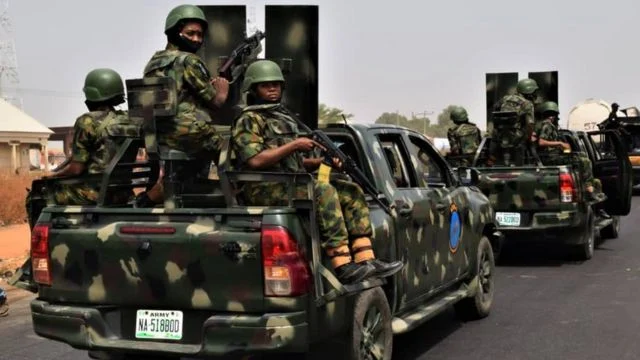
More successes are being recorded by Nigerian forces trying to rout out terrorist in parts of the country, with emerging reports indicating that the perpetrators are currently running scared from the hot onslaughts they are getting from the operatives.
Channels Television, is quoting military authorities at the Operation Hadin kai (OPHK) conducting military blitzkrieg against the terrorists in the North East as saying that the troops received six Islamic State of West African Province (ISWAP), one of the major terrorist groups operating in the area, who surrendered alongside their families, at the 192 Battalion (Main) Sector 1 of the body.
Quoting a statement on Wednesday by Mohammed Goni, spokesman of the military operation, with headquarters in Maiduguri, Borno State, the report, said that among the items recovered from the terrorists and their families included a cumulative sum of more than N1.5 million, two Tecno mobile phones, and other items.
Th statement, added that troops of 115 Task Force Battalion, while conducting ongoing search and rescue operations in Askira/Uba Local Government Area of Borno State, on July 7, rescued two additional abductees from a terrorist hideout, where they also recovered cash of N1.2 million suspected to be proceeds of criminal activities, food items, and other logistics believed to have supported terrorist operations.
The rescued victims have since been evacuated to a secure location where they are receiving appropriate medical care and psychosocial support, the report said, adding that during the same period, the troops noted that it contained a coordinated attack by ISWAP terrorists in Borno, and one of the soldiers was killed.
“Although the insurgents briefly exploited a section of the base’s defensive perimeter during the intense firefight, the troops rapidly regrouped, mounted a determined counter-offensive and decisively expelled the attackers, inflicting significant casualties and forcing the surviving terrorists to flee with varying degrees of gunshot wounds.
“Regrettably, one gallant soldier paid the supreme price, while two gun-trucks and some combat enablers sustained damage during the engagement. The situation at FOB Logomani remains firmly under the control of Operation HADIN KAI troops, with reinforcements deployed, exploitation operations ongoing and additional measures being implemented to further strengthen the defensive resilience of the location.”
Detailing how troops of 232 Battalion apprehended a notorious criminal in Gombi Local Government Area of Adamawa State, the statement, said: “Follow-up exploitation of the arrest led to the recovery of one AK-47 rifle, two magazines, and twenty-eight rounds of 7.62mm special ammunition.
“The suspect and recovered items are currently in military custody, while further investigations are underway to identify and apprehend other members of the criminal network.”
Similarly, the statement said troops of the 149 Battalion arrested two suspected terrorist logistics suppliers in the Mobbar Local Government Area of Borno State.
The recovered items include cash sums, a Volkswagen Golf vehicle, construction materials, household items, and other supplies suspected to have been destined for terrorist elements.
The suspects are currently undergoing interrogation, while the recovered items remain in military custody as investigations continue.
As part of ongoing offensive operations, troops of 24 Task Force Brigade, in conjunction with members of the Civilian Joint Task Force, conducted a clearance operation on known terrorist enclaves around Wulgo.
During the operation, the troops said they exploited the terrorists’ hasty withdrawal and recovered a sack containing assorted illicit drugs abandoned by the fleeing insurgents.
“The recovery further underscores the sustained pressure being mounted on terrorist elements, denying them freedom of movement and disrupting their operational capabilities.”
Relatedly, the troops apprehended a suspected BHT/ISWAP logistics supplier at the Molai checkpoint in possession of large quantities of medical supplies without due clearance. The suspect and items recovered are in custody for further interrogation.
Again, in Sector 2 Area of Responsibility, Troops of 233 Tank Battalion, in conjunction with local hunters, intercepted and arrested a suspected BHT/ISWAP terrorist logistics supplier from Ngirya village of Tarmuwa LGA with five motorcycle tires. The suspect and items are in military custody for investigation.
“These latest operational gains underscore the effectiveness of sustained offensive operations, actionable intelligence and the seamless collaboration among security agencies and auxiliary forces in dismantling terrorist logistics networks, disrupting criminal activities and protecting vulnerable communities across the North East”, the statement added.
Headquarters Operation HADIN KAI assured the public that ongoing search and rescue operations will continue with unwavering resolve until every abducted person is accounted for and safely reunited with their families.
“The Theatre Command also issues a stern warning to individuals involved in supplying food, fuel, construction materials, transportation or any other form of logistics to terrorist groups to immediately desist. Anyone found aiding, abetting or collaborating with terrorist elements, directly or indirectly, will be identified, apprehended and prosecuted in accordance with the law.”

Peter Obi, candidate of the Nigeria Democratic Congress (NDC), in the 2027 presidential election, is insistent President Bola Tinubu has so battered the Nigerian economy that Nigerians with thriving businesses are now selling kulikuli – a local groundnut cake snack.
Obi, former Governor of Anambra State, who contested the same election in 2023, where Tinubu was declared winner by the Independent National Electoral Commission (INEC), told Chude Jideonwo, a popular social media programme host, while appearing in his #WithChude podcast, that the way things were going today, the President had nothing more to offer Nigeria than more misery.
Citing a situation in which Tinubu had taken Nigeria from the 87 million poor people to the current figure of 140 million in his three years of governance, Obi, said the idea of Renewed Hope the President sold the country through his All Progressives Congress (APC), indicated a total collapse of the economy and a complete mess of the system that must result in him throwing in the towel and going home to take his rest.
Hear him: “Those who jumped into Tinubu’s experimental things that this man did this or did that and is going to create a future, have seen that the whole thing has become a mess. Renewed Hope has now become Renewed Hopelessness.
“When President Tinubu came into power, 87million Nigerians were living in poverty, today it is 140million. We were number five below where we are today in hunger-list. Today, it has increased. Everything has gotten worse. We are no longer talking about ghost workers now, you can see where we’ve gotten.
“So, everything – insecurity – everything is getting worse. Which hope are they going to renew again? You can’t renew failure. So, the only thing to do now is to plead with them – there is a way you fail in school and they’ll ask you to leave the school.
“Tinubu’s supporters have joined my supporters. They have, because they’ve seen it themselves. Nobody can tell you that things are moving well. What are you going to do now? Those who had businesses – people who had businesses before he came into power – they’re now the people who’re selling kulikuli.”



-
 News3 weeks ago
BREAKING: Troops rescue wife of kidnapped General! *Terrorists flee scene
-
 News3 weeks ago
BREAKING: Count me out, Okonkwo tells Atiku *Amaechi VP’s choice an insult to Ndigbo
-
 News2 weeks ago
BREAKING: Court sentences Nigerien, two others to death over terrorism
-
 News4 weeks ago
Dickson: Obi, a big asset to NDC, we’re working together … but!
-
 News4 weeks ago
Ovia, ex-Zenith Bank boss swings into luxury apartments *Flats hit $2.8million price tag
-
 News6 days ago
BREAKING: EX-SSG mowed down by gunmen! *He resisted being kidnapped – driver
-
 News2 weeks ago
Abductors of Oyo teachers panicking, freedom coming for victims soon!
-
 News3 weeks ago
Two hours after Igboho’s ‘red-eyes’ to ‘Fulani’ leaders, gunmen free kidnap victims!