
Columns
Did you marry a wife or a wifey?

Some years back when I was a married bachelor living alone in Abuja, I had this “terrible” experience with my wife. Yes! Some of us are married to a wife and not wifey.
I had left my family in Lagos to work in Abuja. I didn’t like it, neither did she or the children. But cum si cum sa, life is what it is and life must go on. But on this occasion my madam had something to do at their office headquarters in Abuja. Of course, it was excitement on all sides.


Before now, I was the person making the trip to Lagos at every given opportunity to be with my people. There were many other reasons for the excitement on both divides. One of them was to show my wife the culinary side of me.Yes! I pride myself as an excellent cook.
I started cooking officially at the age of 10 or 11, when I joined my elder brothers in Lagos in the late 70s. It took me after a few months of arriving Lagos as a complete village boy to start taking care of myself. They had shown me around within the period of the tutorial of life in Lagos including the markets, churches and other important places and that was it.
As bachelors then, they must have felt that they owed me little else outside my stomach infrastructure. So, in the morning, they simply dropped money on the table and left, only to return late at night, most times heavily decked from intensive binging as virtually every young man of that era when Nigeria was practically flowing with the biblical milk and honey did – they were actually in their middle and late 20s, though in my eyes I saw them as Methuselahs – and my lot was to wake up and serve them food.It was so annoying, but that was my own part of the bargain.
Sometimes the demand would come as pleas and appeasements, and at others, commands and rebukes. Whichever, I did my duty. So before I turned 15 or more, I had known what to do with stockfish, oporo, snails, tozo or cow tongue and how to make them sit well in either onugbu, egusi, ogbono and other kinds of delicacies and watch those who had the privilege of being called at table smack their lips and rub their bellies in contentment.
This was the side of me I wanted to show my wife. So, that day, a day before, I had gone to Wuse Market and bought up the entire market. And throughout the night and early morning, I laboured in my kitchen and before midday, the next day, I was done. All manner of dishes – stuffed with every kind of protein I could find in the market – from periwinkles to stockfish, snails, prawns, cowlegs, cowheads, cow-tongues to goat meat, chicken, turkeys and fishes.
I would probably have added snakes and crocodiles if I could find them. All because I wanted madam to have a feast during her one-week stay. Because she was scheduled on an afternoon flight, I set off to the airport on an empty stomach. It was a mistake that would have led to fatality. But the aroma of the food had filled my stomach. Above all, I wanted to enjoy the feast eating together with madam. It was an error!.
Of course, driving from the airport to my house was fun and filled with exciting banters and jokes, one of the main reasons I love madam. There is never a dull moment when she’s in good mood as on that day.
But everything changed immediately we entered the house and she started surveying the environment.My heart practically dropped when I say her face as she entered the kitchen. I had packed all the food in the freezer, but left the samples on the kitchen table.
I couldn’t help but notice the sneering, sniggering, contemptuous countenance as she opened each dish, without saying a word. But that was not even the biggest problem. I had expected her to descend on the food, as much as I craved them myself. But whosai! In the same cloth she wore from Lagos, madam went to work and started cleaning.
This was the same house that had been cleaned a day before. I had someone that came to clean three times in a week. That part, I hid from her, because I knew her likely reaction. So for hours, I was not only hungry – I dared not dish the same food I cooked at that moment, because she was now in charge.
So, as I lay on the bed in the visitors room, I could hear her lacerating abuses as my mother would in the days I was with her, and realised that there was little difference between my own mother and this woman. Thank God for social media. I buried myself there and tried to find solace. I’d never been so hurt, so incensed, so disappointed, so scandalised.
To rub it in, after dealing with other departments of the house, she came to where I was lying on the bed and commanded me to get up, because she wanted to change the sheets. This was a fresh sheet I changed myself a night before. Of course, did I have a say? Not until she was satisfied that the house was in impeccable state and that there was no dust anywhere or grain of sand on the floor that she went to take a bath and have a change of clothes.
By the time she called me to eat, my steaming anger, had almost boiled over. But, my wife, just like my mother, knew how to turn things around with me. She did the needful and before minutes turned into hours, you didn’t notice the man that was seething with anger some hours ago. That’s the wife I married.
Now, do you see the power of women – the real African wife that is supposed to be everything to her husband. Do you notice that in spite of everything, I couldn’t afford to go against her own trajectory because of those powers – power of being in charge and in control. Of course, I could have gone to the kitchen to eat to my fill. Nobody would beat me. But I could have hurt her feelings more than I was hurt myself. Why? Whatever she did, was not out of spite or hatred, but love. Was my wife a wicked woman? Was she uncaring?
No! Never! She was simply doing her duty of taking care as she saw her mother do to her father. Besides, before a lady finally leaves to her husband’s house, the mother, a good mother, that is, calls her inside the fortress of her room to give her pep talks on how to go about her duties, which are necessary for stable marriages. I saw my mother do that to her daughters on their own days. But picture the difference. If I had married a wifey, she would have probably caused me to drive into one of the fancy eateries in Abuja right on the way from the airport.
On getting home, she would have expected me to pull off her shoes, bring a bowl of water and cool her feet and wipe them with towel, carried her and laid her on the bed. Yes! She would have begun to sniff around in search of women things and tell-tale signs of another woman coming into the house and a strand of hair in the bathroom or the whiff of female fragrance somewhere could have tipped her and hell would be let loose.
Yes! Her concern would probably be how many women had come into my house and whether I was cheating on her rather than my welfare. If I had married a wifey, instead of a wife, the love and care would have been to descend on those delicacies and expecting me to clear and wash the dishes thereafter because it’s shared responsibility because we’re supposed to be equals.
The next morning, she would have expected me to serve her on bed as she lazied about and after eating, that I’d clear the dishes and return to wash them as she returned to sleep, else it showed I didn’t love her.
Now, if you were an African man, which treatment would you prefer? The punishment my wife gave to me and the type a wifey would demand? Which of the relationships do you think would endure – the one erected on the strong foundation of duty and affection or the one sequestered on the strange model as copied from foreign films by Nollywood producers and actors?
Do you think that I would ever talk back at my wife with strong words not to talk of raising my hand to strike her. Would you talk back at or strike at your mother? Yes! The wifey goes into her husband’s house in combat mood to do battle – with side chics, mothers-in-law, and husbands relations while the wife goes to the same house to build a home – a stable home of love and care – with eyes half-closed to the vagaries of marriage.
Do you still wonder why I love my wife? Do you still wonder why it’ll be until death do us part? Are you wondering why I wrote this? Have a nice day! – The Tiny Voice!
Posted by Sunny Igboanugo | 5 July 2022, 01:52am

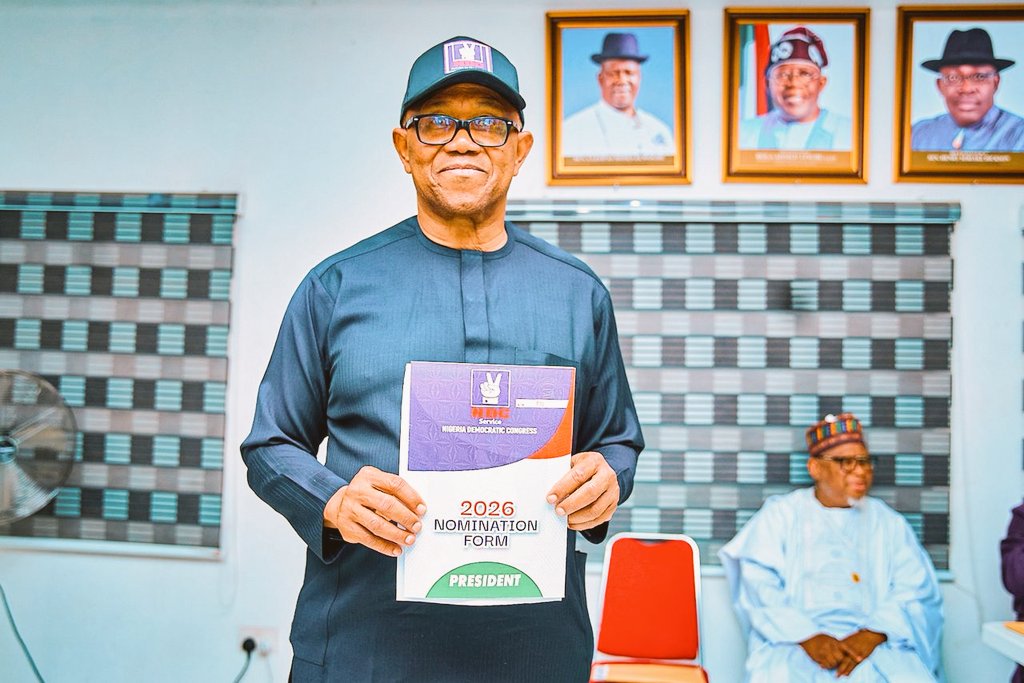

Have you been watching the drama happening in ADC? I have, and I have been thoroughly amused doing so. Have you been following the television appearances of Rotimi Amaechi recently? Did you see how the former Governor of Rivers State had been vibrating, assuring of his victory at the party’s presidential primaries?
Did you hear him boasting how he was going to vanquish Atiku Abubakar, former Vice President and now the presidential candidate of the party, indicating that ADC members would prefer him over the seventh-time election-contesting Nigerian record holder, because of his (Amaechi’s) records?
Did you see the vehemence with which he warned that television host, to “stop that nonsense,” for suggesting that he could end up as the VP candidate to the same Atiku? Did you see how he rolled his bulging eyes and how angry he sounded?
Did you read the statement of the former Minister of Transportation, rejecting the outcome of the ADC presidential primaries, even before it was finally announced on Wednesday.
Now, pan the camera to the Abuja home of the same Amaechi – by the way – I could swear the ambiance could compete with the palace of the Sultan of Brunei – how did he do it – but how could I forget his wife is a money-minting machine!
Did you see the selfsame man with Atiku? Did you notice the difference? Did you notice the robustness, the comicalness? Did you watch the chumminess and the camaraderie? What meaning did you read into it? You actually have to be an initiate to correctly read everything perfectly.
Just wait for a few days to hear the announcement. I won’t be the one to tell you that the huffing and puffing, the air-punching and the table-banging is all for one thing – the VP position.
For those who had advocated that Obi stayed back and contested with Atiku, it would have been a fatal gambit. He would have come a distant third in the contest, competing with Mohammed Hayatu-Deen. Not because it will be so by the desires of the members, but the goons, wanted it so and would have made it so.
Even the position of the VP which hitherto had been bandied as his for the asking, would have eluded him. Amaechi was there to pick it up.
You heard Dele Momodu an accomplice in that plot telling you that Amaechi was more experienced than Obi in that interview with Charles Aniagolu on ARISE NEWS Television’s Prime Time.
It was all figured out. If Peter Obi had fallen to the plot he would have been the greatest political mugu of the century. He would have rubbished the rock-strong foundation on which his profile was built and stands today – as businessman and politician.
Indeed the plot appeared skewed towards not only making him wave goodbye to politics forever, but caast a huge slur on his exhilarating credentials that account to his being celebrated as one of the most successful Nigerian business tycoons today.
Only a few seconds and the trap would have snapped. Had he waited a few days more in that ADC environment, it would have been over. He would have been trapped in the odd situation of point of no return.
By now he would have become an object of mockery and an item of sport for his enemies. Tons of them would be having a bellyful of laughter over his ordeal by now – had he wasted a second more.
But having that laugh would mean that the eagle has lost its lustre. Obi isn’t Obi just by name. Now, here is the Obi they wanted to trick into a trap. Still in his early 20s, he drove three cars he bought with his own money before graduating from the university.
First year – a Volkswagen Beetle (today’s Venza) – second year a Peugeot 505 (today’s Prado) – third year – a BMW (Today’s Maybach). Now think of yourself as a student then. Think of your children that are students today. That would bring you closer to the persona in question.
It didn’t end there. Still as an undergraduate, he owned the supermarket on campus. There was more. He built residential houses and became a landlord to students and locals in the university community – one of them, said to be Abubakar Sa’ad, the current Sultan of Sokoto, who was then a military officer.
De hear o! This same Obi, was among the 1,000-ONLY, UK customers the American Express Bank gave their Platinum Cards. You know what that means. In the whole of the UK – including oyibo people of all nationalities doing business.
Before his 33rd birthday, this Obi, had become Chairman of a commercial bank and director of other blue-chip companies. At the same age when his colleagues still clutch files in their armpits in pursuit of jobs, he was already heading a conglomerate of firms dealing with supplies and distribution of goods.
So, add all these up! Imagine the number of intriguing situations he must have dealt with in this long journey. Imagine the boardroom politics. Imaging the various business tricks he must have survived.
In politics, this same Obi practically cut off the head of the political monster prowling Anambra for years.
Before his arrival, the whole of the state was one huge conflagration and cataclysm. Elements sponsored by patrons of evil had razing down structures including the Government House of governor’s residence. Anambra was all chaos – a huge bedlam!
But all these Obi faced and conquered, arresting the tempest, quietening the tide and smoothening the waves – not without battles – there was a deluge of them – but with willpower, wisdom, tenacity, consistency, and above all – courage.
He battled the electoral heist that stole his original mandate, won, then impeachment, triumphed, then abrupt tenure termination, challenged it and returned to power – battled entrenched interests in the labour unions – teachers, doctors, workers – et al – prevailed and handed down a new Anambra sitting on the foundation of sobriety and good behaviour.
Now this was the man they wanted to trick. Obi’s case would have been that of the late John Chukwu, the hero in the tragicomedy, Isubru Ekperi – described as the crab which swam across the mighty ocean, but fell in the woman’s pot of soup.
Had Obi, stayed in ADC to contest against Atiku, his fate would have mimicked Okonkwo in Chinua Achebe’s Things Fall Apart, whom for fear of being thought weak, destroyed his own destiny by killing Ikemefuna and ended up committing suicide! But providence was on his side;
Thankfully, he did not. And today, NDC provides a new horizon. Nigerians are being provided the opportunity of a new country, that could rise from the ashes of the old order – a clean break from the past – a new hope of awakening the sleeping giant!
The Tiny Voice!
By Sunny Igboanugo
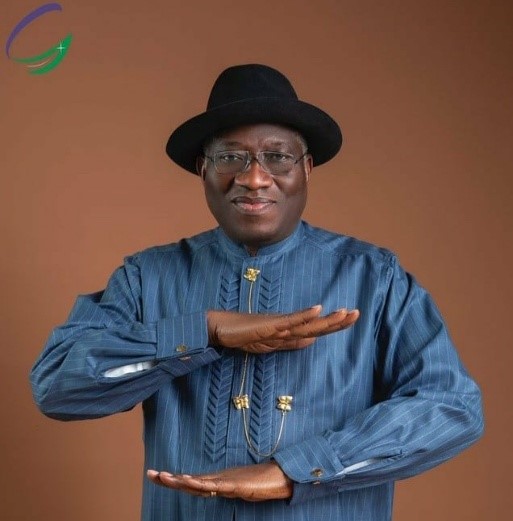
On Wednesday, April 22, 2026, Goodluck Jonathan, Nigeria’s 14th leader and the fourth elected President was at the Presidential Villa, Abuja, on a visit to President Bola Tinubu. Nobody knew the content of that visit because discussions were conducted closed doors.
However, knowing Tinubu, would anything concerning him ever be free of politics, especially given the nuances of the season? Would the snake ever give birth to a creature that is short?
Naturally, as it is wont with Nigeria where one event takes over from the other in quick successions, the Jonathan visit, naturally disappeared – buried inside the reservoir of public consciousness.
But then, things have begun to unfold that people are not only now returning to that April visit, but are taking notes as well as connecting the dots.
Nothing yet seems definite, except in the realm of the popular local saying that when a witch cries at night and the baby dies in the morning, the people know where to look.
Indeed, the droppings of the caterpillar on the ground is making people look up to the tree to see if they are actually eating the green leaves on them. Naturally, events around the 14th President, do not look ordinary – at least not that ordinary to escape more than a scant public scrutiny.
So, when on Thursday May 7, 2026 youths stormed the Abuja office of the ex-President urging him to run for the office he left in 2015, after his historic defeat by Muhammadu Buhari, it elicited a deeper interest from the previous attempts. Yes! It wasn’t the first time Nigerians would be making the pitch. Several groups had tried in the past, even as far back as the 2023 elections.
So, the attempt three weeks ago, was not new. But, this time, eyebrows were raised all the same because it seemed to conduce more intriguing interpretations. Therefore, instead of mere passing interests, Nigerians are now interrogating deeply, putting two and two together.
How much did the former President know about that visit? Did those youths ambush him or was he in the know that such a visit would take place? Was it what is known here as an arrangee – a well-crafted political facade?
Then came the angle of the Peoples Democratic Party (PDP). A long time ago, when speculations were rife that Peter Obi, was being courted by the former ruling party to return and run for the 2027 presidential election on its platform, Jerry Gana, a stalwart of the party had served notice that they even had a more seducing and deliverable option. It turned out to be Jonathan.
So, long before the Nyesom Wike devastating blow on the party that has kept it in its prostrate state, Jonathan had been on the cards as the number one option for the party. Therefore, it follows that the current steps the party is taking to draft him in, to run as its candidate in the election, is normal. But is it?
The argument in PDP quarters for the Jonathan choice is because he is the only one constitutionally barred from contesting a second term, he is the most fitted to satisfy all shades of political interests in Nigeria today, especially the North eager to return to power. Quite scintillating.
But seducing as this appears, there is a hugely compelling argument against the move. A groundswell of analysts swear that the ex-President is being pushed into the ring as an instrument to stop Peter Obi, the current moving train threatening to crush the ambition of Tinubu to remain in office beyond 2027. In other words, the sole reason is to play the spoiler role.
Supposing this is the reason. Then what is before us is more fatal than critical. This is the same Jonathan whose singular act of calling Buhari that morning on March 31, 2015 to concede defeat, suddenly catapulted him to a global democratic icon – the same that hops into presidential planes to other countries in Africa to straighten crooked democratic roads.
Now, would the same Jonathan swear with his church mind that Tinubu’s model of democracy is what he would prescribe even for an enemy country, let alone Nigeria? What aspect of the country has Tinubu not damaged. So, what would make him a Tinubu’s ally in the further destruction of Nigeria, if he truly loves the country?
This was the same Jonathan who swore that his ambition was not worth the blood of any Nigerian. Is he not aware that the land on which he’s standing is already soaked with the blood of the same citizens by the sheer butchery that is happening daily in the country under the nose of the most underwhelming President yet? Isn’t this the issue now?
Indeed, not a few people have argued that Jonathan should be in the forefront of the Obi project. For one, Obi was once his appointee apart from being a sworn ally. So, he would be in a position to ascertain his true qualities first hand and confirm that he’s the only one among the lot that could fix the country. Even an imbecile knows that Obi would create the clean break from the past that Nigeria needs today to build the future everyone desires.
Besides, he Jonathan, if anything is substantially part of the reason the South East is in its current state at the moment, the level of support the area gave him throughout his tenure is part of the reason the late Buhari increased his hatred for the Igbo a million times more – a phenomenon he transferred through the APC to Tinubu – and which the current President has been unable to extricate himself from.
Okay, is the former President not aware that the position Tinubu is sitting on today belongs to the South East – the zone that took him like one of them that they even gave him an Igbo name – Ebele. If everyone else shortchanges Ndigbo, would he also join, given the foregoing? What manner of ingratitude would that be?
O yes! He has had his Villa meeting. PDP has adopted him as their candidate. Even the legal barrier that would have stopped him, was cleared on Monday when Justice Peter Lifu of the Federal High Court, Abuja, handed him the all-clear sign. He has told the world that he is consulting. While at it, hopefully, more people would tell him the home truth.
Fortunately, he was the one who said it is easy to wake someone that is actually asleep than someone pretending to be asleep. Regrettably, by his silence since the obscene drama began, it appears he prefers the latter. Therefore, his action would not derive from ignorance.
If he finally bites at the apple, it wouldn’t be because he didn’t know how much Tinubu has messed up Nigeria and the implication of reinforcing him with another four years.
His complicity wouldn’t mean that he doesn’t know what to do to reverse the trend. It would only mean that personal interest has taken the better part of him and not the love of the country.
If he deliberately makes that choice, with both eyes open, then he’s welcome in the hall of infamy rather than honour. Fortunately, there is still a window to prove that the foregoing was a mere political nightmare and not reality. But otherwise, it would be apposite for Nigerians to say in unison – GOODLUCK?
My name is Sunny Igboanugo, I’m The Tiny Voice!
Option A4, occupies a central place in Nigeria’s democratic development. That unique election model developed and introduced in the Nigerian electoral process by Humphrey Nwosu, the late Professor of Political Science, has become a symbol mounted on a standard and raised high above the sky.
It is Nigeria’s mimic of that biblical golden serpent to which both the nation and its citizens look up at and derive instant succour – much like a balm to their heavily-lacerated democratic soul – a wonder device, that once mesmerised the world.
Yes! Anytime Nigerians want to serenade their democratic spirit with the allure of sweetness, they take a recourse to that unique event that happened more than three decades ago, on June 12, 1993. They reminisce on the purity of the process and beauty of the outcome.
Like the saying that precious things come in simple packages, Option A4, was not only as simple as simplicity itself, but was as powerful as the most impactive dynamite – simple enough to break all barriers of ignorance and powerful enough to destroy all electoral bad behaviours defacing the beautiful perspective of democracy.
Here is the process. Voters converge on a location at approved time, get accredited, queue behind preferred candidates, get counted and the votes recorded in approved result sheets. Finish! No ballot-snatching, no ballot-stuffing, no quarrel, no thuggery, no blood on the floor.
Even the issue of proper voting that lead to void votes is eradicated by the process. The electorates need no education on how to vote properly. The issue of thumb-printing in the wrong space or double-voting is taken care of.
Today, in Nigeria, June 12 is designated as Democracy Day, based on the outcome of that election. It was so seamless and produced such a perfect result that the product – Moshood Kashimawo Olawale (MKO) Abiola was never challenged on the inviolability, but on the other ideas the military government in power then had.
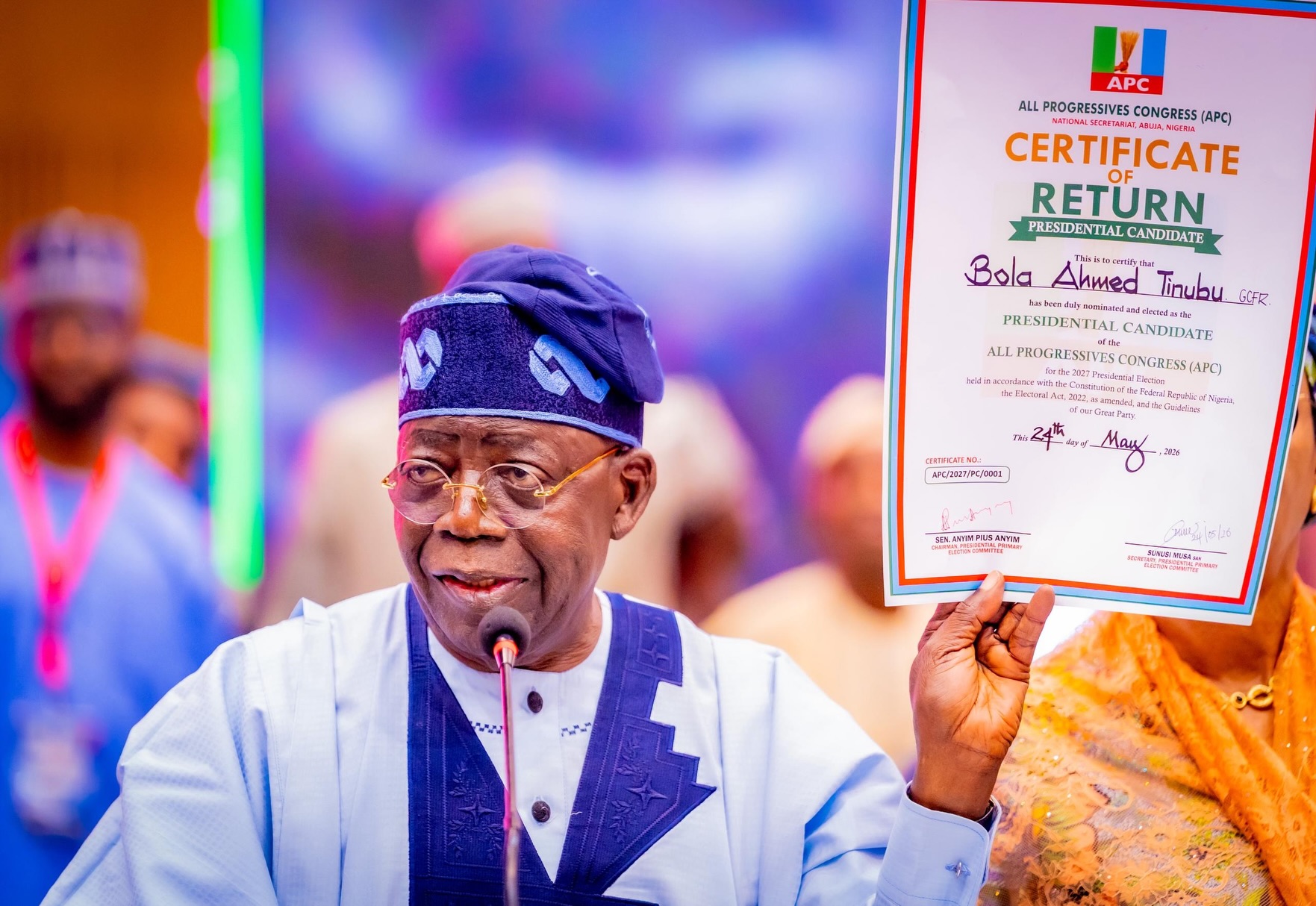
But did you see the same Option A4 put to test under President Bola Ahmed Tinubu? Did you watch the primaries of the All Progressive Congress (APC), at various stages, including the one that produced the President as candidate of the party in the 2027 presidential election? If you did, you would understand where your country is currently and where it is headed.
How could anyone have the mindset to deface such a beauty, let alone design a mechanism to destroy it, given its centrality as the bastion of Nigerian democratic commemorations? How could anyone be so wicked as to destroy the most beautiful Nigerian democratic ornament?
It is like pulling the original of Monalisa or the best of Bini Bronze from their protective encasements and smashing them on the floor. It takes a mindset that has scant regard for beauty – a destructive spirit to do so.
But see how easily they did it! See how simple it was for them. It was as easy as jumping from 10 to 1,000 in a simple counting process a primary school child could do.
Did you see the smiles on their faces to indicate how much fun they had supervising the putrid, outlandish and parlous construct – like the lurid expression of a rapist seeking to satiate his lust? Clearly, it did not matter to them the danger they’re putting themselves and future generations – comprising their children and grandchildren, Tragedy!
But what is it that Tinubu and his co-travellers have not destroyed since happening on Nigeria? What pain have they not wrought on the polity? Is it the economy? Think of those rich Nigerians alighting from their fancy cars and jumping into the Lagos Lagoon.
Is it security? Reminisce on the last moments of General Sani Uba, as he watched the approach of the terrorists while crouching on his knees in the forest, having lost the vain hope that his country would save him.
Think of the Oyo school teacher in that final moment as he waited for the impact of that sharp knife on his bare throat, while being slaughtered like a goat at the abattoir. Think of Zamfara, think of Sokoto, think of Kwara, think of Anambra – add to the list – think Nigeria.
Yet, the APC foot-soldiers – including a Deputy Speaker of the House of Representatives – a leader in the legislature – the most important institution of democracy – clowned, jested and had fun.
For them, the rest of the country doesn’t matter. All that matters is Tinubu’s happiness. And the master-strategist, the democratic doyen, the June 12-NADECO icon, was all and about, grinning from ear to ear and lapping everything up.
With economy destroyed from day-one with the impulsive, brainwave – subsidy is gone declaration – with security in tatters that school children, now scurry and scamper in different directions like scared rodents, at the slightest sight of strange faces for fear of being the next kidnap victims – with the national fibric almost giving way from the consistent and unrelenting pressure in running the most nepotistic administration – far worse than the days of the late Muhammadu Buhari, thought to be the worst at a time – what else remains of Nigeria?
Before now, I had grieved that Tinubu deliberately left out Humphery Nwosu in that outlandish June 12 struggle honourees list, when he ought to be the numero uno. I had hoped however that someday, someone more amenable than Tinubu would do the needful. But what hope is there now that Tinubu and his men are tightening the noose on Nigerian democracy? Now this!
The worst part is not that the APC goons committed this heinous atrocity, but in the manner they did. They enjoyed the process. Only mindless characters such as mafia kingpins we watch in movies, take pleasure in inflicting pains. That we now watch such playing out in real life is not only disturbing, it is THE TRAGEDY!
My name is Sunny Igboanugo, I’m The Tiny Voice!



-
 News3 weeks ago
BREAKING: US-Nigeria troops slaughter 175 ISWAP fighters
-
 Columns3 weeks ago
Dear General Gowon: That apology you’re running from is your nemesis
-
 News1 week ago
BREAKING: Terrorists strike Ibadan again! Abduct ex-Minister’s sister, twin children
-

 News3 weeks ago
BREAKING: Wait over! Arsenal are CHAMPIONS! Win EPL after 22 years hiatus
-
 Columns3 weeks ago
See Tinubu’s terrible damage on Option A4 and its precious memories
-
 News3 weeks ago
BREAKING: Jonathan emerges presidential candidate *Gets automatic PDP ticket!
-

 News3 weeks ago
Presidency: Obi met all requirements – NDC *Cleared to contest primaries
-

 News1 week ago
Emeka Ike: I’ll make example of Lere Olayinka for prying into my privacy