
Opinion
Awomamma massacre: What if it was a DSS operation

Watching Uche Onyeagocha, former Secretary to State Government (SSG) in Imo State and Mbadiwe Emelumba, present Commissioner for Information in the state last Friday in their frenzied argument on Channels TV breakfast programme, Sunrise Daily, the impression an observer just chancing into the programme would have is that they are debating over the price of meat in the market or who would become the next governor of the state.
That is until the observer settles down to assimilate the subject matter – they were actually haggling like buyers and sellers at Eke Onunwa Market in Owerri, not over the price of roofing sheets or iron rods, but over the killing of seven able-bodied youths from Ubahaoji Otulu community in Oru West Local Government Area of Imo State, in yet another orgy of carnage that has become a signature mark in the state in recent years.

What is in issue? Onyeagocha, of course is a member of the Peoples Democratic Party (PDP), and the number three officer of the executive branch of government in the Emeka Ihedioha administration that the incumbent governor, Hope Uzodinma replaced in controversial circumstances in February 2020. He is supposed to be beefing the current government from his sulking corner after the feeding bottle was yanked off his mouth, stripping him of power and its appurtenances. Given! Or so it must be construed.
On the other hand, Emelumba, who incidentally comes from the area where the young men that were mowed down in a hail of bullets by licensed killers, either in the garb of Ebubeagu, the official vigilante group sanctioned by the Imo State Government or Department of State Services (DSS), hails, has since taken over where the former SSG left off, even at a lower cadre. Of course, a man in government, a la Nigeria, would obviously be ready to offer a finger or a toe to maintain that status regardless the harm he could be doing to his people. Nigeria of today is replete with many Joseph Goebbels who defended Hitler’s incineration of six million Jews. Very few studying Emelumba’s spirited and sometimes incendiary grandiloquence would doubt some Goebbels in him.
So, both huff, puff, remonstrate and demonstrate, practically dancing and urinating on the souls of the Awomama Seven, the res in the whole affair. On the one hand, the slain youths were members of the Eastern Security Network (ESN), the supposed militant wing of the Indigenous People of Biafra (IPOB), who now take the bullet for all manner of offences in Nigeria from bombing a plane to stealing goats. On the other, they were young men cruising home after having good times, having enjoyed themselves at a wedding ceremony before being waylaid and slaughtered in cold blood.
Now, the meat of the matter! The seven youths, whatever labels they carried, were not hares, grasscutters or antelopes in the forest that are shot at sight for food. They were, up until their sudden end, human beings. The quick and obvious counter would be that they were dangerous bandits. But again, even bandits are humans, covered by law. Does the fact that they were bandits subtract from their rights to life and fair trial? The quick question would be how much justice did they give to those they killed as bandits and terrorists to merit justice? Then the counter again be, should the law be thrown away then, so that jungle justice becomes a state policy?
The official government account, as further adumbrated by Emelumba was that these were ESN members hiding in a camp in one of the forests in the community, who opened fire on DSS officials sent there to rout them out and were vanquished by the superior fire power of the secret police. Of course, this was also the official position of DSS.
The natural conclusion even a half imbecile would readily draw is that the DSS, were not only amply trained, but were better equipped, reason why no casualty was recorded on their side. Were this the case, the further conclusion must then be that the operatives, using their skills could have also demobilised the so-called terrorists. Did they do so. If one or two of the seven boys that were killed, had been allowed to live, and probably paraded, as is wont in the Nigerian system, he would have been able to give account of what actually transpired.
But no! It is convenient to just name them as ESN and the case would be another open and shut book. That, of course underscores the sad part, because in so doing, the public, to whom the men in black, Emelumba and his principal, Uzodinma are accountable, have been left in the lurch, many of them aghast at the calamity a government that claimed to have come from their mandate has wrought on them. Sad!
It is even sadder being when confronted with the other side of the story. In the chilly narrative delivered by multiple accounts, including the man whose traditional wedding the young men were said to have attended and returning from. The goriest of them all, was that one of the victims, who was earlier shot and wounded, managed to return to the wedding venue, but that his assailants following the trail of blood from his wound, traced him to the back of a water tanker, where he was crouching and shot him point blank. Obviously, nobody at the venue of the wedding could help him because of the consistent shooting outside. So, he died! What a painful death it must be!
Now, if this is not murder, what is it? But then, that familiar line is always been there – they fell to the superior fire power. For those who followed the Apo Six case, that was the same story the butcher of those innocent Igbo traders advanced, though it was a clear case of woman snatching. Yet those young, thriving youths, were wasted. Not until they were busted by the panel of enquiry that the Obasanjo government set up then did the truth surfaced. Would Uzodinma set any such panel? Never! Not when he has already, dismissed the account of the other side as propaganda. The protest and dust raised are the handiwork of his political enemies, he insists. Terrible!
Now, for those who still don’t know what human life is worth, here are some examples. A Nigerian governor was once arrested at Heathrow Airport in the UK. What was his offence? He was brandishing a supposed elephant tusk. He was already ushered into a waiting room, regardless of his diplomatic passport to square up with the law. His saving grace was when tested, the item was found to be a painted wood and not real.
Today, a Nigerian Senator, no less a former Deputy Senate President, is spending the last one month in detention and may end up spending years. His offence? Organ harvesting. He did not kill anybody. He did not even force his supposed victim into the UK. It was an arrangement gone-awry. No more. But look at the consequences. That tells the story of the value placed on life generally, whether of human or animal.
You simply don’t kill any living thing in sight, man or animal. You don’t even kill a dangerous snake you find in your bedroom. Yes! A whole football match was stopped the other day because a squirrel jumped into a pitch. The footballers had to remain in frozen position lest they scared the animal, until it was finally removed. That was the case for an ordinary animal. What about the footballer that has now lost virtually everything with the prospect of going to jail for kicking a cat?
For a headless body that was found floating in the Themes River, some years back, were the whole security in the UK – Scotland Yard, Met Police, MI5 not unleashed in search of the culprits until the matter was fully resolved? That is the extent life matters and the reason everything else works. For it is only when life is valued that the ingredients to live it to the fullest are added.
Conversely, take a look at the stories coming out from the same Imo in recent times. Was it not in the same state that a whole vehicle was set on fire with those inside roasted like animals and those involved were actually boasting and displaying their escapade? The explanation was they were the culprits in the brutal murder of the late Ahmed Gulak, a top-ranking politician, who visited the state? It didn’t matter that the same people you’ve subdued to the extent of setting them on fire, you could have arrested them to extract the information needed to resolve the case. How would it matter when they had been labelled? How many other sanguinary tales would the nation hear before someone in Douglas House Owerri, says – Enough!
Yes! There is no way Uzodinma would escape blame in the entire sordid affair in his state. Nobody is saying he should not fight evil when it besets him, because not doing so, would also make him blameworthy. But he must do so in a civilised and acceptable manner. There must be rules of engagement. ESN, no matter the label attached to it, must never be an excuse for wasting life in the manner those seven young men have gone.
In fact, we at Whirlwindnews insist that there must be an inquiry into the Awomama Seven. The truth must be unveiled. That’s the only way not only to assuage the spirit of the dead, but the quench the hunger for a closure from the living and avoid possible vengeance. Yes! It’s DSS. So what? When did DSS acquire license to kill anyhow?
Posted July 26, 2022

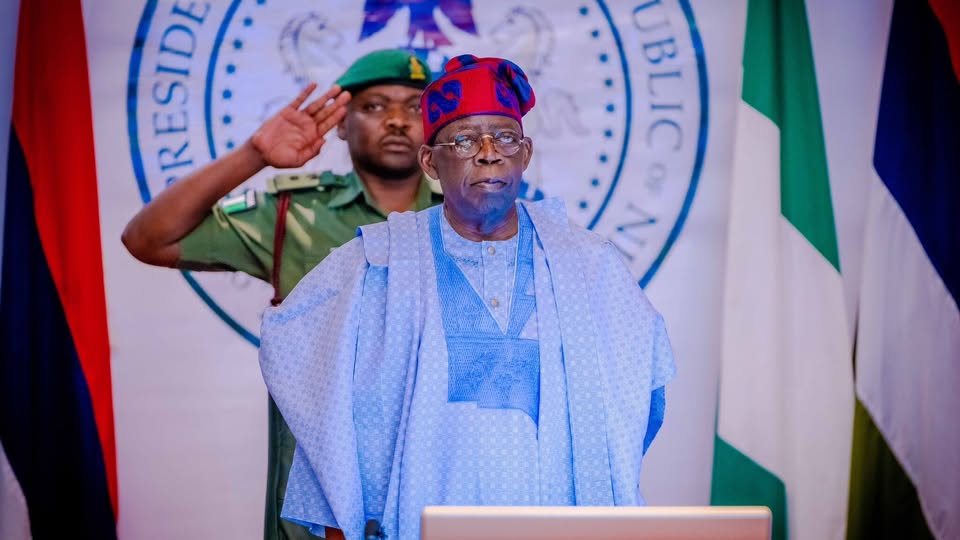

By Bayo Onanuga
With politicking intensifying ahead of the January 2027 election, opposition politicians have escalated their campaign of misinformation and calumny to diminish the impact and achievements of this administration over the last three years.
Two years ago, when the administration was struggling to deal with the unintended consequences of its historic reforms, the campaign would have made sense. But not anymore, as the administration can rightly claim bragging rights for what it has achieved against all odds and why the international community is applauding it for putting Nigeria irrevocably on the path of growth and development.
The impact of the three-year-old government is best felt at the subnational level – state and local levels. States that hitherto were unable to pay salaries by May 2023, with months of unpaid obligations to their workers and pensioners, are now doing so with ease and dreaming big about infrastructure. In every state I have visited, I have seen this development. Ogun, my state, Oyo, Nasarawa, Enugu, Ebonyi, Kaduna, Kano, Kebbi, Katsina, and others have witnessed development projects spring up, thanks to President Tinubu’s re-engineering of the federation’s finances and increased allocation to the states. When local councils begin to receive their allocations directly from the Federation Account, the Tinubu effect will ensure that more governance cascades down to the 774 local councils.
State governors who have benefited from this policy have openly admitted that increased allocations have enabled them to bring social and infrastructural development to their states. Many opposition PDP governors who joined the APC did so for this reason—not for the baseless claim that President Tinubu bribed them. Governor Abdulrazak said in December 2024 that his administration embarked on more projects in the first 18 months of Tinubu’s presidency than in his first four years. The Governor of Ebonyi, Nwifuru, who is building iconic underpasses and overpasses in Abakaliki, credited his ambition to President Tinubu. Governor Peter Mbah similarly attested to this, crediting the Naira rain from the centre for his programmes. And Nasarawa State Governor Abdullahi Sule, who understands how Tinubu’s financial re-engineering and the end of the subsidy regime have increased the states’ fortunes, said President Tinubu “has taken the bullets for all of them.”
In May 2023, President Tinubu inherited acute petrol scarcity, an unsustainable petrol subsidy regime due to expire in June 2023, multiple exchange rates, arbitrage, and low revenue, with at least 30 states unable to pay workers, let alone fund infrastructure and social projects. Debt servicing consumed 97 per cent of Federal revenue. Additionally, food scarcity and inflation plagued the country as farmers abandoned their fields, recording massive losses amid the currency squeeze introduced by former CBN Governor Godwin Emefiele.
President Tinubu, guided by the Renewed Hope Agenda, wasted no time. He threw the ruinous subsidy out of the window from Day One. Days later, he floated the Naira and ended the artificial fixing of the Naira-to-dollar exchange rate, a system that had enabled well-connected individuals to profit effortlessly. Tinubu declared a food emergency and announced the Presidential Committee on Fiscal Policy and Tax Reforms to examine our outdated tax laws, some of which date back to the colonial era. Immediate gains included encouraging dry-season farming, with subsidies and inputs provided for farmlands abutting dams and irrigation sites in at least 14 states.
Even by President Tinubu’s admission, the early months and the first year were tough as the government implemented its programme. The cost of living went up, and businesses claimed the harmonised exchange rate had put them in the red. A few companies even closed shop and left our shores. On the streets, some Nigerians claimed that the policies have left them hungry, a sentiment the opposition still parrots to this day, without any empirical proof. If not sure of the salience of his reforms, President Tinubu would have taken a reverse gear in fright and abandoned all the new reform policies amid the avalanche of attacks from critics and opposition elements in the media. Instead, he persisted.
Two years after the first challenging year, the story has changed for good. However, some opposition elements are stuck in the sentiment of 2023/24, unyielding and adamant about acknowledging the many gains and milestones achieved by the Tinubu administration. But only the blind will fail to admit that this government has taken the country miles away from the state it inherited in 2023.
The stock market is clear proof of the administration’s economic success. In May 2023, Tinubu met the All-Share Index at 53,000 points and the market capitalisation at N30 Trillion. Today, the ASI has risen five times, to a record 250,000 and a market capitalisation of N160 Trillion. Blue-chip companies, including those initially negatively impacted by government policies, are declaring record profits and dividends. Equally, foreign portfolio investors are flocking in to partake in the Nigerian boom. This is not a bubble. It shows that a fundamental paradigm shift has occurred in the economy, all thanks to the Tinubu administration’s policy direction.
In recent weeks, I revisited the manifesto and policy ambitions that won us the election. The Tinubu administration has faithfully implemented its Renewed Hope Agenda, striving to resolve in three years the cumulative problems of decades.
Roads that will outlast this generation are being built nationwide. I recently went home to Ijebu-Ode, Ogun State, and was amazed that the highway to my town from the Shagamu intersection now has a concrete pavement, thick enough to withstand the traffic of trailers from the West to the East. The most audacious road projects ever undertaken by any administration since independence are the Illela-Sokoto-Badagry and the Lagos-Calabar coastal superhighways. President Shehu Shagari conceived the Sokoto-Badagry highway in the early 80s. Succeeding administrations, afraid of the huge cost, abandoned the road. The Lagos-Calabar has also been on the map for decades, but no leader has ever dared to turn the idea into reality. President Tinubu has proven to be a transformative leader who has decided to turn the roads into reality, adding new roads to our road network for the first time, beyond those we inherited from the colonialists. Myopic critics of the two roads have assailed the Tinubu administration for taking loans to accomplish them. How else could the roads have been built if we rely only on FG’s share from FAAC? Relying solely on federal allocations would mean waiting 50 years or more, with costs ballooning out of reach, as in the metro-rail to nowhere started by presidential aspirant Rotimi Chibuke Amaechi in Port Harcourt, Rivers State. In the states, governors are building roads of similar standards. I saw some of these in Ogun, Kaduna, Ebonyi and Enugu.
As with roads, the Tinubu administration is also investing heavily in rail transportation, with the Kaduna-Kano-Gusau-Maraadi rail network scheduled for completion next year. City rail networks in Kaduna, Lagos, Kano and Enugu have been approved for construction, along with the Lekki-Ibadan rail.
When historians write about the Tinubu administration in 2031, they will not remember it only for audacious road and rail networks, but also for historic reforms. The oil and gas sector is one area in which the administration has impacted the country. Apart from ending the regime of wasteful subsidies, the government has instituted reforms that have made the sector attractive to fresh investment. International Oil Companies(IOCs) that once shunned our country are returning with billions of dollars in investment. Domestic refining and the innovative Naira-for-crude policy are ensuring energy security, thereby avoiding acute scarcity arising from the disruptive war against Iran and the closure of the Strait of Hormuz. More recently, the administration enacted a policy requiring the NNPC to remit oil sales proceeds to the Federation account.
Confronted by the administration’s stellar performance, the opposition and media propagandists dredged up a campaign video of the President promising a 24/7 power supply. They distorted his words. What he actually said was: “Whichever way, by all means necessary, you will have electricity, and you will not pay for an estimated bill anymore. A promise made will be a promise kept. If I don’t keep the promise and I come for a second term, don’t vote for me, unless I give you adequate reasons why I couldn’t deliver.”
What the distorters failed to admit was that the Discos, privatised since 2013 by President Goodluck Jonathan, are responsible for delivering power to the end consumers, not the Federal Government. What this government has done in the last three years has been to address the problems hindering the capacity of Discos to deliver, such as bringing Siemens to strengthen the grid, activating idle GENCOs, and planning to clear the N4 trillion legacy debts owed to GENCOs and GASCos, which will encourage new investments in the sector. The government has also massively implemented its metering policy, providing over 2.5 million meters to homes. Recently, the Tinubu administration announced the establishment of GAMCO, the Grid Asset Management Company, which will optimise power supply and activate idle facilities.
One of the administration’s impactful programmes, apart from issuing passports in less than a week, is the introduction of NELFUND and CREDICORP in 2024. While Credicorp is making loans available to civil servants to buy Made-In-Nigeria products, NELFUND, with N282 billion committed so far, has made tertiary education more accessible for our children. About 1.6 million Nigerian students have benefited. Payment of school fees and stipends is assured for the children, and the government has also renegotiated the 2009 ASUU-FG agreement, such that in the last three years, our universities, along with the Polytechnics and Colleges of Education, have been spared the disruptive academic strikes. Let’s give the Tinubu government some slack: a four-year programme is now a four-year programme. He promised it during the campaign and has delivered. The government has also invested in technical schools, offering students pursuing vocational education allowances. In the universities, TETFUND is once again funding research grants for dons willing to pursue ideas that will be useful to our society.
Among impactful programmes, apart from issuing passports in less than a week, are NELFUND and CREDICORP, introduced in 2024. Credicorp makes loans available to civil servants for Made-In-Nigeria products, while NELFUND, with N282 billion committed, has made tertiary education more accessible. About 1.6 million students have benefited. School fees and stipends are assured, and the government has renegotiated the 2009 ASUU-FG agreement, sparing universities from disruptive strikes. Today, a four-year programme in the universities, polytechnics and colleges of education is completed in four years. Technical schools offer allowances to vocational students, and TETFUND is funding research grants to academics.
It has not been all rosy the past three years, especially in the area of making our people safe from the band of bandits and terrorists. While the armed forces have been locked in an asymmetrical war against these heartless elements, neutralising their leaders and foot soldiers in several theatres of conflict, the displaced terrorists are attacking vulnerable areas in some of the states, killing and kidnapping. The government is unrelenting in providing the armed forces, intelligence agencies, and police with the tools they need to wage the war. With support from friendly governments like the US, France, and the UK, there is hope that the menace of kidnappers and their political sponsors will become history. The man who has taken the bullets to make Nigeria survive a fiscal disaster is even more willing to take additional bullets to make all Nigerians safe.
Onanuga is Special Adviser to President Tinubu on Information and Strategy
By Hon Eseme Eyiboh
Let us begin with a confession. There is something unsettling about a politician who no longer appears to struggle.
In the turbulent theatre of Nigerian politics, where noise is often mistaken for relevance, where primaries resemble wrestling contests and delegate management demands the instincts of a hostage negotiator, a man who walks in unopposed does not merely win. He transforms the entire contest into a rehearsal.
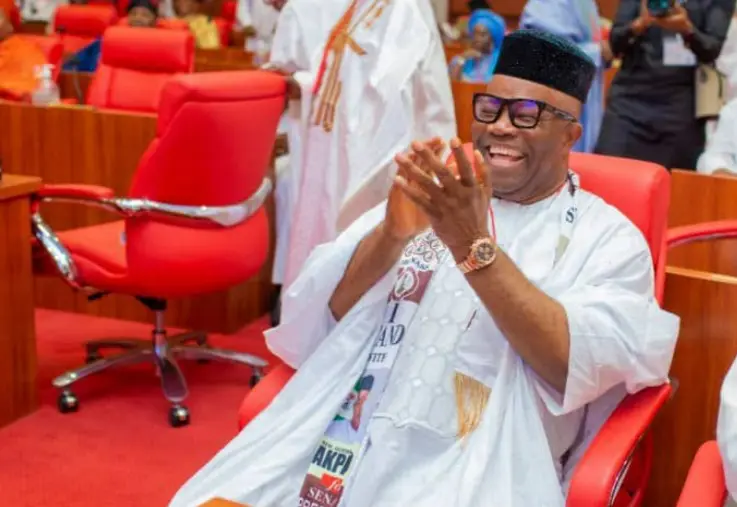
On Monday, May 18, 2026, at Methodist Primary School, Ukana, in Essien Udim Local Government Area, Senator Godswill Akpabio did exactly that. No contest. No drama. No nervous counting of votes. He simply emerged as the candidate of the All Progressives Congress for the Akwa Ibom North West Senatorial District without a single challenger.
While many politicians remain trapped in the exhausting rituals of horse trading, factional bargaining, and survival politics, Akpabio’s good works delivered something far rarer in Nigeria’s political environment than gold itself. Absolute consensus.
To the casual observer, an unopposed return may suggest the absence of competition. That would be a dangerously shallow interpretation.
Those familiar with the political phenomenon long associated with the “Uncommon Transformer” understand the distinction clearly. An unopposed ticket does not mean nobody desired to contest. Politics naturally attracts ambition the way light attracts insects. Power always generates interest. Influence always provokes aspiration.
What an unopposed return truly means is far more significant: potential challengers surveyed the landscape, studied the numbers, weighed the networks, measured the emotional connection between the man and the political structure around him, and quietly concluded that the road to victory simply did not exist.
There is a profound difference between lack of opposition and the collapse of viable opposition
Why is there no road to victory for others? Because what Akpabio has built in Akwa Ibom State in general and Akwa Ibom North West in particular is no longer merely a political structure. It is a fortress. Its walls are not made of concrete. They are made of cultivated loyalty. Enduring networks. Strategic generosity. And the unspoken understanding that confronting him politically is not simply difficult. It is often futile and absurd.
The atmosphere at the ward centre resembled less a political exercise and more a carnival of affirmation. Supporters, community leaders, women groups, youths, and party faithful gathered not to determine an outcome but to endorse a grace carrier already settled in the public imagination. The votes were counted without end. The votes were celebrated.
Here is the remarkable part.
The whispers surrounding Akpabio’s dominance do not come only from admirers. They come from seeming opponents too.
They do not fear his voice. They fear his results. They do not tremble at confrontation. They confront something more sobering: the recognition that within his political territory, the arithmetic has been solved with almost clinical precision.
While others are still assembling coalitions, Akpabio consolidated his long ago. While rivals continue calculating delegate figures, he has already moved to the next question: what happens after victory? How does political power translate into enduring relevance and measurable impact?
That is the distinction between a career politician and a political architect. One chases office. The other shapes the terrain on which the chase itself occurs.
Since assuming office as President of the 10th Senate, Akpabio has projected a measure of stability within the Red Chamber. That should not be understated.
The Nigerian Senate has earned a reputation for turbulence over the years. Leadership rebellions. Internal fractures. Floor dramas that generate headlines while weakening governance and social democratic structures. Against that backdrop, a Senate President capable of maintaining institutional stability without recurring crises becomes more than merely effective. He becomes uncommon.
His admirers see in him a politician who has consistently combined institutional authority with emotional loyalty from his base through the National to International arena. From Governor to Minister to Senate President, his rise is framed as the journey of a man who understood tomorrow before others arrived there. A politician deeply conscious of timing, alignment, and the delicate craft of converting social capital into durable influence and uncommon power (political capital).
This point matters enormously. Political capital is easy to squander. This point matters enormously. Political goodwill is easy to destroy. Many politicians exhaust it through arrogance, exclusion, or the endless pursuit of personal advantage. But Akpabio appears to understand something deeper about leadership: goodwill grows when people genuinely feel seen, valued, included, and carried along.
Over the years, he has cultivated relationships not merely through politics, but through accessibility, generosity of spirit, loyalty to associates, and an unusual ability to make people feel remembered even in the midst of high office. That is why his support structure often appears less like a coalition held together by convenience and more like a community bound by shared experience and enduring personal connection.
What some interpret merely as political dominance may actually be the long-term harvest of sustained human investment.
And perhaps that explains the ease with which the field gradually cleared around him. Not because opposition was forcibly silenced, but because many within the political environment saw little wisdom in disrupting a consensus built around continuity, stability, experience, and an existing relationship of trust.
His commitment to continue working closely with President Bola Ahmed Tinubu and Governor Umo Eno reinforces a broader message of continuity and strategic alignment. At a time when fragmentation remains the temptation of many ambitious actors, Senator Akpabio has chosen coordination. That is not a weakness. It is political arithmetic.
And this is where the conversation shifts from the present to the near future. The same political capital that secured his senatorial return without resistance is not a one-use currency. It accumulates. It compounds. The goodwill he has cultivated, the equilibrium he has maintained, and the pragmatic preference for results over rhetoric are not merely tools for another Senate term. They form the foundation of something larger and forthcoming.
The crystal ball is not required to observe the trajectory. A Senate President who secures his own return effortlessly, stabilises a chamber historically associated with instability, aligns himself with the centre of national power grid while maintaining grassroots legitimacy, is a Senate President who has solved one of Nigerian politics’ most difficult equations.
He has demonstrated to his colleagues that he can deliver. He has shown the party hierarchy that he can be trusted. He has reassured constituents that proximity to power has not disconnected him from them.
This combination is rarer than any single attribute standing alone. So when the 11th Senate eventually convenes and the question of leadership emerges once again, the conversation may prove shorter than many anticipate. Not because there will be no interested contenders. There always are. But because the arithmetic of loyalty, institutional experience, strategic alignment, and demonstrated political capacity will already have completed its quiet work.
Akpabio has not formally declared interest in leading the 11th Senate. He does not need to. The declaration already exists in the pattern of his movements, the stability of his stewardship, and the political field he has cleared without visible strain. It is simply the discipline of reading political signs as they present themselves* .
In the end, Nigerian politics rewards those who understand the people more deeply than those who merely master performance and noise.That is not sentimentality. It is a political reality.
A politician capable of delivering his constituency without violence, panic, or emergency intervention is a politician who understands something fundamental: power is never truly declared. It is demonstrated. And it is demonstrated most convincingly when nobody steps forward to challenge it.
On that Monday in Ukana, the drums rolled. Praises echoed across the gathering. And the political message arrived without ambiguity. In Akwa Ibom North West, the conversation has moved beyond opposition. What remains is an audience waiting to see the next chapter unfold without ceasing.
Senator Godswill Akpabio has once again reminded observers that in certain political spaces, dominance is not always loud.
Sometimes, it is simply complete. And in the intricate chessboard of Nigerian politics, where many players are still learning how the pieces move, that level of mastery remains rare, consequential, and deeply potent.
The man who saw tomorrow understood something else too. The loudest voice in the room is rarely the one that prevails.
The one that prevails is the one that no longer needs to shout because everybody already understands. And that is what Senator Godswill Akpabio has demonstrated that he is the man who saw tomorrow.
Rt Hon Eseme Eyiboh mnipr is a former member and Spokesperson of the House of Representatives and currently Special Adviser, Media/Publicity and official Spokesperson to the President of the Senate
News
Senate rule amendment: Why the debate should be about institutional stability, not personalities



-
 News3 weeks ago
BREAKING: US-Nigeria troops slaughter 175 ISWAP fighters
-
 Columns3 weeks ago
Dear General Gowon: That apology you’re running from is your nemesis
-
 News1 week ago
BREAKING: Terrorists strike Ibadan again! Abduct ex-Minister’s sister, twin children
-

 News3 weeks ago
BREAKING: Wait over! Arsenal are CHAMPIONS! Win EPL after 22 years hiatus
-
 Columns3 weeks ago
See Tinubu’s terrible damage on Option A4 and its precious memories
-
 News3 weeks ago
BREAKING: Jonathan emerges presidential candidate *Gets automatic PDP ticket!
-

 News3 weeks ago
Presidency: Obi met all requirements – NDC *Cleared to contest primaries
-
 News1 week ago
Emeka Ike: I’ll make example of Lere Olayinka for prying into my privacy