
News
From Abuja to the world: The Insecurity Triad and Rise of the Independent African Scholar

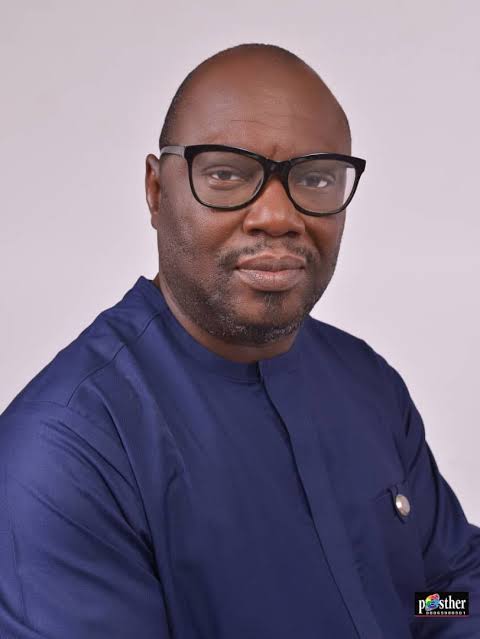

By Max Amuchie

There are moments when an idea moves beyond commentary and begins entering systems.
The week that just ended was one of those moments.
Within the span of days, The Insecurity Triad experienced three separate but interconnected breakthroughs.
First came the Brussels intervention, last Sunday via an Op-ed piece in BusinessDay by hugely respected Collins Nweke, where the framework was interpreted within a European geopolitical context as an explanatory model for Sahel instability and its implications for Europe’s own strategic future.
Second came its consolidation into the global scholarly archive through repositories including Academia.edu, Harvard Dataverse, Zenodo, SSRN, OSF, and SocArXiv — six distinct platforms representing the full architecture of contemporary open-access scholarship.
Then came a third development whose symbolism may ultimately prove just as significant: my integration into the ResearchGate ecosystem.
At first glance, this may appear procedural. Another profile. Another platform. Another account.
But within the architecture of global scholarship, ResearchGate represents something much larger than social networking.
It is one of the world’s largest academic visibility platforms — a digital meeting ground where researchers, scholars, institutions, laboratories, journals, policy specialists, and interdisciplinary thinkers interact within a continuously evolving scholarly network.
To understand why this matters, one must first understand what ResearchGate actually represents in contemporary academic life.
What ResearchGate Really Is
Founded in 2008 by physicians Ijad Madisch and Sören Hofmayer alongside computer scientist Horst Fischbach, ResearchGate emerged as part of a broader transformation in global scholarship: the migration of academic visibility from closed institutional corridors into digital knowledge ecosystems.
Traditionally, scholarly recognition depended heavily on university affiliation, conference access, institutional journals, and physical academic networks.
ResearchGate altered part of that equation.
With over 25 million researchers from 193 countries, it created a platform where research outputs, citations, working papers, datasets, methodological discussions, and scholarly engagement could circulate beyond the limits of geography and institutional hierarchy.
Today, researchers from universities, think-tanks, laboratories, policy institutes, and independent research environments use the platform to upload publications, track citations, share datasets, engage with disciplinary debates, connect with other scholars, and increase discoverability across fields.
In effect, ResearchGate functions as part archive, part visibility engine, and part intellectual networking infrastructure.
And visibility matters in scholarship.
Because ideas do not influence debates merely by existing. They influence debates by becoming discoverable.
The Platforms and What They Represent
The repositories into which The Insecurity Triad has now been archived are not equivalent. Each represents a distinct layer of global scholarly infrastructure.
Academia.edu, with over 250 million registered users, is the world’s largest platform for academic sharing — the first point of entry into the global research conversation for many independent scholars.
Harvard Dataverse is an open-source repository operated by Harvard University, one of the most trusted and widely indexed academic archives in existence. A deposit there is not a symbolic gesture. It is a permanent record.
Zenodo, developed under the European OpenAIRE programme and operated by the European Council for Nuclear Research (CERN), assigns each deposit a Digital Object Identifier — a DOI — making it permanently citable in academic literature worldwide regardless of what happens to any journal or institution that might otherwise have hosted it.
OSF — the Open Science Framework — developed by the US Centre for Open Science, supports the full research lifecycle from planning through archiving and dissemination. It has become a standard for researchers committed to transparency and reproducibility.
SocArXiv is a premier open-access repository designed to ensure that social science research is shared rapidly and transparently.
It serves as a vital bridge between rigorous academic inquiry and the public interest.
It was founded in 2016 by Philip N. Cohen, a distinguished Professor of Sociology at the University of Maryland, College Park with a vision to create a “knowledge commons” that returns power to the scholars themselves.
And SSRN — the US-based Social Science Research Network, owned by Elsevier — is where social science scholarship enters the citation economy. With over one million papers and three million registered users, it is the platform through which working papers reach the global research community before and alongside formal peer review. It is also, notably, where Nobel Economics laureates Joseph Stiglitz, Esther Duflo, and Paul Krugman circulate their working papers — not because they are required to, but because that is where the serious readership is.
Together, these six platforms represent discovery, archiving, citation, networking, and dissemination. A coordinated presence across all six creates an unusually broad discoverability footprint for an independent scholar. For a scholar-journalist working from a newsroom in Abuja, it is extraordinary.
The Scholarly Series
Embedded within the developments of the week just ended is a commitment that deserves to be named directly.
Over the next twelve months, The Insecurity Triad will be developed into a ten-part scholarly series — engaging the framework, the Trinity of State Decay theory, and Sahel security dynamics in full academic register. Not as journalism. Not as commentary. As scholarship.
Part One — The Insecurity Triad (Part 1): Foundations of Convergence and Rival Sovereignty — An Analysis of Money, Land, and Mind (MLM) — has already been published and archived across Academia.edu, Harvard Dataverse, Zenodo, OSF, and SocArXiv, with SSRN forthcoming.
That is the opening instalment of a structured, year-long intellectual undertaking. Nine parts remain.
Why Admission Matters for an Independent Scholar
This is where the significance of these developments becomes clear.
Admission into these global scholarly platforms from outside formal academia carries symbolic and structural weight because it challenges one of the oldest assumptions within global intellectual culture: that legitimate scholarship must originate exclusively from institutional spaces.
For generations, the architecture of scholarship has largely been built around universities as gatekeepers of credibility.
The university conferred identity. The institution supplied legitimacy. The department validated intellectual existence.
But digital scholarly ecosystems are increasingly disrupting that monopoly.
An independent scholar operating from Abuja can now enter the same searchable research environment inhabited by professors in London, policy researchers in Brussels, doctoral candidates in Toronto, and analysts in Pretoria.
That does not erase institutional inequalities. But it narrows intellectual distance.
And that narrowing matters enormously for African thinkers working outside formal academic systems.
The African Reality of Intellectual Production
Across Africa, some of the continent’s most original analytical work often emerges under structurally difficult conditions.
Many researchers operate without university grants, funded research assistants, subscription journal access, institutional methodological support, conference travel funding, or formal research laboratories.
Yet despite these constraints, important ideas continue to emerge.
This is partly because African intellectual production has historically developed through hybrid spaces: journalism, activism, policy observation, civil society, strategic commentary, and independent inquiry.
In many cases, African thinkers are forced to become researchers, archivists, editors, publishers, and distributors simultaneously.
That reality makes entry into global scholarly ecosystems especially important.
Because platforms like Harvard Dataverse, SSRN, ResearchGate and others do more than host publications. They insert researchers into discoverability networks where their work can be found, cited, discussed, questioned, and expanded upon.
For an independent scholar, that visibility is not cosmetic. It is infrastructural.
The Insecurity Triad’s Expanding Scholarly Geography
Taken together, this sequence reveals the expanding geography of the framework’s circulation
The Insecurity Triad is no longer confined to one medium, one geography, or one intellectual ecosystem.
It now exists simultaneously across media discourse, policy interpretation, repository preservation, and scholarly networking systems.
From Abuja’s grounded observation of insecurity dynamics, to Brussels’ geopolitical interpretation of Sahel instability, to integration within global repository and research infrastructures, the framework is beginning to circulate through multiple layers of international knowledge production.
That circulation matters because frameworks gain strength through repeated engagement across different environments.
Some will critique it. Others will refine it. Some may reject aspects of it. Others may adapt it to new contexts.
But circulation itself is the beginning of intellectual life.
Beyond Personal Achievement
It is tempting to read these developments purely as personal achievement.
That would be too narrow.
What makes this moment significant is what it signals for African media institutions, independent scholars, and emerging researchers across the continent who operate outside traditional academic pathways.
It suggests that the global knowledge system — while still unequal — is becoming more permeable.
An idea no longer needs to begin at Oxford, Harvard, or Sciences Po before it can enter international circulation.
It can begin in Abuja.
It can emerge from a newsroom. From a scholar-journalist’s research desk. From a media-backed analytical unit. From a self-funded intellectual project.
And if sufficiently coherent, persistent, and discoverable, it can travel.
The Deeper Meaning of This Convergence
Perhaps the most important lesson of this moment is not institutional.
It is psychological.
For many African thinkers, the greatest barrier has often not been intelligence or originality, but proximity to recognised systems of validation.
The old model suggested: first secure institutional acceptance, then produce ideas.
The emerging reality increasingly suggests the reverse: produce durable ideas, and institutions may eventually begin to engage them.
That is the quiet significance of last week.
From Brussels to ResearchGate, from repositories to scholarly circulation, The Insecurity Triad is beginning to move through systems that were historically difficult for independent African frameworks to enter.
Not as charity. Not as symbolic inclusion. But through interpretive engagement.
And in the evolving geography of global scholarship, that distinction changes everything.
Interlude
In the last eight or nine weeks, this column has birthed The Insecurity Triad, defined its architecture, examined its dynamics, and from there developed the Trinity of State Decay theory. There is still much more to explore.
But next week, we step briefly away from the Triad and the Trinity to pay tribute to one of the outstanding intellectual giants of twentieth-century Africa.
Thirty years after his passing, Claude Ake remains profoundly missed.
Trust Is Sacred. Stay seasoned.
- Dr. Max Amuchie is the CEO of Sundiata Post and architect of The Insecurity Triad Analytical Framework, and the Trinity of State Decay theory. He writes The Sunday Stew, a weekly syndicated column on faith, character, and the forces that shape society, with a focus on Nigeria and Africa in a global context.
X — @MaxAmuchie | Email: max.a@sundiatapost.com | Tel: +234(0)8053069436











Justice Muhammad Nuraddeen Bello of High Court sitting in Sokoto State has sentenced three men, including a foreign national, to death by hanging, after convicting them on charges bordering on terrorism and arms proliferation.
The convicts, Yusuf Muhammad (alias Sallau), a Nigerien; Jabbi Alhaji Yalle; and Kabiru Muhammad, were apprehended on 13th June, 2025, by the Department of State Services (DSS) Counter Terrorism Unit in connection with cross-border criminal activities bordering on arms trafficking and terrorism.
Bello, who found all three defendants guilty as charged and sentenced them to death by hanging, while also ordering the forfeiture of all monetary exhibits recovered from the convicts to the Federal Government, said: “The conviction is the latest in a series of successful prosecutions by the DSS in its sustained operations against terrorism and organised cross-border criminal networks across Nigeria.”
The sentencing is coming about two weeks after the Federal High Court sitting in Abuja sentenced each of the five suspects arrested on May 31, 2026, by the DSS for their involvement in the November 21, 2025, attack on St Mary’s Catholic School, Papiri, Niger State, to 25 years’ imprisonment.
Justice Binta Nyako, had handed down the judgment after the men, including two Nigeriens, pleaded guilty to all four terrorism-related charges, bordering on support for the commission of an act of terrorism, breaching both Section 16 of the Terrorism (Prevention and Prohibition) Act, 2022, and the Firearms Act, were pressed against them.
According to Count One, the men were accused of jointly conspiring to assist a terrorist by agreeing and intentionally playing various roles towards conveying 15 AK 103 rifles as well as about 1,434 rounds of 7.62mm live ammunition from the Diffa region, Republic of Niger, to one Malam Ahmad, a member of the Boko Haram terrorist group based in Borgu, Niger State, and thereby committed an offence contrary to Section 26(1) of the Terrorism (Prevention and Prohibition) Act, 2022.

Primate Elijah Ayodele, is on the verge of coughing out a whopping N10billion, if he fails to offer unrestrained apology to Rabiu Musa Kwankwaso, former Governor of Kano State within the next 24 hours, and retract his claim that the former Minister of Defence is bidding his time to betray Peter Obi, to whom he is to contest the 2027 presidential election as a running mate.
Without doing so, the controversial cleric, should be ready for a major court battle with the vice-presidential candidate of the Nigeria Democratic Congress (NDC), the platform on which the pair is to contest the election.
In a letter indicating a legal action against Ayodele of the INRI Evangelical Spiritual Church over defamatory remarks, Kwankwaso, through Magaji Mato Ibrahim, SAN & Co., his lawyers demanded an immediate retraction and apology from the cleric over the allegations.
Details of the letter, dated June 11, and unveiled through the X platform of the legal team, was based on a viral video recorded during a live-streamed church service, where the preacher made allegations targeting Kwankwaso’s integrity as Peter Obi’s running mate under the NDC.
Quoting the cleric as stating: “KWANKWASO IS A FAKE TO OBI, KWANKWASO WILL BETRAY YOU. KWANKWASO HAS BEEN PAID TO BE VICE PRESIDENT TO OBI AMONG OTHER LIBELOUS COMMENTS WHILE PRETENDING TO BE A PREACHER,” the former governor said the comments were unprovoked, grossly unfounded, and carefully designed to create a rift within the ranks of the political party and its supporters.
Handing Ayodele a 24-hour ultimatum to publish a full and unequivocal retraction across all social media platforms and news outlets with the same prominence as the original video, they also demanded a written undertaking that he would cease and desist from making any further malicious statements against their client, warning that failure to comply, would lead to full legal actions.
The letter stated: “We shall claim substantial damages to the tune of Ten Billion Naira and cost of the action on a full indemnity basis amongst other reliefs.”

President Bola Ahmed Tinubu on Tuesday demanded the immediate end to the exportation of minerals from countries in Africa in their raw forms, which he said had led to massive exploitation of the continent.
The President, told member countries of the African Minerals Strategy Group (AMSG), a forum of Ministers in charge of Mining and Solid Minerals on the continent to speak with one voice to promote, collective interests, ensure value addition, and prevent the continent from becoming merely a source of raw materials for the rest of the world.
As the Grand Patron of the group, chaired by Dele Alake, Nigeria’s Minister of Solid Minerals Development, gave the charge while receiving a delegation of AMSG in the State House, Tinubu told the delegation that the group had a critical role to play in strengthening Africa’s bargaining power in the global mineral market and ensuring that the continent derives maximum value from its natural resources.
His words: “ What we should do is avoid bureaucracy and deceit; we must put an end to exploitation. The rest of the world won’t mind if your country is a cesspit of dams and rubbish and excavates your raw materials without giving value.
“It is our responsibility to collaborate and cooperate to ensure that these metals and minerals bring value to us, bring technology to us, and we can do it. It is how much each country will put into the research, development and refinery. I don’t see reasons we cannot demand centralisation of that conversation somewhere on the continent. So why not utilise that in our research and development and knowledge-based economy to enhance the quality of life and bring prosperity to our people.”
Emphasising that Africa possessed enormous mineral wealth that should be strategically harnessed to drive industrialisation, create jobs and accelerate economic transformation across the continent, the President, said the era of exporting raw minerals without local processing and beneficiation must give way to a new model that encourages investment in local industries, technology transfer and the development of value chains that retain wealth within Africa.
Alake, who had earlier expressed gratitude to the President for his exemplary leadership under the Renewed Hope Agenda, said the gesture had shown support for Nigeria’s mineral sector, especially in the local value-addition and economic diversification drive, where artisanal miners are empowered.
He told the President: “You encouraged us to look at the focal point of the establishment of this group, which is to ensure that the African natural resources, especially with regards to minerals, critical matters, are localised, the beneficiation coming directly to Africans generally.
“You charged us that we should set our sails very high and ensure that local value addition is a pivot around which all the objectives of this organisation should revolve.
“So, sir, we have gone implemented your charge and we are quitted that today local value addition is reverberating all over Africa.”
He added that some member countries have gone ahead to ban the export of raw minerals.
He explained members of the body were in Abuja for the Fifth edition of the African Natural Resources and Energy Investment Summit (AFNIS 2026), to push for a new continental approach to resource management and industrial development.



-
 News3 weeks ago
BREAKING: Terrorists strike Ibadan again! Abduct ex-Minister’s sister, twin children
-

 News2 weeks ago
BREAKING: Troops rescue wife of kidnapped General! *Terrorists flee scene
-

 News3 weeks ago
Emeka Ike: I’ll make example of Lere Olayinka for prying into my privacy
-
 News2 weeks ago
BREAKING: Count me out, Okonkwo tells Atiku *Amaechi VP’s choice an insult to Ndigbo
-

 News4 weeks ago
Tinubu’s $9million lobby deal in jeopardy *Group goes after US firm
-
 News2 weeks ago
Dickson: Obi, a big asset to NDC, we’re working together … but!
-
 Columns4 weeks ago
Atiku-Amaechi tag-team: An indication of ADC’s hideous plan for Obi
-
 News2 weeks ago
Ovia, ex-Zenith Bank boss swings into luxury apartments *Flats hit $2.8million price tag