Connect with us

News

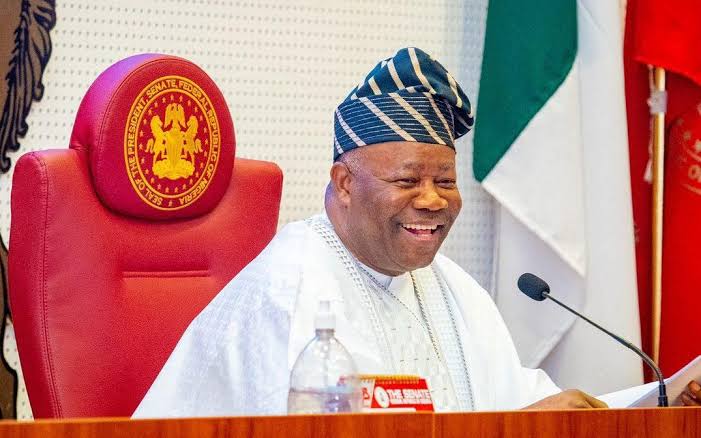
The trials and triumphs of a resilient Nigeria’s 10th Senate

Published

on

By Eseme Eyiboh
In the unfolding story of Nigeria’s democracy, the Senate remains one of its most enduring symbols of institutional resilience and national balance. Beyond the spectacle of debates and the colour of political persuasion, it is the grand arena where the destiny of the nation is shaped, refined, and defended through rules, order, and reason. It is the one chamber where passion must bow to procedure and where leadership must blend authority with decorum.
Under the current stewardship of Senator Godswill Akpabio,GCON the Nigerian Senate has again shown that discipline is not the enemy of democracy but its lifeblood. In a political climate often prone to impulsive rhetoric and theatrical defiance, the Senate’s commitment to its Standing Orders has reaffirmed the solemn truth that democracy thrives only when its institutions are respected and its rules upheld.
At a time when political tempers can easily flare and institutional boundaries are tested, the Senate has chosen the steadier path of order. Its resilience is not borne out of the absence of conflict but from the maturity to resolve such tensions through due process. It is this adherence to procedure that transforms the Senate from a mere congregation of political actors into a citadel of constitutional governance. The Tenth National Assembly has therefore become more than a legislature; it has risen to become the custodian of Nigeria’s democratic rhythm, ensuring that the music of governance remains in tune even when discordant notes arise.
● The Architecture of Order
Every functioning democracy stands or falls by the strength of its institutions. Rules are the unseen architecture that hold those institutions together, shaping not only how decisions are made but also how power is exercised and limited. The Nigerian Senate’s Standing Orders are not ceremonial relics from the past. They are the living constitution of the institution, carefully designed to preserve fairness, consistency, and the sanctity of the legislative process.
The discipline of parliamentary conduct is a universal marker of political civilisation. In the United Kingdom’s House of Commons, the authority of the Speaker is absolute and unchallenged, ensuring that debates proceed with respect and precision. No member, regardless of party or popularity, may openly defy the Speaker’s ruling without consequences. In Canada’s Parliament, even the fiercest partisans understand that procedure is sacred.
Heated disagreements are channelled through decorum, not chaos. Similarly, in Australia, the Senate’s ability to hold the executive accountable depends not on the whims of politics but on the meticulous enforcement of rules that keep legislative integrity intact.
Without a doubt, Nigeria’s Senate belongs in that global fellowship of parliaments that recognise chaos as the heart of anarchy and order as the soul of democracy. Its insistence on upholding internal discipline and protecting the authority of its leadership is, therefore, neither personal nor punitive. It is institutional self-preservation.
When the chamber asserts that it will not be held hostage by the disruptive instincts of any single member, it is affirming the primacy of collective responsibility over individual grandstanding. This is how strong legislatures endure: not by silencing dissent, but by ensuring that dissent respects the bounds of procedure.
In many ways, the Akpabio-led Senate has re-introduced a tone of seriousness into the conduct of legislative affairs. The presiding officer’s calm firmness, coupled with his inclusivity, has reminded both senators and citizens that freedom within order is the truest form of democracy. Leadership of this sort does not seek applause; it seeks stability. By upholding its Standing Orders, the Senate has reclaimed its moral authority and demonstrated that rules, properly enforced, are not instruments of oppression but shields against institutional decay.
● A Record of Uncommon Legislative Action
To judge a legislature by its distractions is easy, but to measure it by its legislative work is wiser. By that measure, the Tenth Senate has already left an imprint that few in Nigeria’s democratic history can rival. In barely two years, the Senate has processed over 90 bills, with more than 50 receiving presidential assent. To be clear, these are solid, impactful achievements; they are substantive interventions in the nation’s economic, social, and security architecture.
Among them are landmark reforms such as the Nigeria Tax Administration Act and the Joint Revenue Board Act, which harmonise tax collection across the federal, state, and local governments, thereby reducing duplication and boosting fiscal efficiency. These laws lay the groundwork for a more coherent revenue system that can fund Nigeria’s development priorities sustainably. The Electricity Act (Amendment) has opened the power sector to decentralised innovation by placing generation and distribution within concurrent legislative jurisdiction, allowing states to take greater ownership of electrification drives.
Equally significant is the Student Loans (Access to Higher Education) Act, which has established the Nigerian Education Loan Fund, a mechanism designed to democratise access to tertiary education and build the nation’s human capital. Through this law, thousands of young Nigerians from modest backgrounds can now dream beyond financial constraints.
In matters of national security, the Senate has enacted the Control of Small Arms and Light Weapons Act and reformed the Defence Industries Corporation to modernise local arms production and improve oversight. It has strengthened the Police Act and advanced the legal framework for community policing, ensuring that law enforcement is both professional and accountable. Social welfare has not been neglected either. The Senate’s approval of an increased national minimum wage reflects its sensitivity to the economic pressures faced by ordinary citizens.
Beyond these legislative milestones, the Senate has exercised its oversight powers with renewed vigour. Ministerial nominees have faced rigorous scrutiny, and budgetary processes have been more transparent than in previous sessions. Committee reports are now subjected to fuller debate, while public hearings are reclaiming their role as forums of accountability rather than ceremonial formality. This spirit of constructive collaboration with the executive, balanced by a firm assertion of institutional independence, has restored public confidence in the Senate’s purpose and performance.
Senator Akpabio’s leadership style has been pivotal in this transformation. Combining political experience with procedural discipline, he has stabilised the chamber and inspired cooperation across party lines. The result is a Senate that legislates with urgency but without recklessness, that debates with passion but within the boundaries of respect. It is a model of legislative management that other emerging democracies might do well to emulate.
● Discipline as Democracy’s Anchor
In any democracy, the question is never whether there will be dissent. Instead, it is always about how it will be handled. The real measure of a democratic institution is how it handles internal turbulence. The Tenth Senate has faced its fair share of provocations and personality clashes, yet it has consistently chosen the path of principle over populism. When it insists that rules must be followed and that leadership must be respected, it is not acting out of pride but out of duty. Every time the Senate enforces its Standing Orders, it sends a message that Nigeria’s democracy is strong enough to discipline itself.
In the world’s most respected parliaments, members who flout rules face swift consequences.
In the British House of Commons, suspension or expulsion is not rare when a member’s behaviour undermines parliamentary dignity. In Canada, contempt of Parliament remains one of the gravest offences, warranting public apology or even exclusion. Nigeria’s Senate has every right to apply similar standards, for to allow disorder in the name of political freedom is to invite the slow death of the institution itself.
There is a reason democracies that survive for centuries place such premium on decorum. Discipline is the invisible thread that connects authority to accountability. A Senator who disregards procedure may think he is exercising personal liberty, but in truth, he is unravelling the very order that gives that liberty meaning. The Senate, as the upper chamber of Nigeria’s legislature, bears the burden of showing restraint even when provoked and firmness even when misunderstood.
Under Akpabio’s guidance, that balance has largely been achieved. His steady hand has preserved the Senate’s institutional dignity while ensuring that disagreements, inevitable in a plural polity, never degenerate into institutional disrespect. His colleagues, through their support, have shown that the Senate’s unity is not fragile but founded on shared commitment to the republic’s greater good. This collective resilience is what distinguishes a mature legislature from a mere gathering of political actors.
As democracy worldwide faces disillusionment, with parliaments in many countries besieged by populist anger and public cynicism, Nigeria’s Senate stands out as a stabilising force. Its insistence on rule-based conduct, its robust legislative output, and its respect for leadership all reinforce the idea that democratic governance is not sustained by emotion but by discipline. In times of uncertainty, Nigerians can look to their Senate as a beacon of institutional steadiness, where procedure triumphs over impulse and order over anarchy.
● A Legacy of Institutional Maturity
Every democratic generation must reaffirm its faith in its institutions. For Nigeria, the Senate remains one of the surest proofs that despite imperfections, the system endures. It is the forum where politics matures into policy and ambition yields to service. Its current trajectory under Akpabio’s stewardship shows that a disciplined legislature can coexist with vibrant debate, and that leadership tempered by wisdom can guide even the most divided chamber towards a common purpose.
The trials of the Senate are many: public scepticism, partisan rivalry, and the ever-present temptation of populist showmanship. Yet its triumphs are greater still. By choosing law over noise, the Senate has shown that Nigeria’s democracy can heal itself from within. Each bill passed, each order enforced, and each moment of collective restraint strengthens not just the chamber but the republic it represents.
The true triumph of the Senate lies in its rediscovery of itself as a body governed by rules, led by example, and anchored in service to the nation. In doing so, it has become a model for the continent and a reassurance to Nigerians that the spirit of democracy, though tested, remains alive and well.
As the nation moves through uncertain times, the Senate’s resilience will remain a cornerstone of Nigeria’s democratic stability. Its fidelity to order and leadership not only safeguards the present but also lights the path for future generations. For, in the end, it is not the noise of politics that defines a nation’s greatness but the calm persistence of its institutions. In that regard, the Nigerian Senate stands triumphant, disciplined, dignified, and resolutely democratic in all terms.
•Rt. Hon. Eseme Eyiboh mnipr is the Special Adviser on Media/Publicity and Official Spokesperson to the President of the Senate.

Share this story:

News

Why Prominent Individuals Pay Premium for Online Credibility in the Digital Age – Ayobami Eruobami

Published

on

As the global economy becomes increasingly digital, Eruobami Ayobami, Chairman of Erumedia Group & Charity Trust who also doubled as the founder of Pressford , has shared a bold perspective on the rising demand for online credibility and why individuals are now investing significantly to build it.

In a world dominated by platforms such as Instagram, LinkedIn, and TikTok, first impressions are no longer made in rooms but on screens.

“Credibility today is no longer something people wait to discover about you. It is something they search for instantly,” Ayobami stated. “If your digital presence does not validate your value, you are already at a disadvantage.”

This shift has transformed credibility into a high value digital asset one that professionals, founders, and public figures are now actively building through media exposure, strategic storytelling, and search visibility.

Advertisement

Erumedia Group: Building the Narrative Behind Credibility

As a Public Relations, communications and media company, www.erumediagroup.com focuses on shaping the foundation of credibility helping individuals and organizations define, structure, and communicate their stories with clarity and authority.

“Before visibility comes narrative. Many people struggle not because they lack value, but because they lack structured positioning,” Ayobami explained. “At Erumedia Group, we help clients refine their voice, their message, and the way they are perceived before they ever go public.”

Through brand development, storytelling strategy, and reputation positioning, the company ensures that credibility is not just visible but meaningful and consistent.

Pressford: Distributing Credibility at Scale

Advertisement

While narrative builds the core, Pressford plays a different role amplification.

As a press release distribution and digital PR platform, Pressford enables individuals and organizations to translate their credibility into verifiable public presence across media channels.

“Pressford exists because credibility must not only be built it must be seen, indexed, and validated publicly,” Ayobami said. “It gives individuals the infrastructure to show up in search results, in news mentions, and in conversations that matter.”

By making media visibility more accessible, Pressford addresses one of the biggest gaps in the digital credibility cycle: discoverability.

The Business of Being Seen

Advertisement

Ayobami notes that the increasing willingness to pay for credibility is not driven by vanity, but by necessity.

“Opportunities today are often given to those who appear prepared, visible, and validated. The market responds to perception before it investigates performance,” he stated.

However, he also warns against mistaking visibility for substance.

“If credibility is only built on aesthetics without real value behind it, it will fail. The goal is not to look credible it is to be credible and ensure that credibility is visible.”

A Shift That Cannot Be Ignored

Advertisement

As digital ecosystems continue to shape human interaction and business decisions, Ayobami believes the importance of intentional credibility building will only grow stronger.

“The future belongs to individuals who understand that credibility is not accidental. It is designed, positioned, and distributed,” he concluded.

Eruobami Ayobami is a Professional Public Relations Executive, Media Entrepreneur, Personal Brandinf Expert and communications strategist.

He Chairs Erumedia Group and Charity Trust and Founded Pressford. His work focuses on helping individuals and organizations build, structure, and amplify their digital credibility.

Advertisement
Share this story:
Continue Reading

News

Jonathan to Atiku: I don’t play God *I still achieved, though imperfect

Published

on

From Goodluck Jonathan, Nigeria’s former  President, came a mild rebuke to Atiku Abubakar, former Vice President, who in assessing the quality of his six-year tenure as Nigerian leader, all but dismissed him as “inexperienced.”

Atiku, a guest of Prime Time, a public affairs programme on ARISE NEWS Television, last week, told his host that Jonathan was inexperienced, saying his tenure was marked by notable missteps.

“I know Goodluck Jonathan very well. He is a decent young man, but also inexperienced, and I believe that contributed to his inability to manage the affairs of the country, particularly when he was faced with challenges,” Atiku, currently chasing the number one job the former President exited in 2015 for the seventh time, said.

But in a measured riposte at the 2025 Association of Retired Career Ambassadors of Nigeria awards ceremony in Abuja on Monday, Jonathan, while acknowledging that he must have made some mistakes, argued that errors were inevitably with human beings as only God could be perfect,

Advertisement

Reacting to Atiku’s remarks, he told his audience: “So not too long ago, a very senior politician said, ‘Oh, Jonathan was too young and probably that’s why he made mistakes.’

“If I made mistakes, yes, nobody who becomes a governor or a president will say you did not make mistakes. Even when you promote yourself to the level of a god, you become a deity.

“All human beings must make mistakes. I became president in 2010 at the age of 53. I left in 2015 at the age of 58, and they say I was too young. Must it have been 100 years before I ran the affairs of the state?

“I’m talking to diplomats, so I can say that during my period, I knew what I did for us to appear in the UN Security Council two times… If I were so naive, I don’t think I would have been able to navigate through that process.”

Jonathan also spoke on regional affairs, warning that political instability remains a major obstacle to economic growth across West Africa. He stressed that without stable governance systems, meaningful development in the sub-region would remain elusive.

Advertisement

“We cannot progress economically if we are very unstable societies politically,” he said.

Jonathan noted that while the founders of ECOWAS envisioned strong economic cooperation, persistent political crises have hindered progress, particularly in enforcing democratic standards among member states.

“That means that ECOWAS must interfere with the internal affairs of the states, and the issue of sovereignty becomes a problem,” he said.

Jonathan urged leaders in the region to work collectively towards stability, saying, “The heads of states of ECOWAS must continue to work together and agree on concrete terms and make sure that the sub-region is politically stable.”

He added that economic integration efforts would falter without solid democratic institutions and called on Nigerian diplomats to properly document foreign policy experiences for future leaders.

Advertisement

Paying tribute to ECOWAS founders, including former Head of State Yakubu Gowon, Jonathan described the creation of the bloc in 1975 as a bold and necessary step toward regional unity and economic integration.

Gowon, who was also honoured at the event, recounted the origins of ECOWAS, linking its formation to post-war diplomatic engagements across West Africa.

According to him, “It was as a result of the various efforts of all Nigerians when we went through a very difficult period, and I had to go to the various countries to say thank you.”

He said discussions with regional leaders at the time led to a shared vision for broader cooperation.

“Why don’t we also think about having something that we can at least have in agreement for all of us when we are working together?” he said.

Advertisement

Gowon emphasised that ECOWAS was the product of collective effort rather than individual ambition, crediting government institutions and civil servants for its success.

“This would not have been possible without the support of all the staff of the Ministry of External Affairs and the Ministry of Economic Development,” he stated.

He added that the recognition bestowed on him should be shared widely.

“The honour that is being done to me today should really go back to all the staff that worked so hard to make sure that this became a reality,” he said.

Also speaking, the President of the Association of Retired Career Ambassadors of Nigeria, Joe Keshi, highlighted the importance of honouring excellence in diplomacy, noting that the awards celebrate dedication and service to Nigeria and the continent.

Advertisement

“Diplomacy is one profession where success is often invisible, reflected not by news coverage, but by maintained stability, prevented conflicts, cultivated partnerships,” he said.

Keshi noted that the event coincides with the 50th anniversary of ECOWAS, describing the organisation as “a bold experiment in regionalism,” and urged diplomats to adapt to evolving global challenges.

The Chief of Army Staff, Lt Gen Waheed Shaibu, also praised Gowon, describing him as a symbol of national unity and visionary leadership.

He said the recognition offers a chance to reflect on a legacy “defined by visionary leadership, courage, and unwavering commitment to the unity, stability, peace, and progress” of Nigeria.

Shaibu added that Gowon’s leadership reflected “patriotism, resilience, and a profound sense of duty,” while commending ARCAN for its continued contribution to diplomatic discourse and Nigeria’s global engagement.

Advertisement

Share this story:
Continue Reading

News

BREAKING: FG opts for open court trial of coup plotters against Tinubu

Published

on

After months of official hiatus, the Federal Government, on Tuesday finally got on the way with the trial of those fingered in the alleged plot to oust President Bola Ahmed Tinubu through a coup, including Timipre Sylva, former Minister of State for Petroleum.

The move, which apart from the former Governor of Bayelsa State, came with the filing of a 13-count charge before the Federal High Court, Abuja, against the alleged plotters including Mohammed Ibrahim Gana, a retired General in the Nigerian Army, Erasmus Ochegobia Victor, a retired Naval Captain, Ahmed Ibrahim, a serving police inspector, Zekeri Umoru, Bukar Goni, and Abdulkadir Sani.

Sylva, whose name surfaced as one of the plotters when the news first broke and believed to be the major financier of what would have led to another military government in Nigeria after the last ended in 1999, was listed as being at large – on the run.

The charge, filed on Monday by the Office of the Attorney-General of the Federation and signed by the Director of Public Prosecutions, Rotimi Oyedepo (SAN), accuses the defendants of offences ranging from alleged treason and terrorism to failure to disclose security intelligence and money laundering linked to terrorism financing.

Advertisement

The prosecution alleged that the defendants conspired in 2025 “to levy war against the state to overpower the President of the Federal Republic of Nigeria”, an offence punishable under Section 37(2) of the Criminal Code.

The Federal Government further alleged that the defendants had prior knowledge of a planned treasonable act involving one Colonel Mohammed Alhassan Ma’aji and others, but failed to alert authorities.

Furthermore, the defendants were also accused, according to the charge, of, while “knowing that a treasonable act was intended to be committed, did not give information thereof with all reasonable despatch to either the President… or a peace officer.”

They were also accused of failing to take preventive steps and “did not use any reasonable endeavours to prevent the commission of the offence”.

Beyond treason, the defendants are facing terrorism-related charges of conspiracy under the Terrorism (Prevention and Prohibition) Act, 2022, as they “conspired with one another to commit an act of terrorism in the Federal Republic of Nigeria”.

Advertisement

Inspector Ahmed Ibrahim and Zekeri Umoru were specifically accused of attending meetings linked to the alleged plot “in a bid to further a political ideology which may seriously destabilise the constitutional structure of the Federal Republic of Nigeria.”

The charge also accused the defendants of providing support for terrorism, alleging that they “knowingly and indirectly rendered support” to facilitate acts of terror.

The prosecution alleged deliberate suppression of intelligence, stating that the defendants “had information which would be of material assistance in preventing the commission of the act of terrorism but failed to disclose the information to the relevant agency as soon as practicable”.

Financially, several defendants were accused of handling funds linked to terrorism financing, in violation of the Money Laundering (Prevention and Prohibition) Act, 2022.
Bukar Kashim Goni allegedly “indirectly retained the aggregate sum of N50,000,000, which forms part of the proceeds of an unlawful act, to wit: terrorism financing”, while Abdulkadir Sani allegedly retained N2m from a similar source.

Advertisement

According to the charge, Zekeri Umoru “without going through a financial institution accepted a cash payment of the sum of N10,000,000″ and also retained an additional N8.8m suspected to be proceeds of terrorism financing.

Inspector Ahmed Ibrahim was also accused of taking possession of “the sum of N1,000,000, being part of proceeds of terrorism financing”.

Alleged Coup Plot, Protests

After the Federal Government cancelled the parade to mark Nigeria’s 65th independence anniversary on October 1, 2025, reports had claimed that the move was linked to an alleged coup attempt.

The Defence Headquarters (DHQ) dismissed the claims, however, saying the parade cancellation had nothing to do with the alleged coup attempt.

Advertisement

In January 2026, the DHQ confirmed that there was an attempt to overthrow President Tinubu.

The DHQ Director of Defence Information, Samaila Uba, said investigations showed some military personnel were involved in the alleged coup plot.

According to Uba, the officers have been detained and would be arraigned before military judicial panels.

Last month, families of the military officers detained over the alleged coup plot appealed to Tinubu to allow the suspects to be tried in an open court.

Human rights activist Omoyele Sowore protested alongside the detained officers’ families. They also asked for access to the alleged coup plotters.

Advertisement

Share this story:
Continue Reading

Trending