
News
Poor economy: Heavy drop in fuel consumption, as Nigerians groan!


Petrol consumption nationwide has fallen by 28 per cent over the past two years, as pump attendants across filling stations are left with scanty vehicular calls, with latest figures from the Nigerian Midstream and Downstream Petroleum Regulatory Authority (NMDPRA) showing that the daily volume of Premium Motor Spirit (PMS), popularly known as petrol, dropped from 68.353 million litres in June 2023, when fuel subsidy was removed, to 49.277 million litres in June 2025.
Vanguard reports that since the coming on stream of the Dangote Refinery, marketers have reviewed prices multiple times, explained that investigations last weekend showed that despite fuel stations across major cities in Nigeria adjusting prices and displaying same, a large number of consumers no longer bother with the price as they make purchase decisions before getting to the fuel station.

It added that such decisions were always based on availability of money and considerations for competing needs in their lives, stating that low patronage and dwindling vehicle presence at the fuel stations, were causing rise in idle time at the stations.
For instance, Ibrahim Gambo, Station Manager at RYBL Services Limited in Karshi, Abuja, was quoted as saying that it now took about two months to sell a single 30,000-litre tanker due to poor patronage, adding: “The market is not moving well. We used to have three pump attendants, but now we keep only one. We cannot pay salaries for three because sales are too low.
‘’Before, people came with jerry cans, but now you hardly see that. Many only buy when they have important and compelling need to drive. Also, people are now using generators at home sparingly.”
In filling stations visited in some parts of Lagos, including Amuwo-Odofin, Apapa, Ajegunle and Orile, independent marketers lamented that sales have dropped significantly, with another attendant, this time at Techno Oil at Alaba Oro, saying: “Within the last two weeks, the price of petrol increased by N50 and dropped N20 few days ago. But one cannot say the business is all that lucrative at the moment.
‘’This is because, prior to deregulation, we had a lot of demand from customers to fill up when cars come to purchase fuel, but the reverse is the case now. Most times, our turnover is very low compared to what was obtainable in the past.”
The situation, however, appeared to be different at retail outlets such as MRS, one the retail partners to the Dangote Refinery and sells petrol at about the lowest price in the country, and Fatgbems at Amuwo, Oshodi/Apapa expressway, and Mile 2 road, respectively which had long queues of cars trying to buy petrol, where the pump price was pegged at N865 per litre, compared to N870 to N890 at other stations.
At the MRS station, an attendant who identified herself simply as Chinenye, said: “We are very grateful for the number of customers and the turnover we are getting. I can tell you for certain that things have turned around for us at MRS, against the regulated period of the downstream.”
Retail outlets visited along Benin-Asaba Road showed a few vehicles being attended to. Vanguard gathered that pump price has also dropped from an average of N950 per litre it sold a week ago, to the current rate of N910 per litre.
In Nasarawa State, checks by Vanguard showed that while most stations operated by independents and major marketers remained largely empty, those operated by MRS, AYM Sharfa and AA Rano had a good number of vehicles, tricycles (Keke) and commercial motor cycles (Okada) in them.
With very few vehicles seen at filling stations visited in Kano, where pump attendants could be seen sitting idle in most of the filing stations, a petrol attendant at Ammasco, Court Road branch, lamented low patronage of customers, explaining that the low patronage has affected their daily sales.
One A. Y. Maikifi, who said sales had dropped drastically due to rise in the pump price of the product, added: “You can’t compare sales two years ago with now. We recorded more sales in the past than now. The increase in the price of fuel is the major factor for the low patronage.’’
In Kaduna, attendants across the stations visited by Vanguard disclosed that sales had improved slightly compared to recent weeks, as motorists were returning to the pumps. However, they observed that sales volumes remained lower than they were two years ago, largely due to fewer vehicles on the roads and the increasing shift to Compressed Natural Gas, CNG, by some vehicle owners.
The gloomy picture at petrol stations contrasts sharply with the growing demand for Compressed Natural Gas, CNG.
Across the FCT, long queues were seen at CNG outlets, where prices range from N230 to N235 per kilogram, far lower than petrol.
At the NNPC CNG retail station in Wuse Zone 2, a Bolt driver, Onyebuchi Okeke, told Vanguard he had already spent an hour on the queue but noted that the waiting was worth it.
“I really don’t mind the time because it is by far cheaper than petrol. I have a 10kg cylinder and it costs just N2,300 to fill. I will work with it for about four hours and make over N10,000. So, I will be here until it’s my turn. I have about half a tank of petrol in my car. It has been there for about two weeks. If there is need to use it, I will,” he stated.
He disclosed that he hardly goes to filling stations to buy, adding that “since I got my car converted to CNG, I don’t go to petrol stations often. It is once in a while.”
The report, quoted Chinedu Ukadike, spokesman for the Independent Petroleum Marketers Association of Nigeria (IPMAN), as saying it was a trying time for independent marketers, while attributing the drop to the increase in the price of the product, vehicle conversions to CNG and the general hike in the cost of living in the country.
Stressing that the drop in consumers volume could partly be due to reduction in the volumes smuggled across Nigeria’s borders to neighbouring countries due to removal of subsidies in Nigeria, he said: “The issue of smuggling has dropped drastically. Movement across the borders have dropped because the removal of subsidies means that neighbouring countries which have been benefiting from low prices in Nigeria are no longer able to do so.
“Secondly, many vehicles have been converted to CNG because it is cheaper. I am sure you have noticed the length of queues at the CNG stations. It is far cheaper and makes more economic sense. In fact, if the presidential committee on CNG continues to work at the rate they are doing, by this time next year, petrol supply will drop by half of what NMDPRA has declared.
“Thirdly, small scale industries are also converting to gas usage. All these have made the petrol supply business not as lucrative as it used to be. The cost in petrol price has also moderated the pocket of Nigerians. Since the removal of subsidies, many car owners have dropped cars and now use commercial vehicles. Also a lot of people now use commercial motor bikes to pick up items or parcels, rather than drive to pick them.”
On the impact of the drop in consumption on their business, Ukadike said: “It is actually a trying time for marketers. The return on investment is now very small. For most, the turnover is not more than one truck per month, for some it is one truck in two months.
“This is why we have been asking government to intervene so that independent marketers do not go out of business. With the way things are going, independent marketers will go into extinction by 2028.”
Henry Adigun, Chief Executive Officer (CEO) AHA Consultancies, while enhancing the belief by experts that frequent price changes were unhealthy for sector, was quoted as saying that for the sector to attract the needed investment, there had to be more certainty in the downstream sector.
“The downstream market should be driven by competition. The market must be fair, must be seen to be fair, must be well regulated and must provide benefits for consumers. When there is competition in any market, the consumers benefit.
“The Dangote Refinery is a state-of-the-art facility and there is no other in the country that can compete with it. That is why government has continued to allow importation of petrol. That is the only way to provide competition, for now. Competition ensures that there is no monopoly and price gorging.
“The frequent changes in price is leading to a lot of losses in the market, and this will affect the capacity of marketers to pay back money loaned secured from banks to purchase the product.”

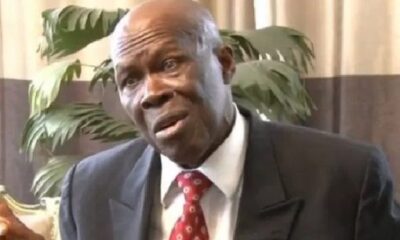






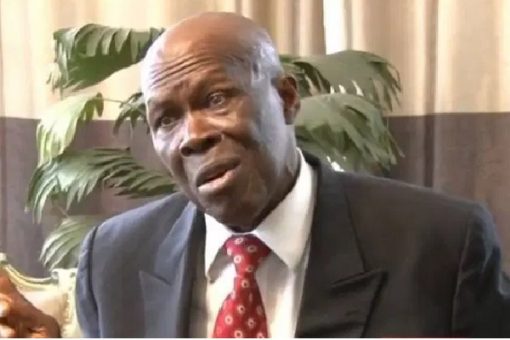
For those believing that President Bola Tinubu’s exclusion of Humphrey Nwosu, the late Chairman of the defunct National Electoral Commission (NEC), was an error that would be corrected subsequently, their expectation came to naught on Friday, with his non-recognition once again.
In a surprise outing, the President failed once again to name the late Professor of Political Science as one of the Nigerians honoured, on the day Nigerians would be celebrating this year’s anniversary of June 12, designed to mark the historic 1993 presidential election, which has now been designated as Nigeria’s Democracy Day.
It was a day Moshood Kashimawo Olawale Abiola (MKO), the candidate of the defunct Social Democratic Party (SDP), was elected President in a transition programme undertaken by the military government of then President Ibrahim Badamasi Babangida (IBB).
Expectations are that because the Option A4 model used in achieving the outcome of the election, acknowledged as the freest and fairest election in Nigerian history, the late electoral commission’s boss, would feature prominently in the list of those to be honoured by the government.
But another list contained in the national broadcast by the President, suggested that the position of the treatment meted to the former NEC Chairman, reflected the thinking in the All Progressives Congress (APC), as the late President Muhammadu Buhari, Tinubu’s predecessor, under whom June 12 was given national recognition.
The list, populated mainly by names from the South West, which included both civilians and military personnel, did not capture the category of national honours to be bestowed on the recipients, as the government said further information would be released in due course.
Prominent among those recognized, was Shehu Musa Yar’Adua, a General and former Chief of Army Staff, Supreme Headquarters between 1976 and 1979, under the military regime of Olusegun Obasanjo, who died in Abakaliki Prison in 1997, where he was detained for allegedly participation in carrying out a coup against Sani Abacha, then Head of State.
Tinubu, said the completed Institute of Petroleum Studies, Kaduna, would now be known as General Shehu Musa Yar’Adua University of Geological Sciences and Engineering Technology, to honour the General, who later became a prominent figure in Nigerian politics, “for his vision of national partnership.”
Listing the other names, Tinubu said: “I am also pleased to announce national awards to the following Nigerians, who suffered persecution, endured indignities, exile, incarceration, and, at times, solitary confinement, so that we have democracy today.”
The recipients included: Ayoka Lawani, Tunde Fagbenle, Oladele Alake, Olatunji Bello, Louis Odion, Segun Babatope, Sam Omatseye, Ademola Osinubi, Bola Bolawole and the duo of Lade Bonuola, former Managing Director of The Guardian and Femi Kusa, former Editor of the Nigerian foremost newspaper.
Others, were: Debo Adeniran, Ayo Opadokun, Chief Ralph Obiora, Ose Osayande, Osa Director, Sylvester Odion-Akhaine, Arthur Nwankwo (Posthumous) and Osagie Obayuwana, all pro-democracy activists.
The list also included Joe Okei-Odumakin , Titus Mann, Joe Igbokwe, Richard Akinnola, Ben Charles-Obi (Posthumous), George Mbah Niran Malaolu, Ishola Williams, a retired Major-General, Femi Aborisade, Jenkins Alumona, Gbemiga Ogunleye, Muyiwa Adekeye, Babajide Kolade-Otitoju and Ike Okonta.
“We also recognise the soldier-democrats of the June 12 struggle: Major General MA Garba, Brigadier General Lawal Jaafaru Isa, Col Umar Farouk Ahmed; Col Sambo Dasuki;
Col Lawan Gwadabe; Brigadier Jonathan Ndam Temlong, Col Musa Shehu; Major General Chris Eze; Major General Harris Dzarma; Col Isa Jibrin; Maj. General Joseph Oshanupin; Col Olusegun Oloruntoba, Olugbede of Gbede Kingdom), Lieutenant Colonel Happy Kefas Bulus, Col J Okai;
Col Emmanuel Ndubueze; Lt Col Yakubu Muazu and Brigadier Yahaya Abubakar, the Current Etsu Nupe, who is already the holder of the CFR title.”
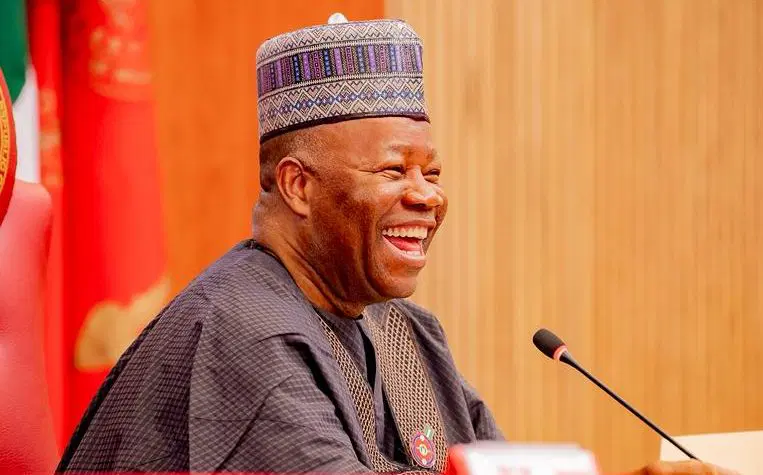
From Godswill Obot Akpabio, Senate President, came a definitive message to Nigerians on Friday – the future is bright, the road is clear and destination is assured under a strong, visionary and purposeful democratic leadership of President Bola Tinubu.
But he also raised a proviso – since democracy is participatory all citizens of the country, must get involved in providing the planks, which when nailed together, would enable the leaders fortify the platform for its growth, to enhance a robust, viable future.
These formed the fulcrum of his admonishment, as he joined other national leaders to celebrate Nigeria’s 27th anniversary of uninterrupted democracy, in which it not only broke the vice grip of military rule, but witnessed seven election circles to choose leaders at both national and other levels of government.
Akpabio, Chairman of the National Assembly, Nigeria’s lawmaking institution, was particular about the participation of the Nigerian youths in making his admonition come true, reminding them that they actually owned the future being fashioned today.
Conveying his message through Eseme Eyiboh, his spokesman the former Governor of Akwa Ibom State and former Minister of Niger Delta, also called on Nigerians to embrace unity, vigilance, and active participation in nation-building, commending them for showcasing resilience and support for democracy despite some low moments.
Noting that democratic experiment remained a testimony of endurance despite years of agitations, he said: “On behalf of the 10th National Assembly, I congratulate every Nigerian for the sustenance of democracy for close to three decades. Mistakes have been made in the course of this journey but we will surely get to the desired destination with your support.”
“Democracy should extend beyond the conduct of elections and be anchored on accountability, justice, compassion and service to the common good.”
Particularly for the Nigerian youths, he was emphatic about their active participation in the nation’s political process stressing that the younger generation forms the fulcrum of leadership succession.
Hear him: “As we commemorate June 12, I wish to encourage the youth not to sit on the fence but be active participants in the nation’s political activities. The youths constitute the fulcrum of those who will succeed us tomorrow.
“Let us therefore rededicate ourselves to the ideals of freedom, transparency and accountable government, social justice, and active citizen participation, especially the youths.”
The Senate President, also spoke the current parlous state of carnage in the country, appealing to Nigerians to unite with one another and cooperate with the government to tame “the monster that has befallen the nation.”
Assuring that Tinubu’s administration remained committed to ending the menace and securing the release of all persons in captivity, he said: “I urge every Nigerian to support the administration of President Bola Ahmed Tinubu in her efforts in fighting terrorism. We understand the pains you are going through but the government is not resting on its oars and hopefully we shall overcome this current challenge and all will be well with Nigeria.”
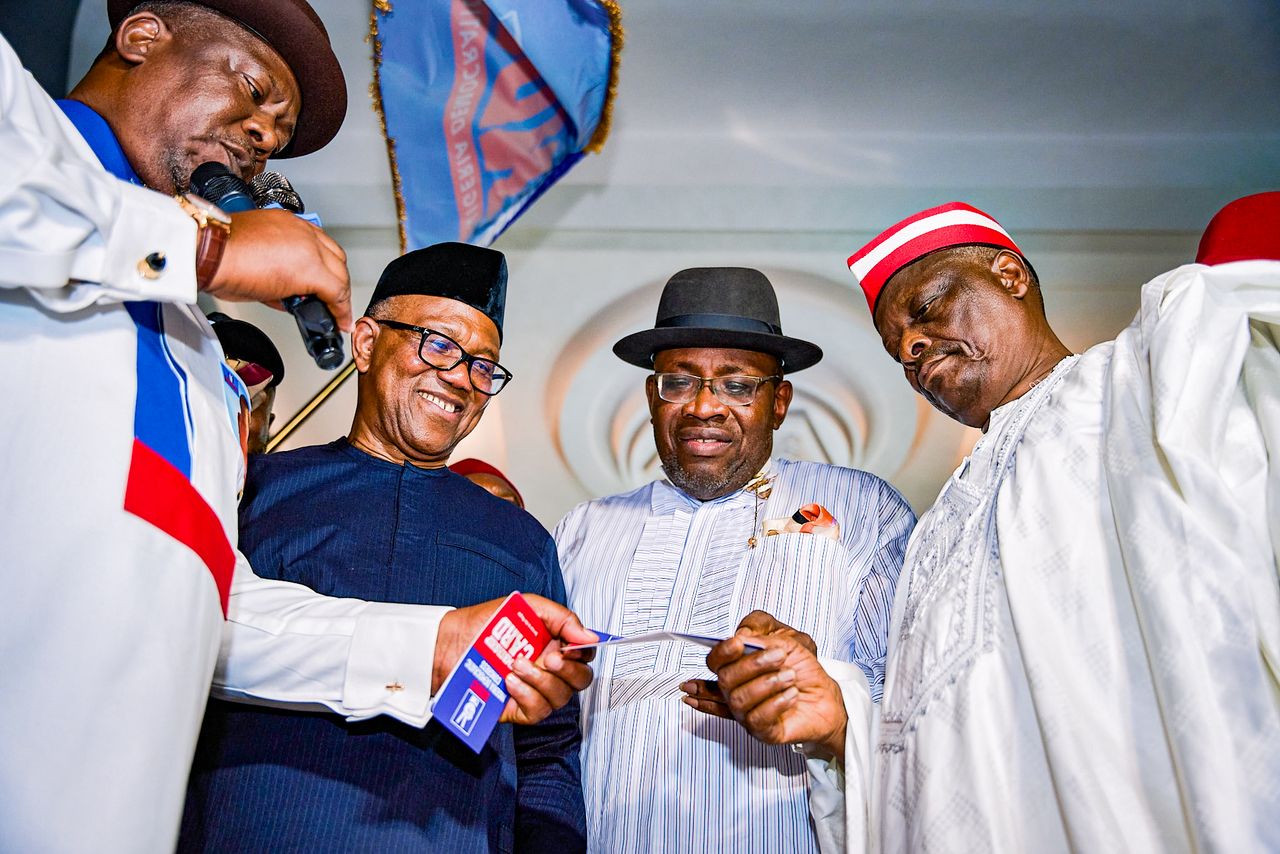
Seriake Dickson, National Leader of the Nigeria Democratic Congress (NDC), on Wednesday showcased Peter Obi, its presidential candidate in the 2027 election, but gave a proviso – his importance would not be at the expense of the party.
A guest on Prime Time, a public affairs programme on ARISE NEWS Television, the former Governor of Bayelsa State, now Senator representing West at the National Assembly, maintained that the belief in some quarters that Obi’s entrance into the party was a favour was completely misplaced.
Instead, he argued that the opposite was the case, as it was the party that was doing its candidates a favour by giving them the opportunity to contest elective positions on its platform in the 2027 elections, a gesture that ought to be returned.
Hear him: “Don’t make it look like anyone is doing NDC a favour. No one is. Rather, the NDC and I and my colleagues are doing people a favour by granting our platform. If you are genuinely supporting Peter Obi and you are disparaging me, the leader, or the platform itself. That is nonsensical.”
Stressing that NDC had demonstrated confidence in Obi by adopting Obi as its sole presidential candidate and selecting a vice-presidential candidate without internal disputes, he said it was enough to earn its leadership the gratitude it deserved.
He added: “Nobody paid shishi. So, if a presidential candidate didn’t pay shishi to be made the sole presidential candidate and sole vice-presidential candidate, that same party cannot be the one saying that small people are underprivileged.
“I could have run. There’s no one more qualified than me. There’s no one more qualified than me to run for presidential candidate. None. There is no crisis within the NDC. Peter Obi is a cherished member of our party. On our own, we have made him a presidential candidate. Sole presidential candidate. And that counts for something. We are working well together. There’s no crisis.”



-
 News3 weeks ago
BREAKING: US-Nigeria troops slaughter 175 ISWAP fighters
-
 Columns3 weeks ago
Dear General Gowon: That apology you’re running from is your nemesis
-
 News1 week ago
BREAKING: Terrorists strike Ibadan again! Abduct ex-Minister’s sister, twin children
-

 News3 weeks ago
BREAKING: Wait over! Arsenal are CHAMPIONS! Win EPL after 22 years hiatus
-
 Columns3 weeks ago
See Tinubu’s terrible damage on Option A4 and its precious memories
-
 News3 weeks ago
BREAKING: Jonathan emerges presidential candidate *Gets automatic PDP ticket!
-

 News3 weeks ago
Presidency: Obi met all requirements – NDC *Cleared to contest primaries
-

 News1 week ago
Emeka Ike: I’ll make example of Lere Olayinka for prying into my privacy