

News
Justice is what the people say


By Abraham Ogbodo
I have known Dr. Reuben Abati almost from the cradle. We were not only in the same university but the same department. When he was leaving University of Calabar in 1985, he had in his bag, all the prime prizes. The best graduating student of the University which meant he was also best in the Department of Theatre Arts and the Faculty of Arts. I can therefore say without fear of being contradicted that he is not pretentious. He is brilliant; intellectually loaded to the brim. He left two years ahead of me which does not in any way suggest he is older. He was apparently faster and more brilliant. His law degree at the Lagos State University was a latter day addition after he had earned his PhD from the University of Ibadan and in fact already on the Editorial Board of The Guardian Newspaper.


Of late however, Dr Abati has been projecting rather too forcefully his legal background on the Morning Show programme on Arise TV which he co-anchors with two others. He gets tutorial and even magisterial as he pushes through all the fine points of law when occasion calls for it. He was at his best last Friday following the Supreme Court’s affirmation of the election of President Bola Ahmed Tinubu in the February 25 presidential election and dismissal of the appeals of the PDP and LP candidates, Alhaji Atiku Abubakar and Mr. Peter Obi the day before.
Altogether, Abati sounded as if law is not also common sense. As if procedural law is sacrosanct and no matter the weight of evidence, a procedure cannot be overtaken to lay substantive claims or facts. He was a kind of saying the law is independent of truth and even if justice is not served in the process but the law is duly followed, the outcome should be applauded to high heavens. This is taking the Realist School of Jurisprudence too far. The school that says law does not have to go on an endless excursion for meaning beyond what the court says. It is best captured in the words of American jurist, Oliver Wendell Holmes that: “The prophesies of what the courts will do and nothing more pretentious are what I mean by the law.”
It amounts to open acceptance of the tyranny of the court, however, on the fundamental assumption that the operating and human agent in the court system is rational and far from being a tyrant. That way, the court for instance, will not say crime, without punishment, should be statue-barred or vitiated by the mere passage of time and a very short time for that matter. Such is the consolation and indeed the intention of the realist school. It was not propounded to lead the court into a web of legalese and reverse its very essence as the temple of justice.
If I may ask, what is law if it does not serve the purpose of justice or the hopes of the people? No jurisprudence aspires higher than the aspirations of the people or subordinates justice and morality to law. Law itself fails woefully if it only massages the intellect and ceases to be an instrument for social justice. The Supreme Court in any legal system is beyond reproach. It can only fine tune itself. Beyond it, no legal arguments stand. Its role in jurisprudence is enormous and it does not include the convenience of hiding behind procedural infractions to obfuscate substantive law and justice. On the contrary, the Supreme Court is remarked for its boldness to rise up to the exigency of changing the position of the law to serve justice and the hopes of society.
The strongest reference point in jurisprudence today, Lord Alfred Thompson Denning, did not ascend that height by just running with extant codes. Real jurists are defined by their audacity to push the frontiers of substantive law and morality to enrich Jurisprudence. They do not mark time forever upholding the law even when the law has become anachronistic and a clear affliction to society. Needless to say that the majesty of law is its inherent dynamism to translate to justice. For, in truth and as noted by Lord Denning; “law is not an end in itself but a means to achieving a fair and harmonious society.” It is also not some technical game to be manipulated for personal advantages by experts but a “force to be applied with wisdom and compassion” by the sitting judge to serve society.
I also heard Dr. Abati saying public opinion does not matter in law. Really? The thing about law is that it is 110 per cent intellectual intimidation and posturing. Whoever holds the high end in sheer sophistry and pedantry also stands on a high ground in real advocacy. Whereas the law may have just an intention, what makes it an interesting practice is the near infinite capacity of its practitioners to create intentions and intrigues to detract from the real intention. From where does common law, including written and codified law, derive if law is so insulated from its human setting.
The truth is that such legal maxims can only stand firm if other things remain equal. If in any context the *ratio* *decidendi* , that is, the reason for the judgment, repudiates facts and common sense and instead celebrates methodology or even mediocrity, public opinion will rise irrepressibly like the morning sun whether you like it or not. The position is that public opinion matters and there had been reviews of case laws on the strength of public opinions alone. For instance, the *M’Naghten* *Rule* which set the test for the defence of insanity in criminal responsibility, especially in a murder charge, was forced by public opinion.
The views of Dr. Abati were to receive huge validation by Chief Robert Clarke (SAN) who was on the Arise TV Morning Show programme last Frday to specifically discuss the Supreme Court’s decision of the previous day. Abati must have felt within himself like the first and only winner of the Nobel Prize in Jurisprudence as Papa Clarke loaded him with encomiums for a job well done. The only additional point made by the old lawyer was the call for the reordering of the statutory frame work so that elections can be decided by the electorate in the polling booths and not in court rooms by judges. Excellent point I must say.
As God would have it, while Abati and the old lawyer were in the television studio engaged in a rigorous post-ruling advocacy to dress up the Supreme Court, an old Judge, Justice Musa Dattijo Muhammad who retired after 36 years on the bench, 11 of which were spent in the Supreme Court, was reading his valedictory speech to dress down the Supreme. Details of the speech are too heavy to fit into this purpose. It is important to note that Justice Dattijo is more than just an eye witness. He was an active participant. He was the second longest serving Justice of the Apex court and next to the Chief Justice of Nigeria (CJN) Olukayode Ariwoola. The balance of probabilities tilt heavily in his favour.
It was like the Supreme Court was put on trial in the court of public opinion and while Abati and the old lawyer appeared for the Supreme Court (I will resist using ‘defendant’), old judge appeared for aggrieved Nigerians. The thesis and antithesis are in search for a synthesis. The verdict lies both in history and posterity.










In a quick riposte on Saturday, Dave Umahi, Minister of Works, has cautioned Nigerians to be circumspect in the manner they react to the story of the death of a female student in his home in Ebonyi State, warning against the temptation of jumping to conclusion.
Conveying his position on the highly-volatile matter through Francis Nwaze, his spokesman, Umahi, former Governor of Ebonyi State and a key figure in the government of President Bola Tinubu, said caution was needed to enable the police conduct unfettered investigation into the matter.
It was his response to breaking of how one Mary Habila, a female physiotherapist reportedly died in his palatial home at Uburu, Ohaozara Local Government Area of Ebonyi State, on June 27, hours after arriving the day before.
Nwaze, a Senior Special Assistant on Media and Publicity, specifically cautioned against speculations by “tale bearers,” while conveying the Minister’s shock over the matter and his eagerness for the authorities to get at the root of the matter through forensic investigations.
He wrote in the statement: “The attention of the Media Office of the Honourable Minister of Works, Senator Engr. David Nweze Umahi, has been drawn to a publication by a publication concerning the unfortunate passing of Miss Mary Habila in Uburu, Ebonyi State, alleging that the circumstances surrounding her death were shrouded in secrecy.
“The Honourable Minister received the news with profound shock and sadness and has since extended his heartfelt condolences to the bereaved family. For the avoidance of doubt, immediately the unfortunate incident occurred, appropriate emergency steps were taken. Medical personnel, including the Chief Medical Director of the David Umahi Federal University of Health Sciences, Uburu, were contacted without delay, while the Nigeria Police was promptly notified in accordance with the law.
“Following confirmation of Miss Habila’s passing, the Honourable Minister personally received her parents, conveyed his sincere condolences, and advised that an autopsy be conducted to scientifically establish the exact cause of death. At the time, however, the family declined the recommendation.
“It is important to clarify that Miss Mary Habila and Miss Anita Baski are employees of the David Umahi Federal University of Health Sciences, Uburu, who had been on secondment to the Federal Ministry of Works as physiotherapists for the past three years until the unfortunate passing of Miss Habila.
“Following the recent developments and in the interest of ensuring that the truth is established beyond doubt, the Honourable Minister has again reiterated his position that an autopsy must be conducted. He remains convinced that this is the most credible and responsible path to resolving all questions surrounding the unfortunate incident.
“We therefore urge the public to exercise restraint, refrain from speculation or premature conclusions, and allow the relevant authorities to carry out their responsibilities without interference. At this difficult time, our thoughts and prayers remain with the family of the deceased, and we pray that God grants them the strength to bear this irreparable loss.”

The circumstances that led to the sudden death of Mary Habbila, a Nigerian female student died in the Uburu, Ohaozara Local Government Area of Ebonyi State, home of Dave Umahi, Minister of Works, has now thrown the entire household and environs into serious quandary.
SaharaReporters, which first broke the revealed that the incident, which happened since June 27 this year, has been shrouded in secrecy, with both the Ebonyi State Government and the state police command maintaining silence over the matter.
The incident, the report, added, took place barely a day after Habbila and another woman, Anita Baski, both from Kaduna State, were reportedly brought to the minister’s residence, triggering a police investigation, with the case transferred from the Ohaozara Divisional Police Headquarters to the Ebonyi State Criminal Investigation Department (SCID) in Abakaliki.
Habbila and Baski reportedly arrived at the minister’s residence on June 26 to “attend” to him, only for Habbila to be found dead inside the residence the following morning under circumstances investigators are still trying to establish.
Police sources were quoted by the paper as saying that Jonathan Bawado, a police officer who serves as Senator Umahi’s Personal Assistant and previously worked as his Aide-de-Camp (ADC) during his tenure as Governor of Ebonyi State, alerted medical personnel after Habbila was discovered unresponsive.
Subsequently, a doctor and an ambulance were dispatched to the residence, while Tobechukwu Godwin, Chief Superintendent of Police (CSP) Divisional Police Officer (DPO) of Ohaozara Police Division, was notified of the incident, the report said, adding that at the hospital Chihurumnanya Alo, a Professor and Consultant Public Health Physician, Infectious Diseases Specialist and Chief Medical Director of the David Umahi Federal University Teaching Hospital (DUFUTH), Uburu, was also alerted about the incident.
The police who subsequently conveyed Habbila’s body to a mortuary, were said to have handed over the identification tag attached to Habbila’s to the Ebonyi State Police Command by the said DPO, as part of the ongoing investigation.
SaharaReporters, quoted a senior police officer, with knowledge of the case as saying: “The case has been transferred to the State Criminal Investigation Department in Abakaliki,” but, however declined to provide further details, citing the ongoing investigation.
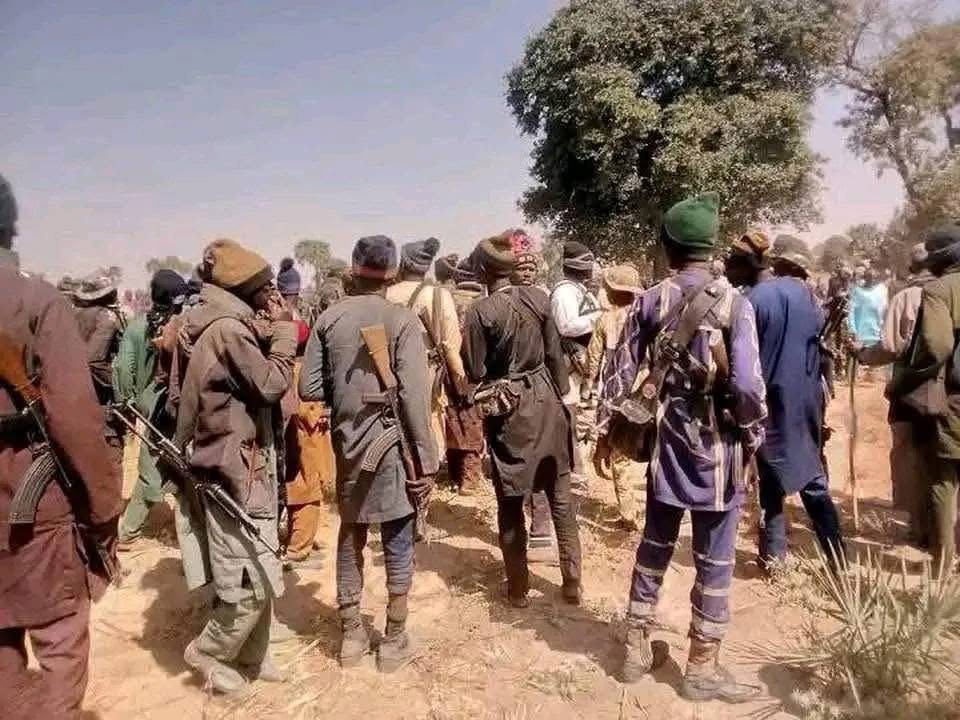
Unlike in other cases, security operatives in Nigeria have upped the ante by adding the arrest of perpetrators to the menu of rescue operations, with the announcement of the capture of eight terrorists who participated in the abduction of school teachers and students in Oyo State on May 15.
All the 46 pupils, students and teachers abducted by terrorists from three schools in Oriire Local Government Area of Oyo State, regained their freedom on Friday, after about 56 days in captivity, with several others reportedly also neutralised during the operation.
Giving a clue of what transpired during the operation, Bayo Onanuga, who broke the story of the feat, said it was the outcome of sustained security operations, which also foiled the attempt by the abductors to secure the release of one of their captured leaders.
Onanuga, Special Adviser to the President on Information and Strategy, using his X handle to give details about the operation, said: “Finally, all the kidnapped pupils and teachers in Orire, Oyo have been rescued by our security agencies. In the course of the rescue operation, eight of the kidnappers were arrested and are now in DSS custody, while some of them were neutralised.”
“There was no quid pro quo in the rescue as one of the terrorists, a kingpin, that the kidnappers demanded his release, is being prosecuted for his atrocities. The security agencies will give full account soon.”
The victims were abducted on May 15 when heavily armed bandits attacked Community Grammar School, Baptist Nursery and Primary School, and L.A. Primary School in the Esiele and Yawota communities of Oriire Local Government Area, seizing dozens of pupils, students and teachers.
The abduction sparked nationwide outrage, with parents, labour unions, traditional rulers and civil society groups mounting sustained pressure on the authorities to secure the victims’ release.
The incident also triggered an indefinite strike by the Nigeria Union of Teachers in Oyo State over growing insecurity in schools.
President Bola Tinubu had condemned the attack and ordered security agencies to intensify intelligence-led operations to rescue the captives and bring the perpetrators to justice.
The President subsequently dispatched a high-powered Federal Government delegation to the affected communities, approved the deployment of specialised rescue assets and authorised the recruitment of 1,000 forest guards to strengthen security across Oyo State.



-

 News4 weeks ago
BREAKING: Troops rescue wife of kidnapped General! *Terrorists flee scene
-

 News7 hours ago
BREAKING: Mystery death! *Female student dies a day after arriving Umahi’s home!
-

 News2 weeks ago
BREAKING: Court sentences Nigerien, two others to death over terrorism
-

 News4 weeks ago
BREAKING: Count me out, Okonkwo tells Atiku *Amaechi VP’s choice an insult to Ndigbo
-
 News1 week ago
BREAKING: EX-SSG mowed down by gunmen! *He resisted being kidnapped – driver
-

 News3 weeks ago
Abductors of Oyo teachers panicking, freedom coming for victims soon!
-

 News3 weeks ago
Two hours after Igboho’s ‘red-eyes’ to ‘Fulani’ leaders, gunmen free kidnap victims!
-

 News3 weeks ago
Chicagogate: Nigerians return to court! *Move to stop Tinubu from 2027 polls