
News
Atiku attempting the impossible at S’Court, CSU papers worthless – Tinubu


President Bola Tinubu has picked holes in the submissions of Atiku Abubakar at the Supreme Court, with which he urged the apex court to declare that he is not fit to contest the 2023 election, having submitted forged documents to the Independent National Electoral Commission (INEC).
Atiku, former Vice President and candidate of the Peoples Democratic Party (PDP), in the election, held on February 25, is relying on the content of the deposition made by the Chicago State University (CSU) in relation to Tinubu’s academic records, to establish his case of forgery, claiming that what the former Governor of Lagos State submitted to the electoral body ahead of the election, was different from what he claimed to have obtained from the US university.


But, Tinubu’s argument through his lawyers led by Wole Olanipekun, a Senior Advocate of Nigeria (SAN), is that the Supreme Court could no longer, at this stage, assume trial jurisdiction in the case since the 180 days allocated for the hearing of election petition has lapsed and that the supposed new evidence was strange to the proceedings, having not been presented by the trial court, Atiku and the PDP, who were joint petitioners at the Presidential Election Petition Court (PEPC), did not challenge the outcome of the last presidential election on ground of forgery before the PEPC.
In Tinubu’s counter deposition at the apex court, he further argued in a written brief that court could not accept the written deposition of the Registrar of the CSU, who was not a witness before the the PEPC and whose written statement was not activated through oral evidence as required under Section 41(1) of the First Schedule to the Electoral Act 2022.
He argued: “The mode of oral examination is provided for in paragraph 41(3) of the First Schedule to the Electoral Act, to wit: adoption of written deposition. Where a written deposition is not activated by oral examination of the deponent before the court, same will not be acted upon by a court.
“It is not in doubt that the deponent of the deposition sought to be introduced as additional evidence was not orally examined at the lower court. The appellant has not made a case for the court to override the provision of Paragraph 41(1) of the First Schedule to the Electoral Act or referred to any law permitting the use of the deposition outside the confines of Paragraph 41(1) of the 1st Schedule.
“Appellants are attempting the impossible – thus, they have not stated whether the evidence is documentary or oral evidence because it fits into neither.
He also argued that the Supreme Court no longer has the power to assume trial jurisdiction on the petition by Atiku and the PDP because the 180 days allowed by the Constitution for the hearing of election petion lapsed on September 17 in respect of this petition.
“In the circumstance, this honourable court is without the vires to consider the said deposition either as oral or documentary evidence, moreso when same was not considered by the court of first instance within the 180 days timeframe provided by the Constitution of the Federal Republic of Nigeria.
“The case presented by Atiku and the PDP is worse than the situation in the case of Tofowomo v. Ajayi (SC/CV/1526/2022 where the apex court, in a judgment delivered on January 27, 2023, declined to invoke its power under Section 22 of the Supreme Court Act as being sought by Atiku and his party in their latest application.
“The court will note that the above decision presented more valid basis than this application for the Supreme Court’s intervention, because therein, the issues had been raised at the lower court without resolution. The situation of this application is worse because, admittedly, it relates to fresh evidence obtained after the judgment of the lower court and the date of the filing of the motion was/is outside 180 days of the filing of the petition.
“Admission of fresh evidence can only proceed from the combined provisions of sections 22 and 33 of the Supreme Court Act. The provisions of Order 2 Rule 12(1) of the Rules of this honourable court, pursuant to which appellants’ motion has been brought, circumscribe the receipt of fresh evidence within the circumference of section 33 of the Supreme Court Act.
“Hence, for this honourable court to be able to give effect to Section 33 of the Supreme Court Act, which is the bedrock for Order 2 Rule 12(1), the jurisdiction of the lower court must be alive. Unfortunately for the appellants, however, this jurisdiction died as far back as 17th September, 2023, upon the expiration of 180 days from the date of filing of the petition by the appellants.
“In recent times, even in very dire and pathetic situations, this honourable court has been faced with supplications from parties to consider the merit of their actions which was left unattended by the trial court after consideration of threshold issues. However, being bound by the provision of section 285(6) of the Constitution , this honourable court has consistently declined.
“We reiterate that the new document/deposition was neither pleaded nor listed at the lower court. Even in regular civil proceedings, the court will still be required to fall back to originating processes in assessing the extent of its powers. Five conditions/requirements must co-exist before this court can grant this type of application, as decided in a host of authorities.
“In summary, the conditions are that: the fresh evidence could aot have been obtained with reasonable diligence at trial; such evidence, if admitted would have important effect on the subject of the appeal; such evidence, er facie, is apparently capable of being believed; such evidence would have influenced the judgment of the lower court in favour of the appellants, had it been available; and if such evidence is admitted, further evidence from the opposing party will not be needed.
“Aside from the fact that there was no pleading whatsoever in the appellants’ petition before the lower court relative to the fresh evidence, which they seek to adduce, may we refer the court to paragraph 14(iii) of the counter affidavit, where the 2nd respondent had reiterated the fact that no issue was joined as between him and the appellants on this purported evidence which they seek to tender.
“This is in addition to the fundamental issue of fair hearing contained in paragraph 14 (iv) to the effect that the respondent will have no opportunity of reacting to this fresh evidence. A person who alleges that his right to fair hearing is being or likely to be breached does not need to prove any special damage.
Accusing Atiku and his party of deliberately misrepresenting facts before the Supreme Court in relation to their claim that he was not qualified to contest the election, he added: “In addition to the foregoing, is the misleading posture of the appellants, attempting to mislead the apex court in this land through Ground 1 of their application, that ‘one of the grounds of the appellants/applicants’ petition before the court below is that the 2nd respondent was not qualified at the time of the election to contest the election as required by section 137(1)(j) of the Constitution of the Federal Republic of Nigeria 1999 (as amended)’, whereas, the only ground (Ground D) of their petition relating to disqualification reads thus: ‘The 2nd respondent was, at the time of the election, not qualified to contest the election.’
“While this application, for whatever it is worth, seeks the equitable jurisdiction of this honourable court, it is obvious that the applicants have not come with clean hands; they have come with a deceitful disposition ex facie (on the face of it). This honourable court cannot pay heed to this type of applicants, even if they had had a good cause, owing to their attitude.
Tinubu, stressed that the Supreme Court could equally not admit the deposition by the CSU’s Registrar and an additional document (marked Exhibits C and D) because the deposition was not made before a court, but in the office of Atiku’s lawyer, saying: “Exhibits C and D are not admissible in their current form. Starting from page 1 of Exhibits C, it reads: ‘This is the discovery deposition of Caleb Westerberg taken in the above titled cause before Gwendolyn Bedford, a Certified Shorthand Reporter…taken at the offices of Dechert LLP…’
“The purported deposition was made, not before a court, but before a shorthand reporter, in a law office of the 1st appellant (Atiku’s) counsel. In essence, the appellants seek to tender as fresh evidence, before the Supreme Court of Nigeria, statements made by a third party by name Caleb Westerberg, in the presence of lawyers and a shorthand reporter , without calling him as a witness. It is at best hearsay, which is of no evidential value in the absence of the alleged deponent, Caleb Westerberg. See section 83 of the Evidence Act.
“While we are not oblivious that the procedure adopted is as prescribed by 28 U.S.C. § 1782 and the Federal Rules of Civil Procedure in the USA, we dare submit that these body of laws do not have extra-territorial application and cannot bind this honourable court, which is by no means of equal or subordinate status to the United States District Court for the Northern District of Illinois or more ridiculously, the law office of 1st appellant’s US counsel, Dechert LLP, where the deposition took place.
“There is no connection between the appeal and the documents that Atiku and the PDP went to the US to obtain and which they seek to tender before the apex court. It is our further submission that in the most unlikely event that this honourable court considers Exhibits C and D admissible, they will be of no utility or affinity to the appellants’ appeal, for several reasons, including the fact that there is no ground of appeal upon which they can be structured, as well as there being no accommodative issue for determination.
“The law is trite that an appeal is not only a continuation of hearing, it is also circumscribed by matters heard and determined at the trial court. Thus, the Supreme Court cannot exercise any jurisdiction that the Court of Appeal is incapable of exercising.
“We refer your Lordships to the brief of argument filed by the appellants, and submit that no issue for determination thereof, can accommodate Exhibits C and D, yet, appeals are decided on issues for determination, which must be predicated on the grounds of appeal. None of the seven issues for determination presented by the appellants has any proximity to the disqualification of the respondents on the ground of forgery of any certificate whatsoever.
“Equally, there is no relief in the petition, seeking the disqualification of the respondent on the ground of forgery.”
Citing the Supreme Court’s earlier judgment in that case Saraki v. Kotoye (1992) 9 NWLR (Pt. 264) 156 at 188, Tinubu submitted that the latest application by Atiku and the PDP “is meant to harass, irritate and annoy the respondent (Tinubu),” adding that “it is reckless and frivolous, and there is no iota of law supporting it.
He said: “From the foregoing, it is safe to submit that this application is a crass abuse of the processes of this honourable court. Arising from the foregoing, we urge the Supreme Court to resolve the sole issue formulated in this address against the appellants/applicants and in favour of the respondent. In conclusion, and for the reasons and arguments advanced in this address, we urge the Supreme Court to dismiss this application.”





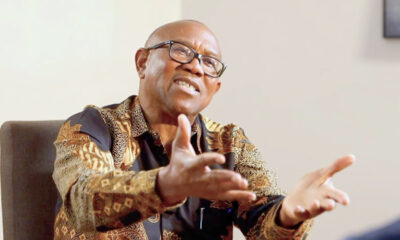





Peter Obi, candidate of the Nigeria Democratic Congress (NDC), has given assignment to Nigerians to put all those aspiring to take up political positions in the country through the grill to ascertain their level of integrity, saying it was required as a sine qua non for the job they seek.
Obi, who has been a subject of discussion in the polity since the allegation of corruption was levied against him by Kenneth Okonkwo, spokesman of his campaign in 2023, over the conduct of the party’s primaries to choose candidates for the 2027 general elections, said the grilling must start with his own person.
A guest in an interview on a podcast with Rufai Oseni, a popular television anchor, the former Governor of Anambra State, stated that it was actually for this reason that he had now sworn to see the litigation he instituted against Okonkwo through.
His take is that the Nollywood actor should use the courtrooms to give all the details of bad behaviour, following his threat to expose him fully, after alleging that he was collecting money from aspirants in the said election for electoral favours.
Hear him: “The issue of taking Kenneth Okonkwo to court wouldn’t have arisen if he had stopped at those allegations. But he claimed he still has more he would expose about me in the future. So, I am very happy to take him to court so that he can expose me publicly, alongside other Nigerians. If any of them has any criminal allegations against me, they should bring them to court.
“Not just Kenneth, everybody should now say those things they know that is bad about me or I did that is wrong because it’s good for the system, it’s good for the society,” Obi said.
“So, if you know that when we were in primary school, this man was cheating or didn’t go to the primary school, didn’t go to secondary school, didn’t do, if you know this man has done something criminal somewhere, this is time to bring it up.”
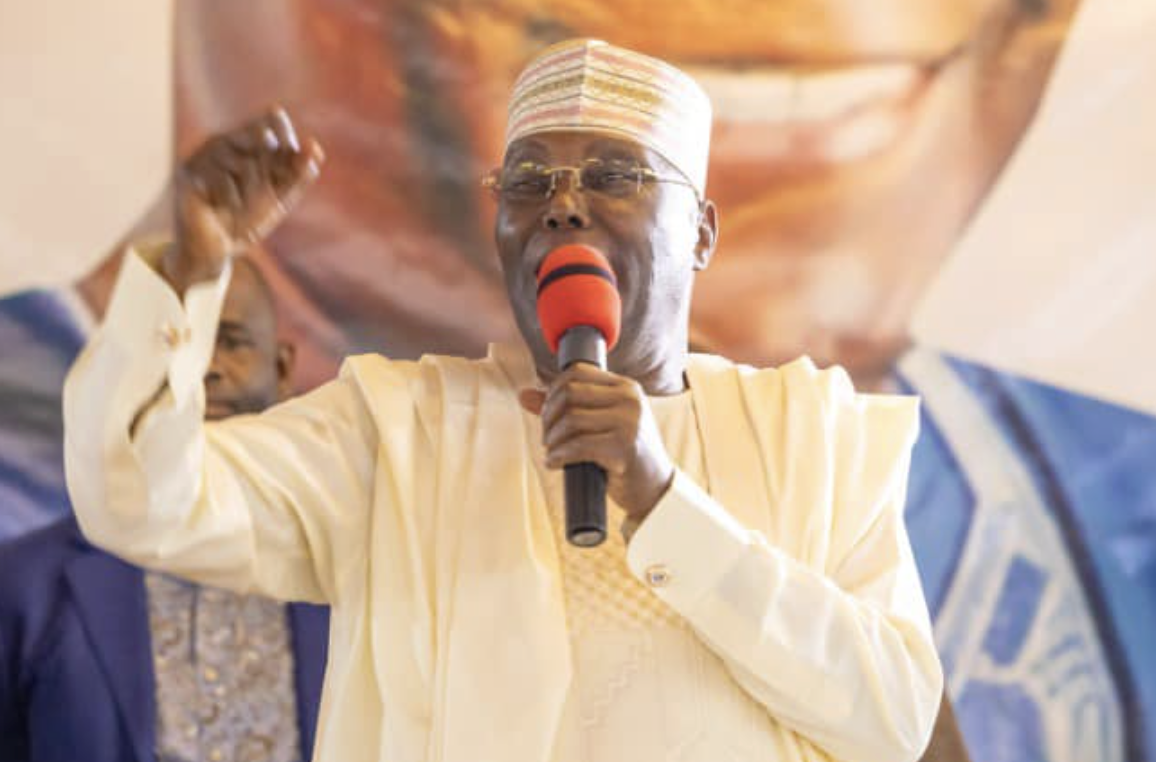
For the umpteenth time, Atiku Abubakar, former Vice President Atiku Abubakar has warned about the dangerous implication of using state institutions, particularly the judiciary to destroy Nigeria’s democracy, saying it is an ill-wind that blows nobody any good.
Atiku, presidential candidate of the African Democratic Congress (ADC), speaking on the heels of Tuesday’s verdict of the Court of Appeal, halting the de-registration order by the Federal High Court, insisted that judicial officers must not lend themselves to any act capable of undermining the nation’s democratic process.
The appellate court had ordered a stay of execution on the order made on Monday by Justice Peter Lifu of the Federal High Court Abuja, for the Independent National Electoral Commission (INEC) to deregister the ADC alongside four other political parties).
A totally scandalised Court of Appeal, sitting in Abuja, had taken umbrage, sparing no hard words in upbraiding the lower court judge, stating that his likes were unfit to sit on the bench.
In a unanimous ruling by a three-man panel, the court held that Lifu’s action was “the highest form of judicial impertinence”, stressing that the Supreme Court previously held that a judge who acted in such a manner.
Describing his conduct as the height of judicial rascality, the upper court, stated: “Courts are enjoined to protect their integrity. This Court has supervisory authority over the trial court.
“The decision of the lower court to proceed with the judgment despite the express order of this court is a brazen violation of the hierarchy of the court and the 1999 Constitution.
This court has the duty to invoke its powers in ensuring that its orders are obeyed. The application for a stay of execution is here yet granted. The enforcement of the judgment is stayed.”
Atiku, who hailed the position of the higher court, which restored his hope to be on the ballot as presidential candidate in the 2027 election, also noted the role of INEC as “significant.”
He said: “I welcome the Court of Appeal’s decision to stay the execution of the Federal High Court judgement seeking the deregistration of our great party, the ADC, and four other political parties. It is particularly significant that INEC itself initiated the application for the stay.
“The development reflects growing public concern over judicial contradictions and politically charged rulings within the judiciary. “Any attempt to undermine Nigeria’s hard-won democracy through judicial manipulation is a grave danger to the Republic. If our democracy suffers further injury, history will demand accountability from those entrusted with dispensing justice.
Outside ADC, Lifu’s order, also included: Action Democratic Congress (ADC), Action Peoples Party (APP), Action Alliance (AA), Accord Party (AP) and Zenith Labour Party (ZLP), similarly slammed for allegedly failing to meet the constitutional requirements for continued registration and participation in elections.

“He is running in contempt of the court. Justice Lifu should be arrested because he is acting in contempt of the court which is a criminal act,” were the exact words with which the African Democratic Congress (ADC), demonstrated its angst over the court ruling on Monday, ordering its de-registration as a political party in Nigeria.
A furious Bolaji Abdullahi, spokesman of the party, told his host while appearing as a guest on Monday’s edition of Politics Today, a public affairs programme on Channels Television that the judge of the Abuja Federal High Court who gave the order was actually playing with fire because of the consequences.
Directly accusing him of playing the script of the All Progressives Congress (APC), to ensure that President Bola Tinubu emerged the sole candidate for the 2027 presidential election, the party spokesman, was emphatic that the plan would not work, as head or tail, ADC must be on the ballot in all the elections.
Hear him: “There is a Court of Appeal order saying don’t hear this case until October 27. So, on what basis? You can’t place something on nothing. The Court of Appeal said don’t act on this until I hear it on October 27. So, on what basis did he deliver the judgement
“So, for us in the African Democratic Congress, what we’re convinced and they know is what they have done has no leg to stand on legally. What they want to do is to create doubts in the minds of the people that this ADC has too many legal cases, can we actually run on this? And to distract us. But we’re not distracted.
“We’re very clear. It was in spite of all they have done since ADC came on board that we ran one of the best and one of the most comprehensive direct primaries in the history of democracy in Nigeria. So, we are strong enough to withstand this. And that’s why I’m saying that we are going to contest in 2027. We’re ADC. We don’t buckle before dictatorship.”
Stressing on the implication of the judgement, which also affected Accord Party (AP), Action Peoples Party (APP), Action Alliance (AA), and Zenith Labour Party (ZLP) for allegedly failing to meet constitutional and electoral performance requirements, following a suit by the National Forum of Former Legislators, he said it portended grave danger.
He added: “We are not surprised. We know that the Nigerian people believe that there is a problem with the judiciary, but what we did not expect is the level of judicial rascality that was demonstrated today.
“What we are saying is that we reject it in its totality, and we are saying that the people behind this are playing with fire. Hundreds, if not thousands, have obtained nomination forms and contested elections and emerged as candidates on the platform of the ADC.”



-

 News4 weeks ago
BREAKING: US-Nigeria troops slaughter 175 ISWAP fighters
-
 Columns4 weeks ago
Dear General Gowon: That apology you’re running from is your nemesis
-

 News2 weeks ago
BREAKING: Terrorists strike Ibadan again! Abduct ex-Minister’s sister, twin children
-

 News4 weeks ago
BREAKING: Wait over! Arsenal are CHAMPIONS! Win EPL after 22 years hiatus
-

 Columns3 weeks ago
See Tinubu’s terrible damage on Option A4 and its precious memories
-
 News4 weeks ago
BREAKING: Jonathan emerges presidential candidate *Gets automatic PDP ticket!
-

 News2 days ago
BREAKING: Troops rescue wife of kidnapped General! *Terrorists flee scene
-

 News4 weeks ago
Presidency: Obi met all requirements – NDC *Cleared to contest primaries