

News
Tinubu’s certificate saga: Now, Gani’s spirit can truly rest in peace – Atiku


“Gani’s soul can now rest in peace. The task he started is now completed,” were the words of Atiku Abubakar, presidential candidate of the Peoples Democratic Party (PDP) in the February 25 election, as he underscored the import of the release of Tinubu’s academic records by the Chicago State University as ordered by a US court.
Atiku, armed with the document, which he said contradicted Tinubu’s submission to the Independent National Electoral Commission (INEC), at a world press conference in Abuja, said that the soul of late legal icon, Gani Fawehinmi, would now rest in peace following the discovery of the truth on the (CSU) record.


Atiku, who recalled that 23 years ago, Gani Fawehinmi began the process of unravelling the mystery surrounding Tinubu’s educational claim in Chicago, said the late fiery human rights activist had been vindicated.
Tinubu, ahead of the 1999 election, had as candidate of Alliance for Democracy (AD), in the run for the governorship of Lagos State, had claimed that he attended Government College Ibadan and the University of Chicago.
Gani Fawehinmi argued in court that the claims were false. But he could not proceed with the case because Tinubu enjoyed constitutional immunity as Governor of Lagos State.
Apart from Faweihinmi, Atiku, also paid tribute to investigative journalist, David Hundeyin and millions of other young Nigerians who continued to put the truth about Tinubu on social media even when nobody was listening.
He said the quest against Tinubu was carried out to expose the truth. He appealed to his counterparts in the Labour Party, Peter Obi, and New Nigeria Peoples Party (NNPP), Rabiu Musa Kwankwaso to join him in redeeming the image and respect of Nigeria as he takes the evidence he obtained from the U.S. to the Supreme Court.
During the questions and answer session, Atiku denied the claim that Tinubu was his benefactor.
He said it was true that in 2007, Tinubu offered him the Action Congress of Nigeria platform to contest the presidency. Atiku said shortly afterwards, Tinubu withdrew the support because he (Atiku) refused to accept Tinubu as his running mate. Atiku said Tinubu decided to support the late Umaru Musa Yar’Adua, the candidate of the PDP in the election.
Atiku said in 2003, he was the one who prevailed against Obasanjo not to take Lagos State from Tinubu during the PDP tsunami in the South West. PDP swept all the states in the election except Lagos.
When asked if he was not worried about a backlash to his business interest in Nigeria by fighting the president, Atiku said whatever interest he had with the government was already terminated by then-President Muhammadu Buhari. According to Atiku, none of his businesses has a relationship with the government.
On what exactly he discovered about Tinubu’s records, Atiku asked a lawyer to address the issues.
The lawyer, Kalu Kalu listed the issues, including;
- The Certificate Bola Tinubu submitted to INEC did not emanate from Chicago State University
- The Qualifying Certificate from South West College used by Tinubu to gain admission to CSU, bears female which clearly means it does not belong to him.
- In the CSU documents, Tinubu attended Government College Lagos and graduated in 1970. The said school came into existence only in 1974. It also means the Government College Lagos document is a forgery.
- In the CSU document, Tinubu has American citizenship. But Tinubu swore under oath in an INEC form that he does not have any citizenship other than Nigerian citizenship.
- In the CSU document, the initial ‘A’ in Tinubu’s name is Adekunle. Whereas, the ‘A’ in President Tinubu’s public record is Ahmed.
The lawyer also dismissed the claim that the evidence would not be admitted by the Supreme Court. He said in several rulings of the apex court, parties can present fresh evidence once certain conditions are met. He said the court cases in the U.S. has satisfied that requirement.
Presidential candidate of the Peoples Democratic Party (PDP) in the February poll, Atiku Abubakar, has dismissed claims that he betrayed President Bola Tinubu during their political alignment in 2007.
At a press conference on Thursday, Atiku said that instead of the narrative of betrayal, Tinubu is indebted to him for standing up to former President Olusegun Obasanjo who wanted to take control of Lagos.
“Those of you who are old enough will also remember that in 2003, the PDP took over all the South-Western states, with the exception of Lagos. I stood between Obasanjo and himself (Tinubu) and I said no, you (Obasanjo) can’t take over Lagos. Leave it and he (Obasanjo) left it. So, who is indebted to whom? Is it me or Bola Ahmed Tinubu?
“There are other things which I will not want to go into, Atiku called on other political leaders such as Peter Obi and Rabiu Kwankwaso to join his camp in the fight to unseat Tinubu.
He said: “This quest is not for or about Atiku Abubakar. It is a quest for the enthronement of truth, morality, and accountability in our public affairs. In line with this, therefore, I am calling on all well-meaning Nigerians, leaders of thought, our religious leaders, our traditional leaders, our community leaders, our political leaders, and in particular, Governor Peter Obi of the Labour Party and Governor Rabiu Kwankwaso of the NNPP and, the leaders of every political party in Nigeria, and, indeed, every single person who loves this country, as I do, and who wishes nothing but the best for the country, as I do, to join me in this campaign to enshrine probity, accountability and the basic principles of justice, morality and uprightness in our country and in our government. This is a task for each and every one of us.”
.








In a quick riposte on Saturday, Dave Umahi, Minister of Works, has cautioned Nigerians to be circumspect in the manner they react to the story of the death of a female student in his home in Ebonyi State, warning against the temptation of jumping to conclusion.
Conveying his position on the highly-volatile matter through Francis Nwaze, his spokesman, Umahi, former Governor of Ebonyi State and a key figure in the government of President Bola Tinubu, said caution was needed to enable the police conduct unfettered investigation into the matter.
It was his response to breaking of how one Mary Habila, a female physiotherapist reportedly died in his palatial home at Uburu, Ohaozara Local Government Area of Ebonyi State, on June 27, hours after arriving the day before.
Nwaze, a Senior Special Assistant on Media and Publicity, specifically cautioned against speculations by “tale bearers,” while conveying the Minister’s shock over the matter and his eagerness for the authorities to get at the root of the matter through forensic investigations.
He wrote in the statement: “The attention of the Media Office of the Honourable Minister of Works, Senator Engr. David Nweze Umahi, has been drawn to a publication by a publication concerning the unfortunate passing of Miss Mary Habila in Uburu, Ebonyi State, alleging that the circumstances surrounding her death were shrouded in secrecy.
“The Honourable Minister received the news with profound shock and sadness and has since extended his heartfelt condolences to the bereaved family. For the avoidance of doubt, immediately the unfortunate incident occurred, appropriate emergency steps were taken. Medical personnel, including the Chief Medical Director of the David Umahi Federal University of Health Sciences, Uburu, were contacted without delay, while the Nigeria Police was promptly notified in accordance with the law.
“Following confirmation of Miss Habila’s passing, the Honourable Minister personally received her parents, conveyed his sincere condolences, and advised that an autopsy be conducted to scientifically establish the exact cause of death. At the time, however, the family declined the recommendation.
“It is important to clarify that Miss Mary Habila and Miss Anita Baski are employees of the David Umahi Federal University of Health Sciences, Uburu, who had been on secondment to the Federal Ministry of Works as physiotherapists for the past three years until the unfortunate passing of Miss Habila.
“Following the recent developments and in the interest of ensuring that the truth is established beyond doubt, the Honourable Minister has again reiterated his position that an autopsy must be conducted. He remains convinced that this is the most credible and responsible path to resolving all questions surrounding the unfortunate incident.
“We therefore urge the public to exercise restraint, refrain from speculation or premature conclusions, and allow the relevant authorities to carry out their responsibilities without interference. At this difficult time, our thoughts and prayers remain with the family of the deceased, and we pray that God grants them the strength to bear this irreparable loss.”
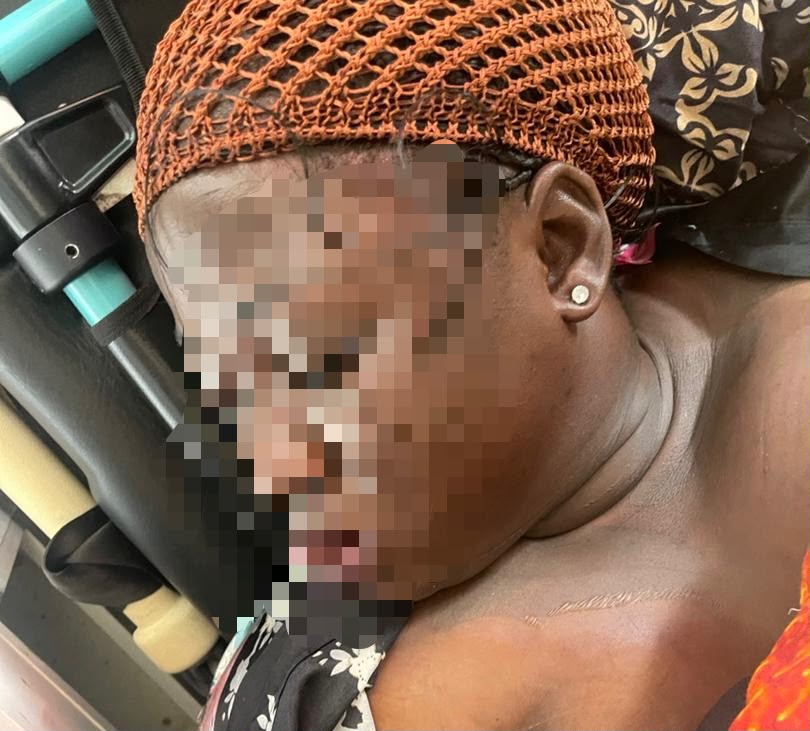
The circumstances that led to the sudden death of Mary Habbila, a Nigerian female student died in the Uburu, Ohaozara Local Government Area of Ebonyi State, home of Dave Umahi, Minister of Works, has now thrown the entire household and environs into serious quandary.
SaharaReporters, which first broke the revealed that the incident, which happened since June 27 this year, has been shrouded in secrecy, with both the Ebonyi State Government and the state police command maintaining silence over the matter.
The incident, the report, added, took place barely a day after Habbila and another woman, Anita Baski, both from Kaduna State, were reportedly brought to the minister’s residence, triggering a police investigation, with the case transferred from the Ohaozara Divisional Police Headquarters to the Ebonyi State Criminal Investigation Department (SCID) in Abakaliki.
Habbila and Baski reportedly arrived at the minister’s residence on June 26 to “attend” to him, only for Habbila to be found dead inside the residence the following morning under circumstances investigators are still trying to establish.
Police sources were quoted by the paper as saying that Jonathan Bawado, a police officer who serves as Senator Umahi’s Personal Assistant and previously worked as his Aide-de-Camp (ADC) during his tenure as Governor of Ebonyi State, alerted medical personnel after Habbila was discovered unresponsive.
Subsequently, a doctor and an ambulance were dispatched to the residence, while Tobechukwu Godwin, Chief Superintendent of Police (CSP) Divisional Police Officer (DPO) of Ohaozara Police Division, was notified of the incident, the report said, adding that at the hospital Chihurumnanya Alo, a Professor and Consultant Public Health Physician, Infectious Diseases Specialist and Chief Medical Director of the David Umahi Federal University Teaching Hospital (DUFUTH), Uburu, was also alerted about the incident.
The police who subsequently conveyed Habbila’s body to a mortuary, were said to have handed over the identification tag attached to Habbila’s to the Ebonyi State Police Command by the said DPO, as part of the ongoing investigation.
SaharaReporters, quoted a senior police officer, with knowledge of the case as saying: “The case has been transferred to the State Criminal Investigation Department in Abakaliki,” but, however declined to provide further details, citing the ongoing investigation.
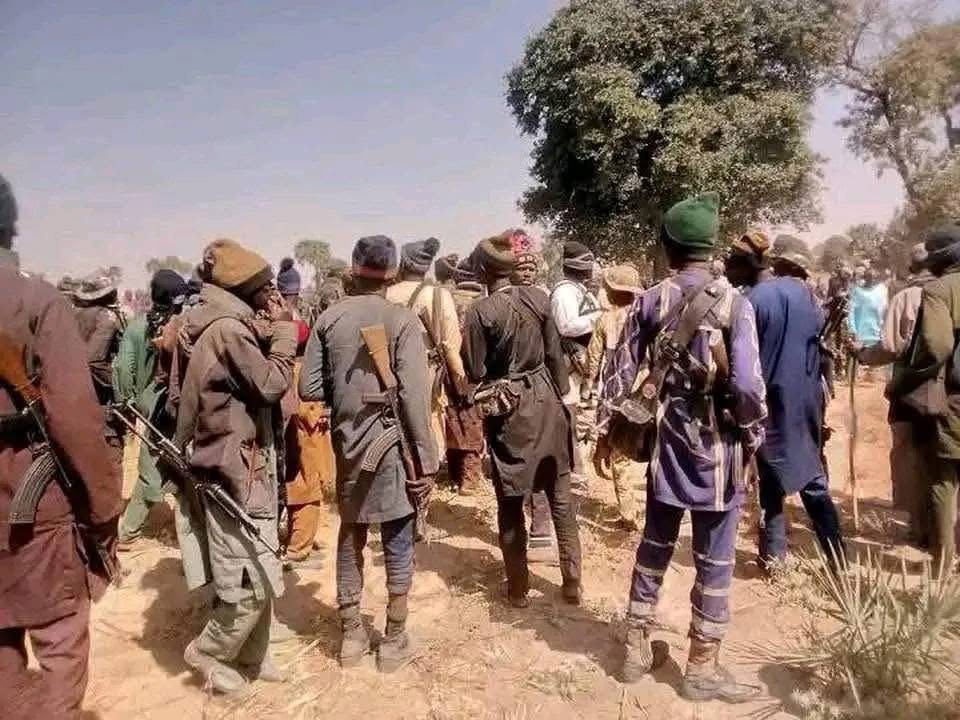
Unlike in other cases, security operatives in Nigeria have upped the ante by adding the arrest of perpetrators to the menu of rescue operations, with the announcement of the capture of eight terrorists who participated in the abduction of school teachers and students in Oyo State on May 15.
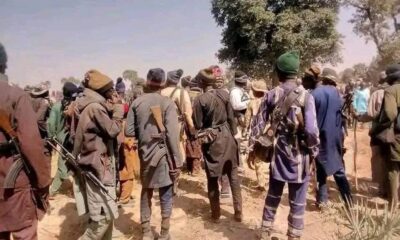
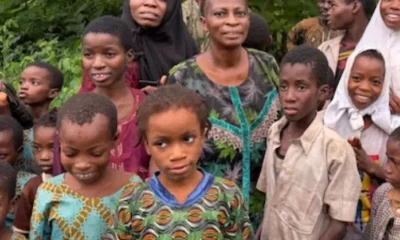
All the 46 pupils, students and teachers abducted by terrorists from three schools in Oriire Local Government Area of Oyo State, regained their freedom on Friday, after about 56 days in captivity, with several others reportedly also neutralised during the operation.
Giving a clue of what transpired during the operation, Bayo Onanuga, who broke the story of the feat, said it was the outcome of sustained security operations, which also foiled the attempt by the abductors to secure the release of one of their captured leaders.
Onanuga, Special Adviser to the President on Information and Strategy, using his X handle to give details about the operation, said: “Finally, all the kidnapped pupils and teachers in Orire, Oyo have been rescued by our security agencies. In the course of the rescue operation, eight of the kidnappers were arrested and are now in DSS custody, while some of them were neutralised.”
“There was no quid pro quo in the rescue as one of the terrorists, a kingpin, that the kidnappers demanded his release, is being prosecuted for his atrocities. The security agencies will give full account soon.”
The victims were abducted on May 15 when heavily armed bandits attacked Community Grammar School, Baptist Nursery and Primary School, and L.A. Primary School in the Esiele and Yawota communities of Oriire Local Government Area, seizing dozens of pupils, students and teachers.
The abduction sparked nationwide outrage, with parents, labour unions, traditional rulers and civil society groups mounting sustained pressure on the authorities to secure the victims’ release.
The incident also triggered an indefinite strike by the Nigeria Union of Teachers in Oyo State over growing insecurity in schools.
President Bola Tinubu had condemned the attack and ordered security agencies to intensify intelligence-led operations to rescue the captives and bring the perpetrators to justice.
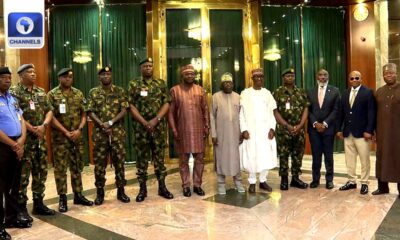
The President subsequently dispatched a high-powered Federal Government delegation to the affected communities, approved the deployment of specialised rescue assets and authorised the recruitment of 1,000 forest guards to strengthen security across Oyo State.



-
 News4 weeks ago
BREAKING: Troops rescue wife of kidnapped General! *Terrorists flee scene
-
 News2 weeks ago
BREAKING: Court sentences Nigerien, two others to death over terrorism
-
 News4 weeks ago
BREAKING: Count me out, Okonkwo tells Atiku *Amaechi VP’s choice an insult to Ndigbo
-
 News1 week ago
BREAKING: EX-SSG mowed down by gunmen! *He resisted being kidnapped – driver
-
 News5 hours ago
BREAKING: Mystery death! *Female student dies a day after arriving Umahi’s home!
-
 News3 weeks ago
Abductors of Oyo teachers panicking, freedom coming for victims soon!
-
 News3 weeks ago
Two hours after Igboho’s ‘red-eyes’ to ‘Fulani’ leaders, gunmen free kidnap victims!
-
 News3 weeks ago
Chicagogate: Nigerians return to court! *Move to stop Tinubu from 2027 polls