
News
Niger: Ghana opposition tears ECOWAS apart *Its panic action by scared visionless leaders *Read full statement


Stop ECOWAS’ Aggression Against Niger
The Socialist Movement of Ghana calls on ECOWAS Heads of State to withdraw their threat of military action to reinstate former President Mohamed Bazoum of Niger.

War benefits nobody in West Africa
The ECOWAS threat is a strategic mistake. Predictably, Burkina Faso, Guinea and Mali have indicated that they will treat any attack on Niger as an attack on their countries and respond accordingly. In other words, ECOWAS’ adventurism has already split the sub-Region and could overnight escalate the political crisis in Niger to an existential crisis for the entire sub-Region – destroying millions of lives and hamper production of goods and services with severe ramifications for the entire continent.
Military intervention cannot solve Niger’s crisis. Bazoum’s overthrow is only one minor expression of Niger’s crisis. The real crisis is underdevelopment. Despite its fabulous gold, hydrocarbons and uranium resources, Niger is one of the poorest countries on earth. This is because France has plundered the country ruthlessly for over a century using bankrupt local elites to repress dissent and to play ethnic and religious communities off against each other and frustrate popular organisation. Niger’s neocolonial crisis deepened when NATO destroyed Libya in 2011, encouraging hardened Islamist fighters from Central Asia to infiltrate and destabilise the Sahel-Sahara region and militarizing and “Islamizing” existing communal problems. This created a pretext for renewed Western intervention in the sub-Region – as saviours. Nigeriens have responded magnificently to the long-term crisis with popular struggles for social justice, development, and dignity. Organised Labour, the Gender movement, Youth organizations, intellectuals, and the religious establishment have challenged the status quo for many years and been ruthlessly repressed by the Nigerien State led, most recently, by Bazoum and backed by France. A military intervention will not wash away this history or the complex web of social conflict it has created. ECOWAS guns will not assist Nigeriens to clarify and determine how they will organise and pursue national development. Guns will only deepen the underlying crisis of foreign exploitation and underdevelopment that Niger suffers. ECOWAS military action will deepen Nigeriens’ suffering and set their economic and social development back even further.
An ECOWAS military intervention will also not advance the long-term well-being of other West Africans. Niger’s story differs only by degree from that of the rest of the subregion. West Africa remains one of the poorest and most troubled regions in the world. Every suffering war will bring to Niger will be replicated and amplified throughout the sub-region with unforetold consequences. The signals from Mali, Burkina Faso and Guinea suggest that the integrity of ECOWAS itself is at risk. An ECOWAS war also enables Jihadi forces to strengthen their military and ideological campaign across the Region.
A war will also have national level consequences as well. For example, it is unlikely that ECOWAS soldiers will want to risk their lives to restore another bankrupt political regime. Military deployment will be the straw that breaks the back of the camel of “stability” in many West African countries. It could provoke mutinies, and accelerate, rather than halt, the wave of coups d’etat the region is Experiencing.
War Benefits Imperialism!
The real beneficiaries of an ECOWAS attack on Niger are Western Imperialist forces. France is struggling to sustain generations of the cruel plunder and oppression that West Africans have rejected. Without Nigerien uranium French electricity costs will rise significantly plunging that country into deeper crisis. EU dependency on Russian uranium (which it has not so far dared to impose sanctions on) will increase. Of course the EU is fully subordinate to the United States, in its aggression against strategic rivals China and Russia. As it can no longer compete commercially the US seeks to exclude these countries’ access to African resources through military force in alliance with backward sociopolitical elites. The US has established military bases across all West Africa including for example the infamous “Niger Air Base 201” near Agadez which is the largest military drone base in the world nominally owned by the Nigerien military but completely controlled by the US and capable of launching attacks across the entire region. On the one hand, developments in Niger threaten US hegemonic interests. But on the other hand Niger presents an opportunity for the US to consolidate its control over West Africa’s military. Imperialism will therefore press for military intervention.
ECOWAS governments lack the ability to manage even domestic insurgencies. ECOWAS can only contemplate a Niger expedition because “NATO” will resource and run it. ECOWAS states will in fact contribute only two elements to any military operations. First ECOWAS provides a fig leaf – the media illusion that this is a “legitimate” democratic West Africa intervention to restore democracy (and not just another US or French invasion of a struggling Third World country). Second, ECOWAS provides cannon-fodder – expendable African soldiers that save the US Government from having to account for the deaths of thousands of Americans. In all material strategic and operational respects this will be an invasion to re-establish colonial rule in West Africa.
What is ECOWAS Leadership’s agenda?
Why are ECOWAS Heads of State shamelessly fronting for US and French imperialism? ECOWAS leaders are willing to front Imperialist conquest because they are desperate and trapped in neocolonialism. Our leaders are firm accomplices in foreign exploitation and oppression. Our leaders have not for example raised concern about the squalor, lack of basic amenities, or exposure of children to deadly radiation that the French capital imposes on the inhabitants of uranium mining towns. Our leaders have not protested the numbers of innocent citizens killed by US and French troops in their so-called counter-insurgency operations. Rather our leaders have forced through laws granting US troops full immunity for crimes committed on our soils – essentially ceding our sovereignty to foreign militaries.
Our leaders have fully supported dishonorable ploys to amend national constitutions to extend term limits to shield themselves from accountability. Our leaders have for years ignored or perpetrated arbitrary arrests and detention without charge or trial in violation of our constitutions. Our leaders have collapsed our national economies with unpayable debts, fiscal indiscipline, profligate spending, and accelerated transfer of wealth to the colonial metropoles. Having plunged us into crisis our leaders have fled back cap-in-hand to the IMF for bailouts conditioned on deepening the policy measures responsible for our suffering in the first place – austerity measures that grind working people into the dust and accelerate outflows of the wealth from our resources and labour. West Africans are no longer impressed by the theatre of periodic elections. West Africans know that these are simply exercises in ego, empty promises, vote-buying, rigging, elite violence, and whitewashing by pliant, partisan judiciaries. Our leaders own bankruptcy – is the source of the wave of revolts and military take-overs across the subregion.
Following their mismanagement and abuse of their citizens’ fundamental development and human rights, the gathering in Abuja that threatened Niger with invasion was really a bunch of scared men, who having lost all moral or political legitimacy now seek to use military force to protect their privileged positions. “ECOWAS Heads of State” do not speak for West Africa. They cannot commit our youth to fight and die in the defence of hollow legalistic “constitutionalism” and elite vanity.
The Socialist Movement of Ghana (SMG) rejects the positions of ECOWAS Heads of State. And we will campaign against any ECOWAS mobilisation for war on Niger. We call on all progressive
organizations and forces in West Africa and especially the West African Peoples Organisation (WAPO) to also condemn the recklessness of West African leaders and work to stop any such mobilisation.
What West Africa needs is to stop the Islamic insurgency in the region and hold our leaders accountable for the mess they have created and sustainably end the growing hunger facing our people. West Africa does not need war and our people are tired of our neo-colonial leaders and their Machinations.
Kwesi Pratt jnr
SOCIALIST MOVEMENT OF GHANA (SMG)
August 2, 2023

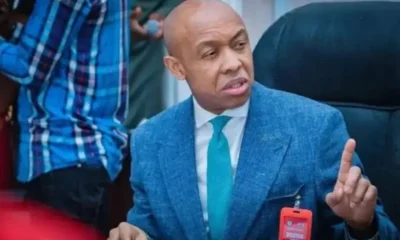





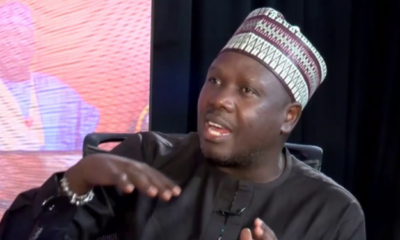

Chidi Odinkalu, Nigeria’s fiery lawyer, law teacher and former Chairman of the National Human Rights Commission (NHRC), is emphatic that President Bola Tinubu is pushing to perpetuate himself in office, beginning with gaming the electoral process in 2027.
Odinkalu, Professor of Practice in International Human Rights Law at the Fletcher School, told his host Naija Unfiltered, a popular Nigerian podcast programme, that he was as sure as death that the President would not exit office in 2031, if he succeeded with his current gambit to remain in power beyond next year.
Hear him: “Yes. But as I said, let me repeat myself. There’ll be a third term. President Tinubu has not done all of this just for another four years. There will be a third term. And anybody who is doing, ‘it is not our portion,’ is not reading the evidence.”
To achieve this aim, the activist, who was also emphatic that the National Assembly, would play a role, added: “The current National Assembly is anything but national or an assembly. And if it’s an assembly, it’s not a parliamentary one. Many people have called it a rubber stamp, but I think that is actually abusive of rubber stamps. I think this National Assembly is a disgrace.
Citing how bizarre and completely compliant the national legislature had become to Tinubu, the ex-NHRC’s boss, stated: “If you can change your national anthem in less than 24 hours with no public hearing, no public consultation, no public involvement, it tells you you don’t have a country because a national anthem is fundamental to the construction of a national identity.”
Also referring to the current move by the President to introduce state police, Odinkalu, wondered how the Nigerian Senate would introduce the bill to that effect and proceed towards the first and second readings, as well as committee stage and passage in less than two hours, questioning how that was possible in normal clime.
Hear him: “Once we finish our elections, we’re going to amend our Constitution, introduce a single six-year presidential term. The current incumbent will be elected until 2031. In 2031, what will happen? The question will be, will he be entitled to run on the six-year term or will he not?
“You will then get the best Senior Advocates in Nigeria telling you the law is not retrospective. That is why the administration is supporting the litigation over President Jonathan’s tenure—not because the Constitution is not clear, but because they will say there is precedent. There will be a third term, and I’m prepared to bet on it.”

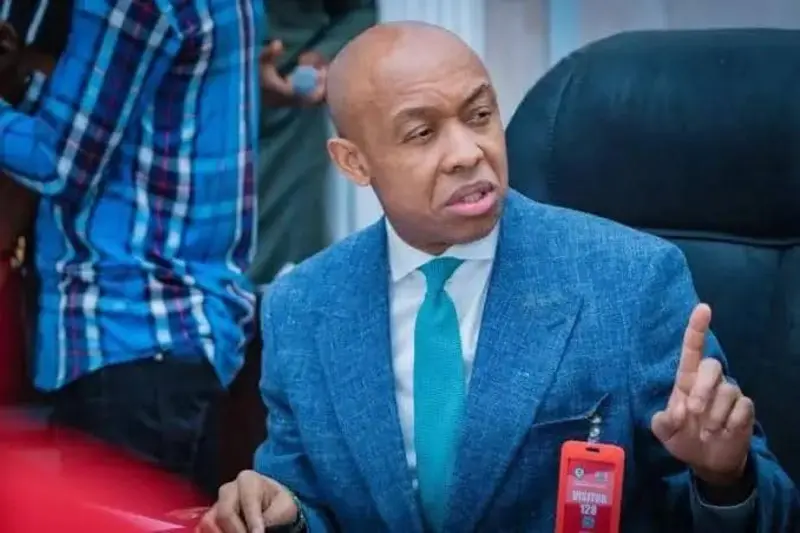
“If we continue to pay ransom, we are encouraging these criminals to kidnap more people. The cycle will only continue unless we stop rewarding criminality,” were the words of Dauda Lawal, Governor of Zamfara State, with which he blamed those in the habit of paying ransoms as the major factor fuelling the current wave of kidnapping incidents across the country.
Lawal, on Thursday at the ARISE News/THISDAY Town Hall Conference on State Police and National Security in Abuja, told his audience how he flatly refused to pay a ₦300 million ransom demanded by kidnappers who abducted his brothers in 2019.
Reiterating his opposition to negotiating with bandits and renewed his support for the establishment of state police, Lawal, while recounting the incident, said: “My own brothers were kidnapped in 2019, and the kidnappers demanded about ₦300 million. I told them I was not going to pay a dime. If they wanted to kill them, they could go ahead.”
Stating that his brothers were eventually released without any ransom being paid, he argued that paying ransom usually emboldened criminal groups by providing financial incentives for further kidnappings.
He added: “My position on ransom payments remains unchanged. I will not negotiate, and I will not pay ransom to any criminal, no matter what happens.”
Endorsing the move for the establishment of state police, to enable governors have greater operational authority over security within their states, he regretted that the current constitutional arrangement left governors with responsibility for security without corresponding powers to direct security agencies.
His words: “In as much as I am called the chief security officer of the state, I do not have the command-and-control authority to direct the operations of the security agencies. I’m prepared to support the funding of state police if the proposed policing structure is established. I’m confident that decentralised policing will improve intelligence gathering, response time and the overall fight against insecurity.”
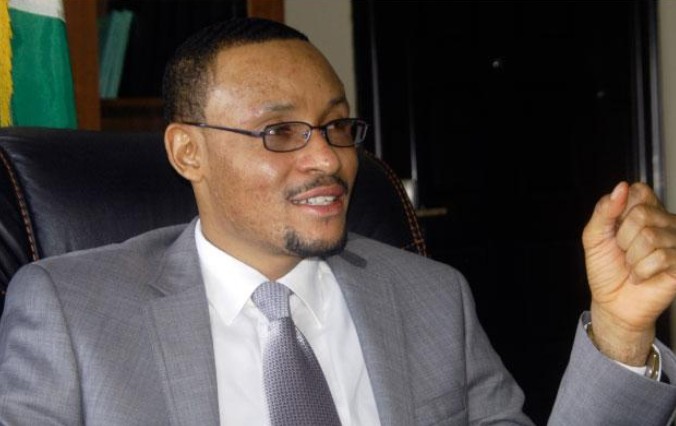
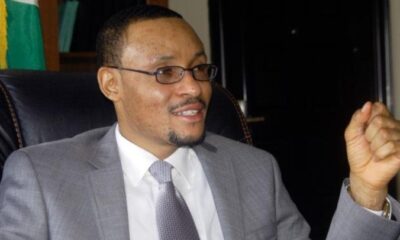
Exactly seven years, two months and four days after he forced Walter Onnoghen, the 16th Chief Justice of Nigeria (CJN) out of office, Danladi Umar, former Chairman of the Code of Conduct Tribunal (CCT), on Thursday, found himself in Kuje prison.
Justice Peter Kekemeke, of the High Court of the Federal Capital Territory (FCT), sitting in Maitama, handed the ex-CCT boss the unwelcome package on Thursday, following his arraignment by the Federal Government on a four-count corruption charge.
Umar’s ordeal began after an investigations revealed that he abused his official position by conferring an undue advantage on himself while serving as head of the tribunal, having in 2021, reportedly using his wife’s bank account to collect the sum of N5.5 million from a contractor engaged to paint the headquarters of the CCT in Abuja.
He was also accuse of using the same account to collect another N6million on January 25, 2024, from a contractor who handled the digitisation of the CCT’s records and yet another N2.43 million a contractor paid as tuition fee of his daughter at Baze University, Abuja.
After pleading not guilty to offences, said to be punishable under section 19 of the Corrupt Practices and Other Related Offences Act, 2000, Christopher Mshelia, lawyer to the FG, prosecuting the matter, applied for his remand in a correctional facility, while urging the court to set a date for the commencement of trial.
His pleas to be freed on bail pending the determination of the case, was opposed by the prosecution, which drew the court’s attention to the fact that it had just been served with the bail application, saying it needed time to respond to it, forcing Kekemeke to adjourn the case till July 15 for hearing while the former CCT boss remained behind bars.
Umar, had as CCT Chairman, on January 23, 2019, issued a controversial ex parte order that led to the removal of a serving Chief Justice of Nigeria (CJN), Justice Walter Onnoghen.
Following the ex parte order, the late President Muhammadu Buhari, on January 25, swore in the next most senior jurist of the Supreme Court, Justice Tanko Muhammad, to take over the leadership of the judiciary as Acting CJN.
Even though Onnoghen later voluntarily resigned his position as CJN on April 4, Umar went ahead and convicted him on April 18, 2019, on the federal government’s allegation that he had failed to properly declare his assets as required by law.
He gave the federal government the go-ahead to confiscate all monies in five accounts belonging to the former CJN, and also removed him as Chairman of both the NJC and the Federal Judiciary Service Commission (FJSC).



-
 News4 weeks ago
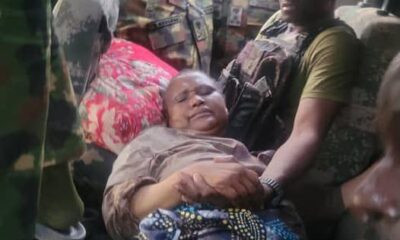
BREAKING: Troops rescue wife of kidnapped General! *Terrorists flee scene
-
 News4 weeks ago
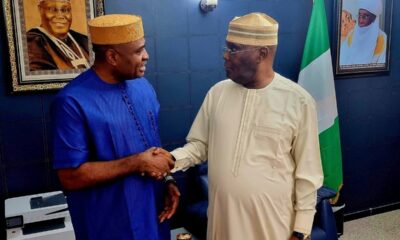
BREAKING: Count me out, Okonkwo tells Atiku *Amaechi VP’s choice an insult to Ndigbo
-
 News2 weeks ago
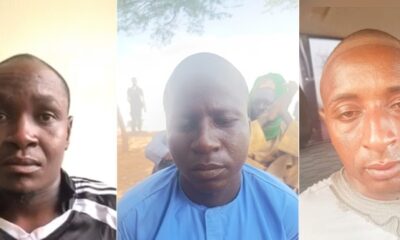
BREAKING: Court sentences Nigerien, two others to death over terrorism
-
 News4 weeks ago
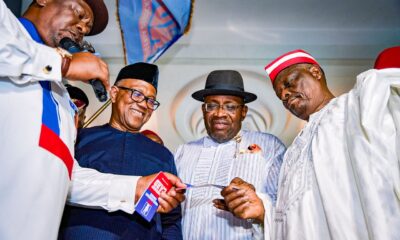
Dickson: Obi, a big asset to NDC, we’re working together … but!
-

 News4 weeks ago
Ovia, ex-Zenith Bank boss swings into luxury apartments *Flats hit $2.8million price tag
-
 News7 days ago
BREAKING: EX-SSG mowed down by gunmen! *He resisted being kidnapped – driver
-
 News3 weeks ago
Abductors of Oyo teachers panicking, freedom coming for victims soon!
-
 News3 weeks ago
Two hours after Igboho’s ‘red-eyes’ to ‘Fulani’ leaders, gunmen free kidnap victims!