
News
Police, EFCC and a citizen’s dilemma

By Gbade Ogunwale
I filed a petition with the Federal Capital Territory Police Command seeking redress for an injustice I suffered. The petition, dated March 23, 2021, detailed a case of unlawful confiscation of my properties and a criminal breach of trust.
The suspect had deceptively confiscated my Honda Accord car, a brand new Dell laptop and a colour HP Printer.
But weeks after the petition was submitted, there was no word from the Police. Worried by the deafening silence, I contacted the Commissioner of Police at the time to inquire why the petition was not acted on. But the CP said the issues raised in my petition were not within the purview of the Police.
According to him, they were within the mandate of the Economic and Financial Crimes Commission (EFCC). Consequently, he advised that I file the petition with the EFCC. Following his advice, I filed a fresh petition dated April 19, 2021, and addressed it to the Chairman of the EFCC, Mr Abdulrasheed Bawa. It was officially received and acknowledged.
It is pertinent to state that in my separate petitions to the Police and EFCC, I supplied the suspect’s mobile telephone contacts alongside mine, to ease the investigation. But several months after, there was no word from the EFCC either.
A few days after I filed the petition, I got hints that the suspect had been arrested by EFCC operatives. I waited in vain for the anti-graft agency to contact me to enable me state my case against the suspect. I then filed a reminder, dated July 7, 2021, to the EFCC, stating among others, that I was aware of the suspect’s arrest and wondered why I was not invited to state my case against him.
I got no reply. I was forced to call the attention of the EFCC Chair Bawa to the matter. I forwarded the cover pages of my original petition and the subsequent reminder to Mr Bawa through WhatsApp. Almost immediately, the EFCC chair responded through a WhatsApp call, saying that neither the original petition nor the reminder was brought to his attention.
Mr Bawa said he was in Europe for some official engagements at the time but he promised to make his findings right away and get across to me through his men on the ground.
Less than two hours later, I received a telephone call from a Special Assistant to the Chairman, Ngunan Kakwagh. The aide told me that the EFCC had indeed prepared a written reply to my petition and the subsequent reminder but that the agency could not locate the address for onward delivery to me. I had to be physically present at the agency’s head office the very next day where I was handed the letter.
The letter, dated September 3, 2021, reads: “We refer to your letter dated 19th April 2021 and reminder dated 7th July 2021 addressed to the Executive Chairman of the Commission on the above subject matter. We have reviewed your petition and found that it does not fall within the Commission’s mandate.
“Consequently, your petition was referred to the Inspector General of Police vide letter ref. no. EFCC/EC/IGP/09/534 dated 11th May 2021 for investigation. Please accept the assurances of the Executive Chairman’s highest regards and respect.” Kakwagh signed the letter on behalf of the EFCC Chairman.
The letter was silent on the issue of the arrest of the suspect, which I raised in the reminder petition. I demanded to know why the suspect was arrested without me being contacted. The aide admitted that the suspect was indeed arrested then. But the aide said he was arrested based on a separate petition filed against him by a different complainant. A coincidence? But does that not say enough about the suspect acting true to character?
In that letter, the EFCC claimed to have referred my petition to the IGP vide a letter dated May 11, 2021. But it took the personal intervention of the EFCC chair for me to get it on September 3, 2021, which is four months after. The wording of the letter gave the impression that it was written after a review of my original petition of April 19 and the subsequent reminder of July 7. If this was the case, then EFCC’s referral letter of May 11 is deemed to have preceded the review of the reminder of July 7 by 51 days.
I filed the petition with the office address of the Abuja Bureau of The Nation Newspapers for easy accessibility. But the EFCC claimed they could not trace the address, so the letter was kept in their files for four months. However, at the intervention of the Chairman, they found the telephone number with which they contacted me.
I proceeded to the office of the Inspector General of Police (IGP) to trace the said referral letter from EFCC. There was no trace of the letter there. A concerned police officer at the Force Headquarters advised I file a fresh petition with the FCT Police Command.
I was emotionally drained at this point so I had to take a break to reflect and to allow me to gain some inner strength.
I resumed the pursuit about a year later with a fresh petition dated September 13, 2022, addressed to the FCT Commissioner of Police. There, I met a new CP who, without much ado, received the petition by himself. After reading through it, directed that it be sent to the Criminal Investigation Department (CID) for investigation.
After days of surveillance, the suspect was brought in for interrogation. He admitted being in possession of my car, laptop and printer but he said he was not prepared to return them to me.
After days of running back and forth, the police ordered him to return the three items in his possession to me. On his own terms, he asked to be given three weeks to replace the laptop and the printer. He set a four-month timeline to either return the car or pay a mutually agreeable value for it.
But that was just one leg of the two-pronged petition. The other leg, which is much more high-ended, bordered on criminal breach of trust. Investigation into that aspect, which is considered to be within the mandate of the EFCC, is now being kept in abeyance at the CID.
After much dithering, the suspect replaced the brand-new laptop with an unserviceable one that looked like something he picked from a junkyard.
Also, he procured a badly refurbished printer as a replacement for the new one he collected from me. I promptly indicated my rejection of the unserviceable laptop. The two items have been gathering dust at the CID office since then.
The four-month timeline he set himself to replace or pay for the car expired on January 31, 2023. But he asked for a further extension of time till February 28, 2023. It was granted but he still defaulted. Apparently, as a decoy, he obtained my bank account details through the Police to enable him to transfer the agreed sum to me. He never did.
I called the investigating CID officer on March 14 to report that the suspect had yet to pay up. The officer replied that the suspect had been ignoring his telephone calls and text messages. And as you are reading this piece, the suspect is still being evasive while police investigators appear helpless. That’s where we are now.
I must state here that the investigation process at the CID has not only been frustrating but also distressing. As the complainant, I had to, on two occasions, wait with the investigators for the suspect to arrive for scheduled appointments.
On one occasion, I had to leave after waiting for an hour without the suspect showing up. At every turn, they made it look like I was begging for some underserved favour. That has been the attitude and body language of the suspect, and even the investigating police officers.
In the course of arresting and investigating the suspect, I was made to part with N50,000 for “logistics”. I was also made to pay an additional N100,000 for the “processing of documents”. That’s besides other incidental expenses I incurred along the line. A case of double jeopardy?
Worried by the frustrating turn of events, I approached a certain EFCC officer who I fortuitously ran into at a recent public event. I narrated my experiences to him following which he requested to see a copy of my petition. I gave him a copy a few days later and I waited for his opinion.
After going through the contents, he opined that I ought to have filed the petition with the EFCC instead of the Police. He was categorical that it’s purely a matter for the EFCC – that is the aspect bordering on criminal breach of trust.
According to him, it shouldn’t take the EFCC much time to crack the case and resolve it decisively. He was momentarily flustered when I handed him a copy of the EFCC letter that referred the petition to the Police. Reading through the letter, he paused for a moment, reflected briefly, and with measured subtlety, said: “Something must have gone wrong somewhere.”
There and then, he advised I withdraw the petition from the Police and file a fresh one with the EFCC. It’s quite distressing that a petition that originated in 2021 is being tossed back and forth, first from the Police to EFCC, then back to the Police. Now, I am being advised to withdraw the petition from the Police and file it afresh with the EFCC. Again?
The question is: will the EFCC take a second look at the petition if it is withdrawn from the Police? What if the agency decides to, once again, send it back to the Police as it did in the first place? Will it not be back to ground zero? It has been an unending circle of motion without movement from 2021 to date. The law, truly, is a dumb ass that even the crooked can ride. So where do I go from here?


Ogunwale works with The Nation newspaper.

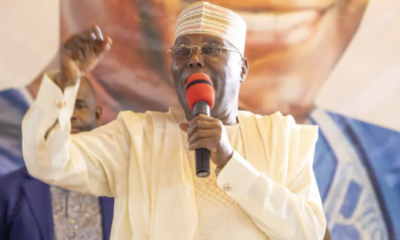







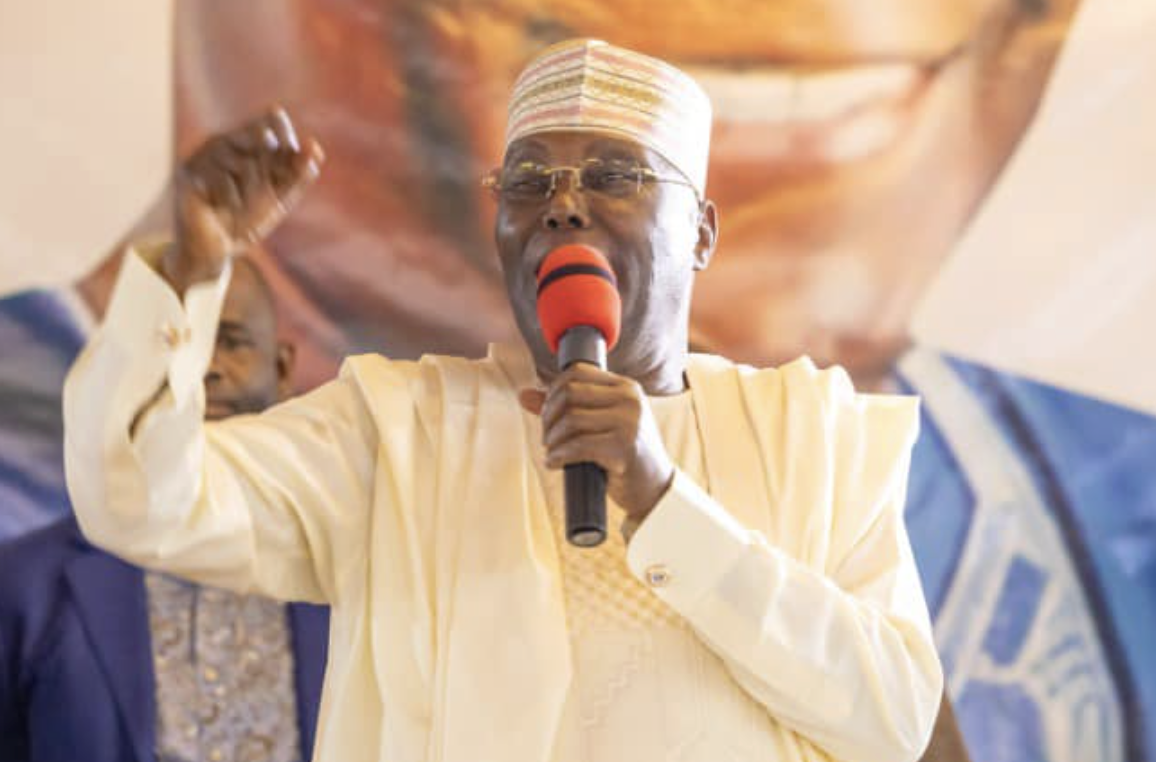
“Nothing must happen to Peter Obi. An injury to one is an injury to all. When one opposition leader is intimidated, every opposition voice is diminished,” came the immediate reaction of Atiku Abubakar candidate of the African Democratic Congress (ADC), in the 2027 presidential election on Thursday.
It was a day Atiku, who came second in the 2023 election and Obi, third, in the declaration made by the Independent National Electoral Commission (INEC), also asked for the release of Nasir el-Rufai, former governor of Kaduna, warning that democracy is threatened when opposition figures are intimidated.
Obi, Governor of Anambra State between 2006 to 2014, had accused the federal government of deliberately frustrating his means of livelihood and targeting opposition figures, while appearing on #WithChude podcast, a programme hosted by Chude Jidonwo, a popular Nigerian social media host.
On the same Tuesday, Obi’s outing broke on social media, where he claimed that the way the Tinubu government was pursuing him, he was not sure of making it to the 2027 election alive, the family of the former Kaduna State Governor, also came publicly to describe stark details of what the family head, currently in detention since February this year, has been facing.
Conveying his distaste on the two situations through, Phrank Shaibu, his spokesman, Atiku, Nigeria’s Vice President between 1999 and 2007, added: “When one citizen begins to fear because of his political beliefs, democracy itself becomes the casualty.”
In a quick riposte to the scant regard, Aso Rock seemed to have placed on Obi’s fears, the former VP, said: “The Presidency must understand that democratic leadership demands composure, not contempt. When a citizen, particularly an opposition figure, voices concerns about the state of the nation or his personal safety, the first duty of government is to reassure through statesmanship, facts and responsible conduct—not through insults.
“Democracies are strengthened by reasoned engagement, not by invective. A government that answers every criticism with abuse projects insecurity, not confidence. The opposition is not the enemy of Nigeria.
“Poverty is the enemy. Hunger is the enemy. Insecurity is the enemy. Corruption is the enemy. Kidnapping is the enemy. The daily bloodletting across our communities is the enemy. A government that devotes more energy to attacking its critics than confronting these existential challenges has confused political survival with the purpose of governance. There are schoolchildren and teachers still waiting to be reunited with their families. There are countless innocent Nigerians languishing in the camps of kidnappers,” he said.
“These are the emergencies that deserve the full machinery of government—not endless political sparring with opposition figures. The Federal Government must devote the same urgency it applies to political communication to rescuing kidnapped Nigerians and restoring public confidence in national security.”
Regarding the plight of el-Rufai, Atiku stated: “The continued detention of Mallam Nasir El-Rufai has generated widespread public concern. Every Nigerian, irrespective of political affiliation, is entitled to due process, equal protection under the law and the presumption of innocence until proven guilty by a competent court. Justice must never create the appearance of selective application.
“Public confidence is not restored through insults or propaganda. It is restored through openness, accountability and the courage to answer legitimate questions,” he said.
“Governments earn trust by confronting controversy with facts, strengthening institutions and demonstrating that no one is above scrutiny. Our elders say: ‘When the drums of injustice beat for your neighbour, do not dance, for tomorrow they may beat for you. Every Nigerian, regardless of political affiliation, has a stake in defending the democratic space. Release Mallam Nasir El-Rufai.
“Bring home every abducted schoolchild, every teacher and every innocent Nigerian still languishing in the hands of kidnappers.
“Stop chasing political opponents and start confronting the crises that are bleeding our nation. History will not remember how fiercely a government fought its critics.
“It will remember whether it protected its citizens, upheld justice, rescued the vulnerable and preserved the democracy entrusted to its care.”

“They apologised to me privately. I said they should put it on social media. They said they will not put it on social media, it will affect their credibility, because it’s not just them, but their other programmers at the Al Jazeera network too.”
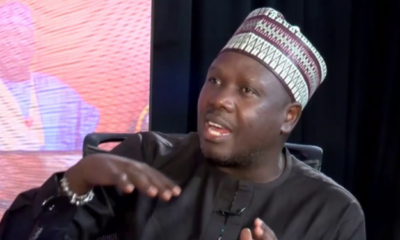
These were the words of Daniel Bwala, while giving further insight into what has transpired along the line since his controversial interview with Mehdi Hasan of Al Jazeera, a global television network in March 2026, stating that the station privately apologised to him.
Bwala, who appeared on The Morayo Show, a private talk-show programme, hosted by Morayo Afolabi-Brown, a popular television presenter, however said because both Mehdi and Al Jazeera, refused to make the apology public, he was prompted him to instruct his lawyers in England to sue for defamation.
Clips on the controversial outing in which Bwala, spokesman for the campaign of Atiku Abubakar during his presidential bid in 2023, were in the public domain for several weeks after where a groundswell of commentators believed his performance was not only underwhelming, but he was outrightly disgraced.
He added: “The substance of the apology was that they should have told me that part of what they discussed with me was a talking point, that they were also going to interrogate me on my credibility for supporting the person I had attacked before.
“By their own ethics, they ought to have told me that, but they said they were sorry they didn’t. If you’re bold, if you call yourself a journalist, a fact-checker, you run your programme live and let people judge live.
“If you’re thinking straight, that’s what you’d do. You took creative control of the programme. You made a recorded programme. Ethics demanded you publish it exactly as it was recorded.”
Informing that the programme ran for one hour and 30 minutes but Al Jazeera published only 49 minutes, he accused the network of skewing the footage in Hasan’s favour, adding: “The deeper point is that they cut out the parts where I was fact-checking him and the crowd was clapping for me, and instead kept the parts where he was speaking and people were clapping for him. He’d ask me a question, I’d deny it, then he’d play the old clip. We call that ‘cut and joined’ in media. After doing that, which amounts to a smear campaign, he didn’t give me the chance to react to it.
“Instead, he let it appear that I was simply asked a question, denied it, was shown the clip, denied it again, was shown another clip, and denied it again. He removed that part, because if he’d left it in, anyone watching would understand that I had already answered the question upfront, and that my later denials were a response to his repeated bringing it up. That’s where the unethical conduct of a professional issue arose.
“When they apologised, I said no, put it on social media. They refused. So, I instructed my lawyers in England to go to court. The case is currently in court. Because my advisers in England said it’s defamation of character.”
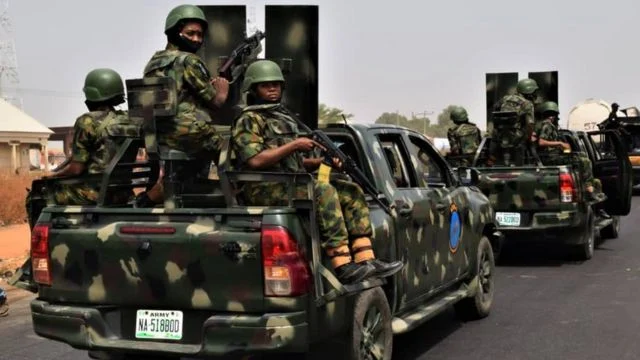
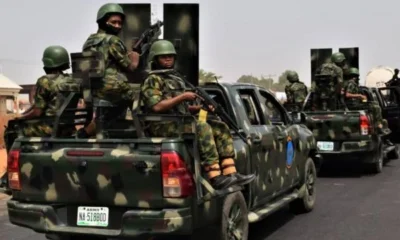
More successes are being recorded by Nigerian forces trying to rout out terrorist in parts of the country, with emerging reports indicating that the perpetrators are currently running scared from the hot onslaughts they are getting from the operatives.
Channels Television, is quoting military authorities at the Operation Hadin kai (OPHK) conducting military blitzkrieg against the terrorists in the North East as saying that the troops received six Islamic State of West African Province (ISWAP), one of the major terrorist groups operating in the area, who surrendered alongside their families, at the 192 Battalion (Main) Sector 1 of the body.
Quoting a statement on Wednesday by Mohammed Goni, spokesman of the military operation, with headquarters in Maiduguri, Borno State, the report, said that among the items recovered from the terrorists and their families included a cumulative sum of more than N1.5 million, two Tecno mobile phones, and other items.
Th statement, added that troops of 115 Task Force Battalion, while conducting ongoing search and rescue operations in Askira/Uba Local Government Area of Borno State, on July 7, rescued two additional abductees from a terrorist hideout, where they also recovered cash of N1.2 million suspected to be proceeds of criminal activities, food items, and other logistics believed to have supported terrorist operations.
The rescued victims have since been evacuated to a secure location where they are receiving appropriate medical care and psychosocial support, the report said, adding that during the same period, the troops noted that it contained a coordinated attack by ISWAP terrorists in Borno, and one of the soldiers was killed.
“Although the insurgents briefly exploited a section of the base’s defensive perimeter during the intense firefight, the troops rapidly regrouped, mounted a determined counter-offensive and decisively expelled the attackers, inflicting significant casualties and forcing the surviving terrorists to flee with varying degrees of gunshot wounds.
“Regrettably, one gallant soldier paid the supreme price, while two gun-trucks and some combat enablers sustained damage during the engagement. The situation at FOB Logomani remains firmly under the control of Operation HADIN KAI troops, with reinforcements deployed, exploitation operations ongoing and additional measures being implemented to further strengthen the defensive resilience of the location.”
Detailing how troops of 232 Battalion apprehended a notorious criminal in Gombi Local Government Area of Adamawa State, the statement, said: “Follow-up exploitation of the arrest led to the recovery of one AK-47 rifle, two magazines, and twenty-eight rounds of 7.62mm special ammunition.
“The suspect and recovered items are currently in military custody, while further investigations are underway to identify and apprehend other members of the criminal network.”
Similarly, the statement said troops of the 149 Battalion arrested two suspected terrorist logistics suppliers in the Mobbar Local Government Area of Borno State.
The recovered items include cash sums, a Volkswagen Golf vehicle, construction materials, household items, and other supplies suspected to have been destined for terrorist elements.
The suspects are currently undergoing interrogation, while the recovered items remain in military custody as investigations continue.
As part of ongoing offensive operations, troops of 24 Task Force Brigade, in conjunction with members of the Civilian Joint Task Force, conducted a clearance operation on known terrorist enclaves around Wulgo.
During the operation, the troops said they exploited the terrorists’ hasty withdrawal and recovered a sack containing assorted illicit drugs abandoned by the fleeing insurgents.
“The recovery further underscores the sustained pressure being mounted on terrorist elements, denying them freedom of movement and disrupting their operational capabilities.”
Relatedly, the troops apprehended a suspected BHT/ISWAP logistics supplier at the Molai checkpoint in possession of large quantities of medical supplies without due clearance. The suspect and items recovered are in custody for further interrogation.
Again, in Sector 2 Area of Responsibility, Troops of 233 Tank Battalion, in conjunction with local hunters, intercepted and arrested a suspected BHT/ISWAP terrorist logistics supplier from Ngirya village of Tarmuwa LGA with five motorcycle tires. The suspect and items are in military custody for investigation.
“These latest operational gains underscore the effectiveness of sustained offensive operations, actionable intelligence and the seamless collaboration among security agencies and auxiliary forces in dismantling terrorist logistics networks, disrupting criminal activities and protecting vulnerable communities across the North East”, the statement added.
Headquarters Operation HADIN KAI assured the public that ongoing search and rescue operations will continue with unwavering resolve until every abducted person is accounted for and safely reunited with their families.
“The Theatre Command also issues a stern warning to individuals involved in supplying food, fuel, construction materials, transportation or any other form of logistics to terrorist groups to immediately desist. Anyone found aiding, abetting or collaborating with terrorist elements, directly or indirectly, will be identified, apprehended and prosecuted in accordance with the law.”



-
 News3 weeks ago
BREAKING: Troops rescue wife of kidnapped General! *Terrorists flee scene
-
 News3 weeks ago
BREAKING: Count me out, Okonkwo tells Atiku *Amaechi VP’s choice an insult to Ndigbo
-
 News2 weeks ago
BREAKING: Court sentences Nigerien, two others to death over terrorism
-
 News4 weeks ago
Dickson: Obi, a big asset to NDC, we’re working together … but!
-

 News4 weeks ago
Ovia, ex-Zenith Bank boss swings into luxury apartments *Flats hit $2.8million price tag
-
 News6 days ago
BREAKING: EX-SSG mowed down by gunmen! *He resisted being kidnapped – driver
-

 News2 weeks ago
Abductors of Oyo teachers panicking, freedom coming for victims soon!
-

 News3 weeks ago
Two hours after Igboho’s ‘red-eyes’ to ‘Fulani’ leaders, gunmen free kidnap victims!