
Opinion
Bianca Ojukwu: Never judge a book by the cover

By Bianca Ojukwu

Each time I see this picture, the rather funny but sad story of this wedding cake on the left comes to mind.
I was told by a good friend, during my wedding preparations that there was a lady at Enugu that makes great wedding cakes. Infact my friend, though not familiar with the lady, offered to take me to hers.
Dressed rather casually, I decided to park my own Mercedes and I joined my friend in her own car which was a cute looking but modest Volkswagen (known as Beetle in those days) and she drove us to the cake maker’s place.
Upon our arrival, The popular cake maker, (whose name I withhold for obvious reasons) totally oblivious of my identity, took one derisive look at the car we arrived in, and was not impressed. I told her I needed her to make my wedding cake, and she started coming up with all manner of excuses.
First, she told me her cakes were very expensive and I definitely would not be able to afford it ( at 25,000 naira in those days), and offered to direct me to a cheaper cake place, stressing that she only makes cakes for important personalities ( even going ahead to drop names..such as one Union bank manager, one boutique owner, etc who in her estimation were ‘dignitaries’) but I told her that I could manage to afford it.
She then asked where the wedding was taking place and I told her it was at Abuja. She said I would have to pay for her transportation to Abuja to mount the cake and that since she only travels by air, not road, this added cost would be difficult for me to carry, to which I replied that I would pay.
She raised the issue of hotel accommodation, which I assured her, would be taken care of.
My friend kept nudging me and whispering in my ear, ‘ Tell this woman who you are so she can put a stop to these nonsense questions’, to which I replied no. I was secretly amused, albeit perplexed at that moment about human nature and social climbers, which by her attitude, this lady clearly was .
What I found surprising was that the lady herself was definitely not well off, her own car was an old Corolla, her surroundings not plush, and she was merely one of those ‘I must belong by all means’ type of people, yet she had the temerity to look down on others she considered not ‘rich’.
To cut a long story short, still not convinced that I could afford her services ( judging by my casual dressing and the modest ride, which was not even mine, meaning I probably had no vehicle of my own), she briskly discharged us both, telling me to drop my number, and that she would call me.
I dropped my number with her under my Igbo name Odinaka, and we left. I never heard from her again.
I simply took up a generous offer from the Canadian chef at the Nicon Hilton Abuja then, who was a master baker, and my gigantic multi tiered wedding cake was made at no cost at all, simply as PR to market and advertise the Hotel’s services.
The Enugu cake maker one day, just a week to the wedding, saw the television broadcasts of our impending wedding which was a big event at the time, and realised it was me who had come to her place for a wedding cake.
She flew into a panic and quickly managed to find her way to my house, and started begging, with all kinds of bland explanations, asking why I didn’t introduce myself ‘appropriately’ ( by which she meant as a ‘VIP’), and even offering to make the cake free of charge, but it was too late.
On this day, a beautiful breezy day in November 1994, it was a memorable wedding ceremony at the Nicon Noga Hilton ( Today’s Transcorp Hilton), Abuja, the first wedding event ever hosted there. And it was grand…
This life size multi step cake seen in this picture, much bigger and more lavish than any conceivable one the Enugu cake maker could ever have offered, was donated by the management of the Hilton.
The Enugu Cake maker lost a great opportunity to showcase her skills and her product since the event was telecast across the country..TV, radio, Newspapers, Magazines and every conceivable news medium with the Hilton Master Baker taking the cake credits.
This advertisement masterstroke greatly boosted the Hilton Events hosting business and facilitated countless more weddings at the same Congress Hall at Hilton. Last I heard, the Cakemaker’s business has since folded after she faced some difficulties in her business several years ago.
Moral of this true life experience is, NEVER JUDGE A BOOK BY IT’S COVER. We are all human beings,created equally before God, if not before man, regardless of our status in life.
We must never relate to others based solely on who or what they are, what they have, what car they ride or how expensively or poorly they are dressed…Everyday people lose opportunities to forge valuable ties and long lasting friendships because of their snobbish outlook.
…..and best of all, when one door closes, another greater one will open by Divine mercies. I lost a molehill but gained a mountain.
HAPPY WEDDING ANNIVERSARY TO ME AND OGA M, DIM CHUKWUEMEKA ODUMEGWU OJUKWU !
Iyom Ojukwu, was for Nigeria’s Ambassador to Switzerland







By Ken Harries Esq
There are few spectacles more embarrassing in politics than a man arguing passionately against himself while pretending to be attacking someone else. Psychologists call this cognitive dissonance. The rest of us call it eating your own words without choking. It is a difficult performance. The audience remembers the speech made earlier out of conviction, the newspapers preserve the quotes, and the politician is left insisting that black is white and that he has always believed the reverse of what he said. This is a classic Catch-22 situation.
Senator Adams Aliyu Oshiomhole is presently engaged in such a trial. He finds himself confronted not by Senator Godswill Akpabio, but by a far more formidable adversary: his own words. The evidence against him is not supplied by his enemies. It is supplied by his own mouth. The falcon cannot hear the falconer.
In May 2025, Oshiomhole stood on the floor of the Senate and delivered one of the most effusive endorsements ever offered by a senator to another. Under Akpabio’s leadership, he posited, opposition politicians were joining the APC voluntarily and happily. The atmosphere in the Senate had become more cordial. Political tensions were easing. Defections were taking place without intimidation, coercion or conflict.
Then came the line that would become impossible to forget. “Mr Senate President, I thought that you would enter the Guinness Book of Records.”
For Oshiomhole, Akpabio’s leadership was not merely effective but profound. It was exceptional. He described it as “truly uncommon and increasingly uncommon.” He praised Akpabio’s patience, warmth and ability to attract political opponents through persuasion rather than pressure. He spoke admiringly of the Senate President’s smile and suggested that his leadership style had succeeded where others had failed. This was not a routine parliamentary courtesy. It was lavish public endorsement and heartfelt sentiments.
Indeed, Oshiomhole went even further to contextualize his praise of Akpabio. He reminded his audience of his reputation as someone who always speaks out of conviction, and added that public figures had an obligation to acknowledge success when they saw it.
That was Oshiomhole speaking. That was Oshiomhole’s standard. That was Oshiomhole’s record. That was Oshiomhole being Oshiomhole.
Now, fast forward to June 2026.
Appearing on a podcast, the same Oshiomhole launched one of his strongest (and strangest) attacks yet on Akpabio. Among other claims, he alleged that the Senate President’s daughter had secured employment at the Nigerian National Petroleum Company Limited through improper influence and outside normal procedures. The allegation was serious and spurious. It was also, according to Akpabio’s colleagues, completely false.
The Senate President’s Spokesperson stated that it is trite that whoever alleges must proof. He asserted further that none of Akpabio’s children work at NNPC or any of its subsidiaries. Suddenly, the issue was no longer about Akpabio. The issue became a test of Oshiomhole’s integrity and conscience.
How does a former labour leader, former governor, former national chairman of the ruling party and serving senator make such a damaging allegation without first establishing a basic fact: whether the person in question even works where he claims? More troubling still was Oshiomhole’s own explanation for the allegation: “Somebody told me.”
Those three words should worry every Nigerian. Not because politicians should never raise concerns about public institutions. They should. Not because powerful people should be shielded from scrutiny. They should not. But because a democracy cannot function when public accusations are built on hearsay rather than evidence.
The low standards expected from a roadside gossip are not the standards expected from a senator of the Federal Republic. And that is what makes this episode so disappointing and worrisome. Like the first Adam, this Adams gave Eve the apple of lies and digested it.
Adams should have known better. He is not an ordinary politician. His place in Nigeria’s political history compels him to be more circumspect in his communication. He rose through the labour movement to become one of the country’s most recognisable public figures. He challenged military rule. He led workers’ struggles. He governed Edo State. He chaired the APC at a critical period in its development.
Few public figures have accumulated such political capital. Yet the path he toed which made Oshiomhole formidable now appears increasingly to be covered with indignity and less than noble motives.
For much of his career, he thrived on confrontation. There was always a cause to champion, an adversary to challenge or an institution to hold accountable. That instinct served him well when it was anchored in facts and robed with decency.
The danger comes when confrontation becomes an end in itself. Then the need to fight begins to outweigh the need to verify. Then attention becomes more important than accuracy. Then the line between advocacy and recklessness begins to disappear. The contradiction in Oshiomhole’s treatment of Akpabio is therefore impossible to ignore.
A little over a year ago, he was publicly suggesting that Akpabio deserved a place in the Guinness Book of Records. Today, he paints him with tar brush as a beneficiary of nepotism. A little over a year ago, he praised Akpabio’s leadership as a model of political inclusion and persuasion. Today, he portrays him as a leader whose conduct deserves public suspicion. A little over a year ago, he was urging Nigerians to acknowledge what was working. Today, he is making allegations that appear incapable of surviving basic scrutiny and integrity test.
What changed? Did new evidence emerge? Did Akpabio suddenly become a different person? Or is something else at work? Some observers point to Oshiomhole’s growing frustration with developments within the Senate itself, particularly debates around the chamber’s rules and leadership structure. Whether that explanation is accurate or not, it highlights an uncomfortable reality about Nigerian politics and politicians’ sweet descent.
Too often, political disagreements that should remain institutional become personal. Policy disagreements become personality conflicts. Procedural disputes become vendettas. Legitimate criticism becomes a vehicle for settling scores. And when that happens, truth is usually the first casualty. This is where Senator Oshiomhole risks damaging something far more valuable than any political rivalry.
He risks damaging his credibility. Credibility is a strange asset. It takes decades to build and only moments to diminish. It is the reason people listen when a public figure speaks. It is the foundation upon which influence rests. Once it begins to erode, every future intervention becomes harder to take seriously.
That is the tragedy here. Oshiomhole does not need sensational allegations to remain relevant. He has already earned relevance. He does not need unverified claims to command attention. His record already guarantees attention. He does not need to manufacture controversy and peddle rumours. His experience alone should mean his voice would always matter in national conversations.
What he needs is the discipline that once distinguished him from countless others in public life. The discipline to verify before accusing. The discipline to separate evidence from rumour. The discipline to recognise that prominence carries responsibilities. History is often kinder to politicians than their contemporaries. It overlooks many mistakes and forgives many errors. But history is also unforgiving when it comes to patterns.
And a pattern appears to be emerging. The labour leader who once built a reputation on speaking truth to power now risks becoming associated with speaking before establishing the truth. The politician who once demanded accountability now finds himself facing questions about his own standards. The man who urged others to “put a record” when things were going well now stands accused of abandoning the record altogether when it became politically convenient.
That is why this story is ultimately not about Godswill Akpabio. It is about Adams Aliyu Oshiomhole. It is about the danger of allowing ambition, frustration and ego to eclipse judgement. It is about how distinguished careers are rarely destroyed by a single scandal or a single defeat.
More often, they unravel through a series of avoidable choices. A careless allegation here. An unverified claim there. A growing willingness to sacrifice accuracy for effect. For a man of Oshiomhole’s stature, that should be the real concern. Because the greatest threat to his legacy is not Akpabio but ego and himself
It is the possibility that, after spending decades building a reputation for courage and credibility, Adams Oshiomole may now be remembered for diminishing both with reckless falsehoods and needless ego of his own making.
•Ken Harries Esq is an Abuja based Development Communication Strategist
By Hon Eseme Eyiboh mnipr
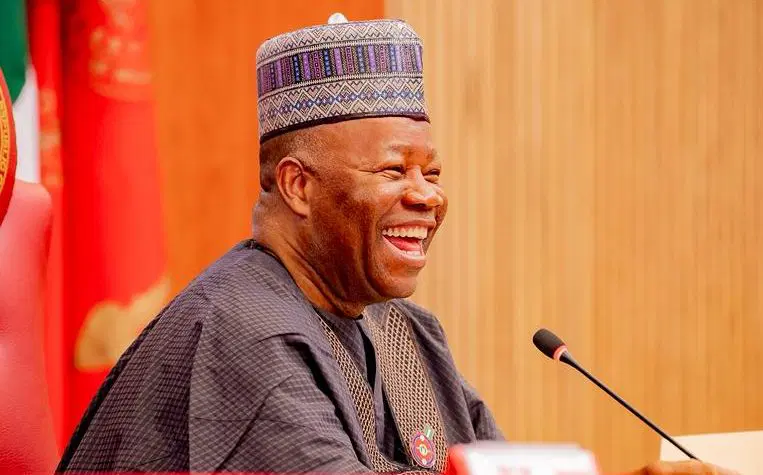
When Senator Godswill Obot Akpabio assumed office as President of Nigeria’s 10th Senate in June 2023, expectations were understandably high. Nigeria was grappling with economic headwinds, persistent security challenges, and growing public demand for more responsive and effective democratic institutions. In such a climate, the National Assembly was expected not merely to make laws, but to provide leadership, strengthen oversight, and restore public confidence in governance.
Three years into his tenure, the Senate under Akpabio has increasingly sought to position itself as a stable, proactive, and policy-driven legislative institution. Through a combination of legislative initiatives, institutional reforms, parliamentary diplomacy, and engagement with critical national issues, the Senate has played a visible role in shaping the country’s governance landscape. While critics have raised concerns on certain matters—an inevitable feature of democratic leadership—the overall record presents a legislature that has remained active, cohesive, and focused on its constitutional responsibilities during a period of significant national transition.
The foremost responsibility of any legislature is lawmaking, and in this regard, the 10th Senate has maintained an ambitious legislative agenda. Hundreds of bills have been introduced and processed, many of them directly targeting Nigeria’s pressing economic, fiscal, and governance challenges. According to Senate Leader Opeyemi Bamidele, in a midterm scorecard released in June 2025, the upper chamber introduced 983 bills and passed 108 into law between June 2023 and June 2025. This included 83 bills passed in the 2024/2025 legislative year alone, compared to 25 bills in the 9th Senate in the same period. Official legislative records also indicate a significant rise in legislative activity compared to previous assemblies, suggesting that the 10th Senate has been notably active by legislative output metrics.
More significant than the volume of legislation, however, has been the Senate’s focus on measures with far-reaching national implications. The emphasis has not been on legislative activity for its own sake, but on advancing reforms designed to address some of Nigeria’s most pressing economic and governance challenges. The Senate has prioritised reforms aimed at stimulating economic growth, improving public finance management, strengthening institutions, and expanding social protection.
One of the defining legislative undertakings of the 10th Senate has been its commitment to tax reform and fiscal modernization. Nigeria’s tax system has long been criticised for fragmentation, multiple taxation, weak compliance, and excessive dependence on oil revenue. Under Akpabio’s leadership, the Senate pursued reforms aimed at simplifying tax administration, broadening the tax base, promoting digital compliance, and providing greater relief for small businesses and low-income earners. In May 2025, the Senate passed four major tax reform bills which, according to the Chairman of the Presidential Committee on Fiscal Policy and Tax Reforms and now Minister of Finance, Taiwo Oyedele, could increase Nigeria’s tax-to-GDP ratio from about 10 per cent in 2023 to approximately 18 per cent by the end of 2027.
These reforms are significant because Nigeria’s tax-to-GDP ratio remains among the lowest in Africa, limiting government revenue and public investment capacity. By supporting measures aimed at modernising tax collection and reducing leakages, the Senate sought to create a more sustainable fiscal framework capable of supporting infrastructure, education, healthcare, and social services.
Beyond fiscal reforms, the Senate has devoted significant legislative attention to education, regional development, agriculture, energy, and the digital economy. Bills relating to tertiary education, regional development etc commissions, agricultural growth, and public sector modernization have featured prominently on its agenda. Notable examples include the Student Loan (Access to Higher Education) Act, 2024, which reportedly facilitated over one million applications through the Nigerian Education Loan Fund, and the Electricity Act (Amendment) 2023, which expanded the role of states and private investors in electricity generation and distribution.
To strengthen the country’s electoral process, the Senate also pursued amendments to the Electoral Act aimed at improving internal party democracy and clarifying procedures around party primaries and consensus candidacies. Supporters of the reforms argue that clearer legal definitions and procedural safeguards could help reduce arbitrary candidate selection and strengthen transparency within political parties. Senate Leader Bamidele has also indicated that additional reforms, including possible provisions for diaspora voting and early voting for security personnel, remain priorities for the remaining legislative period.
Beyond lawmaking, one of the less visible but significant developments of the 10th Senate has been institutional stability. Historically, Nigeria’s upper legislative chamber has often been characterised by prolonged leadership disputes, partisan confrontations, and disruptions capable of slowing governance processes. Under Akpabio’s leadership, however, the Senate has largely maintained operational cohesion and stability.
Plenary debates have generally remained issue-focused rather than personality-driven, while contentious national matters have often been managed through consultation and negotiation. This atmosphere of relative stability has reduced legislative deadlocks and allowed committees to function with greater consistency.
The Senate President’s leadership style has leaned heavily toward consultation and consensus-building. In a politically diverse chamber comprising members of the APC, PDP, Labour Party, NNPP, SDP, and other minority parties, Akpabio has consistently emphasized bipartisan cooperation over rigid partisanship. Committee appointments, major motions, and sensitive legislative debates have reflected efforts to accommodate competing interests while preserving institutional cohesion.
As a result, the 10th Senate has witnessed substantial cross-party cooperation on key national issues, even though disagreements naturally remain part of democratic governance.
Another area in which the Senate has demonstrated effectiveness is budgetary coordination. For three consecutive fiscal years, the National Assembly passed the national budget before the start of the new financial year. The 2024 budget of N27.5 trillion, for instance, was approved on December 30, 2023, ahead of the fiscal cycle. The Senate also passed the 2024 and 2025 appropriations totalling N43.5 trillion, although implementation timelines for some projects were subsequently extended to facilitate completion.
This marked a departure from previous cycles characterised by delayed budget approvals and implementation uncertainty. Timely budget passage improves predictability for Ministries, Departments, and Agencies, enhances investor confidence, allows contractors to plan more effectively, and supports smoother execution of government projects. In a developing economy like Nigeria, where public expenditure plays a major role in economic activity, budget stability remains important to growth and development.
At the same time, the Senate has continued to discharge its constitutional oversight responsibilities through investigative hearings, committee reviews, and ministerial screenings. During periods of persistent fuel scarcity, the Senate leadership engaged key stakeholders in the petroleum sector, including an oversight visit to the Dangote Petroleum Refinery. Supporters contend that the intervention helped keep national attention focused on domestic refining capacity and crude supply arrangements.
Subsequent Federal Government measures, including support for naira-denominated crude transactions, were widely viewed as part of a broader effort to ease supply constraints and calm the downstream market. Today, the long fuel queues that once defined daily life have receded considerably, although deeper challenges in the energy sector remain.
On the international stage, the Senate under Akpabio has strengthened parliamentary diplomacy, carrying Nigeria’s voice into global conversations on democracy, development, security, and international cooperation. Nigeria has assumed a more visible role within the Inter-Parliamentary Union (IPU), contributing to debates on democratic governance, collective security, climate resilience, and legislative best practices. Through these engagements, the Senate has sought not only to advance Nigeria’s interests but also to position the country as a constructive participant in addressing shared global challenges.
A notable diplomatic milestone was Nigeria’s election into the IPU Executive Committee for the first time in decades, a development widely interpreted as recognition of the country’s renewed parliamentary engagement within international legislative circles. Akpabio was also designated to serve on the Preparatory Committee for the 6th World Conference of Speakers of Parliament in 2024.
Domestically, one of the Senate’s most consequential constitutional moments came in August 2023 during the crisis in the Niger Republic following the military coup. When President Bola Ahmed Tinubu, acting as Chairman of ECOWAS, sought legislative backing for possible regional intervention, the Senate urged restraint and prioritized diplomatic engagement over immediate military action. Widely viewed as a demonstration of legislative independence and respect for the principle of separation of powers, the decision reaffirmed the Senate’s constitutional role in matters of security and foreign policy while underscoring a preference for dialogue, diplomacy, and regional stability at a moment of heightened tension across West Africa.
No balanced assessment of the 10th Senate can entirely overlook concerns raised by critics and observers. Questions have occasionally been raised regarding the depth of scrutiny applied during the confirmation of some executive nominees, while certain oversight investigations produced outcomes that critics considered less robust than expected.
In broader terms, the 10th Senate has combined increased legislative activity with relative political stability while attempting to align its priorities with Nigeria’s economic and governance realities. Supporters point to the passage of the National Minimum Wage Amendment Act, the Investments and Securities Act, and multiple regional development commission bills as examples of substantive legislation with potentially long-term national impact.
With one legislative year remaining before the next election cycle begins to dominate political discourse, the principal test facing the 10th Senate may ultimately be one of implementation and public confidence. If the tax reforms strengthen revenue generation, if the student loan programme continues to expand educational access without major controversy, and if the Senate further enhances oversight transparency, the chamber may secure a more enduring institutional legacy. Conversely, if concerns about public perception and executive accommodation persist, critics may continue to question whether legislative productivity has translated into sufficient institutional independence. It is worth noting, however, that history suggests the most successful periods of national development have often occurred not during eras of executive-legislative confrontation, but when both arms of government cooperated effectively while remaining faithful to their distinct constitutional responsibilities.
If the reforms advanced by the Senate continue to produce measurable national impact, and if the institution successfully addresses concerns relating to oversight and accountability, history may ultimately remember the 10th Senate not merely as a productive legislature, but as one that contributed to stabilising governance and repositioning democratic institutions during a consequential period in Nigeria’s development.
* Rt Hon Eseme Eyiboh mnipr is a former member and Spokesperson in the House of Representatives and currently, the Special Adviser on Media/ Publicity and Official Spokesperson to the President of the 10th Senate.
By Bayo Onanuga
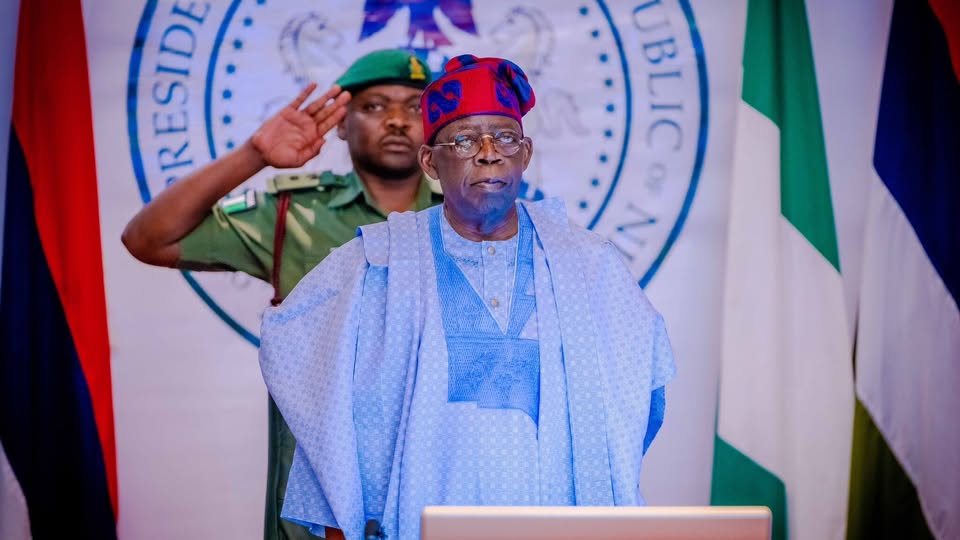
With politicking intensifying ahead of the January 2027 election, opposition politicians have escalated their campaign of misinformation and calumny to diminish the impact and achievements of this administration over the last three years.
Two years ago, when the administration was struggling to deal with the unintended consequences of its historic reforms, the campaign would have made sense. But not anymore, as the administration can rightly claim bragging rights for what it has achieved against all odds and why the international community is applauding it for putting Nigeria irrevocably on the path of growth and development.
The impact of the three-year-old government is best felt at the subnational level – state and local levels. States that hitherto were unable to pay salaries by May 2023, with months of unpaid obligations to their workers and pensioners, are now doing so with ease and dreaming big about infrastructure. In every state I have visited, I have seen this development. Ogun, my state, Oyo, Nasarawa, Enugu, Ebonyi, Kaduna, Kano, Kebbi, Katsina, and others have witnessed development projects spring up, thanks to President Tinubu’s re-engineering of the federation’s finances and increased allocation to the states. When local councils begin to receive their allocations directly from the Federation Account, the Tinubu effect will ensure that more governance cascades down to the 774 local councils.
State governors who have benefited from this policy have openly admitted that increased allocations have enabled them to bring social and infrastructural development to their states. Many opposition PDP governors who joined the APC did so for this reason—not for the baseless claim that President Tinubu bribed them. Governor Abdulrazak said in December 2024 that his administration embarked on more projects in the first 18 months of Tinubu’s presidency than in his first four years. The Governor of Ebonyi, Nwifuru, who is building iconic underpasses and overpasses in Abakaliki, credited his ambition to President Tinubu. Governor Peter Mbah similarly attested to this, crediting the Naira rain from the centre for his programmes. And Nasarawa State Governor Abdullahi Sule, who understands how Tinubu’s financial re-engineering and the end of the subsidy regime have increased the states’ fortunes, said President Tinubu “has taken the bullets for all of them.”
In May 2023, President Tinubu inherited acute petrol scarcity, an unsustainable petrol subsidy regime due to expire in June 2023, multiple exchange rates, arbitrage, and low revenue, with at least 30 states unable to pay workers, let alone fund infrastructure and social projects. Debt servicing consumed 97 per cent of Federal revenue. Additionally, food scarcity and inflation plagued the country as farmers abandoned their fields, recording massive losses amid the currency squeeze introduced by former CBN Governor Godwin Emefiele.
President Tinubu, guided by the Renewed Hope Agenda, wasted no time. He threw the ruinous subsidy out of the window from Day One. Days later, he floated the Naira and ended the artificial fixing of the Naira-to-dollar exchange rate, a system that had enabled well-connected individuals to profit effortlessly. Tinubu declared a food emergency and announced the Presidential Committee on Fiscal Policy and Tax Reforms to examine our outdated tax laws, some of which date back to the colonial era. Immediate gains included encouraging dry-season farming, with subsidies and inputs provided for farmlands abutting dams and irrigation sites in at least 14 states.
Even by President Tinubu’s admission, the early months and the first year were tough as the government implemented its programme. The cost of living went up, and businesses claimed the harmonised exchange rate had put them in the red. A few companies even closed shop and left our shores. On the streets, some Nigerians claimed that the policies have left them hungry, a sentiment the opposition still parrots to this day, without any empirical proof. If not sure of the salience of his reforms, President Tinubu would have taken a reverse gear in fright and abandoned all the new reform policies amid the avalanche of attacks from critics and opposition elements in the media. Instead, he persisted.
Two years after the first challenging year, the story has changed for good. However, some opposition elements are stuck in the sentiment of 2023/24, unyielding and adamant about acknowledging the many gains and milestones achieved by the Tinubu administration. But only the blind will fail to admit that this government has taken the country miles away from the state it inherited in 2023.
The stock market is clear proof of the administration’s economic success. In May 2023, Tinubu met the All-Share Index at 53,000 points and the market capitalisation at N30 Trillion. Today, the ASI has risen five times, to a record 250,000 and a market capitalisation of N160 Trillion. Blue-chip companies, including those initially negatively impacted by government policies, are declaring record profits and dividends. Equally, foreign portfolio investors are flocking in to partake in the Nigerian boom. This is not a bubble. It shows that a fundamental paradigm shift has occurred in the economy, all thanks to the Tinubu administration’s policy direction.
In recent weeks, I revisited the manifesto and policy ambitions that won us the election. The Tinubu administration has faithfully implemented its Renewed Hope Agenda, striving to resolve in three years the cumulative problems of decades.
Roads that will outlast this generation are being built nationwide. I recently went home to Ijebu-Ode, Ogun State, and was amazed that the highway to my town from the Shagamu intersection now has a concrete pavement, thick enough to withstand the traffic of trailers from the West to the East. The most audacious road projects ever undertaken by any administration since independence are the Illela-Sokoto-Badagry and the Lagos-Calabar coastal superhighways. President Shehu Shagari conceived the Sokoto-Badagry highway in the early 80s. Succeeding administrations, afraid of the huge cost, abandoned the road. The Lagos-Calabar has also been on the map for decades, but no leader has ever dared to turn the idea into reality. President Tinubu has proven to be a transformative leader who has decided to turn the roads into reality, adding new roads to our road network for the first time, beyond those we inherited from the colonialists. Myopic critics of the two roads have assailed the Tinubu administration for taking loans to accomplish them. How else could the roads have been built if we rely only on FG’s share from FAAC? Relying solely on federal allocations would mean waiting 50 years or more, with costs ballooning out of reach, as in the metro-rail to nowhere started by presidential aspirant Rotimi Chibuke Amaechi in Port Harcourt, Rivers State. In the states, governors are building roads of similar standards. I saw some of these in Ogun, Kaduna, Ebonyi and Enugu.
As with roads, the Tinubu administration is also investing heavily in rail transportation, with the Kaduna-Kano-Gusau-Maraadi rail network scheduled for completion next year. City rail networks in Kaduna, Lagos, Kano and Enugu have been approved for construction, along with the Lekki-Ibadan rail.
When historians write about the Tinubu administration in 2031, they will not remember it only for audacious road and rail networks, but also for historic reforms. The oil and gas sector is one area in which the administration has impacted the country. Apart from ending the regime of wasteful subsidies, the government has instituted reforms that have made the sector attractive to fresh investment. International Oil Companies(IOCs) that once shunned our country are returning with billions of dollars in investment. Domestic refining and the innovative Naira-for-crude policy are ensuring energy security, thereby avoiding acute scarcity arising from the disruptive war against Iran and the closure of the Strait of Hormuz. More recently, the administration enacted a policy requiring the NNPC to remit oil sales proceeds to the Federation account.
Confronted by the administration’s stellar performance, the opposition and media propagandists dredged up a campaign video of the President promising a 24/7 power supply. They distorted his words. What he actually said was: “Whichever way, by all means necessary, you will have electricity, and you will not pay for an estimated bill anymore. A promise made will be a promise kept. If I don’t keep the promise and I come for a second term, don’t vote for me, unless I give you adequate reasons why I couldn’t deliver.”
What the distorters failed to admit was that the Discos, privatised since 2013 by President Goodluck Jonathan, are responsible for delivering power to the end consumers, not the Federal Government. What this government has done in the last three years has been to address the problems hindering the capacity of Discos to deliver, such as bringing Siemens to strengthen the grid, activating idle GENCOs, and planning to clear the N4 trillion legacy debts owed to GENCOs and GASCos, which will encourage new investments in the sector. The government has also massively implemented its metering policy, providing over 2.5 million meters to homes. Recently, the Tinubu administration announced the establishment of GAMCO, the Grid Asset Management Company, which will optimise power supply and activate idle facilities.
One of the administration’s impactful programmes, apart from issuing passports in less than a week, is the introduction of NELFUND and CREDICORP in 2024. While Credicorp is making loans available to civil servants to buy Made-In-Nigeria products, NELFUND, with N282 billion committed so far, has made tertiary education more accessible for our children. About 1.6 million Nigerian students have benefited. Payment of school fees and stipends is assured for the children, and the government has also renegotiated the 2009 ASUU-FG agreement, such that in the last three years, our universities, along with the Polytechnics and Colleges of Education, have been spared the disruptive academic strikes. Let’s give the Tinubu government some slack: a four-year programme is now a four-year programme. He promised it during the campaign and has delivered. The government has also invested in technical schools, offering students pursuing vocational education allowances. In the universities, TETFUND is once again funding research grants for dons willing to pursue ideas that will be useful to our society.
Among impactful programmes, apart from issuing passports in less than a week, are NELFUND and CREDICORP, introduced in 2024. Credicorp makes loans available to civil servants for Made-In-Nigeria products, while NELFUND, with N282 billion committed, has made tertiary education more accessible. About 1.6 million students have benefited. School fees and stipends are assured, and the government has renegotiated the 2009 ASUU-FG agreement, sparing universities from disruptive strikes. Today, a four-year programme in the universities, polytechnics and colleges of education is completed in four years. Technical schools offer allowances to vocational students, and TETFUND is funding research grants to academics.
It has not been all rosy the past three years, especially in the area of making our people safe from the band of bandits and terrorists. While the armed forces have been locked in an asymmetrical war against these heartless elements, neutralising their leaders and foot soldiers in several theatres of conflict, the displaced terrorists are attacking vulnerable areas in some of the states, killing and kidnapping. The government is unrelenting in providing the armed forces, intelligence agencies, and police with the tools they need to wage the war. With support from friendly governments like the US, France, and the UK, there is hope that the menace of kidnappers and their political sponsors will become history. The man who has taken the bullets to make Nigeria survive a fiscal disaster is even more willing to take additional bullets to make all Nigerians safe.
Onanuga is Special Adviser to President Tinubu on Information and Strategy



-

 News3 weeks ago
BREAKING: Troops rescue wife of kidnapped General! *Terrorists flee scene
-
 News3 weeks ago
BREAKING: Count me out, Okonkwo tells Atiku *Amaechi VP’s choice an insult to Ndigbo
-

 News2 weeks ago
BREAKING: Court sentences Nigerien, two others to death over terrorism
-
 News4 weeks ago
Dickson: Obi, a big asset to NDC, we’re working together … but!
-
 News4 weeks ago
Ovia, ex-Zenith Bank boss swings into luxury apartments *Flats hit $2.8million price tag
-
 News5 days ago
BREAKING: EX-SSG mowed down by gunmen! *He resisted being kidnapped – driver
-

 News2 weeks ago
Abductors of Oyo teachers panicking, freedom coming for victims soon!
-
 News2 weeks ago
Two hours after Igboho’s ‘red-eyes’ to ‘Fulani’ leaders, gunmen free kidnap victims!